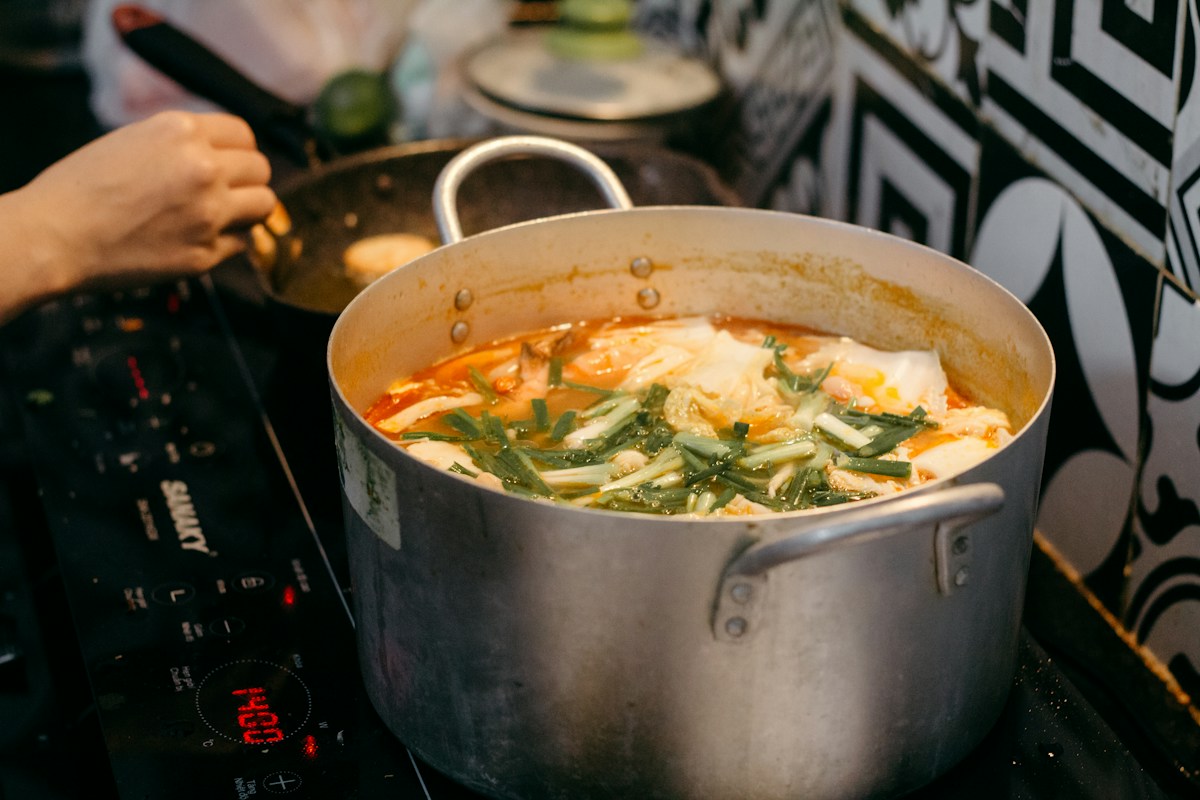
You start a big pot of stew, brown the meat, add vegetables, and then discover that stirring around the tall sides is awkward. Or you remember an old family pot that was broad and surprisingly low, yet handled soup, sauce, and stew better than the modern stockpot in your cabinet.
The short answer is that a wide shallow cooking pot can be better for browning, stirring, reducing, and cooking ingredients in a broad layer. A tall stockpot is often more practical for very liquid-heavy batches, pasta, stock, steaming, or limited stovetop space. The right choice depends less on advertised quart capacity and more on interior diameter, height, working fill level, burner fit, construction, handles, lid, and storage.
Key Takeaways
- A wide shallow pot offers more cooking surface for browning, sautéing, stirring, and sauce reduction.
- A tall stockpot is usually better for deep liquid, pasta, steaming, stock, and very large batches.
- Listed capacity does not tell you how much room you have to work comfortably; compare interior dimensions and usable capacity.
- Match the pot’s base and overall width to your cooktop, nearby burners, cabinets, sink, and lifting space.
- Material, base construction, handles, lid fit, and the weight of a full pot can matter as much as shape.
Wide Shallow Pot vs. Tall Stockpot: What Changes in Use?
A wide shallow cooking pot has a larger interior diameter and lower sidewalls than a conventional stockpot with a similar capacity. Depending on the design and seller, you may also see this shape described as a rondeau, braiser-style pot, wide saucepan, low casserole, or restaurant-style wide stockpot.
The biggest practical difference is cooking surface. In a wide vessel, onions, meat, mushrooms, or other ingredients can spread across more of the base instead of piling deeply. That can make it easier to brown in batches before adding liquid. It also gives you a clearer view of the food and more room to use a spatula, wooden spoon, or whisk.
A tall stockpot concentrates the same volume into a smaller footprint. Its deeper interior is useful when you want plenty of liquid above the ingredients, but the narrower base can make browning more crowded. It may also be harder to reach the bottom, especially when the pot is nearly full.
The shallow pot versus tall pot comparison also affects evaporation. A wide surface exposes more liquid to the air, so it may encourage faster reduction when the pot is uncovered. That is not a guarantee: heat level, lid use, batch size, ingredient composition, and construction all matter. The same wide pot can reduce slowly over low heat with a lid or more quickly when uncovered over stronger heat.
Tall cookware generally contains deep liquid more effectively and takes up less horizontal space on the cooktop. Its higher sides can also help limit splashing during stirring, although any full pot of hot liquid requires careful handling. Neither shape is universally better; each makes different tasks easier.
When a Wide Shallow Cooking Pot Works Best
A broad, lower pot is especially useful when a recipe moves through several stages in one vessel:
- Brown meat or vegetables over moderate heat.
- Add aromatics, spices, or tomato paste and stir them across the base.
- Add stock, wine, tomatoes, or another cooking liquid.
- Simmer while stirring and checking the bottom.
- Reduce the sauce or finish the dish without transferring it.
This is why a wide saucepan for stew or a braiser-style pot can be so useful. The surface supports browning, while the sidewalls still provide enough depth for a stew or moderate soup. The lower profile also makes it easier to lift out a piece of meat, scrape up browned bits, or whisk a sauce without reaching down into a narrow well.
For soups, a wide pot works well when the recipe contains plenty of vegetables, meat, beans, or other solids and you want easy access while stirring. It can also help ingredients heat in a more even layer before liquid is added. However, the pot should not be so shallow that the soup sits close to the rim once everything is in it.
For sauces, a wide vessel is often a strong choice when reduction and whisking are priorities. This can include pan-style sauces, tomato sauces, gravies, and braising liquids. A deeper pot may be more convenient for thin sauces that bubble vigorously or splatter, particularly if you plan to stir less frequently.
A wide cooking surface is not the same as large-batch capacity. A 7-quart pot with a broad base may give you more room for browning than a taller 7-quart pot, but it may not hold the same useful depth of liquid. Conversely, a taller pot may hold more food vertically while offering less room for ingredients to spread out.
For a large batch cooking pot, consider what the batch contains. A broad pot is useful for a large quantity of stew, chili, curry, or sauce that benefits from browning and reduction. A tall stockpot is usually more practical for a deep batch of broth, pasta water, shellfish, or another preparation where vertical liquid capacity matters more than surface access.
A shallow design becomes less attractive when the recipe needs substantial liquid depth, minimal evaporation, or a very full working level. It may also be inconvenient if your cooking surface is small or if the wide handles extend into neighboring burners.
How to Compare Capacity, Dimensions, and Burner Fit
Do not choose a pot by quart or liter capacity alone. Product listings often give a total volume that may describe filling close to the rim, while real cooking requires room to stir, add ingredients, and manage bubbling without spilling. Practical working capacity is therefore more important than the headline number.
Before shopping, record these measurements:
- Interior diameter at the cooking surface
- Interior height from the base to the inside of the rim
- Exterior diameter, including handles if relevant
- Total stated capacity
- Pot weight and lid weight
- Base diameter where it contacts the cooktop
- Available burner and countertop space
- Cabinet height, shelf depth, and sink clearance
Interior diameter tells you how much room ingredients have to spread out. Interior height tells you how much depth is available for liquid and how far you must reach to stir. Compare both rather than assuming that two pots with the same capacity will cook in the same way.
For example, a broad pot may give you a large browning area but a relatively low liquid depth. A tall pot with the same listed volume may be narrower and deeper, making it better for stock or pasta but less comfortable for sautéing a large amount of food before adding liquid.
Check the manufacturer’s dimensions carefully. Some listings show the exterior measurement, including handles, while others emphasize only the body. A pot can fit on a burner by its base yet still crowd adjacent burners because of its rim or handles.
Burner fit matters because a base that is much wider than the active heating area may warm more slowly at the edges or encourage uneven heating, depending on the cooktop and pot construction. A very small burner under a broad, full pot may also lengthen heating time. Exact results vary, so verify the cookware maker’s compatibility guidance and compare the base with the burner you actually use.
Measure the cooktop before buying. Note the size of the intended burner and the distance to neighboring controls, burners, and the counter edge. Then check whether the pot’s handles leave enough room to lift, rotate, or remove the lid without bumping another pan.
Also verify compatibility with your heat source. A pot suitable for gas may have different requirements on an electric, induction, ceramic, or other cooktop. Look for the manufacturer’s stated cooktop compatibility, lid information, maximum heat guidance, and oven-use limits rather than relying on general assumptions.
Materials, Handles, Lids, and Everyday Handling
Material influences how a pot responds, but construction matters just as much. A stainless steel pot may offer a durable cooking surface and broad compatibility, while its heating behavior depends on the base, cladding, and any heat-spreading layer. Some stainless cookware responds more slowly than thinner aluminum, but a well-constructed base can distribute heat more evenly than a very thin one.
Aluminum is commonly valued for being relatively light and responsive. It can make a broad pot easier to lift and maneuver, although exact performance and durability depend on thickness, coatings, and construction. Compatibility with induction or other cooktops must be confirmed for the specific pot.
Enameled cast iron can provide substantial heat retention and a sturdy cooking body. That can be useful for steady simmering, but a large pot becomes heavier, especially when filled with soup or stew. The enamel surface and manufacturer instructions also deserve attention when choosing utensils, cleaning methods, and heat settings.
These are general tendencies, not guarantees. Base thickness, cladding, enamel construction, shape, and heat source can change the result substantially. If even heating is important, look for clear specifications about the base and construction instead of choosing by material name alone.
Handles deserve the same attention as the cooking body. Broad pots often have short side handles that extend outward, while some larger designs add a helper handle opposite the main grip. Check whether you can hold the pot securely with both hands and whether the handles stay clear of nearby burners.
Consider the pot when full, not empty. Hot liquid makes a large pot harder to control, so check the listed cookware weight and imagine adding the soup, stock, or sauce you normally make. If you could not comfortably move a full pot from the cooktop to the counter, a slightly smaller pot or lighter construction may be the better everyday choice.
A lid should sit securely without making the handles awkward to use. Check whether it is included, how it is stored, and whether its knob leaves enough clearance inside a cabinet. A well-fitting lid can limit evaporation when you need to hold moisture in, while an uncovered pot may be preferable when deliberately reducing a sauce.
Storage is easy to overlook. A wide pot may be shorter than a stockpot but require more horizontal shelf space. Measure the body, handles, and lid separately, then check cabinet height, shelf depth, and the space needed to lift the pot out. If the lid cannot be stored on top, include a location for it before purchasing.
Choosing the Right Shape for Your Recipes and Kitchen
Choose a wide shallow cooking pot if you frequently brown ingredients, reduce sauces, prepare stews, or want easy access while stirring. It is especially useful for moderate-to-large batches that fit comfortably below the working level and for recipes that move from sautéing to simmering in one vessel.
Choose a tall stockpot if your priorities are pasta, stock, steaming, deep liquid, or very large batches that need vertical capacity and containment. Its smaller footprint may also suit a crowded cooktop better, provided the base and burner pairing are appropriate.
If you cook both styles of food regularly, owning both shapes may be more practical than forcing one pot to do everything. A wide pot can handle stew, sauce, and braising duties, while a tall stockpot handles pasta water, broth, and especially liquid-heavy batches.
When searching, use terms that describe both shape and purpose. Try “wide stockpot for soup,” “shallow pot versus tall pot,” “wide saucepan for stew,” “restaurant-style wide stockpot,” “vintage wide cooking pot,” or “large batch cooking pot.” Then confirm the actual interior measurements rather than trusting the product title.
Use this final checklist before buying:
- Is the interior diameter large enough for the ingredients you brown most often?
- Is the interior height sufficient for your usual liquid depth?
- Is the stated capacity realistic for your comfortable working level?
- Does the base suit your burner and cooktop?
- Is the construction appropriate for your weight and heat-response preferences?
- Do the handles allow safe, balanced lifting when the pot is full?
- Does the lid fit well and store conveniently?
- Will the pot fit the cabinet, sink, oven, and countertop space you have?
- Have you checked current manufacturer specifications and cooktop instructions?
FAQ
Is a wide shallow pot good for soup?
Yes, particularly for soups with substantial solid ingredients and recipes that benefit from easy stirring or an initial sauté. A tall stockpot may be better when the soup requires deep liquid, a very large volume, or maximum containment near the top.
Does a wide pot reduce faster than a tall pot?
It can, because a wider exposed surface may encourage evaporation. The actual reduction rate also depends on heat, lid use, ingredient volume, cooking time, and pot construction, so shape alone does not determine the result.
What size and shape of pot is best for large-batch cooking?
Choose based on the batch rather than capacity alone. A wide pot is useful for stews, sauces, and batches that need browning or reduction. A tall pot is more practical for stock, pasta, steaming, and batches requiring substantial liquid depth. Compare interior dimensions and working fill level before choosing.