


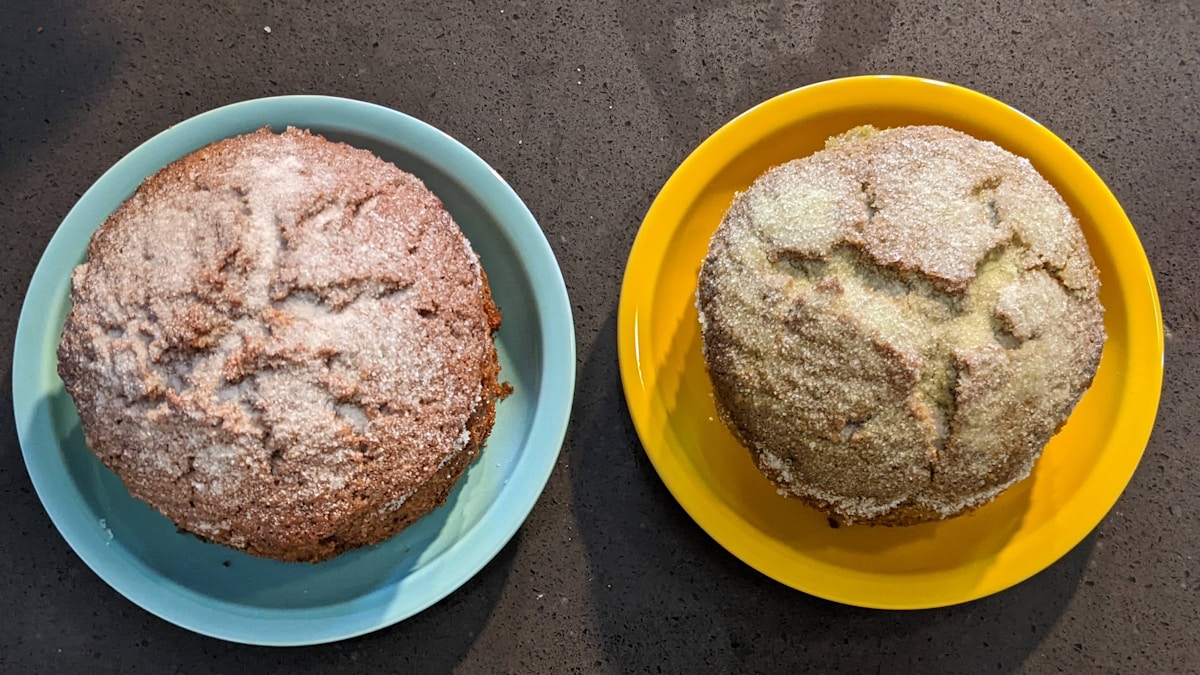
I see you. You’ve followed the recipe perfectly. You have two beautiful, golden-brown cake rounds cooling on your counter, and a bowl of fluffy, sweet frosting ready to go. This is it. This is the moment you become a Cake Person. You place the first layer down, slather on some frosting, and gently lower the second layer on top. And then… it happens. The slide. The slow, heartbreaking tilt. The frosting starts to squish out the sides, tearing the cake as it goes. It’s a wobbly, crumb-filled mess, and suddenly, making a layer cake feels less like a fun project and more like a cruel physics experiment.
Take a deep breath. I promise, it’s not you—it’s the science. And the good news is, we can make the science work for us. Everyone who has ever made a beautiful layer cake has also made a lopsided, crumbly disaster at some point. (Yes, really.) Let’s walk through the common culprits and build your confidence, one stable layer at a time.
The Foundation Starts with Your Bake
Before you even think about frosting, the success of your cake starts in the mixing bowl and the oven. A structurally sound cake layer is your best friend. A weak, crumbly one is just waiting for an opportunity to fall apart.
- Choose a Sturdy Recipe: Not all cake recipes are built for stacking. Some are too light and airy. When you’re starting out, look for recipes specifically described as good for layer cakes. A fantastic, reliable resource for beginners is Sally’s Baking Addiction. Her cake recipes are well-tested and tend to have a moist, sturdy crumb that can handle being stacked. A classic vanilla or chocolate butter cake is a great place to start.
- Prep Your Pans Properly: The last thing you want is for a chunk of your cake to remain stuck to the bottom of the pan when you flip it out. This creates a weak spot that can easily tear during assembly. To guarantee a clean release, trace the bottom of your pan on parchment paper, cut out the circle, and place it in the bottom of your greased and floured pan. This little paper life-raft is a non-negotiable for me.
- Measure Correctly: Baking is a science of ratios. The most common mistake is scooping flour directly from the bag with your measuring cup. This compacts the flour, and you can end up using 25% more than the recipe calls for, resulting in a dry, dense cake. Instead, use a spoon to fluff up the flour in its container, then spoon it into your measuring cup and level off the top with a straight edge. It feels fussy, but it makes a world of difference.
The Most Important (and Most Skipped) Step
If you remember only one thing from this entire article, let it be this: Your cake layers must be 100% completely, absolutely, totally cool before a single speck of frosting touches them.
I cannot overstate this. Not lukewarm. Not slightly warm in the center. Cool. As in, room temperature all the way through. Frosting is made primarily of fat (usually butter), and what does fat do when it gets warm? It melts. Trying to frost a warm cake is like trying to build a snowman during a heatwave. The frosting will liquefy, soak into the cake, and act like a slippery lubricant between your layers instead of a sturdy mortar. Disaster is inevitable.
Here’s my foolproof cooling process:
- Let the cakes cool in their pans on a wire rack for about 15 minutes.
- Carefully run a thin knife around the edge and invert them onto the wire rack to cool completely. This can take 1-2 hours. Be patient!
- The Pro Tip: Once the layers are at room temperature, wrap them tightly in plastic wrap and place them in the refrigerator for at least 30 minutes or even the freezer for 15. A chilled cake is a firm cake. It’s less crumbly, far easier to handle, and the cold surface will help your frosting set up instantly. This one step will change your cake-decorating life.
Understanding Frosting Physics
A wobbly cake isn’t always the cake’s fault; sometimes the frosting is the culprit. If your frosting is too soft and thin, it will never be able to support the weight of another cake layer. You need frosting with some backbone.
For an American buttercream (the most common beginner frosting, made with butter, powdered sugar, and a liquid), consistency is key. When you dip a spoon in, the frosting should hold its shape. If it immediately slumps and runs off the spoon, it’s too thin. To fix it, simply add more powdered sugar, a couple of tablespoons at a time, until it thickens up. If it becomes too stiff, add milk or cream, just one teaspoon at a time, until it’s spreadable but still firm.
Think of the frosting between your layers as the mortar holding bricks together. It needs to be thick and stable. The frosting for the outside of the cake can be slightly softer, but the filling needs to be strong.
The Magic of the Crumb Coat
Have you ever tried to frost a cake and ended up with a million little crumbs ruining your smooth, white finish? It’s frustrating! The solution is a simple, elegant professional technique called the “crumb coat.”
A crumb coat is a very thin, sacrificial layer of frosting that you spread all over the entire cake. Its only job is to trap all the loose crumbs. It’s going to look messy, and that’s okay! Don’t worry about making it pretty. Just cover the top and sides with a thin, even layer.
Then—and this is crucial—you put the entire crumb-coated cake back into the refrigerator for at least 20-30 minutes. This hardens that thin layer of frosting, effectively locking all the crumbs in place. When you pull it out, you have a smooth, stable, crumb-free canvas to apply your beautiful final coat of frosting. No more speckles. No more frustration. It is, without a doubt, the single biggest secret to a clean-looking cake.
Permission to Be Perfectly Imperfect
Let’s be honest. Your first layer cake probably won’t look like it belongs in a bakery window. It might have a slight lean. The frosting might not be perfectly smooth. And that is 100% okay. The goal of your first cake is not perfection; it’s deliciousness and learning.
Every single cake you make is practice. You’ll get a better feel for frosting consistency. You’ll learn how much pressure to apply with your spatula. You’ll discover that a spinning cake stand makes life infinitely easier. Focus on the taste and the texture. Did you create a moist, flavorful cake that people enjoy eating? Then you have succeeded, wildly.
Don’t let Pinterest pressure ruin the joy of creating something with your own hands. A homemade cake, even a slightly lopsided one, is an act of love. Slice it up, share it, and be proud of what you made.
Try This Tonight: Don’t start with a four-layer epic. Bake a simple, two-layer 8-inch round cake. Your only goal for the night is to successfully assemble it with a crumb coat. Bake the layers, let them cool completely, level them, and apply that messy first layer of frosting. Then stick it in the fridge and call it a win. You’ve just mastered the hardest part. The pretty stuff can wait for tomorrow.


