Have you ever been there? You’ve followed the recipe to a T. The chicken is perfectly breaded, the potatoes are cut into beautiful batons, the doughnuts are proofed and ready. You gently lower your masterpiece into a shimmering pot of hot oil, expecting a sizzle and a glorious golden-brown transformation. Instead, you get… well, a sad, oily sponge. Or worse, a burnt-on-the-outside, raw-on-the-inside tragedy.
If this sounds familiar, please know you are not alone. This is one of the most common kitchen frustrations, and it has absolutely nothing to do with you being a “bad cook.” It’s because deep frying is surrounded by a few pesky myths, and the biggest one is that it’s a passive, “set it and forget it” activity. The truth is, that pot of hot oil needs your attention. It’s an active sport! But the good news is that once you understand what the oil is trying to do, you can work with it to get that shatteringly crispy, perfectly cooked result every single time. Let’s unravel the mystery together.
The Myth of the “Drop and Walk Away” Fryer
In professional kitchens, the deep fryer station isn’t where the chefs go to take a break. It’s actually one of the most demanding spots on the line, requiring constant attention. The pros know something that we home cooks often learn the hard way: frying is a dance, not a dump.
The biggest mistake we make is treating our pot of oil like a slow cooker. We carefully place the food in, and then we walk away to prep a dipping sauce or set the table, assuming the oil will handle the rest. But for the first minute, that’s when the most important magic—or mayhem—is happening. When cold, wet food hits hot oil, the batter’s starches immediately start to gelatinize, making them sticky. If two chicken tenders are touching at that exact moment, they will fuse together into a single, awkward “nugget cube.”
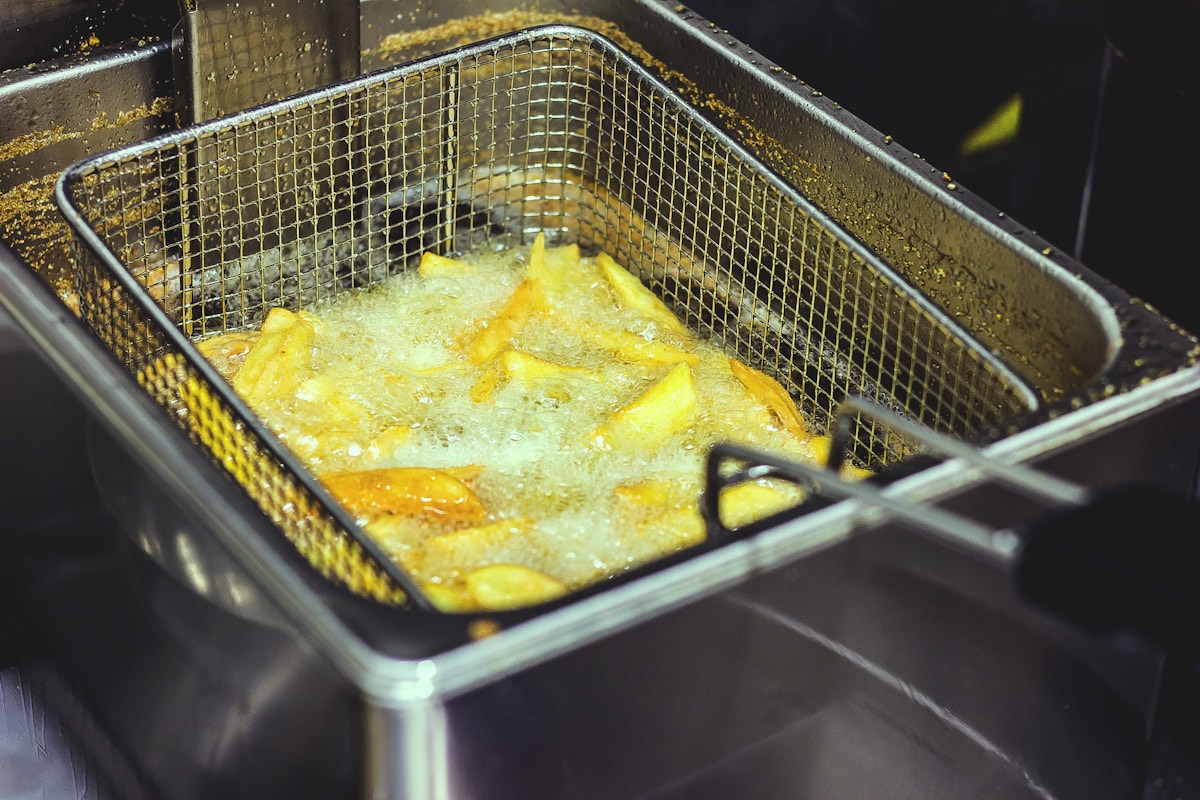
This is why chefs are constantly shaking the fryer basket. They aren’t just being fidgety; they are actively preventing everything from clumping together. At home, this means you need to stay by the stove for the first 60 seconds of frying, gently nudging your food around with a spider strainer or tongs to ensure each piece gets its own personal space to crisp up. Think of yourself as a friendly lifeguard, making sure everyone is swimming happily and not clinging to each other. (Yes, really.)
Temperature Is Everything (No, Really)
If you take only one thing away from this guide, let it be this: you cannot guess your oil temperature. It is the single most important factor between gloriously crispy and tragically greasy.
Here’s the simple science behind it. When food hits oil at the right temperature—usually between 350°F and 375°F (175-190°C)—the moisture on the food’s surface instantly turns to steam. This steam pushes outwards, creating a pressure barrier that prevents the oil from soaking into the food. The result? The exterior cooks and crisps up, while the interior gently steams itself to perfection. It’s beautiful!
But if the oil is too cool (below 325°F / 163°C), that steam reaction is slow and weak. There’s no pressure barrier, so the oil seeps right into the batter and the food itself. This is what gives you a heavy, greasy, and soggy result. Conversely, if the oil is scorching hot (above 400°F / 205°C), the outside will burn to a crisp long before the inside has a chance to cook through. This is how you get blackened-but-raw chicken.
Your secret weapon here is an inexpensive digital thermometer or a classic clip-on candy/deep-fry thermometer. Brands like Taylor or OXO make reliable ones. You’ll also want to use a heavy-bottomed pot, like a cast-iron Dutch oven from Lodge, which holds its heat incredibly well. Heat your oil over medium heat and watch the thermometer. Once it hits your target temp, you’re ready to fry.
Remember to also manage the “recovery time.” Every time you add cold food, the oil’s temperature will drop significantly. That’s why you must fry in small batches! Crowding the pot is a surefire way to lower the temperature and end up with soggy food. Let the oil come back up to temperature between each batch. Your patience will be rewarded with crunch.
Three Simple Rules for Crispy Perfection
Okay, let’s put it all together. Mastering deep frying at home really just comes down to three key habits. Get these right, and you’re golden (and crispy).
-
Use the Dry-Wet-Dry Breading Method: For anything you’re breading, make sure your item is patted completely dry with a paper towel first. Then, set up three stations: a shallow dish of seasoned flour (dry), a dish of beaten egg or buttermilk (wet), and a final dish of your coating, like panko breadcrumbs or more seasoned flour (dry). This three-step process creates a durable crust that adheres to the food and provides an incredible crunch.
-
Don’t Crowd the Pan: I know I said it before, but it bears repeating. Frying three perfect chicken wings is infinitely better than frying eight soggy ones. Give each piece of food at least an inch of personal space in the hot oil. This keeps the temperature stable and allows every surface to make direct contact with the heat, ensuring an even, crispy coating.
-
Drain on a Wire Rack, Never Paper Towels: This is the kitchen hack that will change your life. When you pull fried food from the oil and place it on a paper towel, the bottom of the food is trapped against a flat, wet surface. Steam gets caught, and that beautiful crust you just worked so hard for turns soggy in seconds. Instead, place a metal wire cooling rack over a baking sheet. When you put your fried food on the rack, air can circulate all around it, whisking away steam and keeping it perfectly crisp. (Your future self will thank you for this one.)
Try This Tonight: The Crispiest Chicken Tenders You’ve Ever Made
Ready to put your new skills to the test? This simple recipe is the perfect way to practice everything we’ve talked about. No more soggy tenders!
You’ll Need:
- 1 lb (about 450g) chicken tenders
- 1 cup all-purpose flour
- 1 tsp salt
- 1/2 tsp black pepper
- 1/2 tsp garlic powder
- 1 cup buttermilk
- 1.5 cups panko breadcrumbs
- 4 cups neutral oil (like canola, vegetable, or peanut oil)
Your Steps to Success:
-
Prep Your Station: Pat the chicken tenders completely dry with paper towels. In a shallow dish, whisk together the flour, salt, pepper, and garlic powder. Pour the buttermilk into a second dish and the panko into a third.
-
Bread the Chicken: Working one at a time, dredge a chicken tender first in the seasoned flour (shaking off any excess), then dip it completely in the buttermilk, and finally, press it firmly into the panko, making sure it’s fully coated.
-
Heat Your Oil: Pour the oil into a heavy-bottomed Dutch oven or pot. You want it to be about 2-3 inches deep. Heat over medium until a thermometer reads 350°F (175°C). Set up your wire rack over a baking sheet nearby.
-
Fry in Batches: Gently lower 3-4 tenders into the hot oil, making sure not to crowd them. For the first 30 seconds, use tongs to gently move them around to prevent sticking. (This is your fryer shake!)
-
Cook to Golden: Fry for about 3-4 minutes per side, until they are a deep golden brown and the internal temperature reaches 165°F (74°C).
-
Drain and Season: Remove the cooked tenders with your tongs or a spider strainer and place them immediately on the wire rack to drain. While they are still hot, sprinkle them with a tiny pinch of salt.
Take a bite. Hear that crunch? That’s not magic; that’s you, understanding the why behind the how. You just took control of the hot oil and made something amazing. Welcome to the world of crispy, golden-brown success.


 Lucas
Lucas
