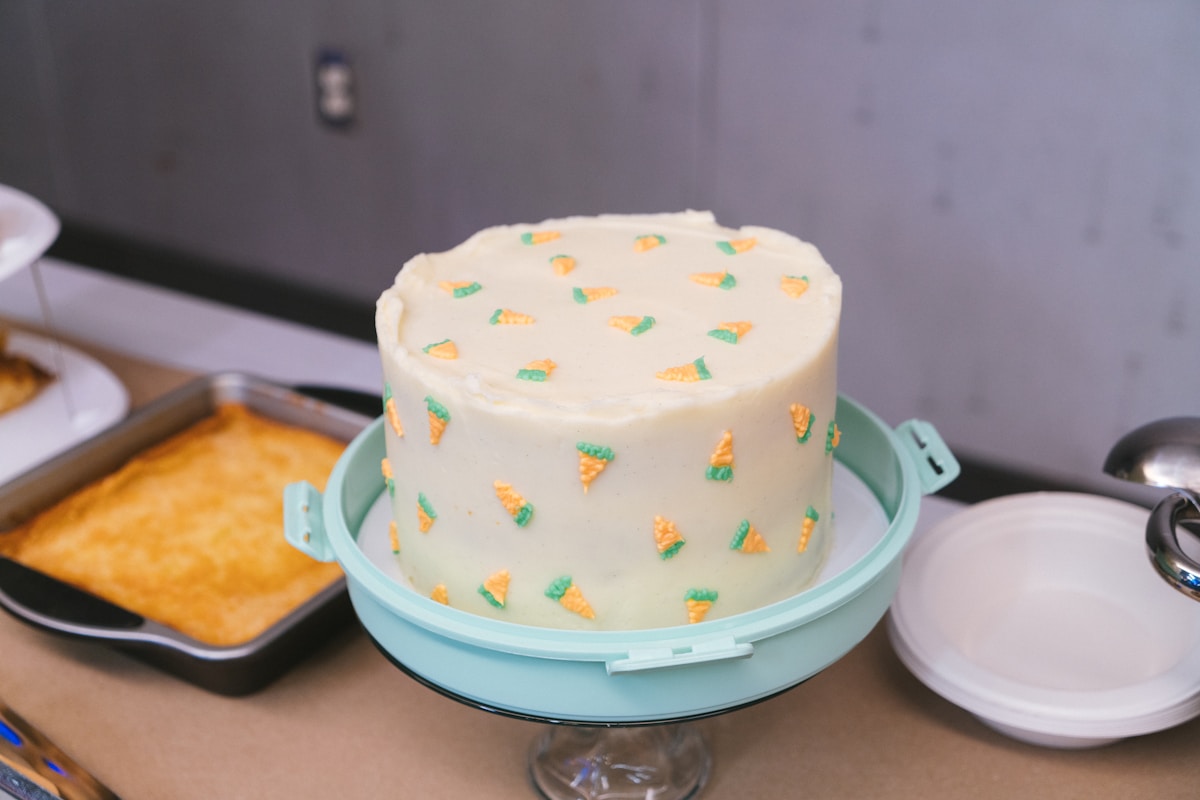
You pull your beautiful carrot cake layers out of the oven, let them cool, and whip up a batch of cream cheese frosting with high hopes. But when you start spreading, the frosting slides off like a sad, sweet puddle. You are not alone — this has happened to countless bakers, myself included. The good news? Runny cream cheese frosting is almost always preventable, and even fixable once it happens.
Let’s walk through why it happens, how to avoid it, and what to do if you are staring at a soupy mess right now.
The Common Problem: A Too-Soft Start
The number one culprit behind runny cream cheese frosting is cream cheese that is too warm. When cream cheese softens past about 70°F (21°C), its structure begins to break down, releasing water and fat. That extra moisture thins your frosting before you even add sugar.
Many recipes say to take your cream cheese out to soften for 30 minutes. But if your kitchen is warm or you leave it out too long, you are setting yourself up for trouble. The ideal temperature for cream cheese before mixing is around 65°F to 68°F (18°C to 20°C). It should be cool to the touch but not cold — think of it like a stick of butter that gives slightly when pressed. If it feels squishy or leaves a greasy film, it is too warm.
Also, always use full-fat block cream cheese, not the spreadable kind from a tub. Brands like Philadelphia (the classic) or name-store equivalents have the proper fat and stabilizer content. Spreadable cream cheese contains added water and gums, which make the frosting even more prone to running.
The Science Behind Runny Frosting
Cream cheese naturally contains a lot of water — about 50 to 55 percent by weight. Butter, on the other hand, is mostly fat and has very little water. When you mix the two, the butter helps trap the water from the cream cheese into a stable emulsion. But if the ratio of cream cheese to butter is off, or if you overmix, that emulsion breaks.
Overmixing is a sneaky mistake. You might think “a little more beating will thicken it up,” but the opposite happens. The friction from the mixer warms the ingredients further, melting the butter and breaking the emulsion. Air bubbles also get incorporated, which can make the frosting look fluffy but then collapse, leaving you with a watery, separated mess.
The same principle applies to adding too much liquid — extra milk, cream, or even vanilla extract. Vanilla is often water-based unless it is a pure extract in alcohol, and even that can affect the balance. Stick to vanilla bean paste or a small amount of extract.
The Perfect Ratio and Temperature
For a stable, pipeable cream cheese frosting, the classic ratio is 2 parts cream cheese to 1 part butter by weight. That means 8 ounces (226g) of cream cheese to 4 ounces (113g) of butter. For a standard batch, that yields enough to frost a 9-inch layer cake or a dozen cupcakes with some left for extra swirls.
From there, you add powdered sugar to stiffen. A good starting point is 3 to 4 cups (340 to 450g) of sifted powdered sugar. Sifting is crucial because clumps of sugar will not dissolve properly and can trap air, leading to a grainy texture.
Temperature control matters here too. Your butter should be at the same cool room temperature — not melted, not too soft. And always start by beating the butter alone for a minute until smooth, then add the cream cheese and beat just until combined. Then slowly add the sugar on low speed.
Mixing Technique Matters
Here is a simple, foolproof method:
-
Let your cream cheese and butter sit at room temperature for no more than 15 to 20 minutes. If your kitchen is hot (above 75°F / 24°C), skip the sitting and use them straight from the fridge, but cut them into small cubes so they blend without overworking.
-
In a stand mixer with the paddle attachment, beat the butter alone on medium speed for 30 seconds until creamy. Do not go longer.
-
Add the cream cheese and beat on medium-low for just 30 to 45 seconds until smooth. Scrape the bowl.
-
With the mixer off, add the sifted powdered sugar. Turn to low and mix until the sugar is mostly incorporated — about 30 seconds. Then increase to medium for another 15 seconds. Stop immediately. Overmixing even a little will thin it out.
-
Add any flavorings (like 1 teaspoon vanilla) by hand, folding gently with a spatula.
How to Rescue Runny Frosting
If your frosting is already a runny disaster, do not toss it. You have options:
-
Chill it: Place the bowl in the refrigerator for 10 to 15 minutes. This firms up the butter and helps the emulsion set. Stir it gently after chilling and test the consistency. It often thickens enough to use.
-
Add more powdered sugar: Stir in another 1/2 cup (60g) of sifted powdered sugar by hand. This absorbs excess moisture. You might need up to a full cup, but add gradually to avoid making it too sweet.
-
Use a stabilizer: A tablespoon of cornstarch or meringue powder can help bind water and thicken frosting. Mix it with a tablespoon of the powdered sugar before adding to prevent clumps. This trick is a lifesaver for warm weather baking. (Some commenters on Reddit swear by it for summer cakes.)
-
Start over with a new batch: If nothing works, use the runny frosting as a glaze for pancakes or a dip for fruit. It is salvageable even if not for piping.
One final pro tip: If you are frosting a cake, refrigerate the unfrosted cake layers for 30 minutes before applying the cream cheese frosting. The cold cake helps the first layer of frosting firm up quickly, preventing sliding or pooling.
Try This Foolproof Recipe Tonight
To put all this into practice, here is a simple frosting recipe that will not let you down:
Perfect Cream Cheese Frosting
- 8 ounces (226g) full-fat block cream cheese, cool (not too soft)
- 4 ounces (113g) unsalted butter, cool room temperature
- 3 1/2 cups (400g) powdered sugar, sifted
- 1 teaspoon vanilla extract (or vanilla bean paste)
- Pinch of salt
Instructions:
- In a stand mixer fitted with the paddle, beat the butter on medium until smooth, about 30 seconds.
- Add the cream cheese and beat on medium-low for 30 seconds. Scrape down.
- With mixer off, add sifted powdered sugar. Mix on low until combined, then medium for 10 seconds.
- Stir in vanilla and salt by hand. Use immediately, or refrigerate for 10 minutes to firm up.
This frosting holds its shape on cupcakes and layers beautifully. It pipes well for rosettes or borders, and it tastes balanced — tangy, sweet, and creamy. No more puddles.
Remember, everyone starts somewhere. Your first runny frosting is just a step toward mastering one of the simplest yet trickiest frostings in baking. Next time, you will know exactly what to do. And if you are making that carrot cake again, this frosting is the perfect partner. Enjoy the process and the delicious results.
(Your future self will thank you for cooling the cake layers first — I promise.)