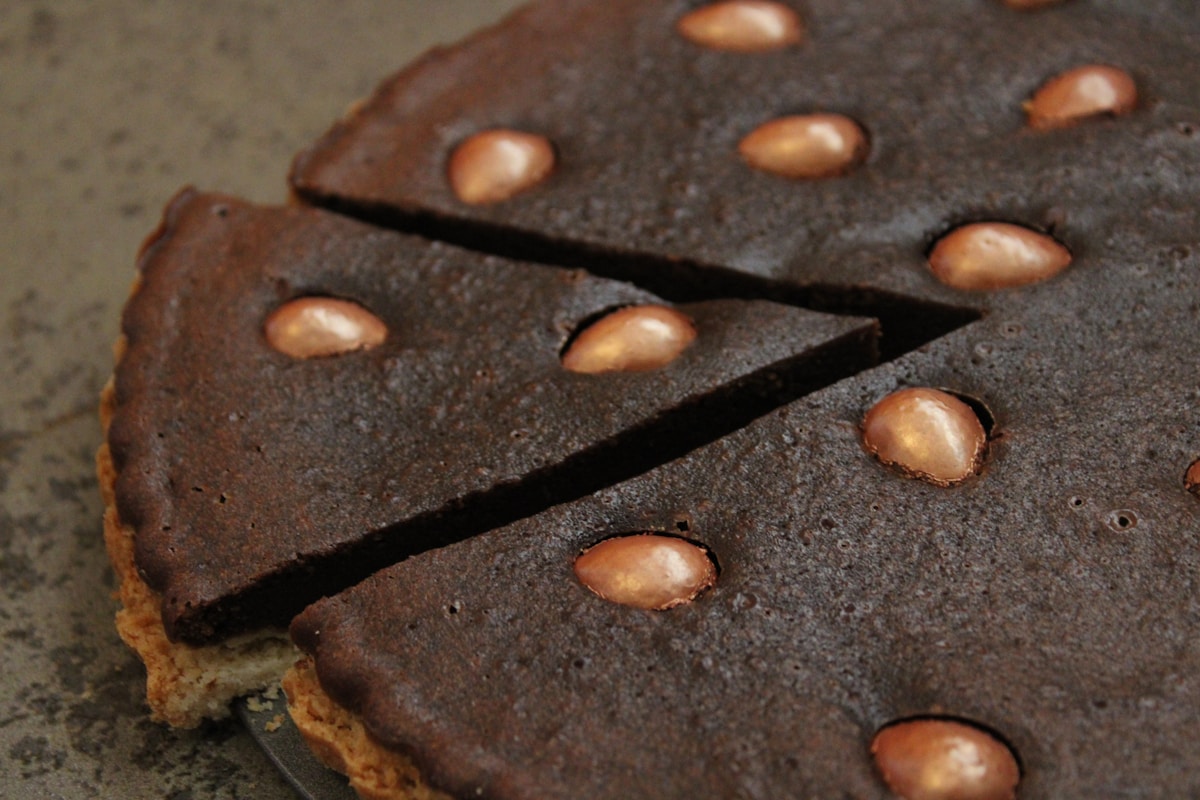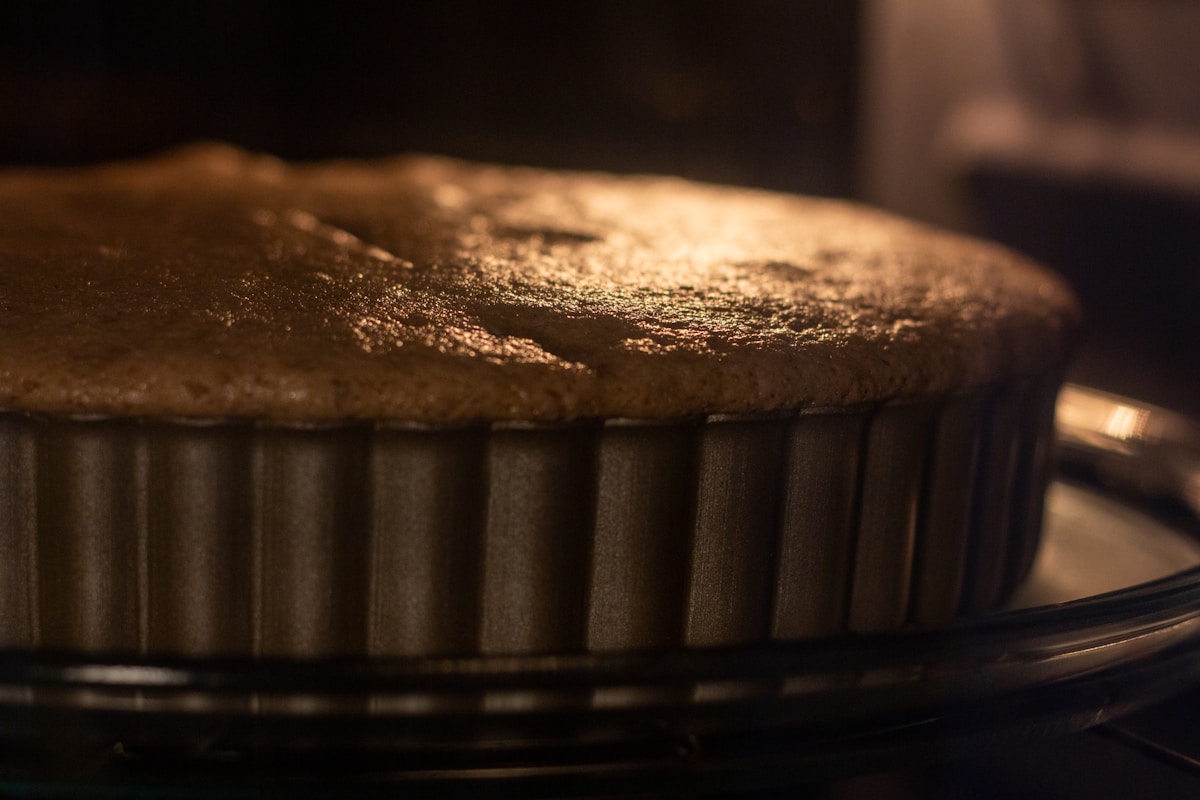
It’s a moment every home baker dreads. You’ve followed the recipe to the letter. You’ve measured with care, preheated the oven, and watched patiently as your cake rose into a golden-domed masterpiece. It cools on the rack, looking picture-perfect. But then you take the first slice, and your heart sinks. The texture is all wrong. Instead of a light, tender, and airy crumb, you’re met with a dense, gummy, and almost rubbery consistency. It’s a deflating experience, turning a potential triumph into a culinary puzzle.
I see this question pop up all the time, from beginner forums to discussions among seasoned bakers. Someone recently shared a story about their first layer cake; it looked stunning, but the texture was a complete letdown. They suspected underbaking or a problem with the eggs. They were on the right track. The texture of a cake isn’t magic; it’s chemistry. And when the chemistry is off, the results are often disappointing. The good news is that this is one of the most common—and fixable—problems in baking. The culprit almost always boils down to one of a few key scientific principles you might be overlooking. Let’s get our lab coats on and diagnose the issue, so you can achieve that perfect, fluffy crumb every single time.
The Primary Culprit Gluten Gone Wild
When we talk about cake texture, we have to talk about gluten. You’ve heard the term used for bread, where we want lots of it for a chewy, robust structure. In the world of cakes, however, gluten is a frenemy we need to manage with extreme precision. Gluten is a protein network that forms when two proteins in wheat flour—glutenin and gliadin—come into contact with water and are agitated (i.e., mixed).
Think of it like this: when you mix flour and a liquid, you’re creating microscopic strands of protein. The more you mix, the more these strands link up, cross over, and organize themselves into a strong, elastic web. For a crusty loaf of sourdough, this web is fantastic. It traps the gases produced by yeast, allowing the bread to rise high and develop that satisfying chew. For a tender vanilla layer cake, that same web is a disaster. An overdeveloped gluten network is what creates a tough, rubbery, and dense texture.
This is why most cake recipes give the very specific instruction to “mix until just combined” after adding the dry ingredients. This isn’t a casual suggestion; it’s a chemical directive. The moment the flour hits the wet ingredients, the gluten-forming clock starts ticking. Your goal is to mix just enough to hydrate the flour and ensure there are no dry pockets, and not a second more.
What does “just combined” look like? It means you should stop your mixer (I love my KitchenAid stand mixer for its control, but a hand mixer works just as well) when you can still see the last few faint streaks of flour in the batter. A final, gentle fold or two with a spatula is all you need to finish the job. If you continue to mix until the batter is perfectly smooth and homogenous, you have almost certainly gone too far. You’ve been building up that gluten network, and your cake will pay the price with a dense, gummy crumb.
To see this in action, try a little experiment. Next time you make a simple butter cake, take a tiny bit of the finished batter and keep mixing it by hand for another minute. You will literally feel it getting tougher and more elastic in the bowl. That’s the gluten developing right before your eyes.
The Emulsification Equation Temperature is Everything
If gluten management is the first pillar of cake texture, proper emulsification is the second. A cake batter is a classic emulsion: a mixture of fat (butter, oil) and water-based ingredients (eggs, milk) that don’t naturally want to stay together. The key to making them cooperate is using ingredients at the correct temperature. This is why recipes insist on “room temperature” butter and eggs.
What does “room temperature” actually mean in a baking context? It’s not a vague concept. We’re aiming for a specific range: 68°F to 72°F (20°C to 22°C). At this temperature, butter is soft and pliable enough to incorporate vast amounts of air when creamed with sugar. These tiny air pockets are the foundation of a light, fluffy cake. The fat molecules in the softened butter surround these air bubbles, creating a stable foam. When you add the eggs, which act as an emulsifier, they help to permanently bond the fat and liquid together into a smooth, homogenous batter.
But what happens if your ingredients are too cold? If your butter is cold, it can’t hold air effectively. It will break into small, hard clumps instead of creaming into a fluffy mixture. When you add cold eggs to the creamed butter and sugar, the fat in the butter will seize up and harden instantly. The emulsion will break. You’ll see it right in the bowl—the batter will look curdled, watery, or greasy. This broken batter can’t hold the air you worked so hard to incorporate, and it won’t rise properly in the oven. The result is a heavy, oily, and dense cake.
So, how do you ensure your ingredients are perfect? For butter, leave it on the counter for 1-2 hours before baking. You should be able to press an indent into it easily with your finger, but it shouldn’t be greasy or melted. Forgot to take it out? Here’s a quick hack: cut the cold butter into small cubes. It will soften much faster, usually in about 20-30 minutes. Don’t microwave it unless you use very short 5-second bursts, as melted butter is just as bad as cold butter.
For eggs, the fix is even simpler. Place your cold eggs in a bowl of warm (not hot) tap water for 5-10 minutes. That’s all it takes to bring them up to the perfect temperature. (Your future self will thank you.)
The Underbaking Trap Is It Raw or Just Gummy?
Let’s say you’ve managed your gluten and your emulsification perfectly, but your cake still comes out with a dense, damp, and gummy layer, often at the bottom. In this case, the problem might not be with your mixing, but with your baking. An underbaked cake is a gummy cake.
When a cake bakes, the starches in the flour need to gelatinize and the proteins in the eggs need to coagulate. This process is what sets the structure of the cake crumb. If you pull the cake from the oven too early, this structure hasn’t had time to fully form and set. The starches remain partially raw and the excess moisture has nowhere to go, resulting in that dreaded gummy texture. The center, which bakes last, will be particularly dense.
Many bakers rely solely on the toothpick test, but it’s not always foolproof. A toothpick can come out clean from a section that’s set, while a spot an inch away is still underdone. For a more reliable diagnosis, use a combination of methods:
- The Visual Test: The edges of the cake should be golden brown and pulling away slightly from the sides of the pan.
- The Spring-Back Test: Gently press your fingertip on the center of the cake. If it springs back immediately, it’s done. If it leaves an indent, it needs more time.
- The Temperature Test (The Gold Standard): This is the most accurate method. Use a digital instant-read thermometer to check the internal temperature of the cake’s center. For most butter and oil-based cakes, you’re looking for a temperature between 205°F and 210°F (96°C to 99°C). This guarantees the structure is perfectly set.
It’s also critical to know if your oven is lying to you. Most home ovens are inaccurate, sometimes by as much as 25-50°F. An inexpensive oven thermometer is one of the best investments you can make. Place it in the center of your oven and check it against the dial. If your oven is running cool, your cake won’t get the heat it needs to set properly in the time allotted by the recipe, leading directly to that gummy texture.
A Better Technique The Reverse Creaming Method
For bakers who consistently struggle with overmixing, there’s a nearly foolproof technique that minimizes the risk: the reverse creaming method. Popularized by bakers like Rose Levy Beranbaum, this method changes the order of operations to protect against gluten development.
In the standard creaming method, you cream soft butter and sugar together first, then add eggs, and finally alternate between dry and wet ingredients. This method is all about creating air pockets early on.
In the reverse creaming method, you do the opposite. You start by mixing all your dry ingredients—flour, sugar, salt, and leavening agents—in the mixer bowl. Then, you add the soft, room temperature butter and mix on low speed until the mixture resembles damp sand. The science here is brilliant: by coating the flour particles in fat before adding the liquid, you create a waterproof barrier around the flour. This barrier inhibits the flour’s ability to absorb water and form long gluten strands.
The result? An incredibly tender, fine-grained cake crumb that is much more forgiving of a little extra mixing. After the fat is incorporated, you simply add the liquid ingredients and mix until just combined.
Here’s a quick rundown of the reverse creaming steps for a basic butter cake:
- In your stand mixer bowl, whisk together flour, sugar, baking powder, and salt.
- Add the room temperature, cubed butter. Mix on low speed for 1-2 minutes until the mixture looks like coarse sand.
- In a separate bowl, whisk together the liquid ingredients (eggs, milk, vanilla).
- With the mixer on low, slowly stream in about half of the liquid. Increase the speed to medium and beat for 60 seconds to build structure.
- Reduce the speed to low again and add the remaining liquid. Mix for another 30 seconds, just until the batter is smooth. Scrape the bowl and you’re done.
Your Dense Cake Troubleshooting Checklist
Next time you bake a cake, run through this mental checklist before and during the process. It will help you pinpoint potential issues and build better habits.
- Did I measure my flour correctly? Scooping flour directly from the bag with your measuring cup can compact it, adding up to 25% extra flour. This throws off your wet-to-dry ratio and leads to a dry, dense cake. Instead, use the “spoon and level” method: fluff the flour, spoon it into your measuring cup, and level it off with a straight edge. For ultimate precision, use a kitchen scale. (1 cup of all-purpose flour from a brand like King Arthur Flour is standardized to 120 grams.)
- Were my ingredients at true room temperature? Check your butter and eggs. They should be around 68-72°F (20-22°C). Was your batter smooth and creamy, or did it look broken and curdled?
- Did I stop mixing as soon as the flour was incorporated? Be honest. Did you walk away from the mixer for a minute? Did you beat it until it was perfectly smooth? Remember: for cakes, less mixing (after the flour goes in) is more.
- Is my oven temperature accurate? Use an oven thermometer to verify. You can’t fix a problem you don’t know you have.
- How did I test for doneness? Did you rely only on a toothpick, or did you use the spring-back test and an internal temperature check as well? A few extra minutes in the oven can be the difference between a gummy mess and a perfect crumb.
Baking isn’t about following rules blindly; it’s about understanding the reactions you’re creating. Once you grasp the chemistry of gluten, emulsification, and heat transfer, you’re no longer just a recipe follower—you’re a true baker. You can troubleshoot problems, adapt recipes, and create delicious results with confidence. That dense, gummy cake will become a thing of the past, replaced by the light, tender, and celebratory slice you always imagined.