You pull your first flan out of the oven, excited to taste that silky caramel custard. Instead, you get a strange cheesy flavor and hardly any sweetness. You are not alone. Many home bakers have posted about this exact problem, wondering if they accidentally added cheese. The good news is that the fix is straightforward once you understand what went wrong.
Key Takeaways
- Overbaking egg proteins releases sulfur compounds that taste cheesy.
- Overmixing incorporates air, weakening the custard and causing curdling.
- Burnt caramel turns bitter; aim for a medium amber color.
- Always use a water bath, gentle mixing, and the jiggle test.
- A failed flan can be repurposed into bread pudding.
The Science: Why Overbaking Creates a Cheesy Flavor
Flan is a custard made from eggs, milk, and sugar. When heated, egg proteins coagulate and form a delicate network that traps liquid. The ideal temperature for this is around 180°F (82°C). If the custard goes above this temperature, the proteins tighten too much and squeeze out moisture. As they contract, they release sulfur compounds that have a distinct smell and taste.
This sulfurous note is often described by home bakers as “cheesy” or “eggy.” It is the same reason overcooked scrambled eggs can take on a similar flavor. Overmixing the custard adds extra air, which weakens the protein structure and makes curdling more likely. So the combination of too much air and too much heat is a recipe for that unwanted cheesy taste.
Common Culprits: Overmixing, Overbaking, and Bitter Caramel
Three main mistakes usually lead to a flan that tastes like cheese. Recognizing them will help you adjust your technique.
Overmixing. Vigorous whisking incorporates too much air into the custard. This creates a spongy or curdled texture and can amplify the egg flavor. You want to whisk just until the ingredients are combined, not until the mixture is frothy.
Overbaking. Baking your flan too long or at too high a temperature causes the custard to separate. The proteins tighten, moisture leaks out, and the sulfur compounds become noticeable. The flan may also develop cracks or a rubbery texture. A water bath is essential to prevent this.
Bitter caramel. The caramel sauce is meant to provide sweetness and depth. If you cook the sugar beyond medium amber, it becomes bitter. Burnt caramel can overpower the entire dessert and also make the flan taste less sweet. The caramel should be a deep amber, not dark brown.
Step-by-Step Fixes for Your Next Flan
Here are the precise adjustments you can make to ensure your next flan is silky, sweet, and free of any cheesy notes.
Use a water bath. Place your flan dish inside a larger baking pan. Pour hot water into the larger pan until it reaches halfway up the sides of the flan dish. This insulates the custard, allowing it to cook gently and evenly. Sudden temperature spikes are the main cause of overbaking.
Mix gently. In a bowl, whisk the eggs lightly to break them up. Add the condensed milk, evaporated milk, and vanilla. Whisk slowly and only until the mixture is smooth. Do not use an electric mixer. You want to minimize air bubbles. If you see foam on top, let it rest for a few minutes and skim it off.
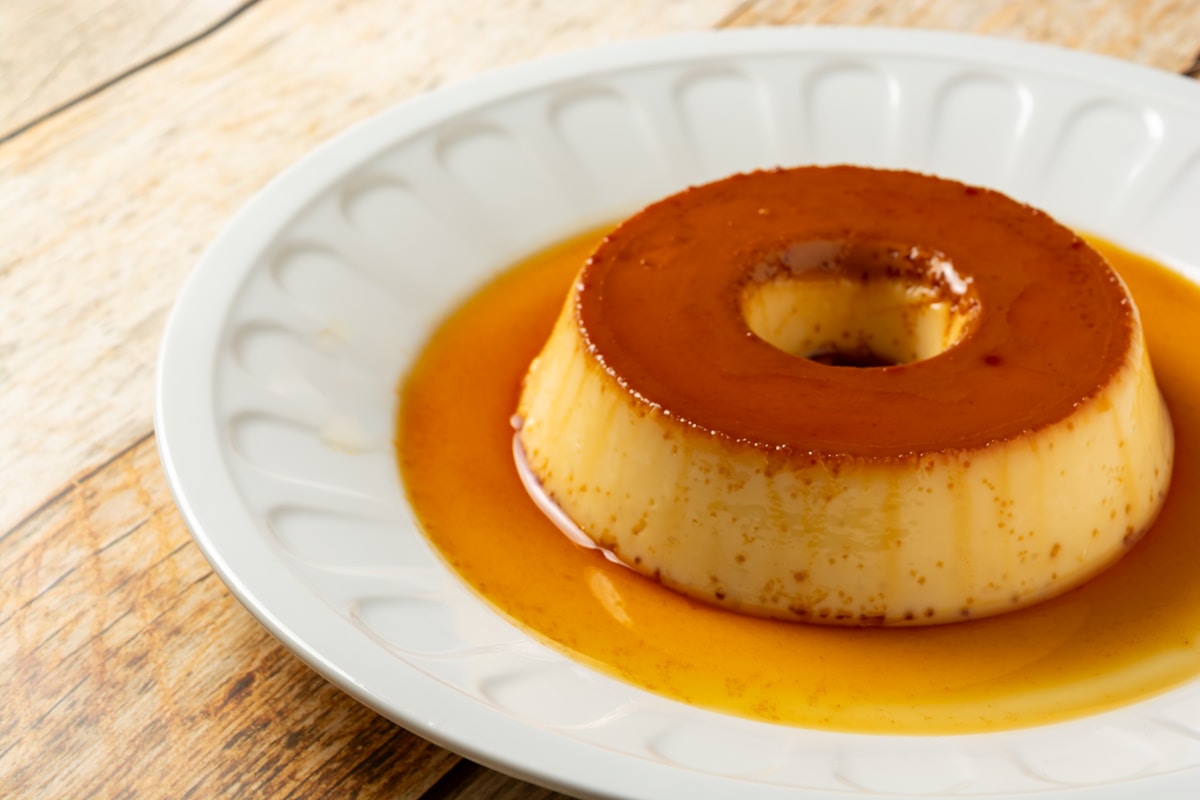
Make perfect caramel. In a saucepan, combine sugar and a little water (about 1/4 cup per cup of sugar). Cook over medium heat without stirring. Swirl the pan occasionally. Watch closely as the syrup changes from clear to golden to amber. When it reaches a medium amber color (approximately 340°F / 170°C, or when it starts to smell toasty), remove it from the heat immediately. Pour it into your flan dish and tilt to coat the bottom. It will continue to darken slightly from residual heat, so err on the lighter side.
Check doneness with the jiggle test. Bake the flan in its water bath at 325°F (163°C). Start checking around 40 minutes for small ramekins, or 55 minutes for a larger dish. Gently shake the pan. The flan is done when the center still wobbles like loose jelly. A knife inserted near the edge (about 1 inch in) should come out clean. The residual heat will finish setting the center as it cools. Do not wait until the center is completely firm – that means it is overbaked.
Adjust sweetness if needed. Standard flan recipes use sweetened condensed milk, but if you find the result not sweet enough, you can add an extra 2 to 3 tablespoons of granulated sugar to the custard mixture, or increase the condensed milk by 1/4 cup. Remember that the caramel also contributes sweetness, so keep that in mind if you are reducing sugar elsewhere.
Saving a Failed Flan: Repurpose into Bread Pudding
If you already have a flan that tastes cheesy and not sweet enough, do not throw it away. You can turn it into a delicious bread pudding.
Crumble the failed flan (even if it is curdled or rubbery) into a baking dish. Add stale bread cubes – about 4 cups of cubed bread for a standard 9x13 pan. In a separate bowl, whisk together 1 cup of milk, 2 eggs, and 1 teaspoon of vanilla. Pour this mixture over the bread and flan crumbs. Let it sit for 10 minutes so the bread absorbs the liquid. Bake at 350°F (175°C) for 25 to 30 minutes, until the top is golden and the center is set. You can use the caramel from the flan as a topping, or stir it into the milk mixture for added sweetness.
The bread pudding masks the off-flavors and turns your mistake into a comforting dessert. It is a forgiving way to practice your custard technique without waste.
Frequently Asked Questions
Why does my flan smell like eggs? Overcooking causes the egg proteins to release sulfur compounds, creating a sulfury odor that is often mistaken for cheese. This is the same reaction that makes hard-boiled eggs smell strong when overcooked. To avoid it, use a water bath and pull the flan while the center still jiggles.
Can I add cream cheese to mask the cheesy taste? No. Cream cheese flan is a different recipe that intentionally includes cream cheese for a cheesecake-like flavor. Adding cream cheese to a flan that already tastes cheesy will not fix the problem – it will only change the dessert into something else. Focus on technique adjustments instead.
How can I tell if I’ve overbaked my flan? Look for surface cracks, puffed edges, or a rubbery texture that does not jiggle at all. If the flan pulls away from the sides of the dish or weeps liquid, it is definitely overbaked. Next time, bake until the center is just set – it should still quiver when shaken.
With these tips, you can confidently make a silky, sweet flan that tastes exactly how it should. Remember: gentle mixing, a water bath, and a medium amber caramel are your keys to success.