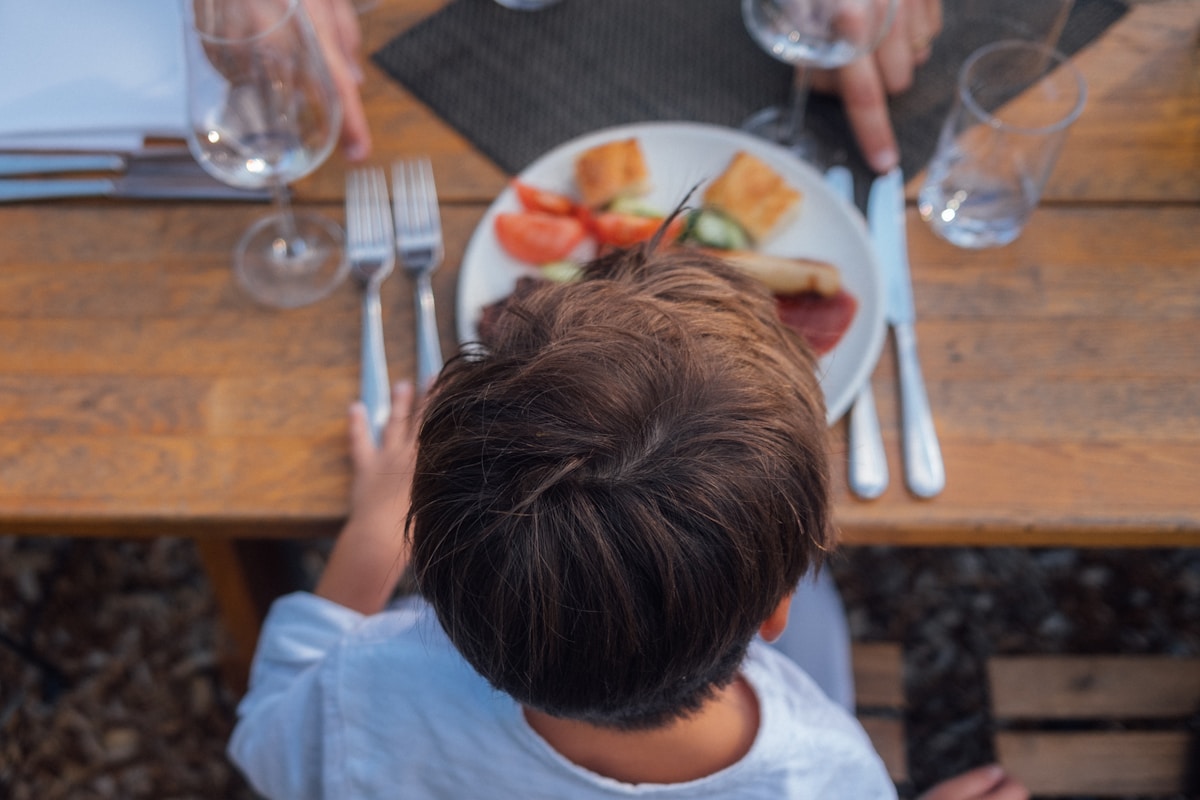
Oh, my dear, let me paint you a picture. You’ve spent the afternoon in your happy place—the kitchen. A delicious roast is sending heavenly smells through the house, the potatoes are perfectly golden, and you’ve even managed to get your little ones to help set the table. Your family rules are simple but clear: we sit at the table, we use our forks, and we don’t throw our green beans. It’s a system, and most days, it works.
Then, the doorbell rings. In come your beloved relatives and their equally beloved, but decidedly more… spirited, toddlers. Before you can even offer a drink, a sippy cup has been launched, one child is already demanding chicken nuggets (which are not on the menu), and another is climbing onto the center of the dining table. You look at your own children, their eyes wide, and feel a familiar knot of stress tighten in your stomach. Your peaceful family meal is about to become a battleground.
If this scene feels even a little familiar, take a deep breath and pull up a chair. You are not alone. Navigating different parenting styles, especially around the dinner table, is one of the trickiest parts of family get-togethers. But I promise you, it is possible to keep both your sanity and your family relationships intact. It just takes a little planning, a lot of grace, and a shift in perspective.
It’s Not About the Food It’s About Family Culture
First things first: let’s acknowledge why this is so hard. When another child behaves in a way you don’t allow in your own home, it can feel like a personal critique of your own rules. It’s easy to think, “If my child can sit still, why can’t theirs?”
But mealtime expectations are deeply ingrained. Every family has its own unique “food culture.” For some, dinner is a structured event, a time for quiet conversation and polite bites. For others, it’s a chaotic, joyful free-for-all where grazing is encouraged and sitting still is optional. One isn’t inherently better than the other—they’re just different. The friction happens when these two cultures collide at one table.
Your sister-in-law isn’t letting her toddler run wild to spite you; she’s likely just operating under her own set of rules (or lack thereof) that work for her family on a daily basis. Understanding this is the first step to letting go of the resentment that can bubble up when a perfectly good sweet potato ends up on your wall. The goal for this one meal isn’t to convert anyone to your way of thinking. The goal is connection.
Your Pre-Meal Playbook for Peace
The best way to handle mealtime chaos is to get ahead of it. A little bit of prep work before the food even hits the table can make all the difference. Think of it as setting the stage for success, not for a showdown.
-
Embrace the Kids’ Table: I am a firm believer in the magic of the kids’ table. It’s not a punishment; it’s a VIP section! A small, low table in the corner of the room or even in an adjacent, visible area gives the little ones their own space. It lowers the pressure for them to perform “adult” table manners and contains the inevitable mess. Cover it with a disposable tablecloth or a roll of craft paper and put out some crayons. This instantly turns waiting for food into a fun activity. (Your dining room chairs will thank you.)
-
The Gentle Welcome Chat: You can set a gentle expectation without being confrontational. When your family arrives, find a quiet moment with the other parents and say something light and breezy. Try this: “I’m so excited for dinner! Just a heads-up, the kids have their own fun table over here. We’re keeping it super casual today, so no pressure at all. We’re just so happy you’re here!” This frames the separate table as a fun perk, not a banishment.
-
Mentally Lower the Bar: This might be the most important tip of all. For this one meal, your goal is not a perfectly mannered, quiet dinner. Your goal is to share food with people you love. Accept that it will be louder and messier than your typical Tuesday night dinner. Let go of the need to control everything. If you go in expecting a bit of chaos, you’ll be far less stressed when it happens.
The ‘Safe Plate’ Strategy A Host’s Best Friend
Picky eating is a major source of mealtime tension. Nothing is more frustrating than seeing a child refuse every single thing you’ve lovingly prepared. This is where the ‘Safe Plate’ comes to the rescue. This isn’t about being a short-order cook; it’s about being a gracious and strategic host.
A ‘Safe Plate’ is a small plate you prepare with two or three simple, generally kid-friendly items that you serve alongside the main meal. It ensures that even the fussiest eater has something they can eat without a fight, which diffuses tension for everyone.
My go-to Safe Plate includes:
- A warm dinner roll with butter. Carbs are almost always a winner.
- A few cubes of mild cheese, like cheddar or Colby Jack.
- A simple fruit or veggie, like apple slices, cucumber sticks, or a handful of berries.
You can place these items directly on each child’s plate or put them in a small bowl in the center of the kids’ table for everyone to share. When you serve the meal, you can say, “Everyone gets some yummy roast chicken, and there are also some rolls and cheese here for you!” You’re not singling anyone out; you’re simply providing options. This one small step can prevent a full-blown meltdown and show the other parents that you’re on their team.
Navigating Mid-Meal Mayhem Like a Pro
Even with the best-laid plans, things can still go sideways. A toddler’s mood can turn on a dime. Here’s how to handle common scenarios with grace.
-
The Food Flinger: A piece of chicken soars through the air. Your instinct is to gasp and correct. Instead, try a calm, neutral response. Turn to the parent and say, with a small smile, “Oh, it looks like Timmy is all done with his chicken! No problem at all.” This does two things: it avoids shaming the child and it gently hands the baton to their parent to handle the behavior as they see fit. You can then quietly remove the plate if the food-flinging continues.
-
The Wandering Diner: A toddler has been at the table for five minutes and is already trying to wander off. Is this a battle worth fighting? In this context, probably not. A two-year-old’s attention span is short. Instead of forcing them to sit, it may be better to say, “Are you all finished? Okay, you can go play quietly with the blocks in the living room while the grown-ups finish eating.” It’s far better to have a happy child playing nearby than a screaming child being forced to stay at the table.
-
Praise What You Want to See: Instead of focusing on the visiting toddler’s behavior, put your energy into positively reinforcing your own children. Say, “Wow, sweetie, I love how you’re using your fork to eat your potatoes,” or “Thank you for sitting so nicely at the table.” This reminds your kids of your own family rules without ever having to criticize your guests.
It Ends with Connection Not Perfection
When the last bite has been eaten and the mess is at its peak, remember your goal. It wasn’t to host a dinner party worthy of a magazine; it was to build memories between cousins, to strengthen family bonds, and to share a meal.
Get the kids involved in a simple, fun cleanup task. Give each one a wet wipe and make a game out of cleaning their own spot. Five minutes of shared, playful “work” can end the meal on a positive, cooperative note.
Later, when the house is quiet and you’re loading the dishwasher, try to focus on the good stuff: the sound of the kids laughing earlier, the hug you got from your niece, the simple joy of having a full house. These are the moments that matter. The spilled milk and flying green beans? They’re just part of the beautiful, messy story of a family growing together in the kitchen.