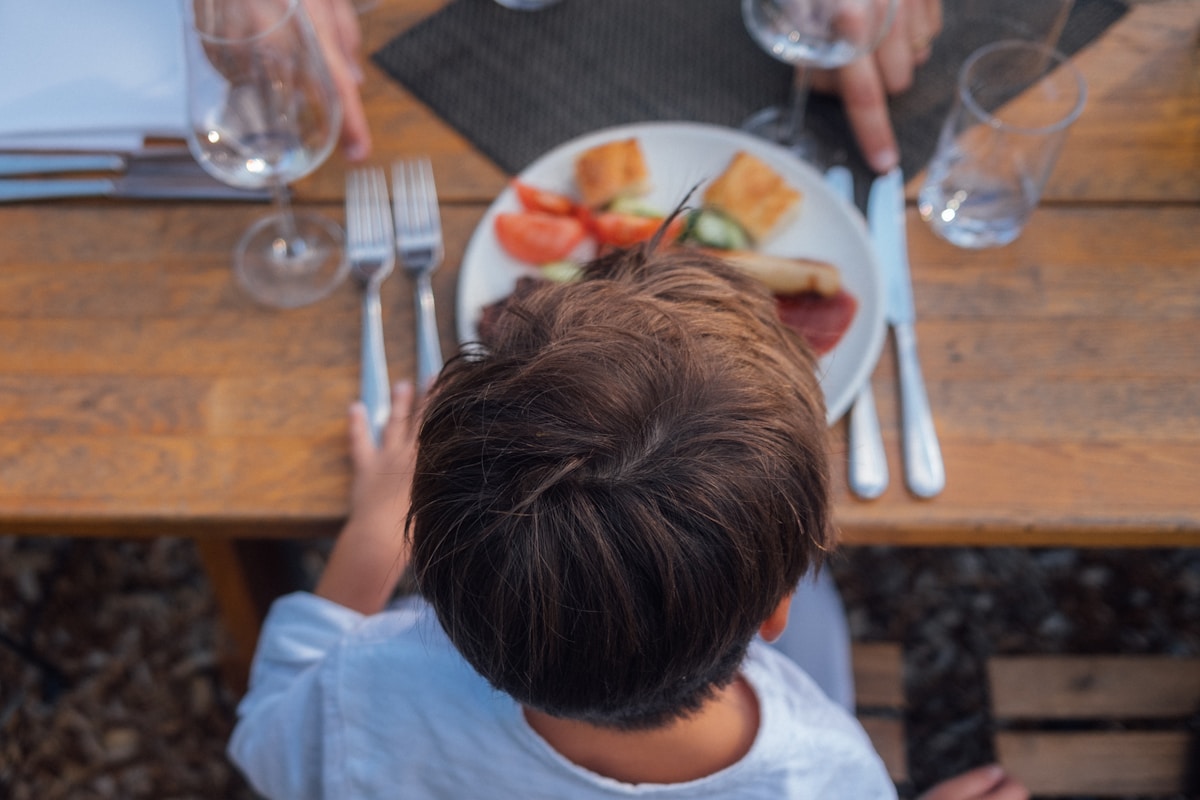
Oh, sweet friend, let me paint a picture for you. You’ve spent the better part of an hour crafting a beautiful, nutritious meal. The kitchen smells heavenly—like roasted chicken and rosemary, or maybe a bubbly, cheesy lasagna. You place the plate down in front of your little one, your heart full of hope, only to be met with a wrinkled nose and two dreaded words: “I hate it.”
Your heart sinks. A flash of frustration, maybe even a little hurt, flickers through you. All that work, all that love, dismissed in an instant. If this sounds familiar, I want you to take a deep breath and pull up a chair. You are not alone, and you have not failed. In fact, you’re in the middle of one of the most common, and most important, teaching moments that happens in a family kitchen.
Here at Kitchen Fun, we believe the kitchen is where families grow together, and sometimes, that growth comes with a few picky-eater growing pains. But don’t you worry. We’re going to navigate this together, turning dinnertime drama into a peaceful, positive experience for everyone.
Take a Deep Breath It’s Not a Personal Attack
First things first, let’s get this out of the way: when your child rejects your food, it is almost never a review of your culinary skills. (Even if it feels exactly like that!) For toddlers and young children, food is one of the very few things in their world they can control. They can’t choose their bedtime, what clothes they wear to school, or when it’s time to leave the playground. But they can choose what goes into their mouths.
Saying “yuck” or “I don’t like that” is a powerful way for them to assert their growing independence and test boundaries. It’s a developmental stage, just like learning to walk or talk. They are figuring out their own preferences, and their tastes are genuinely changing day by day. Something they loved last Tuesday might seem like the strangest thing on the planet today. It’s confusing for us, but it’s a normal part of them becoming their own little person.
So, that feeling of frustration when your lovingly prepared shepherd’s pie is rejected? It’s valid. Acknowledge it in your own mind for a second, and then let it go. Your reaction in this moment is what truly shapes your child’s long-term relationship with food. Responding with anger or pressure turns the dinner table into a battlefield. Responding with calm neutrality turns it into a learning lab.
The Golden Rule of Feeding The Division of Responsibility
If you take only one thing away from our chat today, let it be this. It comes from feeding expert Ellyn Satter and it is, in my opinion, the single most powerful tool for raising a happy, competent eater. It’s called the Division of Responsibility.
It’s beautifully simple. It breaks down the jobs at mealtime like this:
-
The Parent’s Job: You are in charge of the what, when, and where of feeding.
- What: You choose the menu. You decide what food to prepare and serve for the meal.
- When: You set the schedule for meals and snacks.
- Where: You decide that the family eats at the kitchen table, without screens.
-
The Child’s Job: Your child is in charge of if and how much they eat.
- If: They decide whether to eat any of the food you have provided.
- How Much: They decide how much of it to eat, listening to their own body’s hunger and fullness cues.
When you honor this division, the power struggle vanishes. You’ve done your job by providing a balanced meal at a reasonable time in a calm environment. You’ve offered the opportunity to eat. The rest is up to them. This simple framework takes all the pressure off. You no longer have to be the food police, counting bites or negotiating for one more piece of broccoli. You are simply the provider, and they are the eater. This teaches them to trust their bodies and you to trust them. (A beautiful lesson for both of you.)
Your New Go-To Phrase (and What to Avoid)
Alright, so your child has just declared their distaste for dinner. You’ve taken a deep breath. You understand it’s not personal. Now, what do you actually say?
Your goal is to be neutral, calm, and kind. Your new favorite phrase is some version of this:
“You don’t have to eat it, but this is what we’re having for dinner tonight.”
That’s it. No lectures, no bargaining, no threats. You acknowledge their feeling (“You don’t have to eat it”) and gently state the boundary (“this is what we’re having”).
Here are a few other phrases to keep in your apron pocket:
- “It’s okay if you don’t want to eat the chicken tonight.”
- “Thank you for telling me how you feel. The rice and carrots are here if you’re hungry.”
- “Sometimes our taste buds need time to learn to like new things.”
Just as important is knowing what not to say. Avoid these common traps:
- The Bribe: “If you eat your peas, you can have ice cream.” (This teaches that peas are a punishment and ice cream is a reward, elevating dessert to a divine status and demonizing vegetables.)
- The Guilt Trip: “I worked so hard on this dinner for you.” (This puts an emotional burden on the child that they are not equipped to handle.)
- The “Just One Bite” Rule: While well-intentioned, pressuring a child to take a bite can create a negative association and increase resistance. A better approach is modeling enjoyment yourself and talking about the food’s properties— “Mmm, these carrots are so sweet and crunchy!”
- Becoming a Short-Order Cook: This is the big one. If you immediately jump up and make them a separate meal of chicken nuggets or mac and cheese, you are teaching them that rejecting the family meal gets them exactly what they want. It reinforces the picky behavior and creates a whole lot more work for you. (Your future self will thank you for avoiding this habit!)
The ‘Safe Food’ Strategy Your Secret Weapon
Now, you might be thinking, “Beatrice, if I don’t make them something else, they’ll starve!” I hear you, and I promise, they won’t. This is where the brilliant and simple ‘safe food’ strategy comes in.
When you plan your family meal, your job as the ‘what’ provider is to make sure there is at least one thing on the table that you are reasonably sure your child will eat. This is not a whole separate meal, but a single component of the family meal.
Let’s make this practical:
- Taco Night? The main event is seasoned beef and all the fixings. Your safe foods are the plain tortillas, the shredded cheese, and maybe some mild cucumber slices.
- Spaghetti and Meatballs? Your child might reject the sauce and meatballs, but you’ve also served plain pasta and a side of garlic bread. That’s their safe food.
- Roasted Chicken and Veggies? The safe food could be a dinner roll, a side of applesauce, or a simple fruit salad.
See the pattern? You are not making a second dinner. You are simply ensuring that within the dinner you already made, there is a component your child can fall back on. This accomplishes two wonderful things. First, it ensures they can get something in their tummy so they don’t go to bed hungry. Second, it gives them a sense of security and control, which ironically makes them more brave and willing to try the other, newer foods on their plate when they’re ready. No pressure, just opportunity.
Playing the Long Game From Picky Eater to Food Explorer
The most important thing to remember is that you are playing the long game. The goal isn’t to get your child to eat broccoli tonight. The goal is to raise an adult who has a healthy, joyful, and adventurous relationship with food for the next 80 years.
Here are a few of my favorite ways to encourage that food exploration over time:
-
Get Them in the Kitchen: This is my number one tip, always. A child who helps wash the potatoes, tear the lettuce, or stir the batter feels a sense of ownership and pride. They are far more likely to try a dish they helped create. Give them simple, age-appropriate jobs. Even a toddler can “paint” oil on vegetables with a pastry brush.
-
Talk Like a Food Scientist: Take the pressure off “liking” it and focus on describing it. Instead of “Is it good?”, ask, “Is it crunchy or soft? Is it sweet or sour? Does it make a loud noise when you chew it?” This turns tasting into a fun, low-stakes game of discovery.
-
Offer, Don’t Force: It can take 10, 15, or even 20 exposures to a new food before a child’s brain accepts it. Keep offering small amounts of the food you want them to learn to like without any pressure to eat it. Just having it on their plate is a win. One day, out of the blue, they just might surprise you and take a bite.
So, the next time that little voice pipes up with an “I hate it,” just smile, pour yourself a glass of water, and say your new favorite phrase. You’re not just serving dinner; you’re teaching a life lesson in patience, respect, and trust. And that, my dear friend, is the most nourishing meal of all.