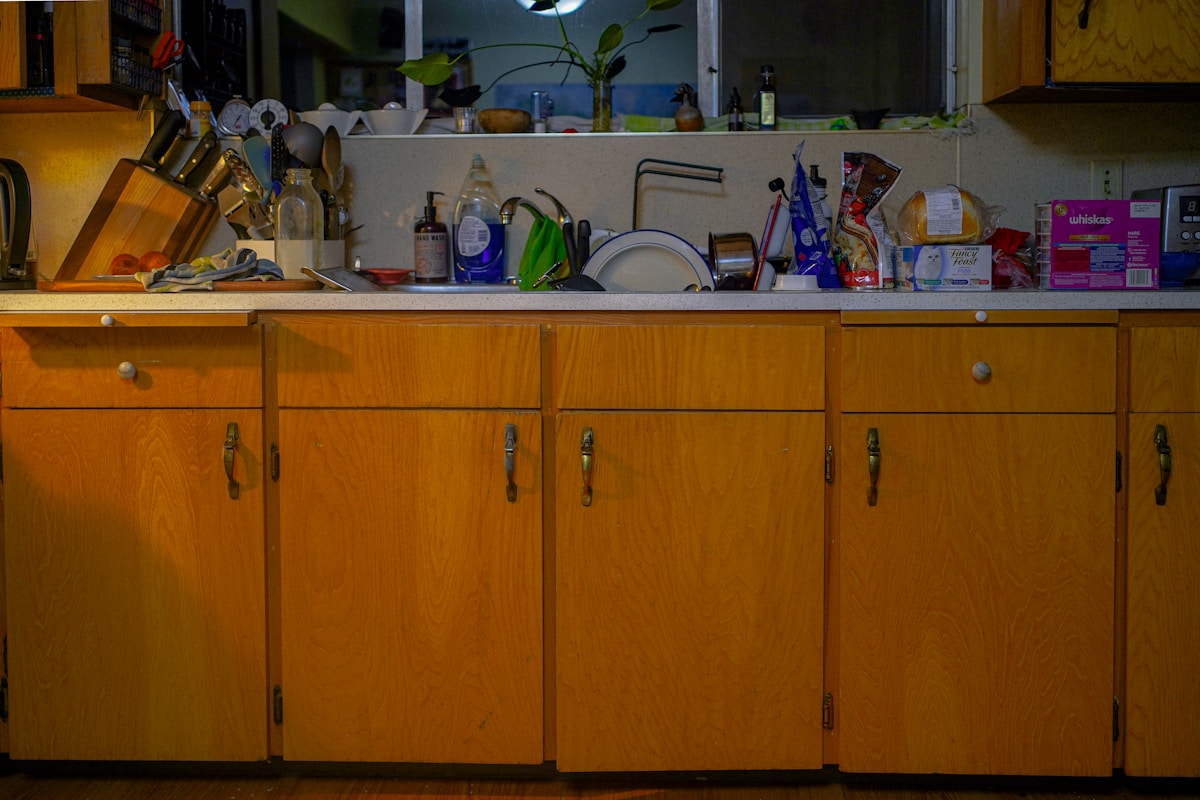
Have you ever been there? The recipe says, “sauté the onions for five minutes, then add the minced garlic and cook for 30 seconds until fragrant.” The onions are sizzling away beautifully. You grab the head of garlic, frantically trying to peel a clove. The paper skin sticks to your fingers. You rush to chop it, but by the time you’re done, you smell it—that sharp, acrid scent of burnt onion. You’ve missed your window.
That little moment of kitchen panic is something we’ve all felt. It’s that feeling of being three steps behind, juggling a hot pan, a knife, and a recipe card all at once. It can make cooking feel less like a joy and more like a race against a ticking clock. But what if I told you there’s a simple, elegant concept, borrowed from the world’s best kitchens, that can completely erase that stress? It’s called mise en place, and it’s about to become your new best friend.
So What Exactly Is Mise en Place?
“Mise en place” (pronounced meez-on-plahs) is a French culinary term that translates to “everything in its place.” That’s it. It’s not a fancy technique or a complicated sauce; it’s a philosophy of preparation. The core idea is to get all your ingredients prepped and organized before you even think about turning on the stove.
Imagine you’re building a bookshelf from IKEA. You wouldn’t just dump the box on the floor and start hammering, right? You’d open it, lay out all the wooden panels, sort the screws and dowels into little piles, and read the instructions from start to finish. You set yourself up for a smooth, frustration-free process. Mise en place is the exact same principle, but for your dinner.
Instead of chopping an onion while oil is already heating in a pan, you do all of your chopping first. You measure out all your spices into a small bowl. You pour your liquids into measuring cups. You arrange everything on your counter in the order you’ll need it. When it’s finally time to cook, you aren’t prepping anymore—you are simply assembling. You become a calm conductor of your culinary orchestra, not a frantic stagehand.
From Professional Kitchen to Your Countertop
In a professional kitchen, mise en place is non-negotiable. Chefs rely on it for speed, consistency, and the ability to cook dozens of meals flawlessly under extreme pressure. For them, it’s about efficiency. But for us home cooks, the benefits are all about joy and confidence.
When you adopt this practice, a few magical things happen:
- Stress Melts Away: The primary source of cooking anxiety is multitasking under pressure. By separating the prep phase (low pressure) from the cooking phase (high pressure), you eliminate the chaos.
- Mistakes Become Rare: Did you ever get to the end of a recipe and realize you forgot to add the baking powder to your muffins or the cumin to your chili? With everything measured out in front of you, it’s nearly impossible to forget an ingredient.
- Your Food Tastes Better: When you aren’t rushing to chop the next vegetable, you can focus entirely on the pan. You’ll notice exactly when your onions turn perfectly translucent or when your sauce has thickened to just the right consistency. This focused attention is the difference between good food and great food.
- Cleanup Is a Breeze: This might sound counterintuitive since you use more little bowls, but trust me. By organizing your prep, you contain the mess. Using a “scrap bowl” on your counter for peels, stems, and ends keeps your cutting board clear and makes for one easy trip to the compost bin.
It might feel like it’s adding time upfront, and on your first try, it might. But you’re not adding time; you’re just shifting it. You’re trading ten minutes of frantic, high-stakes chopping for fifteen minutes of calm, methodical prep. The active cooking time becomes shorter, smoother, and so much more fun.
Your Step-by-Step Guide to Perfect Prep
Ready to give it a try? It’s simpler than you think. Let’s break it down into easy, repeatable steps that you can apply to any recipe, from a simple pasta dish to a holiday feast.
Step 1: Read the Recipe. Then Read It Again. Before you touch a single onion, read the entire recipe from top to bottom. Understand the flow. Notice if you need a zested lemon in step two and the juice from that same lemon in step five. (A classic trap!) This mental walkthrough is the most important part.
Step 2: Create Your Station. Clear your largest counter space. This is now your zone. Get out your cutting board, your favorite knife, and a large bowl to use as your “scrap bowl.” Every peel, seed, and trimming goes in here. (Your future self will thank you for this one simple trick.)
Step 3: Gather Your Tools and Containers. Look at the recipe again and pull out every piece of equipment you’ll need: the skillet, the stockpot, the baking sheet, the whisk, the spatula. Then, grab your prep containers. You don’t need anything fancy! Small glass bowls (like Pyrex prep bowls), ramekins, or even clean yogurt containers work perfectly.
Step 4: Measure, Chop, and Organize. Now, the real work begins. Go down the ingredient list one by one.
- Vegetables & Aromatics: Wash, peel, chop, dice, mince, or slice everything. As you finish each item, put it into its own dedicated bowl. Yes, the single clove of minced garlic gets its own little bowl. This is the way.
- Spices & Dry Goods: If the recipe calls for multiple spices to be added at the same time, measure them all out into one small dish. This is your spice blend, ready to go.
- Liquids & Sauces: Measure your broths, creams, and oils. If you’re making a vinaigrette or a marinade, whisk it together in a bowl now.
- Proteins: Take your chicken, beef, or tofu out of the package. Pat it dry with paper towels (this is key for a good sear!), and cut it as the recipe directs. Place it on a clean plate.
Arrange all your little bowls on the counter, ideally in the order you’ll be using them. Look at what you’ve done. It’s a clean, beautiful, and completely stress-free setup.
Try This Tonight A Simple Chicken Stir-Fry
The best way to understand the power of mise en place is to experience it. A stir-fry is the perfect practice dish because it cooks incredibly fast, leaving zero time for mid-stream prep.
Your Mise en Place:
- Protein: 1 lb boneless, skinless chicken breast, cut into 1-inch cubes. Place in a bowl.
- Vegetables: 1 red bell pepper, sliced into strips. 1 head of broccoli, cut into bite-sized florets. 3 scallions, sliced (separate the white and green parts). Put each in a separate bowl.
- Aromatics: 3 cloves garlic, minced. 1 tablespoon fresh ginger, grated. Put these two together in a small ramekin.
- Sauce: In a liquid measuring cup, whisk together: 1/4 cup low-sodium soy sauce, 2 tablespoons honey or maple syrup, 1 tablespoon rice vinegar, and 1 teaspoon cornstarch (this will thicken the sauce).
- Cooking Oil: Have 2 tablespoons of a high-heat oil like canola or avocado oil ready by the stove.
The Calm Cooking Process: Now, turn on the stove. Heat a large skillet or wok over medium-high heat.
- Add 1 tablespoon of oil. When it shimmers, add the chicken. Cook for 3-4 minutes, until browned. Remove it to a clean plate.
- Add the remaining oil to the pan. Add the broccoli and bell pepper. Stir-fry for 3 minutes.
- Add the white parts of the scallions, garlic, and ginger. Cook for just 30 seconds until you can smell them. See? No panic.
- Add the chicken back to the pan. Give your sauce a final whisk and pour it all over everything.
- Stir constantly for 1-2 minutes as the sauce bubbles and thickens, coating every piece.
- Turn off the heat, stir in the green parts of the scallions, and serve immediately.
You did it. You just cooked a delicious, fast meal without breaking a sweat. That feeling of control, of smoothly moving from one step to the next—that’s the magic of mise en place. Welcome to your new, calmer kitchen.