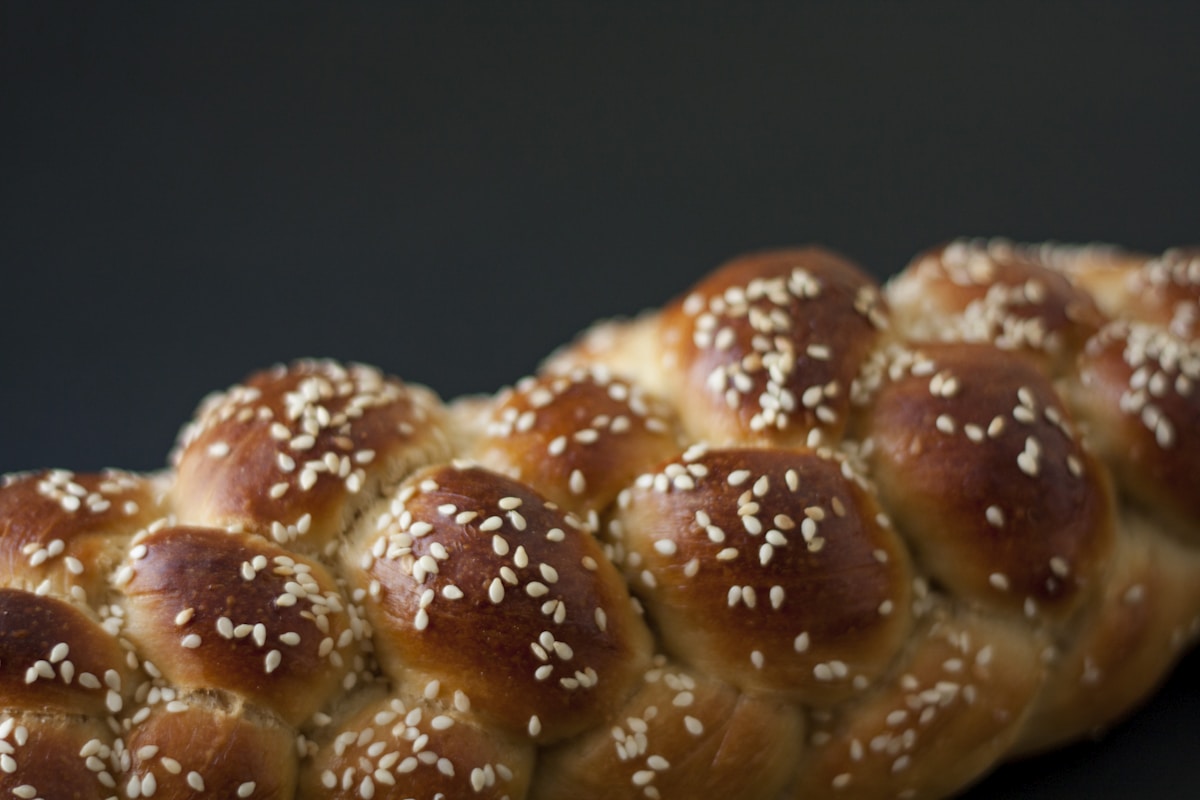
Have you ever seen a loaf of bread that looks like a piece of art? I recently stumbled upon a creation on Reddit’s r/Baking that stopped me in my tracks: a transgender challah. The soft, golden bread was braided into a French braid using strands of blue, pink, and white dough, then formed into a boule wrapped in colorful braids. The result was not only visually stunning but deeply meaningful. Food tells a story, and this challah tells one of inclusion, identity, and celebration. In this article, I’ll share everything I learned from the Reddit community and my own kitchen experiments so you can bake a vibrant transgender pride challah at home.
What Is a Transgender Pride Challah
A transgender pride challah is a twist on the classic Jewish braided bread, using the colors of the transgender pride flag: blue, pink, and white. The flag’s stripes represent traditional gender colors (blue for male, pink for female) and white for those who are transitioning, intersex, or non-binary. By coloring the dough in these shades and braiding them together, bakers create a loaf that celebrates diversity and acceptance. Rainbow challahs have become popular during Pride month, but the transgender version has a specific, powerful symbolism. The technique involves dividing the dough, tinting each portion with gel food coloring, then braiding the colored ropes into a single loaf.
Why Gel Food Coloring Is Non-Negotiable
One of the most critical pieces of advice from the Reddit community is to use gel food coloring instead of liquid. Liquid colors add extra moisture to the dough, throwing off the hydration balance and making the dough sticky and hard to shape. Worse, they can dilute the yeast activity and cause uneven coloring. Gel colors, like those from Wilton or Americolor, are concentrated and contain little water. A tiny drop goes a long way. For a single batch of challah dough, you’ll need about 1/4 teaspoon of gel per color to achieve a vivid shade. Add it during the kneading process so the color distributes evenly. Start with less, because you can always add more, but you can’t take it away.
The Cold Proofing Trick to Prevent Color Bleed
Another Reddit gem: after shaping your colored dough into the final loaf, let it cold proof in the refrigerator overnight. This does two things. First, it slows down fermentation, which develops a deeper flavor and a better crumb structure. Second, and more importantly, it sets the colors. When you proof at room temperature, the moisture and heat cause the colored strands to bleed into each other, turning your beautiful blue, pink, and white into a muddy mess. Cold proofing keeps the dough firm and the colors distinct. After a chilly rest (at least 8 hours, up to 24), you can take the loaf straight from the fridge to the oven. The shock of heat gives an extra oven spring, too.
Step-by-Step: How to Shape a Transgender Pride Challah
Let’s walk through the process. Start with your favorite challah dough recipe. I recommend the one from King Arthur Baking — it’s reliable, with a predictable rise and a soft, tender crumb. Make the dough, let it undergo its first bulk rise until doubled, about 1.5 hours at room temperature (around 75°F / 24°C). Then punch it down and divide into three equal pieces. Tint one piece with blue gel, one with pink, and leave the third white. Knead each piece on a lightly oiled surface until the color is uniform. Then cut each colored piece into three equal parts (so you have nine small dough balls: three blue, three pink, three white). Roll each ball into a 12-inch rope. Now for the French braid: take one blue, one pink, and one white rope. Press the tops together and braid them like a three-strand braid — cross right over center, left over center, repeat. You’ll make three separate braids (each tri-colored). Then braid those three braids together into one giant braid? Actually, Reddit user’s method was: braid the three colored ropes into a single braid, then wrap that braid around a boule (a round loaf). Others stack three braids (one blue, one pink, one white) into a single braid. The most straightforward method for a stunning visual: make one three-strand braid using one rope of each color. This gives you a braid with alternating colors. Tuck the ends under, place it in a loaf pan, or shape into a wreath. For the “boule wrapped in colored braids” effect, make a round loaf from some plain dough, then take your triple-colored braids (you can make two or three) and wrap them around the boule like a nest. The Reddit post specifically said “braiding into a French braid, then forming a boule wrapped in colored braids.” So you’ll want to make a plain boule (white dough) and then wrap it with colored braids. Here’s a clear method: Divide your dough into two unequal pieces — about 2/3 for the boule and 1/3 for the colors. Tint the smaller piece with the three colors as above, shape into three ropes, then braid them into one long tri-colored braid. Shape the larger piece into a tight round boule. Then coil the braid around the boule, tucking the ends underneath. Place on a parchment-lined baking sheet.
Proofing and Baking Times
After shaping, brush with a light coat of oil, cover loosely with plastic wrap, and refrigerate for at least 8 hours or overnight. When ready to bake, preheat the oven to 350°F (175°C). Remove the loaf from the fridge, let it sit at room temperature for 30 minutes while the oven heats. Brush with an egg wash (one egg beaten with a tablespoon of water) for a shiny, golden crust. Bake for 25-30 minutes, until the internal temperature reaches 190°F (88°C) and the crust is deep brown. If the loaf browns too fast, tent with foil after 15 minutes. Let cool completely on a wire rack before slicing.
Common Mistakes and How to Avoid Them
The Reddit thread highlighted two frequent pitfalls: color bleed and air gaps. We already covered cold proofing to stop color bleed. For gaps, the key is a tight spiral when wrapping the braid around the boule. Don’t leave spaces between the braid and the boule, or you’ll end up with ugly cracks after baking. Also, make sure the braid is not too long — trim any excess and tuck it neatly. Another tip: use a bench scraper to handle the colored dough — it minimizes sticking and keeps the colors from smearing. And if your dough feels too soft or slack during braiding, pop it in the fridge for 15 minutes to firm up.
Serving Your Pride Challah
This bread is a celebration. Serve it for Pride gatherings, family dinners, or as a centerpiece at a party. It’s delicious toasted with butter or honey. The colors inside are a joyful surprise when you slice into it. Pair it with a hearty soup or salad for a meaningful meal. The symbolic act of sharing food that represents inclusion is powerful. Whether you’re part of the LGBTQ+ community or an ally, baking this challah is a way to show support and start conversations.
Final Thoughts
Baking a transgender pride challah is more than a recipe — it’s an act of love and visibility. The Reddit community showed how small technique changes (gel colors, cold proofing) can elevate a bread from ordinary to extraordinary. I encourage you to try it. Your kitchen can become a canvas for storytelling, and every slice carries a message of acceptance. Give it a try, and let the colors shine. (Your future self will thank you.)