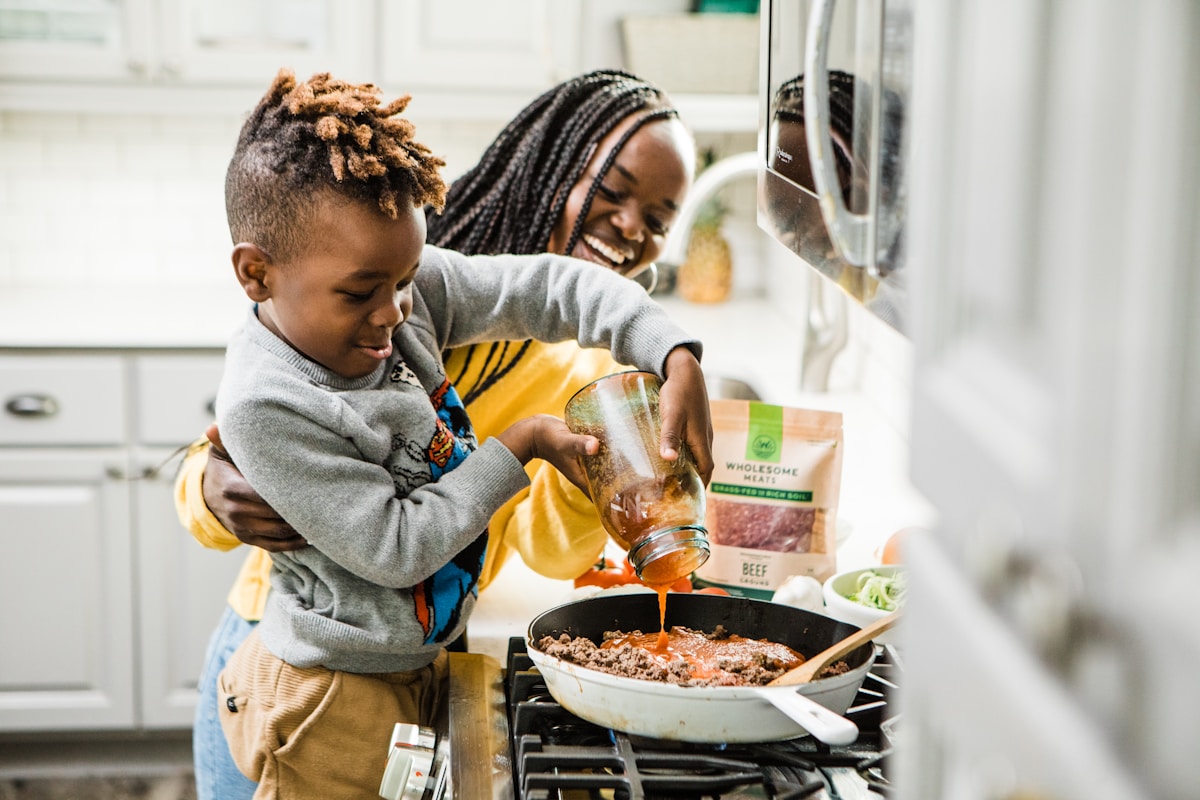
I remember watching my three-year-old nephew, wide‑eyed, as he tried to brush his teeth just like his dad. The toothbrush went everywhere, but his focus was absolute. That same raw curiosity—the drive to imitate everything we do—is a golden ticket for introducing toddlers to the kitchen.
You have probably seen it, too: a little hand reaching for a whisk, or a sticky palm patting a counter. It can be nerve‑wracking, but with the right approach, those messy moments turn into lessons in confidence, coordination, and even a love for food.
Why Bother with Toddlers in the Kitchen?
Let’s be honest—having a toddler “help” in the kitchen isn’t always efficient. Your cookie dough might end up with extra flour on the floor, and the spinach you just washed will likely be spread across the counter. But here’s the thing: every spill teaches cause and effect. Every pour strengthens small hand muscles. Every wiped surface builds a sense of ownership.
Pediatric occupational therapists and parenting experts (like those at HealthyChildren.org) agree that simple kitchen tasks help develop fine motor skills, hand‑eye coordination, and independence. A toddler who stirs their own oatmeal or pours dry beans into a bowl feels a genuine pride that no sticker chart can match.
Plus, getting kids comfortable with food early can reduce picky eating later. When a child has touched, scooped, and sniffed an ingredient, they are far more likely to taste it. (Yes, really.)
What Tools Are Safe for Tiny Hands?
Before you hand over a ceramic mixing bowl, let’s talk gear. The right tools make all the difference—for safety and for success.
For toddlers 18 months to 3 years, stick with:
- Unbreakable bowls – Melamine, silicone, or stainless steel. Look for ones with a non‑skid base (like the OXO Good Grips Prep Bowl or basic Melamine sets from Target).
- Small silicone spatulas and whisks – They are gentle on bowls and won’t scratch. Plus, they are easy to hold.
- Measuring cups and spoons – Plastic or silicone nesting cups. Skip glass until they are older.
- A large tray or rimmed baking sheet – Place it under their station to catch spills. This simple hack turns a mess into a contained play zone. (Your future self will thank you.)
- Child‑size apron – It makes them feel official and protects their clothes.
Avoid sharp knives, hot pans, and anything that could break. Always supervise—more than “keep an eye” – literally sit beside them.
Stirring, Pouring, and Wiping: Tasks for 18 to 24 Months
At this age, toddlers love repetition and cause‑and‑effect. Keep tasks simple and cold.
Stirring cold ingredients – Pour some plain yogurt into a bowl and add a spoonful of applesauce. Show your child how to make gentle circles with a whisk or spatula. The soft resistance of the yogurt is satisfying, and the result is edible. (Tip: do this before bath time, just in case.)
Pouring dry beans or rice – Fill a small plastic cup with dried chickpeas or kidney beans. Give them an empty cup or a funnel placed over a bowl. Let them pour back and forth. The sound of beans clicking—that is sensory learning at work.
Wiping the counter – Hand them a damp (not dripping) cloth and show them how to make swishy circles. They will mimic you and feel like a helper. Even if the counter ends up stickier than before, praise the effort.
What About 2‑ and 3‑Year‑Olds?
As coordination improves, you can add slightly more complex tasks.
Scooping and dumping – Use a small measuring cup to scoop rice or oats from one bowl into another. You can even add a muffin tin for extra fun – one scoop per cup.
Mashing soft foods – Bananas, steamed sweet potatoes, or boiled carrots. A flat‑ended potato masher or a fork works. Let them mash until the texture is as smooth (or bumpy) as they like.
Washing produce – Fill a large bowl with cool water and add grapes, cherry tomatoes, or mushrooms. Show them how to rub each piece clean with their fingers. Water play is irresistible, and it teaches gentle handling.
Sorting and gathering – If you are prepping veggies, ask them to place all the broccoli florets in one bowl and the carrots in another. Simple matching games build categorization skills.
Safety Rules to Follow (Without Scaring Them)
You do not want to make the kitchen feel dangerous, but clear boundaries are essential.
- Stay seated or stand still. We use a sturdy step stool or a learning tower with rails at the counter. Running with tools is not allowed.
- Hot is a “hands off” word. Explain that the stove, oven, and toaster are for grown‑ups. Touch the outside of a warm pan (after it has cooled) so they understand what “hot” feels like.
- No tasting raw ingredients that could be unsafe (like raw eggs or flour). Make it a habit to taste only what you put on their plate.
- Wash hands before and after. Make handwashing a ritual, sung with a song.
One Kitchen Hack That Changes Everything
Here is a tip I learned from watching my niece’s daycare teacher: use a plastic tablecloth under their station. Lay it on the floor or over the table, and when the activity is over, just gather the corners and dump the mess into the trash. It saves minutes of scrubbing. (Trust me on this one.)
Celebrate the Process, Not the Perfection
Your toddler’s first stir will probably end with half the mixture on the counter. Their first pour might create a bean avalanche. That is the point.
When they see you smile and say, “Good try! Let’s clean it up together,” they learn that mistakes are normal. They also learn resilience—the willingness to try again.
So next time you are making breakfast or prepping dinner, pull up a stool. Hand them a whisk. Put a towel down. And remember: the kitchen is where families grow together, one spill at a time.