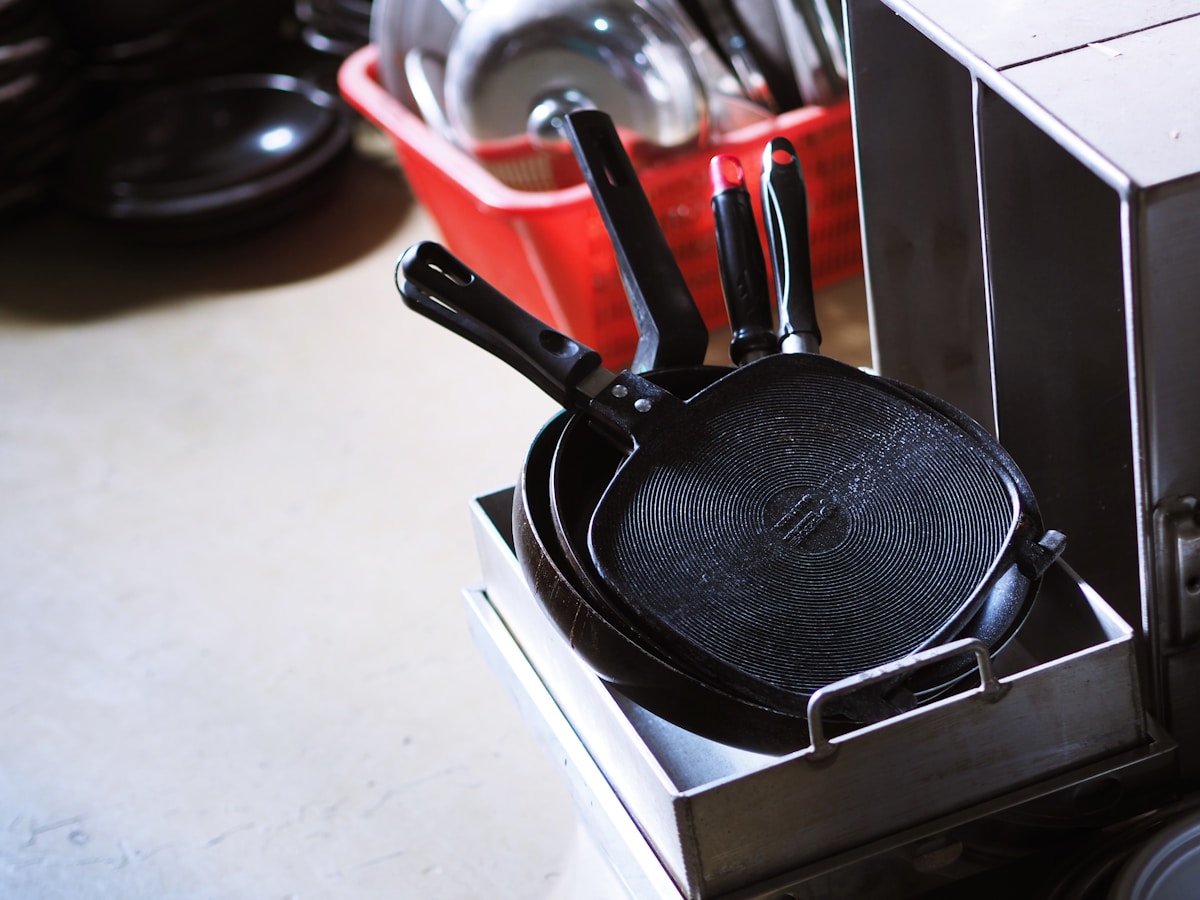
Alright, let’s talk about the cast iron skillet. For many, it’s the final frontier of cookware. You’ve seen chefs sear steaks on it, you’ve seen perfectly golden cornbread come out of it, and you’ve probably heard the almost mythical rules that come with owning one: “Never use soap!” “You have to season it for hours!” “Don’t look at it the wrong way!”
It’s enough to make anyone stick with their trusty nonstick pan. I get it. The idea of a high-maintenance piece of cookware can feel like a burden when all you want to do is make dinner. But what if I told you that 90% of that fear is based on outdated information? What if you could buy a pan today, for less than the price of a couple of movie tickets, and start cooking on it tonight with zero complex prep?
Welcome to the world of the pre-seasoned cast iron skillet. It’s not a gimmick; it’s the single best entry point into a lifetime of incredible cooking.
What Does ‘Pre-Seasoned’ Actually Mean?
This is the most important concept to understand, and it’s thankfully simple. “Seasoning” on cast iron has nothing to do with salt and pepper. It refers to a layer of baked-on oil that has been chemically bonded to the metal.
Think of it like this: When you heat fat or oil to a high temperature on the surface of iron, it undergoes a process called polymerization. The fat transforms from a liquid into a hard, slick, plastic-like coating. This coating is what gives cast iron its signature nonstick properties and its deep black patina. It fills in the microscopic pores of the iron, creating a smooth surface that protects the pan from rust.
In the old days, you’d have to do this yourself. You’d buy a new, dull gray pan, scrub it, and then apply thin layers of lard or shortening, baking it in the oven for an hour at a time, multiple times. It was a smelly, time-consuming ritual.
A pre-seasoned skillet simply means the manufacturer did this for you. Companies like Lodge spray their skillets with a precise layer of vegetable oil and bake them in massive industrial ovens. The pan arrives at your door with a solid foundational layer of seasoning already baked on. It’s not perfect, and it’s not as nonstick as a 50-year-old heirloom pan, but it’s ready to cook on immediately. Your job is simply to build upon that foundation every time you cook with a little bit of fat.
The Ultimate Beginner’s Pan The Lodge 12-Inch
When people ask me where to start, my answer is always the same: the Lodge Classic 12-Inch Cast Iron Skillet. I’ve tested pans that cost five times as much, and for 99% of home cooks, this is the one. There’s a reason America’s Test Kitchen and countless other reviewers recommend it.
Here’s the practical breakdown:
- Price: You can typically find it for between $25 and $40. For a piece of cookware that will literally outlive you, that is an unbeatable value. (Your wallet will thank you.)
- Performance: This is where cast iron shines. The sheer mass of the iron means it holds onto heat like nothing else. Once you get it hot, it stays hot. This is critical for getting a deep, dark crust on a steak without overcooking the inside. You can preheat this pan in an oven to 500°F (260°C), pull it out, and drop a steak on it for a sear that stainless steel can only dream of.
- Versatility: You can use it on the stovetop (gas, electric, induction), in the oven, on the grill, or even over a campfire. From frying eggs to baking a giant skillet cookie, it does it all.
- Durability: It is a single, solid piece of iron. You can’t really break it unless you drop it from a great height onto a concrete floor. There’s no coating to scratch off like with a nonstick pan.
The only real downsides are its weight (it’s heavy!) and the fact that the handle is also cast iron, so it gets screaming hot. Always have an oven mitt or handle cover nearby.
Let’s Bust Some Cast Iron Myths
The care routine is what scares most people off, so let’s clear the air with some facts.
- Myth #1: You can NEVER use soap. This is the big one, and it’s mostly false. This rule comes from a time when soap was made with lye, which was harsh enough to strip seasoning. Modern dish soap is gentle. A little drop of soap and a gentle scrub with a sponge is perfectly fine for cleaning off stubborn bits of food. The key is not to let it soak in soapy water for hours.
- Myth #2: It’s impossible to clean. Cleaning is easy if you do it while the pan is still warm. My routine takes about 60 seconds. I scrape out any big bits with a metal spatula (yes, metal is fine!), run it under hot water, give it a quick scrub with a brush or sponge, and then put it back on the stove over low heat for a minute to dry it completely. That last step is the most important one—it prevents rust. Once dry, I wipe a half-teaspoon of vegetable oil on the cooking surface with a paper towel.
- Myth #3: If it rusts, it’s ruined. False. Rust looks scary, but it’s just surface oxidation. If you accidentally leave your pan wet and find orange spots, don’t panic. Just scrub the rust off with some steel wool, wash the pan, dry it thoroughly, and wipe it down with oil. It will be perfectly fine.
It is incredibly difficult to permanently ruin a cast iron pan. You pretty much have to crack it in half.
Your First Cook Crispy Potatoes and Onions
Want to build confidence and add a great layer of seasoning to your new pan? Make some skillet potatoes. This is a fantastic first meal because it uses a good amount of oil and helps smooth out the factory seasoning.
- Prep: Dice one large onion and about 1.5 lbs (around 700g) of Yukon Gold or Russet potatoes into half-inch cubes.
- Heat the Pan: Place your 12-inch skillet over medium heat. Add about 3 tablespoons of a neutral oil like canola or vegetable oil. Let it heat up for a few minutes until the oil shimmers.
- Fry the Potatoes: Add the potatoes to the pan in a single layer. Let them cook, undisturbed, for 5-7 minutes. You want to resist the urge to stir them. This is how you get that first beautiful brown crust.
- Add Onions & Season: After they’ve browned on one side, give them a good stir. Add the diced onions, a generous pinch of salt, and some black pepper. Continue cooking, stirring every few minutes, for another 15-20 minutes, or until the potatoes are tender and browned all over.
When you’re done, you’ll have a delicious side dish and your pan will have the beginnings of a beautiful, slick cooking surface.
The Final Verdict Is It Worth It
Absolutely, yes. Starting with a pre-seasoned skillet removes all the initial friction and intimidation. It lets you experience the incredible performance of cast iron—unmatched heat retention, a naturally nonstick surface that only gets better with time, and oven-to-table versatility—without the arcane rituals of the past.
Don’t overthink it. Buy an affordable, pre-seasoned Lodge. Cook fatty foods in it for the first few weeks (bacon, burgers, potatoes). Clean it promptly, dry it thoroughly, and give it a little wipe of oil. That’s it. You’re not just buying a pan; you’re adopting a kitchen workhorse that will serve you well for decades to come.