It is 7:20 a.m., someone cannot find a shoe, another child is hungry now, and the pancake pan is still cold. On mornings like this, the goal is not an impressive breakfast. It is an easy family pancake breakfast system that removes decisions before everyone is rushed.
A calmer pancake morning can mean serving in rounds, using freezer backups when plans change, and sharing realistic kitchen jobs. Breakfast is successful when everyone is fed and supported—not when every pancake lands on the table at once.
Key Takeaways
- Set up tools, toppings, dishes, and morning essentials the night before so pancake cooking has fewer interruptions.
- Choose fresh batter for planned mornings, recipe-approved prepared batter when suitable, and freezer pancakes for high-pressure days.
- Cook in modest batches and serve the first pancakes right away instead of waiting for one large stack.
- Give children no-heat jobs, and divide cooking, serving, cleanup, and departure tasks among available adults and older children.
- Keep a backup breakfast available so a changed schedule does not turn pancakes into a problem.
Build an easy family pancake breakfast plan the night before
The biggest breakfast bottleneck is usually not flipping pancakes. It is searching for a bowl, filling water bottles, answering topping questions, and locating lunchboxes while someone is standing near a hot stove. A small night-before setup protects cooking time from those interruptions.
Create one pancake station in a clear area of the kitchen. Gather the mixing bowl, whisk or spoon, measuring tools, spatula, pan or griddle, cooking fat, plates, napkins, and serving utensils. If your equipment has specific preheating, cleaning, or care instructions, plan to follow them in the morning.
Next, choose the simplest batter route. Measure dry ingredients into a container, set out a pancake mix, or place the recipe where it is easy to read. Group refrigerated ingredients together so milk, eggs, or recipe alternatives are easy to find when the pan is heating.
Keep toppings intentionally limited. Two or three choices are usually enough:
- Sliced banana, berries, or other fruit prepared by an adult
- Yogurt in a small bowl with a spoon
- Nut or seed butter, when appropriate for your family
- Syrup in a squeeze bottle, served by an adult or offered in small portions
Small bowls and squeeze bottles can reduce drips compared with placing full containers on the table. For younger children, adding one topping before serving may be simpler than managing a self-serve spread.
Separate non-breakfast tasks from the pancake station. Put school bags by the door, collect lunchbox items in one spot, and stage water bottles ahead of time. Set breakfast dishes on the table if that helps. Pancakes should not have to compete with a last-minute search for library books or clean socks.
A quick night-before checklist is often more useful than an elaborate plan:
- Pancake tools together
- Dry ingredients or mix ready
- Refrigerated ingredients grouped
- Plates, cups, and napkins out
- Toppings chosen
- Bags, lunches, and water bottles staged
- One backup breakfast available
That backup might be freezer pancakes, toast, yogurt, fruit, or another familiar fast option. It does not replace the plan; it makes the family breakfast routine more flexible.
Pick the pancake option that fits this morning
Not every morning needs fresh pancake batter. Choosing the right option before the rush begins makes busy morning breakfast ideas easier to use.
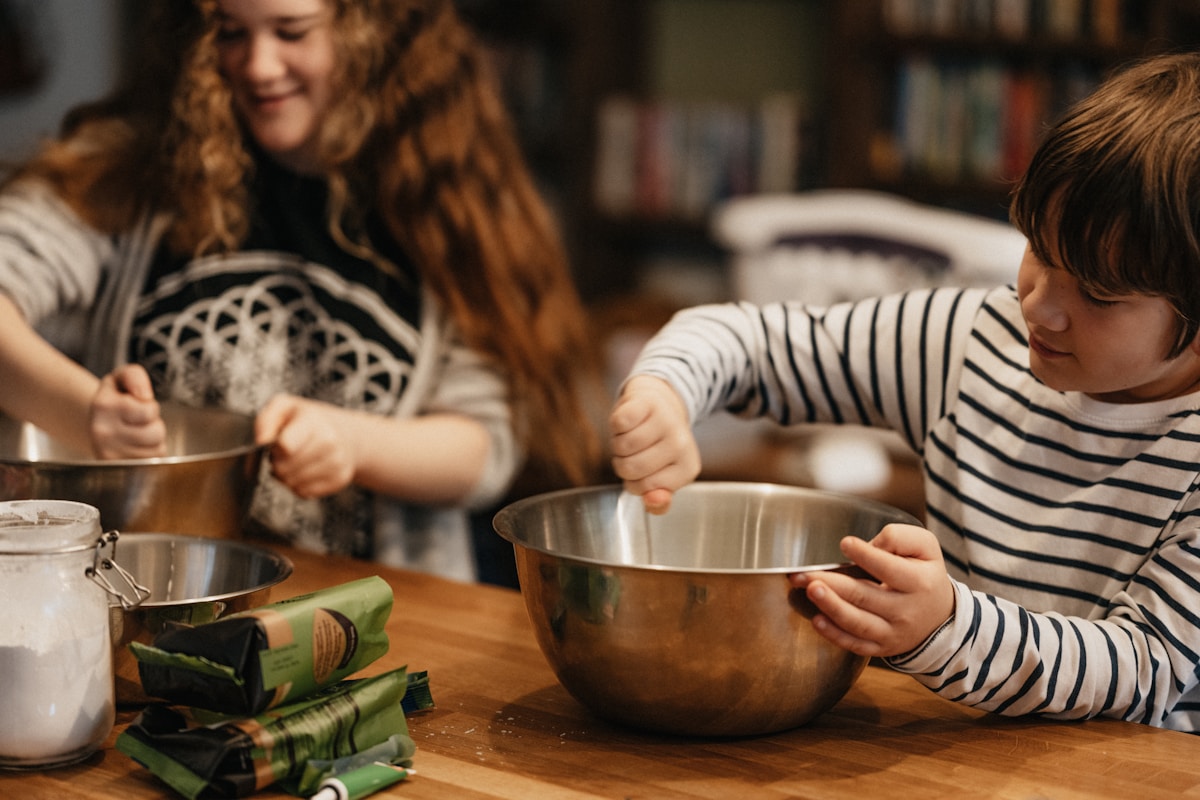
Choose fresh batter when there is room in the schedule. Fresh mixing works well for a planned weekend breakfast or a weekday with extra time. It can also work well when making pancakes with kids is part of the activity, since children can measure, stir, and set the table while an adult manages the hot cooking area.
Choose prepared batter only when the recipe allows it. Whether batter can be made ahead depends on its ingredients, leavening, and the directions for that specific recipe or mix. Some batters may change in texture or rise after sitting. Follow the recipe or package storage instructions rather than assuming every batter performs the same way.
Choose freezer pancakes for high-pressure mornings. Homemade or store-bought pancakes can be a practical backup when someone wakes up late, a child needs extra attention, or the cook is handling several morning tasks. Reheat them according to the recipe, package, or appliance directions that apply to your pancakes and equipment.
A useful decision rule is simple: make fresh pancakes on mornings you planned for them, use freezer pancakes when the morning is already demanding, and switch to another quick breakfast if the schedule changes unexpectedly. This keeps pancakes enjoyable instead of turning them into a deadline.
For pancakes for a crowd, keep a short, repeatable shopping list: pancake mix or usual ingredients, eggs or a preferred alternative, milk or its alternative, cooking fat, a few low-mess toppings, and freezer-safe storage supplies. Keeping the same basics on hand reduces last-minute choices.
If your family eats pancakes often, make a double batch only when you have the time and energy. The extras can support a future breakfast rather than create another weekday task.
Cook in batches and keep the line moving
Before mixing batter, preheat the pan or griddle as directed for your equipment and set up the serving area away from the stove. Hungry children waiting beside a hot surface can make cooking much harder. A ready table gives them somewhere useful to go while the first batch cooks.
Use a scoop, ladle, or measuring cup to portion similar amounts of batter. Consistent portions are easier to turn and tend to cook more evenly than a mix of tiny and oversized pancakes. If your pan or griddle safely has room, cook several pancakes at once without crowding them.
Try this batch rhythm:
- Mix the batter and start the first batch.
- While it cooks, put out fruit, napkins, and drinks.
- Move finished pancakes to a holding setup or serve the first plates.
- Start the next batch while the first eaters begin.
- Refill plates in small rounds instead of waiting for one giant stack.
Serving in rounds is often the difference between a relaxed breakfast and a room full of hungry people. A child can eat one or two pancakes while the next batch cooks. There is no need for everyone to be served at the exact same minute.
To keep pancakes warm, use only a method appropriate for your appliance and follow its instructions. A low oven is often used for short holding, but equipment and food-safety guidance vary. Check a reliable recipe, appliance manual, or trusted food-safety guidance for your setup. Keep hot equipment out of children’s reach, and use oven mitts and stable pans.
Avoid tightly covering a large stack if it traps excess steam. Steam can make pancakes damp rather than fluffy. Long holding can also dry them out or affect texture, so modest batches are usually easier on both the pancakes and the cook.
A topping station away from heat can reduce repeat requests. Give each child a plate, a small spoonful of topping, and a clear place to sit. If syrup causes frequent spills, add it before serving or offer a small amount in a cup for dipping.
Make pancakes with kids without adding heat-related chaos
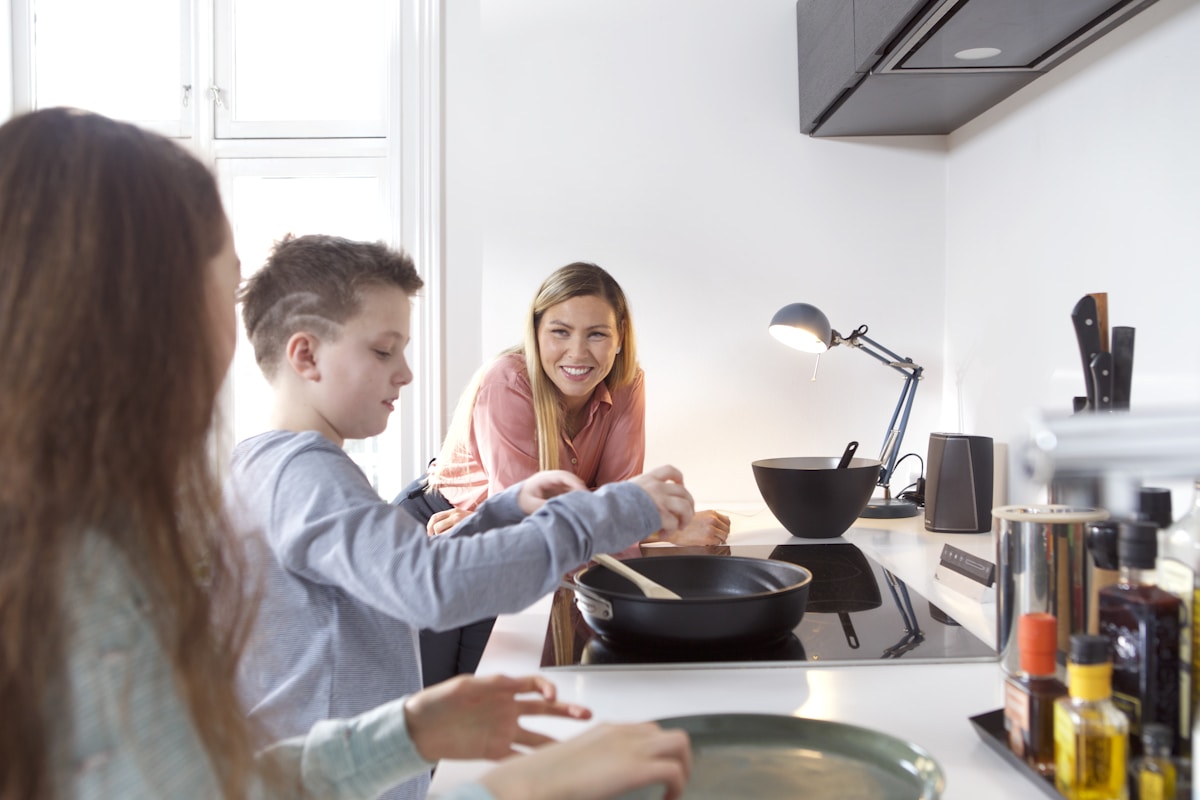
Kids can be part of an easy family pancake breakfast, but helping does not need to mean handling the pan. Keep jobs away from hot surfaces, sharp tools, and unsupervised appliances. Choose tasks based on each child’s abilities, attention, and willingness to follow directions.
Young children can carry napkins, choose plates, put packaged items on the table, or place adult-prepared toppings into small bowls. They can also count how many plates are needed. Give one task at a time; a long list can create more confusion than help.
School-age children may be ready to measure preselected ingredients, stir batter with close supervision, set the table, or sort fruit that has already been washed and prepared by an adult. Keep a damp cloth nearby so flour or batter spills are easy to handle before they spread.
Older children and teens can often take ownership of serving, dish loading, and cold sides such as yogurt cups or fruit. They may be ready for more kitchen tasks after demonstrating readiness, but clear boundaries still matter. Stovetops, hot griddles, hot pans, and hot oven equipment should remain adult responsibilities unless a capable older child is directly supervised and household safety rules allow it.
It also helps to divide responsibilities rather than treating pancakes as one person’s project. Use whichever version fits your household:
- One adult cooks while another helps children get dressed, finds essentials, and manages departures.
- One adult cooks while another serves drinks, handles toppings, and starts cleanup.
- One person mixes and serves cold sides while another manages hot equipment.
- An older child sets the table and clears dishes while adults handle cooking and time-sensitive tasks.
Name the jobs before cooking starts. “I am on pancakes. You are on backpacks and drinks” is clearer than hoping someone notices what needs doing. Shared responsibility makes the routine more dependable and keeps one person from carrying every interruption.
Create a family breakfast routine that works after pancakes are served
The breakfast reset should take only a few minutes. Aim for enough order to make tomorrow easier, not a spotless kitchen before everyone leaves.
Start with leftovers. Let cooked pancakes cool and store them according to the recipe and reliable food-safety guidance that applies to your situation. For pancake prep ahead, package portions in freezer-safe containers or bags, label them, and use recipe, package, or appliance instructions for reheating. Storage and reheating details can vary, so avoid relying on one universal timeline for every homemade recipe.
Then give every family member a small closing task. Plates go to the sink or dishwasher, the table gets a quick wipe, and pancake tools are rinsed or loaded when practical. If another adult is available, one person can handle the kitchen while the other checks coats, bags, and shoes.
A visible family breakfast routine can reduce repeated reminders:
- Wash hands.
- Choose a seat.
- Take one serving first.
- Ask before getting more toppings.
- Clear your dish when finished.
- Collect morning essentials before leaving.
You do not need to use every step perfectly. Start with one or two that solve your family’s most common breakfast friction, then add more only if they help.
The best easy family pancake breakfast is not the one with the tallest stack or the most toppings. It is the one that feeds people without leaving one adult overwhelmed. Fresh pancakes, reheated freezer pancakes, or a quick backup meal can all support a good morning when the routine is built around real family life.
FAQs
Can I make pancake batter the night before?
Sometimes, but it depends on the recipe or mix. Ingredients and leavening can affect how batter performs after resting. Check the recipe or package directions for make-ahead and storage instructions. When in doubt, prepare dry ingredients ahead and mix wet ingredients in the morning.
What is the best way to keep pancakes warm for a crowd?
Cook in modest batches and serve in rounds so fewer pancakes need to wait. If you use a warm oven or another holding method, follow safe appliance use and reliable guidance for your equipment. Avoid long holding and excessive covering, which can leave pancakes dry or steamy.
What can kids safely help with during a pancake breakfast?
Good no-heat jobs include carrying napkins, choosing plates, setting the table, measuring preselected ingredients, stirring with close supervision, and adding safe prepared toppings. Keep children away from hot pans, griddles, ovens, sharp tools, and appliances unless an adult is directly supervising a capable older child under household safety rules.