I still remember it so clearly. My nephew, all of five years old, standing on his little stool, presenting me with a pancake. It was shaped less like the dinosaur he intended and more like a lumpy cloud, slightly scorched on one side. But his face, beaming with pride and dusted with a little flour on the nose, told the whole story. That wasn’t just a pancake. It was a trophy.
Weekend mornings have a special kind of magic, don’t they? The rush of the weekday is gone, and time seems to stretch out, inviting us to slow down. It’s the perfect opportunity to bring our little ones into the heart of the home: the kitchen. Making breakfast together isn’t just about feeding the family; it’s about creating those lumpy-pancake memories that stick with you forever. It’s about turning a meal into a moment of connection and joy.
The Magic Beyond the Mess Why Cook with Your Kids?
I know what you might be thinking. The mess! The extra time! And yes, cooking with children will absolutely involve more of both. But I promise you, what you get in return is worth more than a spotless floor. When you hand your child a whisk, you’re giving them so much more than a kitchen tool.
You’re giving them confidence. Every sprinkle they add, every bowl they stir, ends with a triumphant, “I did it myself!” This sense of accomplishment is a powerful building block for their self-esteem.
You’re teaching them essential life skills. Following a recipe teaches them to listen and follow instructions. Measuring flour introduces them to basic math and science in a way that feels like play. They’re learning where food comes from and how simple ingredients transform into something delicious.
You’re building adventurous eaters. I’ve seen it time and time again. The child who turns their nose up at scrambled eggs will happily devour them if they were the one who got to whisk them. When they are part of the process, they have a sense of ownership and curiosity about the final product.
Most importantly, you are creating a tradition. The kitchen becomes a place of warmth, laughter, and togetherness. It’s where you grow together, one recipe at a time.
Our Kitchen Golden Rules Safety Above All Else
Before we even pull out the flour, let’s set ourselves up for success. A few simple rules create a safe and predictable environment where both you and your little chef can relax and have fun. We call these our “Golden Rules” in my house.
Rule #1: The Grown-Up Zone. The stove, oven, and hot griddles are for adults only. For younger kids, it can be helpful to physically mark out a “hot zone” on the floor with some masking tape. This gives them a clear visual boundary to respect.
Rule #2: We Wash Before We Work. This is our non-negotiable first step, every single time. A thorough hand-washing with soap and warm water while singing a little song makes it a fun habit. We also wash our hands any time we touch our face or hair.
Rule #3: Sharp Things Are for Later. Little hands should stick to kid-safe tools like wooden spoons, whisks, rubber spatulas, and plastic butter knives for spreading. All the chopping and slicing with sharp knives is a grown-up’s job for now.
Rule #4: A Sturdy Step. Make sure your little one has a stable kitchen helper tower or a sturdy step stool so they can comfortably reach the counter. Wobbly chairs are a recipe for spills and tumbles. (Your back will thank you for this one, too!)
Your Little Sous Chef A Guide to Age-Appropriate Tasks
The secret to a happy and helpful kitchen assistant is matching the task to their abilities. Pushing them to do something too complex will only lead to frustration, while giving them a job that’s too simple might lead to boredom. Here’s a little breakdown I’ve found helpful over the years.
The Tiny Tumblers (Ages 2-4): This age is all about sensory exploration. They love to touch, pour, and stir. Keep tasks short and sweet.
- Washing: Give them a colander of berries or sturdy veggies (like mushrooms) to rinse in the sink. They’ll love the splashing!
- Stirring: In a large, non-slip bowl, let them stir pre-measured dry ingredients or a cold batter. Use a bowl that’s much bigger than you think you need to contain the enthusiastic stirring.
- Mashing: A ripe banana and a fork are a toddler’s best friends. This is the perfect first step for delicious banana pancakes or muffins.
- Sprinkling: They are the masters of adding things! Let them be in charge of sprinkling cheese, adding chocolate chips to batter, or decorating the finished product with sprinkles.
The Eager Eagles (Ages 5-7): They are developing fine motor skills and love to feel responsible. They can follow simple, two-step instructions.
- Measuring: This is a fantastic age to learn how to scoop and level dry ingredients. I find brands like King Arthur Flour are so reliable for baking with kids. Give them the measuring cup and a butter knife to level it off.
- Cracking Eggs: This is a huge milestone! Here’s my favorite kitchen hack: always have them crack the egg into a separate, small bowl first. That way, if any shell gets in, you can easily fish it out before it disappears into the main batter. It saves so much frustration!
- Whisking & Mixing: They have the coordination now to whisk eggs until they’re frothy or combine wet and dry ingredients effectively.
- Pouring: From a small pitcher or a spouted measuring cup, they can pour liquids into the bowl or even pour batter onto a griddle (while you manage the heat, of course).
The Junior Chefs (Ages 8-11): They are ready to take on more complex tasks and can start to understand the “why” behind recipe steps.
- Reading the Recipe: Let them be the official recipe-reader, calling out the steps for the whole family.
- Gathering Ingredients: Send them on a kitchen scavenger hunt to find and gather everything you need from the pantry and fridge.
- Using Appliances: With very close supervision, they can learn to use a hand mixer on a low setting or operate a blender (with the lid securely on!).
- The First Flip: This is the moment they’ve been waiting for! On an electric griddle set to a moderate 350°F (175°C), this is a great age to teach them how to carefully peek and flip their first pancake. Start with a small one to build their confidence.
Our Favorite Weekend Breakfast Adventures
Ready to get cooking? Here are a few of our family’s tried-and-true favorites that are perfect for little helpers of all ages.
Recipe: The Famous “Perfectly Imperfect” Family Pancakes This recipe is practically foolproof, wonderfully fluffy, and just begging for creative additions. The imperfections are what make them special!
What You’ll Need:
- 1 ½ cups all-purpose flour
- 2 tablespoons granulated sugar
- 2 teaspoons baking powder
- ½ teaspoon salt
- 1 ¼ cups milk (any kind works)
- 1 large egg
- 2 tablespoons melted unsalted butter, plus more for the griddle
- ½ teaspoon vanilla extract
- Optional Mix-ins: ½ cup fresh blueberries, chocolate chips, or one mashed ripe banana.
Let’s Make Magic:
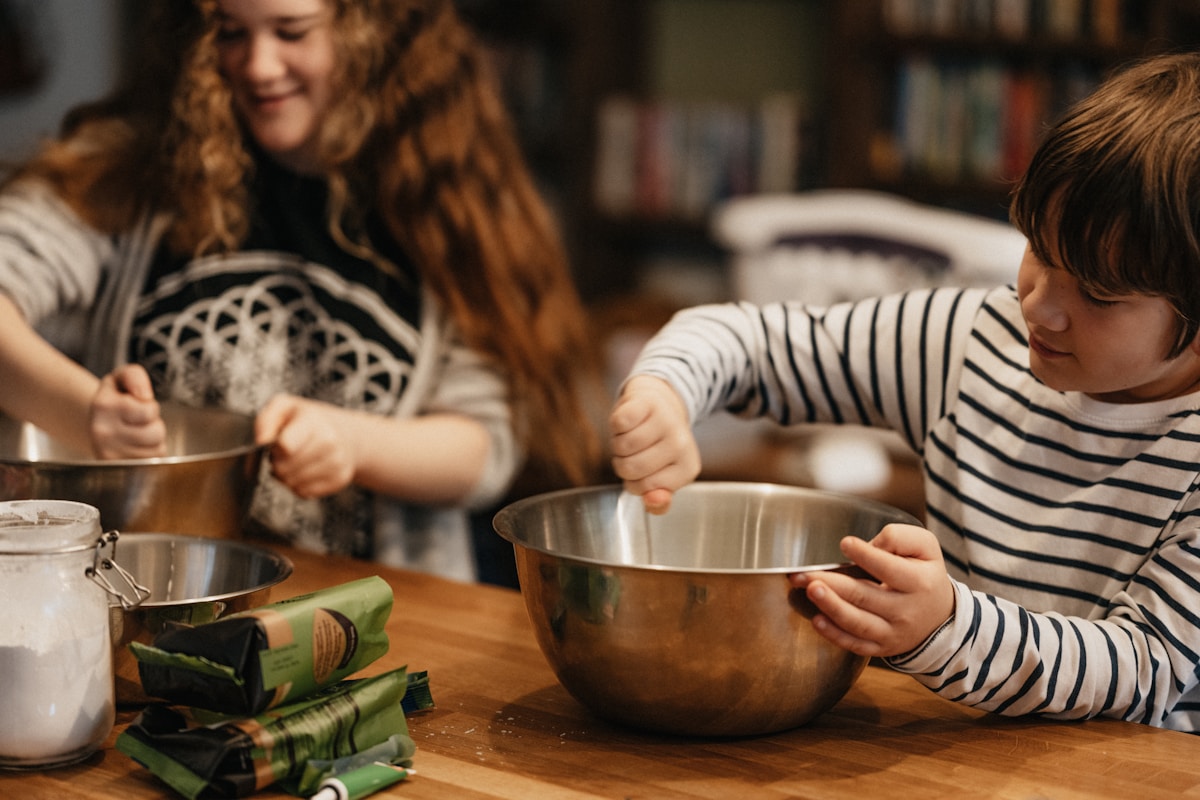
- The Dry Bowl (Toddler & Eager Eagle Task): In a large bowl, let your little one dump in and whisk together the flour, sugar, baking powder, and salt. They love watching the powders fly around (inside the bowl, hopefully!).
- The Wet Bowl (Eager Eagle Task): In a separate medium bowl, have your helper crack the egg (into a tiny bowl first!) and whisk it with the milk. Then, help them stir in the melted butter and vanilla.
- Combine! (All Hands on Deck): Pour the wet ingredients into the dry ingredients. Let the kids take turns stirring with a spatula until everything is just combined. Remember, a few lumps are your friends! Over-mixing makes for tough pancakes. Now is the time to gently fold in any berries or chocolate chips.
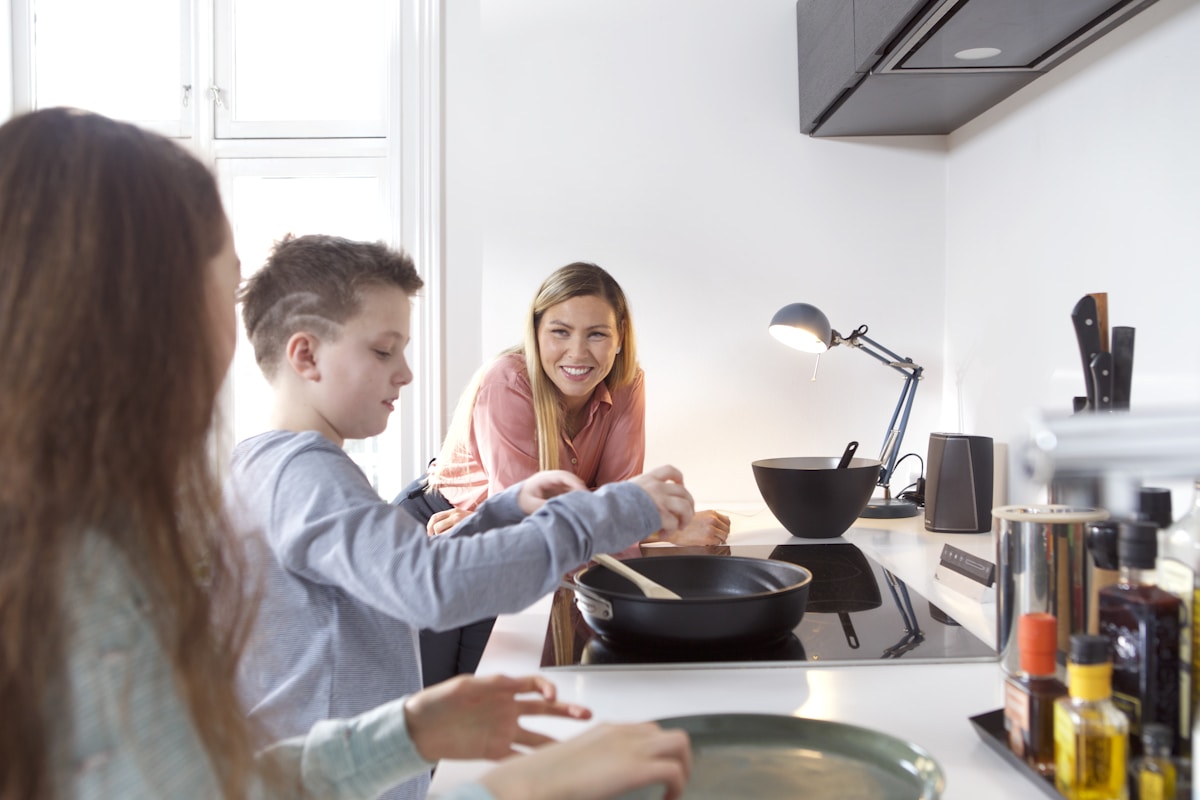
- The Grown-Up’s Job: Heat your non-stick electric griddle to 350-375°F (175-190°C) or a sturdy cast-iron pan (my Lodge pan is my weekend workhorse) over medium-low heat. The pan is ready when a drop of water sizzles and dances before evaporating. Add a pat of butter and swirl to coat.
- Pour & Cook (Junior Chef Task): Let your child use a ¼-cup measure to pour the batter onto the hot griddle. Or, for maximum fun, put the batter in a clean squeeze bottle and let them draw shapes! Cook for about 2-3 minutes, until you see bubbles forming all over the surface and the edges look dry and set.
- The Flip! (Supervised Junior Chef or Grown-Up): With a thin, wide spatula, carefully flip the pancake and cook for another 1-2 minutes until beautifully golden brown.
- Serve with Joy: Stack them high and let the kids be in charge of the toppings bar: maple syrup, fresh fruit, a dollop of yogurt, or a dusting of powdered sugar. This is their masterpiece!
Quick Idea: Build-Your-Own Yogurt Parfait Bar For a no-cook option, this is a total winner. Set out bowls of plain or vanilla yogurt, crunchy granola, and a rainbow of chopped fruits like berries, bananas, and peaches. Give each child a clear cup or small jar and let them create their own delicious layers. It’s edible art!
Quick Idea: Funny Face Toast This is the simplest, smiliest breakfast you’ll ever make. Toast a few slices of your favorite bread. Let the kids spread cream cheese, hummus, or a nut-free spread. Then, provide a platter of “face parts” for them to create with: blueberry eyes, a strawberry mouth, raspberry cheeks, and banana-slice ears. The giggles are guaranteed.
Embracing the Beautiful Mess (and Keeping Your Sanity)
Alright, let’s have a heart-to-heart. It’s going to get messy. Flour will find its way into the most surprising places, and a little batter might end up on the floor. Take a deep breath. It’s okay. (Yes, really.)
Prepare Your Space: Before you start, lay an old, washable tablecloth or a cheap shower curtain liner on the floor under their work area. Use oversized bowls to contain splashes. And always, always have a damp cloth at the ready for quick wipe-ups. It’s much easier to wipe up a fresh spill than a dried, crusty one.
Clean-Up is Part of Cooking: From the very beginning, teach them that cleaning up is part of the fun. Make it a game. Who can carry their own bowl to the sink without spilling? Who wants to be the “Bubble Master” with the dish soap at the sink? Singing a silly clean-up song works wonders to keep the mood light.
Focus on the “We Did It!” Moment: The most important ingredient you can bring to the kitchen is patience. The goal is not a Pinterest-perfect stack of identical pancakes. It’s the shared experience. It’s the look on their face when they serve you a breakfast they made with their own two hands. That pride, that connection, that shared joy—that’s the real magic. It’s the stuff that fills a family’s recipe book with so much more than just instructions.