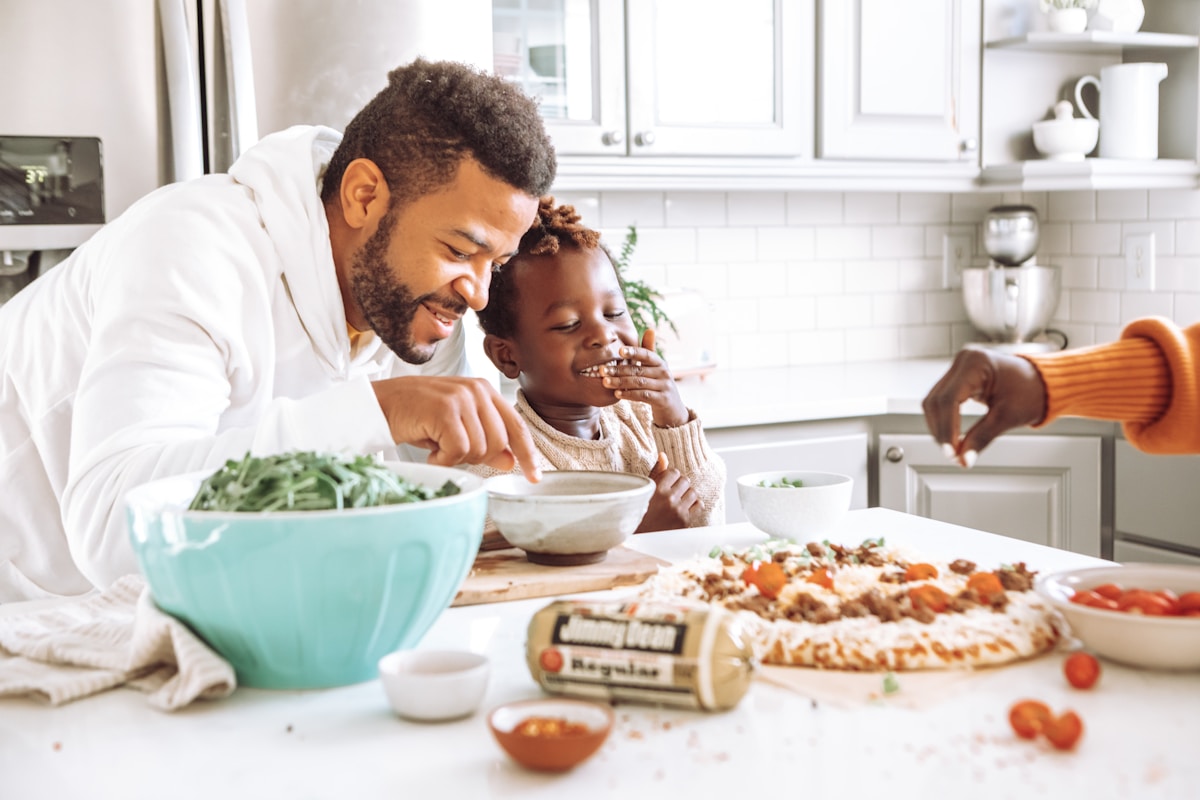
Oh, sweet friend, let me paint a picture for you. You envisioned it perfectly: a sun-drenched afternoon, your little one perched on a stool in a pristine apron, a bowl of cookie dough between you. You’d laugh as you took turns adding ingredients, creating a batch of cookies destined for the family recipe book.
But the reality? Flour has formed a fine, dusty layer on every surface (including the dog), there’s more eggshell in the batter than chocolate chips, and your little helper has lost interest and is now using two sticky spatulas as drumsticks on your favorite mixing bowl. The beautiful, peaceful vision has dissolved into sticky, noisy chaos.
If you’re nodding along, take a deep breath and let me share a little secret we’ve learned over a thousand spilled cups of milk here at Kitchen Fun: you’re doing it exactly right. The goal isn’t a perfect cookie. It was never about the cookie. It’s about creating a space where the messes feel as welcome as the hugs. It’s about building those “core memories,” and they are almost always a little bit messy.
The Myth of the Picture-Perfect Kitchen Moment
It’s so easy to scroll through our phones and see these flawless family moments. Perfectly piped cupcakes, smiling children with not a smudge of chocolate on their faces, and kitchens that look like they’ve never seen a stray sprinkle. It can make you feel like your chaotic reality is a failure. But I’m here to tell you that the most meaningful moments rarely happen in those perfect-looking spaces.
Children don’t remember the perfect crumb on a cake. They remember the feeling of being trusted with the whisk. They remember the sound of your laughter when the flour poofed up into a cloud. They remember the taste of the batter licked right off the spoon (yes, I know, but some rules are made to be bent just a little!).
In our family, we have a little motto: “Connection over Confection.” The true purpose of bringing your kids into the kitchen isn’t to produce a gourmet meal. It’s to share an experience. It’s a sensory playground where they learn about textures, smells, and tastes. More importantly, it’s a place where they learn about teamwork, patience, and the joy of creating something together. When you shift your focus from the final product to the shared process, everything changes. The pressure melts away, and the real fun can begin.
Building Memories One Small Task at a Time
So, how do we make this happen? The key is to give kids age-appropriate tasks where they can genuinely contribute and feel a sense of accomplishment. Forget the complex recipes for now and focus on these simple, joyful jobs.
For the Toddlers (Ages 2-4): The Sensory Explorers
At this age, it’s all about experiencing the kitchen with all five senses. Safety and supervision are everything. Their job isn’t to be precise; it’s to participate.
- Washing Produce: Set up a bowl of water on a towel on the floor and let them “wash” potatoes or carrots. They get to splash, and your veggies get a pre-rinse. (Everyone wins!)
- Stirring & Mashing: Give them a bowl with something soft like banana for banana bread or cooked sweet potato and let them go to town with a fork or a potato masher. It’s a fantastic way to build those little hand muscles.
- Sprinkling & Dumping: They are the masters of this! Let them be in charge of sprinkling cheese on pizza, adding chocolate chips to batter, or dumping pre-measured ingredients into the main bowl.
For the Little Chefs (Ages 5-7): The Eager Assistants
Their fine motor skills are developing, and they can follow simple, two-step directions. They want to do what you’re doing, so let them!
- Measuring: Let them scoop and level dry ingredients like flour and sugar. It’s a sneaky and effective math lesson.
- Cracking Eggs: This is a huge milestone! Teach them to crack an egg into a separate, small bowl first. That way, it’s no big deal if a little shell gets in—you can just fish it out before it goes into the main batter.
- Using a Kid-Safe Knife: There are wonderful nylon or plastic knives (a butter knife works in a pinch) that can cut through soft things like bananas, strawberries, or mushrooms. It gives them a huge sense of independence.
For the Kitchen Assistants (Ages 8+): The Budding Cooks
Now they’re ready for more responsibility. They can read a recipe, understand sequences, and start learning real cooking techniques with your guidance.
- Reading the Recipe: Make them the “Recipe Reader.” Their job is to tell you the next step, which helps them learn to plan and see the whole process through.
- Using the Stovetop (with 100% supervision): This is the time to teach them how to safely sauté vegetables for a sauce or scramble eggs for breakfast. Stay right by their side, teaching them about handle placement and heat safety.
- Meal Planning: Involve them in deciding what to make for dinner one night a week. It gives them ownership and makes them more likely to eat what they helped create.
Our Favorite “Memory-Maker” Recipes (That Are Almost Foolproof!)
Ready to put this into practice? Here are a couple of my go-to activities that are less about the recipe and more about the fun.
1. Anything-Goes Personal Pizzas
This is the ultimate creative meal. Buy pre-made pizza dough (most grocery stores have it, or ask your local pizzeria if they sell a ball of dough), a jar of your favorite sauce, and shredded mozzarella.
The real magic is the “topping bar.” Set out little bowls of anything you have on hand: sliced pepperoni, chopped bell peppers, mushrooms, olives, pineapple—whatever your family likes. Give each child their own small piece of dough to stretch and top. Their creations might look a little strange, but the pride on their faces when they pull their very own pizza out of the oven is priceless. Bake at 425°F (220°C) for 10-15 minutes, or until the crust is golden and the cheese is bubbly.
2. Monster Cookies
Every kid loves a cookie you can design yourself. You just need a solid, basic cookie dough. Here’s a simple one:
- 1 cup (2 sticks) of softened salted butter
- 3/4 cup granulated sugar
- 3/4 cup packed light brown sugar
- 2 large eggs
- 1 teaspoon vanilla extract
- 2 1/4 cups all-purpose flour (I’m partial to the consistency of King Arthur Flour)
- 1 teaspoon baking soda
- 1/2 teaspoon salt
Cream the butter and sugars together until light and fluffy. Beat in the eggs one at a time, then the vanilla. In a separate bowl, whisk the flour, baking soda, and salt. Gradually add the dry ingredients to the wet ingredients until just combined.
Now for the fun part! This is the “monster” mix. Set out bowls of chocolate chips, M&Ms, crushed pretzels, toffee bits, or colorful sprinkles. Let the kids add a scoop of this and a handful of that to their own portion of the dough. Drop by rounded tablespoon onto a baking sheet and bake at 375°F (190°C) for 9-11 minutes. They are chewy, delicious, and uniquely theirs.
The Secret Ingredient is Always You
My dear reader, you can have the best recipes and the most age-appropriate tasks, but the one thing your child will remember above all else is your presence. It’s the secret ingredient that turns a simple activity into a cherished memory.
Put your phone away. Turn on some music you all love. Talk about their day while you stir. When a spill happens (and it will), meet it with a calm, “Oops! Let’s clean that up,” instead of a frustrated sigh. Your calm and joyful presence is the magic that makes the kitchen feel like the warm, beating heart of your home.
Here’s my favorite practical tip for embracing the mess: before you start, head to the dollar store and buy a cheap, plastic party tablecloth. Lay it on the floor under your child’s chair or workspace. When you’re all done, you can just gather it up, shake the mess into the trash, and wipe it down for next time. (Your future self will thank you.)
I remember one time my son and I tried to make a new bread recipe. We misread the instructions and ended up with a flat, dense, very sad-looking loaf. We were both so disappointed for a minute, but then we decided to toast a slice anyway. It was hard as a rock, but we slathered it with butter and jam, took a bite, and burst out laughing. To this day, we still call it our “brick bread,” and it’s a far fonder memory than any perfect loaf we’ve made since.
So please, release yourself from the pressure of perfection. Welcome the chaos. Celebrate the spills. The kitchen is where families grow together, and growth is never a neat and tidy process. The love you stir into that lopsided cake is what they’ll taste for the rest of their lives.