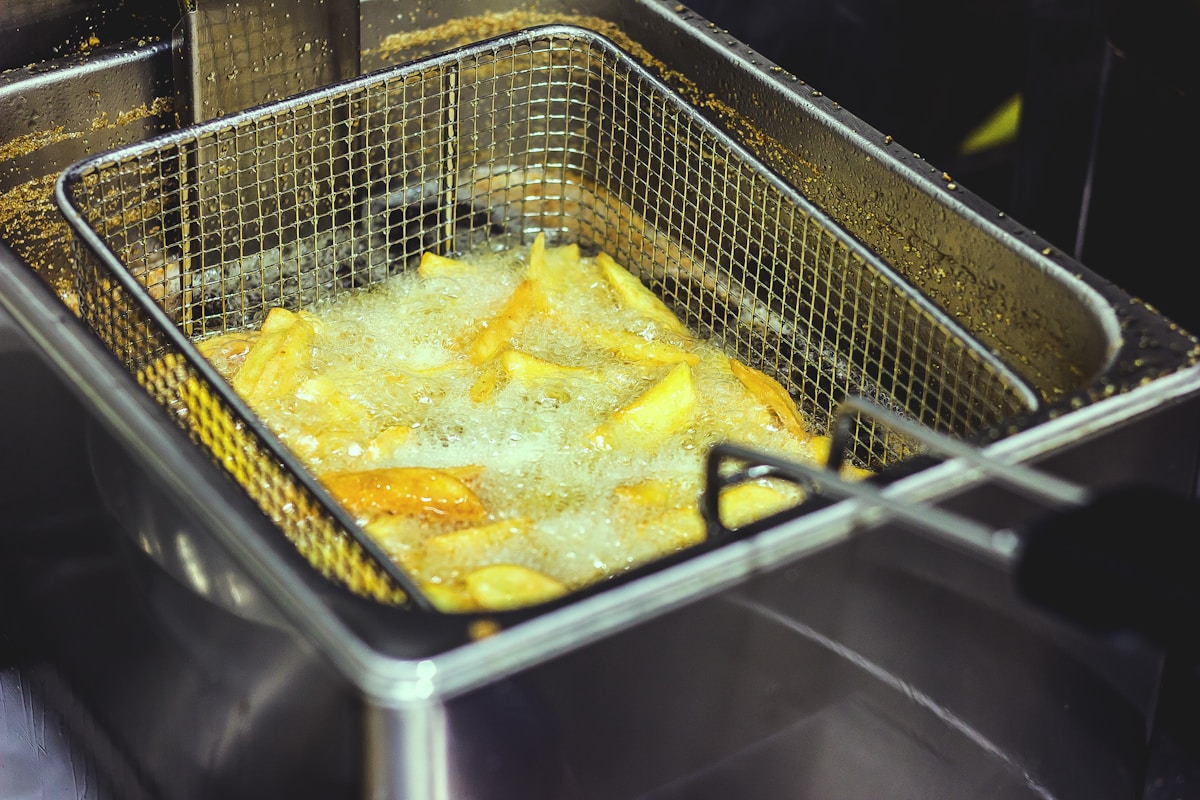
You are halfway through prepping fries or chicken, the pot needs several cups of oil, and the largest bottle in the cupboard is olive oil. Can you use it, or will it overwhelm dinner and waste an expensive ingredient?
Yes, olive oil for deep frying can be a sensible choice. The practical answer depends on whether you have extra-virgin or refined olive oil, how much oil your fryer needs, whether you want olive flavor, and whether you are making a small special batch or feeding a crowd.
Key Takeaways
- Olive oil can be used for deep frying, but extra-virgin and refined olive oils are not interchangeable.
- Refined olive oil is usually the more practical olive-oil option for frying because it has a milder flavor and often costs less than extra-virgin.
- Neutral oils such as canola, vegetable, and sunflower oil are often more economical for large batches of fries or chicken.
- Choose oil based on flavor, fryer capacity, cost, and reuse plans—not smoke point alone.
- Cool, strain, label, and store used oil carefully; never pour it down the drain.
The short answer is yes but the type of olive oil and the job matter
Olive oil is not one single product. A bottle labeled extra-virgin olive oil behaves differently in the kitchen from one labeled olive oil, pure olive oil, or light-tasting olive oil. These products vary in flavor, processing, price, and how practical they are for high-heat cooking.
That is why saying olive oil is simply unsuitable for deep frying is too broad. It can work, but it is not automatically the best oil for deep frying in every situation. A large batch of fries in a countertop fryer has different needs from a small batch of calamari in a Dutch oven.
A useful frying oil should answer five practical questions:
- Does it suit the cooking method and temperature in your recipe or appliance manual?
- Do you want the oil to add flavor or stay in the background?
- How much oil does your pot or fryer require?
- Is the total cost reasonable for the batch and any planned reuse?
- Will you fry foods whose flavors you want to keep separate?
Smoke point matters, but it is only one part of frying performance. Exact figures can vary by oil grade, refinement, brand, freshness, and how they are measured. Check the bottle, follow your recipe and appliance instructions, and avoid pushing oil until it smokes.
Extra-virgin olive oil vs. refined olive oil for deep frying
Extra-virgin olive oil is minimally processed and has the most noticeable olive aroma and flavor. It is often used for dressings, finishing dishes, dipping bread, and sautéing, and it is commonly the pricier olive oil option.
For deep frying, extra-virgin olive oil makes the most sense when its flavor is part of the dish. A small batch of zucchini, eggplant, shrimp, or Mediterranean-style seafood may benefit from a gentle olive note.
It is less practical when you need a large volume of oil or a very neutral result. Filling a fryer with extra-virgin olive oil can be expensive, and its flavor may compete with delicate batter, mild white fish, or classic diner-style fries.
Refined olive oil is processed for a milder flavor and more neutral profile. Store labels may say “olive oil,” “pure olive oil,” or “light-tasting olive oil.” Terms can vary by brand and region, so read the full label rather than assuming every bottle is the same.
“Light-tasting” generally refers to flavor and color, not calories. For frying, it often signals a milder olive profile, making it more flexible than extra-virgin olive oil.
Refined olive oil frying is often the more practical olive-oil route. It is usually milder and may cost less than extra-virgin olive oil. If you want to deep fry with olive oil without giving every food a strong olive taste, refined olive oil is the better place to start.
Before frying, smell the oil. It should smell clean and fresh, not stale, waxy, or rancid. Oil that smells off before heating will not improve in the fryer.
How olive oil compares with other oils for deep frying
The best oil for deep frying is the one that fits the food, batch size, budget, flavor goal, and household needs. A neutral oil is often the practical default for frequent frying, while refined olive oil can be a good middle ground when a mild olive character is welcome.
| Oil type | Flavor profile | Typical label language | Relative cost for a fryer-sized batch | Best-fit uses |
|---|---|---|---|---|
| Extra-virgin olive oil | Noticeably olive-forward | Extra virgin | Usually high | Small vegetable or seafood batches where flavor is welcome |
| Refined olive oil | Mild to lightly olive-like | Olive oil, pure olive oil, light-tasting olive oil | Medium to high | Small or medium batches when subtle olive flavor suits the dish |
| Canola oil | Neutral | Canola oil | Usually low to medium | Fries, chicken, and everyday frying |
| Vegetable oil | Neutral; blend varies | Vegetable oil | Usually low | Large casual batches and mixed frying jobs |
| Peanut oil | Mild, sometimes lightly nutty | Peanut oil | Medium | Fried chicken and fries when appropriate for the household |
| Avocado oil | Mild to neutral | Avocado oil | Usually high | Small batches when price is less important |
| Sunflower oil | Neutral | Sunflower oil | Low to medium | Fries, chicken, and foods needing little added flavor |
Canola and vegetable oil are often practical because they are neutral and commonly sold in larger, less expensive bottles. That makes them easier choices for a fryer that needs a substantial amount of oil. Because vegetable oil is a blend, its ingredients can vary from bottle to bottle.
Peanut oil is a familiar frying option for cooks who enjoy its mild flavor. If anyone eating the food has an allergy concern, choose an oil that works for everyone at the table rather than treating peanut oil as a casual substitute.
Avocado oil can be appealing for high-heat cooking, but its price can make it difficult to justify for a fryer-sized fill. It is often a better value for shallow frying or small batches than for several quarts of oil in a deep fryer.
The important comparison is not simply olive oil versus every other oil. Compare extra-virgin olive oil, refined olive oil, and neutral oils for the particular meal. If olive flavor is a feature, olive oil may be worth the added cost. If the goal is a large platter of crisp, neutral-tasting fries, a less expensive neutral oil is often the better fit.
Match the oil to fries chicken seafood and your fryer volume
For fries, volume and cost are usually the deciding factors. Potatoes do not need olive flavor to taste good, and a fryer may require much more oil than a quick glance at a bottle suggests. Canola, vegetable, or sunflower oil is often the practical choice for a large batch.
Refined olive oil can still work for fries, especially in a smaller pot. Use it when you enjoy its mild character and the total cost makes sense. Extra-virgin olive oil is harder to justify for a family-sized batch unless its flavor is specifically part of what you want.
For fried chicken, a neutral oil is often helpful. The coating, seasoning, and chicken already bring plenty of flavor, so a strongly flavored oil can muddy the result. A neutral oil also gives you more flexibility if you plan to reuse it later for another savory dish.
For seafood, olive oil can be more appealing. A mild refined olive oil works when you want fish or shellfish to remain the focus. Extra-virgin olive oil can make sense for a small batch of lightly breaded shrimp, squid, or vegetables, but only when its flavor fits the recipe.
For vegetables, olive oil is often a natural match. Fried eggplant, zucchini, artichokes, and similar foods can pair well with an olive note. The same oil may be less appealing for doughnuts, churros, or other sweet fried foods, where a neutral oil is generally easier to manage.
Do not guess how much oil you need. Check your countertop fryer manual for minimum and maximum fill levels. If using a pot, choose a sturdy, deep pot with generous headroom above the oil, and follow your recipe’s setup instructions. Never exceed an appliance fill line.
Calculate cost by total volume, not bottle price. If your fryer needs 2 quarts of oil and a bottle holds 1 quart, double the displayed price before comparing options. A premium bottle that seems affordable can become the costly choice once you need two or three bottles.
Also consider cleanup. Deep frying creates odor and can leave a greasy film around the cooking area. Keep the workspace clear, dry foods thoroughly when the recipe calls for it, and avoid overcrowding. Crowding can lower the oil temperature quickly and lead to uneven browning and more splatter.
Flavor transfer matters when you plan to save oil. Oil used for fish may give the next batch of fries a seafood aroma. Oil used for heavily seasoned chicken may not suit delicate vegetables or sweets. Labeling saved oil by food type helps prevent surprises.
Fry safely reuse oil thoughtfully and dispose of it correctly
Use the temperature guidance in your recipe and appliance manual, and monitor the oil with a thermometer if your fryer does not hold a steady temperature. The goal is stable heat, not the highest heat possible. If oil begins to smoke, reduce the heat and do not ignore the warning.
Keep water away from hot oil. Wet utensils, ice crystals on frozen food, and damp ingredients can cause intense splattering. Add food carefully in manageable batches, and stand back as you lower it into the oil.
After frying, let the oil cool completely before moving, filtering, or storing it. Hot oil can cause serious burns and may damage unsuitable containers.
If you plan to reuse the oil, strain out crumbs once it is fully cool. A fine-mesh strainer lined with a coffee filter or clean paper towel can catch smaller particles, though filtering may take time. Removing food particles helps keep the oil cleaner for its next use.
Store filtered oil in a clean, covered container away from light and heat. Label it with the oil type and food cooked in it, such as “canola—chicken” or “olive oil—vegetables.” Do not combine partly used oils with incompatible flavors simply to empty containers.
There is no universal reuse count for home frying. Oil breaks down at different rates depending on the food, moisture, crumbs, frying conditions, and handling. Before reusing it, discard oil that smokes unusually early, smells off, looks excessively dark, foams persistently, feels unusually thick, or produces greasy, unpleasant-tasting food.
Do not pour used frying oil down the drain, toilet, or garbage disposal. Once cool, pour it into a sealed container and follow local household-waste or cooking-oil collection guidance. Disposal rules vary, so check what your local program accepts.
FAQs
Can you deep fry with olive oil without making food taste strongly of olives?
Yes. Choose refined olive oil, often sold simply as olive oil, pure olive oil, or light-tasting olive oil, for a milder result. Extra-virgin olive oil has more character and is best reserved for foods that pair well with its flavor.
Is refined olive oil better than extra-virgin olive oil for deep frying?
For many home cooks, refined olive oil is the more practical choice because it is milder and often less expensive. Extra-virgin olive oil can be worthwhile for small, flavor-led batches, especially vegetables and some seafood.
What is the most cost-effective oil for deep frying at home?
A neutral oil sold in a larger bottle, such as canola or vegetable oil, is often the most cost-effective option for large batches. Compare the price based on the amount your fryer actually needs, then consider whether you expect to filter and reuse the oil for similar foods.
Olive oil for deep frying is a valid option, not a default rule. Choose refined olive oil when you want a mild olive character and the cost works for your batch. Reserve extra-virgin olive oil for small, flavor-led frying. For big pots of fries and everyday chicken, neutral oil will usually save money and keep flavors simple.