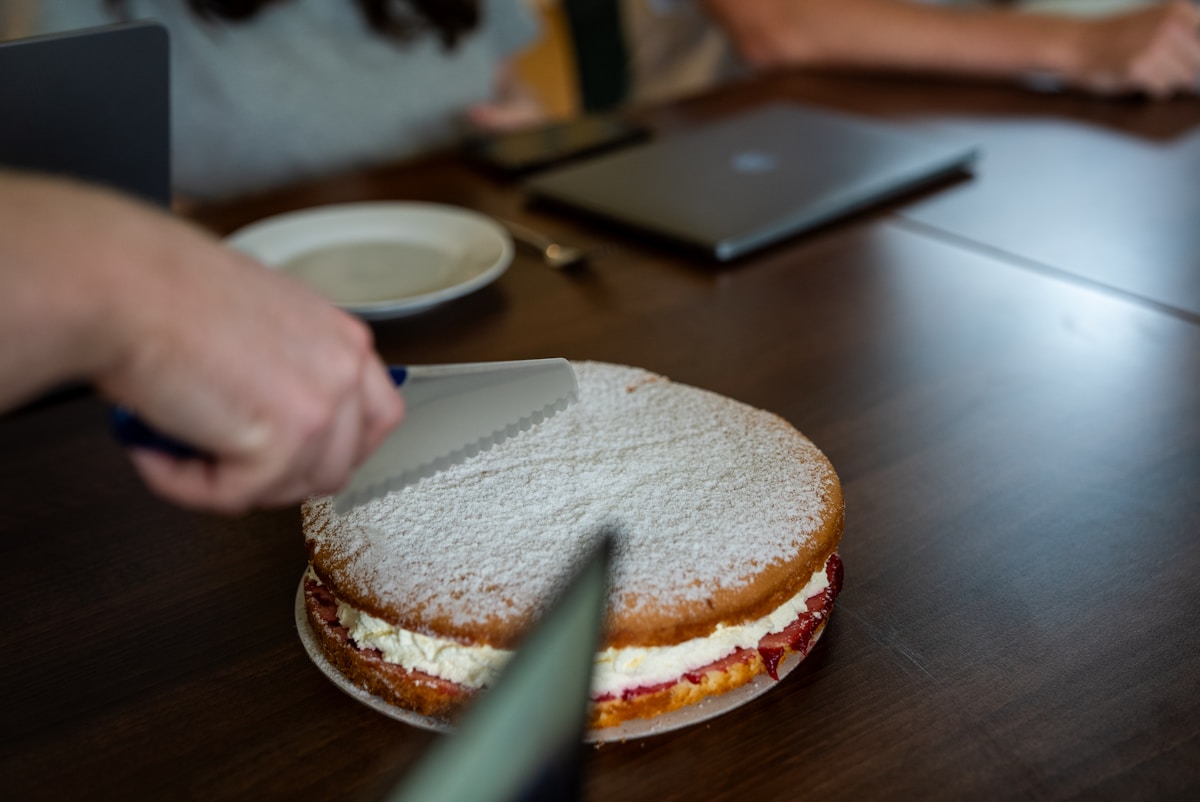
It’s a heart-sinking moment for any baker. You’ve spent hours baking the perfect vanilla bean cake, whipping up a flawless Swiss meringue buttercream, and smoothing it to a pristine, white canvas. For the final touch, you arrange a beautiful crown of ruby-red, fresh strawberries. It looks like a magazine cover. But an hour later, you check on your masterpiece, and your heart drops. Ugly, pinkish-red streaks are weeping down the sides of your cake, pooling at the bottom. Your perfect creation is ruined.
What happened? It’s not your fault; it’s chemistry. But the good news is that with a little bit of science, you can make chemistry work for you, not against you.
The Science of the Weeping Strawberry
Before we fix the problem, it helps to understand why it happens. The culprit is a powerful natural process called osmosis. Think back to high school biology. Osmosis is the movement of water across a semipermeable membrane (like the cell walls of a strawberry) from an area of low solute concentration to an area of high solute concentration.
Your buttercream frosting is packed with sugar, making it a high-solute environment. The fresh, juicy strawberry is full of water, a low-solute environment. When you place that sliced berry onto the frosting, the sugar in the buttercream acts like a magnet, pulling the water right out of the strawberry’s cells. This process is called “bleeding” or “weeping,” and it results in that syrupy mess. (It’s the same principle used to macerate berries for a sauce, but here, it’s our worst enemy.)
So, the goal is simple: we need to stop the water from escaping the strawberry. We need to build a wall.
Your First Line of Defense Perfect Berry Prep
Success begins long before the berries ever touch the cake. Proper preparation is non-negotiable and sets the foundation for a stable, beautiful decoration. Rushing this step is the most common mistake I see.
First, wash your strawberries, but do it hours before you plan to use them. Wash them whole, with the stems still on. If you remove the stems or slice them before washing, water will seep into the berry’s flesh, making our problem even worse.
Next, and this is the critical part, you must get them completely dry. I mean bone-dry. Pat them gently with paper towels, then lay them out in a single layer on a clean kitchen towel or more paper towels and let them air dry for at least an hour at room temperature. Any lingering surface moisture will just work against you. (Your future self will thank you for being patient here.)
Only hull and slice the berries right before you’re ready to apply your chosen sealing method. The less time the cut surfaces are exposed to air, the better.
Creating an Edible Barrier The Sealing Techniques
This is where the real magic happens. To stop osmosis, we need to create an impermeable barrier between the wet, cut side of the strawberry and the sugary frosting. Think of it as an edible raincoat for your fruit. You have a few excellent options.
1. The Apricot Glaze Shield This is a classic pastry chef technique for a reason: it works beautifully and adds a lovely shine.
- What you need: About 1/4 cup (75g) of apricot jam or preserves and 1 teaspoon of water.
- The Method: Gently heat the jam and water in a small saucepan over low heat until it becomes liquid and easily spreadable. Don’t let it boil.
- Application: Strain the warm mixture through a fine-mesh sieve to remove any fruit solids, leaving you with a clear, smooth glaze. Using a small pastry brush, apply a thin, even coat of the warm glaze to the cut surfaces of your strawberries. Place them on a piece of parchment paper to let the glaze set for about 15-20 minutes before placing them on your cake. The pectin in the jam creates a perfect seal.
2. The Chocolate Armor For a delicious and incredibly effective barrier, nothing beats chocolate. It hardens into a solid, waterproof layer.
- What you need: White, milk, or dark chocolate. For ease, I highly recommend using compound chocolate (often sold as candy melts or melting wafers, like those from Wilton or Ghirardelli). It sets quickly and doesn’t require tempering.
- The Method: Melt the chocolate or candy melts in a microwave-safe bowl in 30-second intervals, stirring in between, until smooth.
- Application: Dip the cut side of each strawberry slice into the melted chocolate, scraping off any excess. Or, for more control, use a small brush to “paint” a thin layer onto the cut surface. Place the berries, chocolate-side up, on a parchment-lined tray and pop them in the refrigerator for 5-10 minutes until the chocolate is firm. This barrier is foolproof.
3. The Piping Gel Quick-Fix This is my go-to kitchen hack when I’m short on time. Clear piping gel is essentially a pre-made, flavorless glaze.
- What you need: A small amount of clear piping gel, available from brands like Wilton.
- Application: Simply use a small offset spatula or a clean finger to smear a very thin layer of piping gel across the cut side of the berry. It instantly creates a moisture-proof seal. It’s fast, easy, and virtually invisible.
Timing Your Assembly for Flawless Results
Even with a perfect seal, time is a factor. A decorated cake is a delicate thing, and the longer it sits, the more chances there are for things to go wrong.
If you’ve used one of the barrier methods above, you can safely decorate your cake up to 6-8 hours in advance and keep it refrigerated. The barrier will hold, and your frosting will remain pristine.
If you decide to forgo a barrier and place naked, sliced berries on your cake (a risky move!), you must do it at the absolute last minute. I’m talking about arranging the berries right before you walk out the door or just before cutting the cake. Even then, you may see some minor bleeding within the hour.
For a really important event, like a wedding or a big party, consider transporting the cake and the prepared (and sealed!) berries separately. You can then assemble the final decorations on-site in just a few minutes, ensuring it looks absolutely perfect when it’s presented.
Alternative Berries When Fresh Isn’t Best
Sometimes, the best solution is to sidestep the problem entirely. If your cake needs to sit out for a long time, or if you’re just not in the mood to fuss with barriers, there are other wonderful ways to get that strawberry flavor and look.
- Freeze-Dried Strawberries: These are a decorator’s dream. They have zero moisture, intense flavor, and a vibrant color. You can place them whole, in slices, or crush them into a beautiful pink powder to dust over the cake. (They also add a fantastic crunchy texture.)
- A Proper Strawberry Filling: Keep the fresh fruit inside the cake. Cook down strawberries into a thick compote or jam. When assembling your layer cake, pipe a sturdy “dam” of buttercream around the outer edge of each cake layer, then fill the center with your strawberry filling. The dam keeps the wet filling contained and away from your exterior frosting.
- Candied Strawberries: While more labor-intensive, candying strawberries creates a gorgeous, jewel-like decoration that is completely sealed and stable.
Baking is a beautiful dance between art and science. By understanding the simple chemistry of why strawberries weep, you can take control, prevent a decorating disaster, and ensure your beautiful cakes taste as incredible as they look.