Oh, that sound. It’s a sound every home cook knows. It’s not the happy sizzle of garlic in olive oil or the gentle bubble of a simmering soup. It’s the sharp CLANG of a dropped pan, followed by a tense silence, and then maybe a muttered, “Oops.”
For many of us, this is the soundtrack to a familiar kitchen dance. One partner moves through the space like a whirlwind, focused on getting the job done quickly. The other follows behind, wincing at every near-miss and trying to gently move Grandma’s porcelain dish out of the line of fire. It’s The Sprinter and The Stroller, and when they share a kitchen, sparks can fly for all the wrong reasons.
I’ve heard this story so many times, my dears. The frustration is real on both sides. One person feels their belongings aren’t respected, and the other feels like they’re walking on eggshells, constantly criticized for being “careless.” But I promise you, this isn’t a battle of right versus wrong. It’s a difference in style. And the wonderful thing is that with a little understanding and a few clever tricks, you can turn that chaotic kitchen into a place of harmony and teamwork. Because the kitchen is where families grow together, not where they fall apart over a chipped coffee mug.
Understanding the ‘Why’ Behind the Rush
Before we can solve a problem, we have to understand it. The partner who rushes isn’t usually trying to be destructive. More often than not, their goal is efficiency. They see a task—making dinner, cleaning up—and their brain is wired to find the fastest path from A to B. In their mind, a broken glass is just an unfortunate (and rare) casualty on the road to a clean kitchen and a finished chore.
On the other side, the more methodical partner often sees the process as part of the task. For them, carefully washing a wine glass isn’t just about getting it clean; it’s about taking care of a beautiful object. They see the frantic energy not as efficiency, but as a risk that creates more work and stress in the long run. (After all, who has to sweep up that broken glass?)
Neither viewpoint is inherently wrong. One person values speed, the other values mindfulness. The friction happens when these two values collide without a conversation. The key isn’t to force the Sprinter to become a Stroller overnight. It’s to create a kitchen environment where rushing isn’t necessary, and where clear expectations protect both your sanity and your favorite serving platter.
This isn’t just about dishes. It often taps into deeper feelings about mental load and shared responsibilities. The feeling of needing to rush might come from the pressure of having a dozen other things to do. So, let’s approach this with kindness and a good, solid plan. Let’s make your kitchen work for you, not against you.
The Magic of ‘Mise en Place’ Your Secret Weapon Against Chaos
If I could give every couple just one piece of kitchen advice, it would be this: embrace mise en place. It’s a fancy French term that simply means “everything in its place,” and it is the single most effective way to eliminate kitchen chaos. It transforms cooking from a frantic scavenger hunt into a calm, creative flow.
Most rushing happens when we try to do four things at once. We’re chopping an onion while the oil is getting too hot, all while frantically searching for the paprika we know is somewhere in the back of the cabinet. Mise en place stops this madness before it starts.
Here’s how to do it. Before a single flame is lit:
- Read the Recipe: Read it all the way through. Twice. Understand the steps and the timing. (Your future self will thank you.)
- Gather Your Tools: Get out every single thing you’ll need. The cutting board, the knives, the bowls, the spatula, the measuring spoons. Put them on your counter.
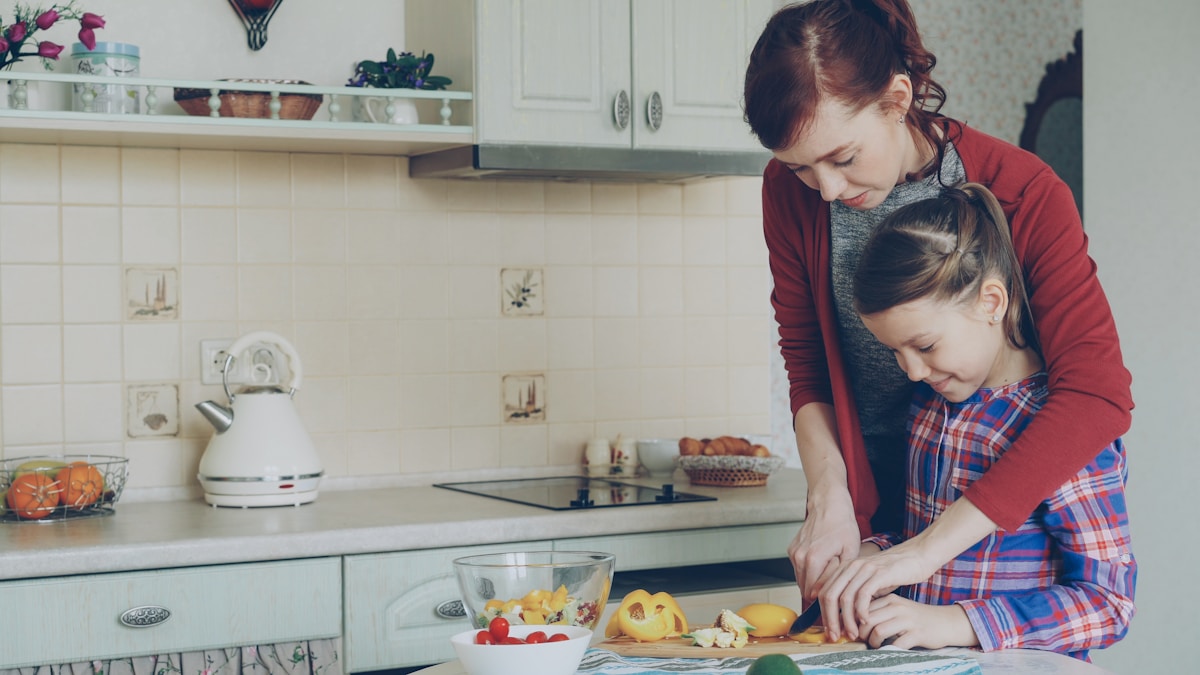
- Prep Your Ingredients: This is the most important part. Chop all your vegetables and put them in small bowls. Measure out all your spices. Mix your sauce. If you’re making a stir-fry, this means your bell peppers are sliced, your garlic is minced, your soy sauce and ginger are whisked together, and your chicken is cubed. Everything is ready to go.
Now, when you turn on the stove, what happens? You’re not rushing. You’re assembling. You add your aromatics, and you can give them your full attention, enjoying the fragrant smell. You add your vegetables, and you’re not panicked because you still need to chop the broccoli. You’re calm. You’re in control. It feels less like a race and more like you’re the host of your very own cooking show.
For the partner who tends to rush, this system provides structure that actually increases efficiency by preventing mistakes. For the partner who values care, it creates a peaceful environment where each step can be done mindfully.
Reorganizing Your Space for a Smoother Flow
A chaotic space breeds chaotic energy. If you have to open three different cabinets and two drawers to find what you need to make a simple salad, of course you’re going to feel rushed and frantic! A well-organized kitchen is a calm kitchen.
Take an afternoon together and rethink your kitchen’s layout based on how you actually cook. The goal is to minimize unnecessary movement. Create work zones:
- The Prep Zone: This should be the largest clear counter space you have, ideally located between the sink (for washing) and the fridge (for ingredients). Keep your cutting boards, knives, and mixing bowls here.
- The Cooking Zone: This is the area immediately around your stove. The drawer or utensil crock next to the stove should hold your most-used tools: spatulas, wooden spoons, tongs, and whisks. In the cabinet nearby, store your everyday pots and pans. Your cooking oils, salt, and pepper should be within arm’s reach.
- The Cleaning Zone: Everything related to cleanup lives here, around the sink and dishwasher. Sponges, soap, drying racks, and dishwasher pods.
Beatrice’s Kitchen Hack: Try the “5-Second Rule.” If it consistently takes you more than five seconds to find a common kitchen tool (like your can opener or vegetable peeler), it’s living in the wrong place. Find it a more logical and accessible home. This simple change can dramatically reduce that frantic rummaging that leads to knocked-over glasses and frayed nerves.
The Gentle Art of Washing Up Together
Oh, the sink. This is often ground zero for broken dishes. A precarious pile of pots, plates, and sharp knives soaking in murky water is an accident waiting to happen. It’s time to establish some simple, gentle rules for washing up.
First, agree on what gets hand-washed. Good chef’s knives should never go in the dishwasher (it dulls the blade and can damage the handle), nor should wooden cutting boards, cast-iron skillets (like a classic Lodge pan), or delicate glassware. Designate a special spot on the counter for these items so they don’t get mixed in with the general pile.
Next, implement a “one-touch” system. Instead of piling things in the sink, scrape the plate, give it a quick rinse, and put it directly into the dishwasher or the dish rack. This prevents the dreaded sink pile-up and reduces the risk of chipping. When washing by hand, wash one item at a time. Trying to wash a stack of three plates at once is how you end up with two.
Invest in a good, cushioned drying mat, like one from OXO. It provides a soft landing spot for delicate glasses and bowls, offering an extra layer of protection against chips and cracks. It’s a small investment that can save a lot of heartache.
Turning Down the Heat on Communication
Ultimately, the best kitchen tool you have is your voice. But it matters how you use it. When you’re feeling frustrated, it’s easy to let accusations fly. “You’re so careless!” or “Why do you always rush?” This language immediately puts the other person on the defensive.
Instead, try framing your feelings around the object or the action, not the person. Instead of, “You broke another bowl,” try, “I’m so sad that bowl broke, it was one of my favorites.” This opens the door for empathy rather than an argument.
Talk about your different styles when you’re not in the middle of a stressful cleanup. Over a cup of tea, you can say, “You know, I’ve noticed that we have different paces in the kitchen. I tend to go slow, and you’re super fast! Can we figure out a system that works for both of us?”
Agree on a few “non-negotiables.” These are the few precious items that require extra-special care. Maybe it’s the crystal wine glasses, the KitchenAid mixer bowl, or the cast-iron pan that needs to be seasoned just so. By defining these together, you’re creating shared standards, not imposing rules.
And most importantly, celebrate your successes. When you have a smooth, calm evening cooking together, say it out loud! “It felt so nice and peaceful in here tonight. Thank you.” Acknowledging the positive changes reinforces them and makes both of you feel like you’re on the same team.
Because that’s what this is all about. You’re a team, building a life and a family together. Your kitchen should be the heart of that home—a place of warmth, delicious smells, and happy collaboration, not a battlefield of broken glass. With a little patience and a lot of love, it absolutely can be.