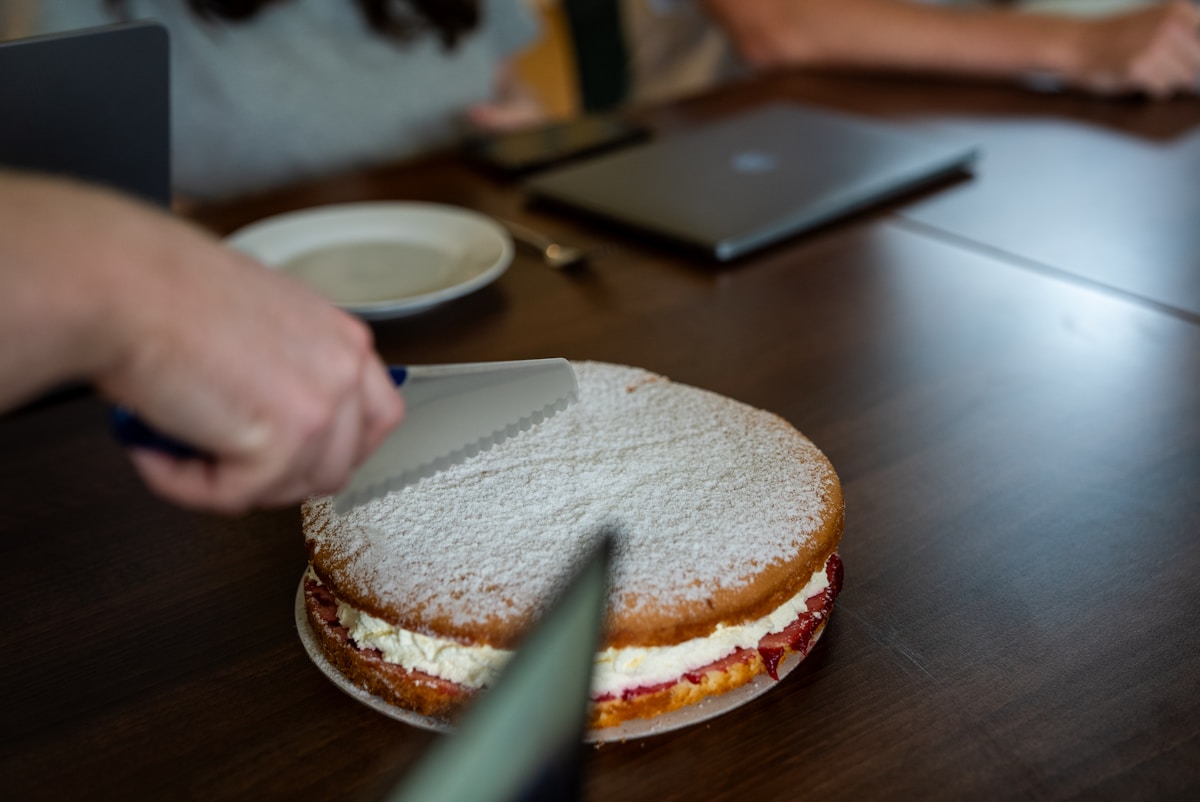
There’s a moment of pure kitchen panic that every ambitious parent-baker knows. You’ve spent hours baking the perfect layers, whipping up silky buttercream, and lovingly decorating a birthday cake masterpiece for your little one. You step back to admire your work… and you see it. The slow, sickening, heart-stopping lean. Is it your imagination? No, the top tier is definitely starting to slide. Suddenly, your towering confection looks less like a celebration and more like the Leaning Tower of Pisa.
We pour so much love into these celebratory bakes, and seeing one fail at the last minute is just heartbreaking. But I’m here to tell you a little kitchen secret: it’s not your fault! You haven’t failed as a baker. You’ve just missed the one step that professional bakers use to defy gravity. It has nothing to do with your recipe and everything to do with a little bit of simple, brilliant construction.
Today, we’re going to leave those cake-tastrophes behind. We’re going to build a cake that’s as sturdy as it is stunning, so the only thing you have to worry about is who gets the corner piece with the most frosting.
Why Buttercream Is a Cushion Not Concrete
First, let’s talk about why tall cakes get wobbly. We tend to think of frosting as a delicious glue that holds everything together. And for a simple two-layer cake, it does a fine job. But when you start stacking tiers high, you introduce a powerful force: weight.
A second or third tier of cake, plus all its frosting and fillings, is surprisingly heavy! When you place that weight directly onto a lower tier, all you have supporting it is… more cake. Cake, by its very nature, is soft, airy, and delicate. The weight from above begins to compress the soft crumb of the cake below, and the slippery layers of buttercream start to bulge. This is where the dreaded lean begins.
Think of it like building with LEGO bricks versus building with marshmallows. You can’t build a tall, stable tower out of marshmallows, right? You need an internal structure. This is where a tiny bit of kitchen engineering comes in. We’re not just bakers; we’re about to become cake architects! All it takes are two simple, inexpensive tools that will completely change your cake-stacking game.
Your Cake Construction Toolkit
Don’t be intimidated! Your structural support toolkit is incredibly simple and can be found at any craft store, cake decorating supply shop, or even online. Many large supermarkets are starting to carry these items, too.
-
Dowels: These are the hidden pillars of your cake. They are food-safe rods that you insert into the cake to act as support columns. They come in a few varieties:
- Plastic Dowels: These are usually white, hollow plastic tubes. They are strong, easy to cut with sturdy kitchen shears or clippers, and reusable if you wash them well.
- Wooden Dowels: These look like thick wooden skewers. They’re very strong but require a small, clean saw or very strong clippers to cut. Make sure you get the ones sold for food, not from a hardware store.
- The Boba Straw Hack: In a pinch for a smaller, lighter cake (like a 6-inch tier on top of an 8-inch tier), you can use wide, sturdy boba (bubble tea) straws! They are surprisingly strong and incredibly easy to cut with scissors. (I wouldn’t recommend this for a heavy, three-tier wedding-style cake, but for a family birthday cake, it’s a brilliant trick.)
-
Cake Circles (or Cake Boards): This is the other half of the magic equation. A cake circle is just a round piece of sturdy, food-safe cardboard, the exact same size as the cake tier that will sit on top of it. This board sits on top of your dowels, and the next cake tier sits on the board. This is how the weight gets transferred from the cake to the dowels, completely bypassing the delicate cake below. (Genius, right?)
You’ll also need a ruler and a marker or pencil to get your measurements right. A pair of strong scissors or wire cutters will be your best friend for cutting the dowels to the perfect height.
The Step-by-Step Guide to Stacking Like a Pro
Alright, aprons on! Let’s walk through this process together. It’s much easier than it sounds. For this example, let’s pretend we’re stacking an 8-inch round cake on top of a 10-inch round cake.
Step 1: Prep Your Tiers Before you even think about stacking, make sure your individual cake tiers are chilled. A cold cake is a firm cake. After leveling and filling your layers, give each completed tier at least 30 minutes in the refrigerator (or 15 in the freezer). This makes them so much easier to handle and less prone to tearing or smushing. Apply a crumb coat to both tiers and chill them again until firm.
Step 2: Frost Your Base Place your bottom tier (the 10-inch cake) on its final serving platter or cake drum. Give it its beautiful final coat of frosting. Smooth the top as perfectly as you can.
Step 3: Measure and Insert the Dowels This is the most important step. Take one of your dowels and gently push it straight down into the center of the 10-inch cake until it hits the bottom board. Now, using a food-safe marker or just the tip of your finger, mark the dowel precisely where it meets the top of the frosting. Pull the dowel straight out. This is your guide! Cut the dowel at the mark you made. Now, cut 4 or 5 more dowels to this exact same length. (Your future self will thank you for making them all identical.)
Now, insert the cut dowels into the bottom tier. Don’t put them at the very edge. You want to place them in a circle about an inch inside where the 8-inch cake will sit. For a 10-inch base holding an 8-inch top, this means you’ll make a 6- or 7-inch circle of dowels. Push them straight down until they are flush with the frosting. They should be practically invisible.
Step 4: The Magic Platform Take your 8-inch cardboard cake circle. Spread a tiny smear of buttercream on the bottom of it—this helps it stick. Gently place the cardboard circle on top of your 10-inch cake, centered right over the dowels you just inserted. The cardboard will rest on the hidden dowels, creating a solid, stable platform.
Step 5: The Big Lift Now for the top tier. Your 8-inch cake should already be assembled and crumb-coated on its own 8-inch cake board. Using a large, angled spatula (and maybe a second helping hand if you’re nervous), carefully lift the 8-inch tier and place it directly on top of the cardboard platform you created. The cardboard-on-cardboard contact makes for a secure base. Once it’s in place, you can give it its final coat of frosting and decorate to your heart’s content, hiding the seam between the tiers with a border of piped frosting or ribbon.
Your Top Questions Answered
Let’s tackle a few common worries I hear from families in my cooking classes.
“Do I have to take the dowels out before serving?” Yes, absolutely! This is the most important part of serving a doweled cake. When it’s time to cut the cake, you disassemble it. Gently remove the top tier (it will lift right off with its cardboard bottom). Place it on a separate cutting board and serve it. Then, using clean tongs or pliers, pull the dowels straight out of the bottom tier before slicing and serving it. Always let your guests know the cake contained supports!
“What if my dowels aren’t cut perfectly even?” Try your best to get them as even as possible. If one is slightly too long, your top tier will wobble. If one is too short, it won’t be doing its job. This is why cutting them all based on that first measured dowel is the best method.
“My cake is just one tier, but it’s very tall with four layers. Does it need dowels?” As a rule of thumb, any single cake that’s taller than about four or five inches can benefit from some support. You can insert a single, long, sharpened wooden dowel right through the center of all the layers, from top to bottom. This acts like a central spine and is fantastic for preventing layers from sliding during transport.
Building a tiered cake is a journey, and these simple structural secrets are your map to success. The first time you do it, it feels like performing magic. But soon, it will become second nature, opening up a whole new world of creative, gravity-defying cakes for every family celebration. Now go on and build something wonderful! Your family is going to be so impressed.