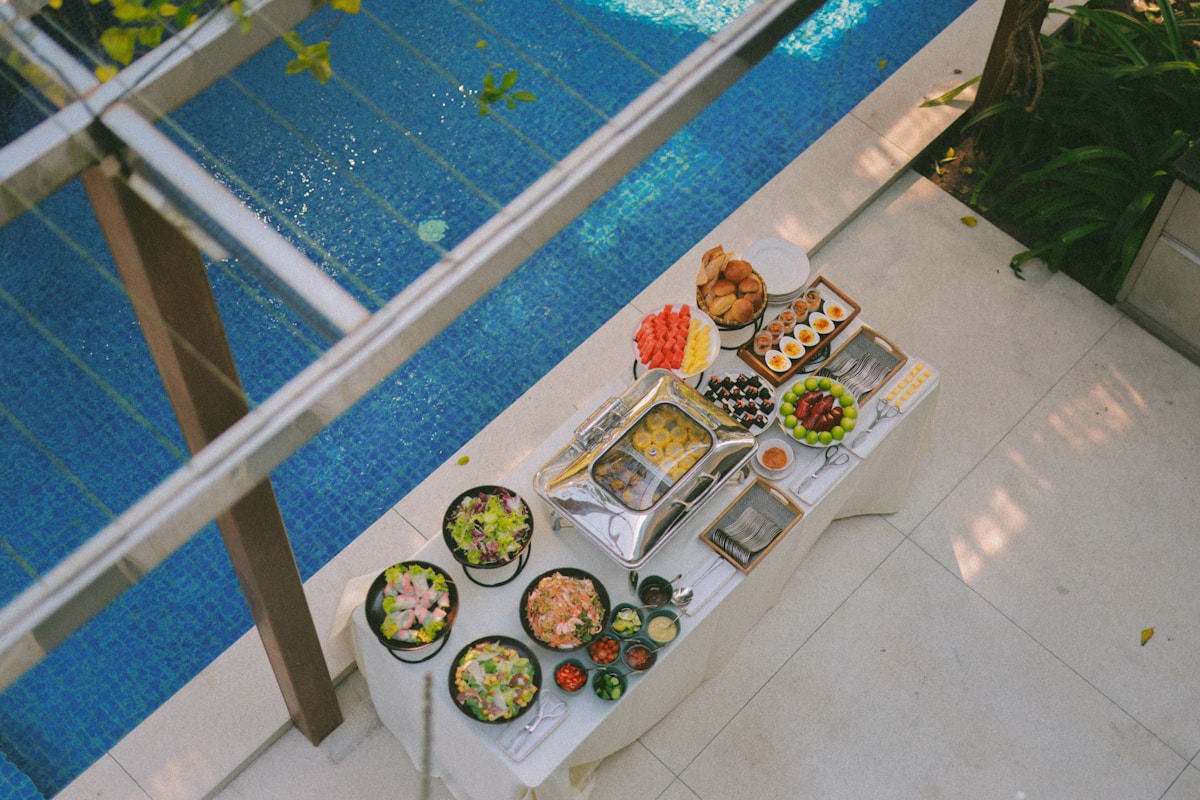
There’s a unique kind of pressure that comes with feeding a crowd. Whether it’s a wedding, a milestone anniversary, or a big community block party, the air hums with happy anticipation. But for the person in charge of the menu, another hum often accompanies it: the low-grade buzz of food anxiety. Did you remember your cousin is gluten-free? Is there anything truly satisfying for your vegan colleague? Will your uncle with the dairy allergy find something safe and delicious to eat?
Feeding a large group is a profound act of love and community, but when diverse dietary needs enter the picture, it can feel like a high-stakes puzzle of restrictions. It’s easy to get lost in a sea of “can’ts” and “don’ts.”
But what if we reframed the challenge? What if we saw it not as a puzzle of limitations, but as a beautiful opportunity to tell a more inclusive, more thoughtful, and ultimately more delicious story with our food? Planning a menu that welcomes everyone isn’t about subtraction; it’s about creative, compassionate addition. It’s about building a table where everyone has a seat and a plate full of something wonderful.
Find Your Culinary Story
Before you choose a single ingredient, before you even think about a recipe, the first and most important step is to choose a theme. This is your anchor, your narrative thread. A strong culinary theme doesn’t just make your event feel cohesive and memorable; it often provides a natural, elegant framework for accommodating different needs without making anyone feel like an afterthought.
Think about cuisines around the world that are built on a foundation of fresh vegetables, flavorful grains, and hearty legumes. These food cultures have been masterfully accommodating diverse eaters for centuries.
Consider a theme like a Mediterranean Mezze Feast. The story here is one of sun-drenched shores, breezy afternoons, and tables groaning with shared plates. This theme naturally and effortlessly includes options for nearly everyone:
- For the Vegans: Creamy hummus, smoky baba ghanoush, marinated olives and artichoke hearts, vibrant tabbouleh (made with quinoa for a GF option), and hearty lentil salads.
- For the Gluten-Free: All of the above, plus grilled halloumi cheese, and flavorful chicken or lamb skewers. Serve with a platter of crisp, gluten-free crackers and crunchy vegetable sticks alongside the traditional warm pita.
- For the Dairy-Free: Most of the vegan options are already safe, as are the grilled meat skewers. The entire spread feels abundant and intentional, not like a collection of special requests.
Or, imagine a Tuscan Harvest Table. The story is one of rustic elegance and celebrating the bounty of the land. This could feature a creamy polenta bar as the centerpiece. Polenta is naturally gluten-free, and you can offer toppings that suit every palate: a rich, slow-cooked meat ragu, a robust vegan mushroom ragu, roasted vegetables, and a simple, bright tomato-basil sauce. Add a large platter of grilled vegetables drizzled with balsamic glaze and a classic white bean and rosemary dip, and you have a feast that feels both luxurious and welcoming.
By starting with a story, you create a menu that is inherently flexible and designed for sharing.
The Art of the Overlap: Smart Ingredient Planning
Here is the secret that professional caterers live by: they don’t cook ten entirely separate dishes for an event. They build a menu where components are cleverly shared, repurposed, and customized. This “tiered system” is the key to managing your time, budget, and sanity, all while reducing food waste.
The strategy is to choose a few versatile, high-quality base ingredients that can be prepared simply and then used in multiple ways. Let’s design a menu around a vibrant Southwest Cantina theme to see how this works:
-
Core Protein Prep: Instead of different proteins for every dish, focus on a few. Slow-cook a large batch of shredded chicken in a simple, flavorful broth with cumin, chili powder, and oregano. In a separate pot, prepare a large batch of seasoned black beans. For a fantastic vegan centerpiece, make a batch of savory pulled jackfruit seasoned with the same Southwest spices.
-
Core Vegetable Prep: Roast several large sheet pans of colorful bell peppers and onions. Prepare a big bowl of fresh corn and black bean salsa. Make a large batch of cilantro-lime rice and perhaps a side of quinoa.
-
The Overlap in Action: Now, watch how these components assemble into distinct meals:
- Meal #1 (Standard): Shredded Chicken Tacos. Guests can build their own with flour or corn tortillas, chicken, roasted veggies, salsa, and cheese.
- Meal #2 (Gluten-Free): A Loaded Burrito Bowl. Guests start with a base of rice or quinoa, top it with chicken or black beans, roasted veggies, and all the salsas. No gluten, all flavor.
- Meal #3 (Vegan): The exact same Burrito Bowl concept, but guests use the pulled jackfruit and black beans for their protein and top it with a dairy-free avocado crema instead of sour cream.
You’ve just created three distinct, satisfying meal experiences using a shared pool of core components. Everyone feels catered to, your prep list is a fraction of the size, and your kitchen stays calm and organized.
Beyond the Buffet: The Joy of Interactive Stations
The long, single-file buffet line is quickly becoming a thing of the past. In its place is the rise of interactive food stations, and for good reason. They are more social, manage guest flow much more effectively, and are a brilliant solution for handling dietary diversity. Stations put the power of choice directly into your guests’ hands, which they love, and it significantly reduces the risk of accidental cross-contamination.
- The Ultimate Taco & Bowl Bar: As we outlined above, this is a champion of inclusivity. Offer soft corn tortillas (naturally gluten-free), flour tortillas, and large romaine lettuce leaves for wraps. Have bowls of cilantro-lime rice and quinoa. Set out toppings in separate, clearly labeled containers: shredded cheeses, a good quality dairy-free cheese alternative, pico de gallo, guacamole, sour cream, and a cashew-based crema. (It’s easier to make than you think!)
- The Modern Pasta Station: This might sound like a gluten-and-dairy minefield, but it’s incredibly easy to adapt. Offer one traditional semolina pasta and one high-quality gluten-free pasta—brands like Barilla and Banza make excellent chickpea or lentil versions that hold up well. Provide two distinct sauces: a classic meat-based bolognese and a vibrant, vegetable-packed marinara or a nut-free pesto. Ensure the pesto is made without parmesan to keep it vegan. A simple shake of nutritional yeast can add that cheesy flavor back for those who want it.
Communication is Key: The Power of a Label
This simple, often overlooked step can single-handedly transform a guest’s experience from one of anxiety to one of confident enjoyment. Vague, unhelpful labels are not your friend. Clarity is an act of kindness.
- Bad Label: “Chicken Salad”
- Good Label: “Creamy Chicken Salad”
- Excellent Label: “Classic Creamy Chicken Salad (Contains: Dairy, Egg). For a dairy-free option, please enjoy our Herb Vinaigrette Chicken Salad.”
Kitchen Hack: Use a simple, elegant, color-coded system. You can buy small, colored dot stickers from any office supply store. Place a small green dot on the label for Vegan, a blue dot for Gluten-Free, and so on. Create a small, beautifully designed sign at the start of the food line that explains the code: “Green Dot = Vegan. Blue Dot = Gluten-Free.” It’s visually clean, unobtrusive, and incredibly effective.
Always list major allergens clearly and boldly: “Contains Nuts,” “Contains Shellfish.” This isn’t just polite etiquette; it is a critical safety measure that shows you care about the well-being of every single guest.
The Graceful Finish: Planning for Plenty, Not Waste
A thoughtfully planned menu is, by its nature, a more sustainable one. The deep-seated fear of not having enough food often leads to massive over-production and, consequently, heartbreaking waste.
First, let’s talk portion math. A general catering rule of thumb is to plan for about 1 to 1.5 pounds (or 0.5 to 0.7 kg) of total food per person. For main proteins, calculate about 5-6 ounces (140-170g) per person. When you offer multiple options, you don’t need a full portion of each for every guest. Most people will take smaller sample-sized portions of several items.
Next, talk to your venue before the event. Ask them about their food waste policy. Many modern venues and catering companies have partnerships with local food banks or shelters. Knowing that any safe, untouched leftovers will be donated to those in need can ease the pressure of perfect portioning.
Finally, remember that the most delicious, well-planned recipe in the world will fail if it’s not held at the proper temperature. Food safety is paramount. Hot food must be kept at or above 140°F (60°C) and cold food at or below 40°F (4°C). This is non-negotiable. Invest in or rent reliable chafing dishes or modern induction warmers to ensure your beautiful food stays safe and delicious.
Creating a menu for a large group with varied needs is one of the most profound acts of hospitality you can perform. It sends a clear message: “You are welcome here. You are seen. There is a place for you at this table.” By choosing a cohesive culinary story, planning with overlapping ingredients, embracing interactive stations, and communicating with clarity and care, you move beyond mere logistics. You become the conductor of a delicious symphony, where every guest, regardless of their needs, can enjoy the music. And that, truly, is the magic of sharing a meal.