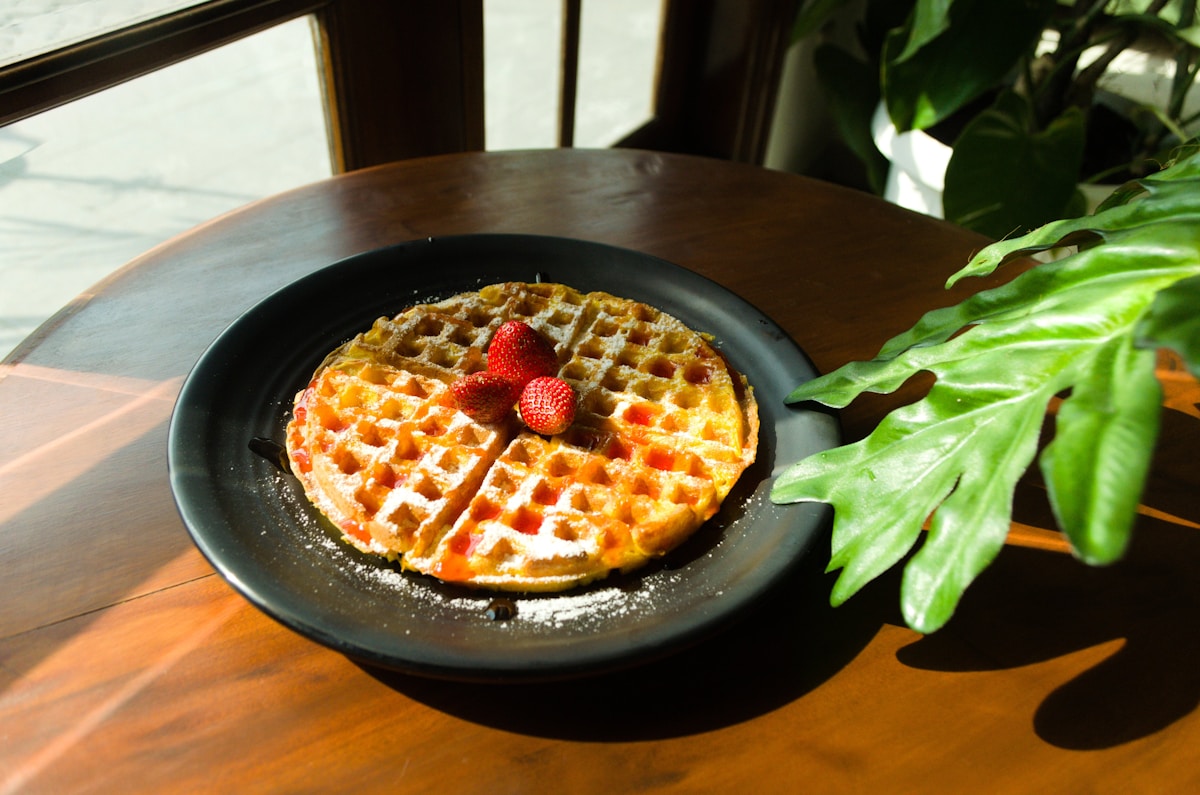
You’ve seen them on your feed. Golden, impossibly intricate, looking more like a delicate piece of edible art than a breakfast staple. They’re called lace waffles, and they have a shattering, satisfying crunch that a regular waffle can only dream of. Your first thought might be, “I need a special, expensive waffle maker for that.” I’m here to tell you that’s completely wrong.
As the guy who tests kitchen gear for a living, my core philosophy is simple: the right tool makes cooking easier, but the most expensive tool isn’t always the right one. This is the perfect example. The secret to these incredible waffles isn’t a hundred-dollar gadget; it’s a ten-cent technique and a simple shift in how you think about waffle batter. Forget everything you know about flooding the iron. We’re going to get precise.
This is one of those brilliant kitchen hacks that delivers a restaurant-quality result using the gear you already own. Ready to transform your weekend breakfast game? Let’s get into it.
It’s All in the Technique Not the Tool
The magic of the lace waffle comes from maximizing surface area and promoting rapid moisture evaporation. A traditional waffle fills the entire iron, trapping steam and creating a softer, cakier interior. For a lace waffle, we only fill the grid lines, or crevices, of the iron. This creates a thin, web-like structure where every single bit is exposed to direct heat, resulting in an unbelievably crispy texture.
So, how do you achieve this precision? Not with a ladle. You need a tool that gives you control. Here are your two best options:
-
A Squeeze Bottle: This is my preferred method. Pick up a cheap, plastic condiment bottle from any kitchen supply store. They offer fantastic control, are easy to fill, and even easier to clean. You can direct a thin, even stream of batter exactly where you want it to go.
-
A Piping Bag: If you do a lot of baking, you might have these on hand. You can use a disposable or reusable piping bag, either with a small round tip (like a number 4 or 5) or with just the corner snipped off. It works just as well, but can be a little messier to fill than a bottle.
The process is simple: instead of pouring a puddle of batter in the center of your iron, you use your bottle or bag to trace the grid pattern. Follow the lines, almost like you’re drawing. You don’t need to be perfect, but the goal is to leave the raised flat sections of the iron empty. The thin batter will spread slightly, connecting the lines and forming the signature lace pattern. (Yes, it’s that simple.)
The Perfect Batter for Maximum Crunch
You can’t use just any old waffle batter for this. A thick, fluffy buttermilk batter will be too gloopy to flow from a squeeze bottle and contains too much fat and leavening for optimal crispiness. For lace waffles, we need a batter engineered for crunch.
Here’s what we’re aiming for:
- Higher Sugar: Sugar does more than add sweetness. As it heats, it caramelizes and hardens upon cooling, creating that glass-like snap. This is crucial.
- Lower Fat: Fat (like butter, oil, or egg yolks) adds tenderness and a cakey texture. We want the opposite, so we keep the fat content relatively low.
- Thinner Consistency: The batter needs to be thin enough to flow easily through a small nozzle. Think closer to a crêpe batter than a thick pancake batter.
Here is a simple, reliable recipe to get you started. This makes enough for about 4-6 large lace waffles.
Crispy Lace Waffle Batter:
- 1 cup (120g) All-Purpose Flour
- 1/4 cup (50g) Granulated Sugar
- 1 tablespoon Cornstarch (This is a pro-tip for extra crispiness!)
- 1/2 teaspoon Baking Powder
- 1/4 teaspoon Salt
- 1 large Egg
- 1 cup (240ml) Milk (whole or 2% works best)
- 2 tablespoons (30g) Unsalted Butter, melted and cooled slightly
- 1/2 teaspoon Vanilla Extract
Instructions:
- In a medium bowl, whisk together the dry ingredients: flour, sugar, cornstarch, baking powder, and salt.
- In a separate small bowl, whisk the egg, then whisk in the milk, cooled melted butter, and vanilla extract.
- Pour the wet ingredients into the dry ingredients and whisk until just combined. A few small lumps are perfectly fine—don’t overmix!
- Let the batter rest for 5-10 minutes. It should be thin enough to pour easily. If it seems too thick, add another tablespoon of milk.
- Transfer the batter to your squeeze bottle or piping bag.
Choosing Your Waffle Iron The Gear Guide
I’ve tested this technique on everything from cheap, classic irons to high-end Belgian models. The good news is that most of them work well, but some have a distinct advantage. A good non-stick surface is non-negotiable here. These delicate waffles will stick to an unseasoned cast iron or a worn-out non-stick surface and turn into a frustrating pile of crumbs.
Here’s a breakdown of what to look for:
-
Belgian Waffle Makers (Deep Grids): These are my top pick for this technique. The deep pockets create a more dramatic, three-dimensional lace structure. The extra depth allows for a slightly thicker lattice that’s still incredibly crisp. A workhorse like the Presto 03510 FlipSide Belgian Waffle Maker (retails for about $50) is perfect. It heats evenly, has a great non-stick coating, and the flipping function ensures both sides are perfectly golden.
-
Classic Waffle Makers (Shallow Grids): These also work beautifully, producing a thinner, more delicate waffle that’s almost like a cookie. They cook faster and the result is incredibly fragile. The Cuisinart WMR-CA Round Classic Waffle Maker (a bargain at around $30) is a fantastic choice. It’s simple, reliable, and its non-stick surface holds up well over time.
-
What to Avoid: I’d steer clear of any waffle irons with complex, novelty shapes (like animals or characters) as they can be difficult to trace accurately. Also, avoid any models with removable plates unless they are known for very even heating, as temperature inconsistencies can lead to uneven cooking.
Ultimately, use what you have! The key is a clean, well-functioning non-stick surface.
Step-by-Step to Perfect Lace Waffles
Alright, you’ve got your batter and your gear. Let’s put it all together. The process is fast, so have your station ready.
-
Preheat Your Iron: Get your waffle maker fully preheated. Most modern irons have an indicator light. You’re aiming for a surface temperature around 375°F to 400°F (190°C to 205°C). A hot iron is critical for that instant sizzle that sets the batter.
-
Give it a Light Grease: Even with a non-stick surface, a very light brush of melted butter or a quick spray of neutral oil is good insurance. Don’t overdo it, or you’ll fry the waffle.
-
Trace the Grid: Open the iron and, working quickly, use your squeeze bottle to trace the grid pattern. Start around the perimeter and then fill in the lines across the middle. Don’t second-guess yourself. A confident, steady hand is best.
-
Close and Cook: Close the lid immediately. You’ll hear a loud sizzle and see a lot of steam. This is a good sign! Lace waffles cook much faster than regular waffles. They will likely be done in just 60 to 90 seconds. Listen for the sound of the steam dying down—that’s your best cue.
-
The Grand Reveal: Open the lid. You should see a beautiful, golden-brown lattice. It will still be slightly pliable while hot. Use a pair of silicone-tipped tongs or a wooden chopstick to gently lift it from the iron. Do not use a metal fork, as you’ll scratch your non-stick surface. (Your future self will thank you.)
-
Cool for Crispiness: Place the hot waffle on a wire cooling rack, not a plate. This is the most important step! As it cools for about 30-60 seconds, the air circulating around it will allow it to firm up into that signature shatteringly crisp texture. Stacking them on a plate will trap steam and make them go soft.
Toppings and Serving Ideas
Because these waffles are so delicate, you need to rethink your toppings. Piling on heavy ingredients will just crush them. This is about elegant, simple pairings that complement the texture.
- Simple & Sweet: A light dusting of powdered sugar is classic and lets the waffle’s texture be the star.
- Fresh & Fruity: A handful of fresh berries like raspberries or blueberries and a dollop of lightly sweetened whipped cream is a perfect match.
- A Delicate Drizzle: Instead of a flood of maple syrup, try a light drizzle of high-quality maple syrup, honey, or a thin chocolate or caramel sauce.
- Ice Cream’s Best Friend: A single, perfect scoop of vanilla bean ice cream nestled beside the waffle (not on top!) makes for an incredible dessert. The contrast between the cold, creamy ice cream and the warm, crispy waffle is unbeatable.
Give this technique a try. It costs you nothing but a few minutes of your time, and the payoff is a breakfast that looks and tastes like it came from a high-end brunch spot, all from the comfort of your own kitchen.