Welcome, friend! Pull up a chair. Let’s talk about a very specific, very important, and often misunderstood dish: macaroni and cheese. Not the fancy kind with a crunchy breadcrumb topping and five artisanal cheeses. I’m talking about the kind you remember from the school cafeteria, a potluck, or maybe from a box that came with a magical orange powder packet.
It’s the mac and cheese that flows like liquid gold. The noodles are so tender they practically melt in your mouth, held together by what a friend of mine once beautifully described as “just spite.” You’ve probably tried to recreate it. You bought a block of expensive sharp cheddar, you carefully made a roux, you whisked in milk to create a classic béchamel sauce… and you were disappointed. It was tasty, sure, but it wasn’t right. The sauce was maybe a little grainy, or it turned greasy as it cooled. It just didn’t have that smooth, glossy, hug-in-a-bowl quality you were craving.
Here’s the secret, and I want you to hear this loud and clear: You weren’t doing it wrong. You were just following the wrong set of rules! To make this specific kind of comfort food, you have to joyfully, intentionally break the rules of gourmet cooking. And I’m going to show you how. This isn’t about making “bad” mac and cheese; it’s about making the mac and cheese of your memories, perfectly.
The “Wrong” Way is the Right Way
In classical cooking, the goals are often about texture, bite, and complexity. We’re told to cook pasta al dente, which means “to the tooth.” It should have a slight firmness, a little chew. We’re taught that a cheese sauce should start with a careful butter-and-flour roux to prevent it from separating.
For our nostalgic mac and cheese, we’re going to throw those rules right out the window. Our goals are different. We want:
- Supreme Creaminess: A sauce that is perfectly smooth, liquid, and stable, never gritty or oily.
- Tender Noodles: Pasta that is soft, plump, and has absorbed some of the saucy goodness, creating a unified, spoonable dish.
Think of it like this: a crispy, Neapolitan-style pizza and a deep-dish Chicago-style pizza are both “pizza,” but they have completely different structures and goals. You wouldn’t use the same dough or baking method for both. The same logic applies here. We’re building a different kind of mac and cheese, so we need a different blueprint.
Our new rules are simple: embrace the processed cheese and intentionally overcook your pasta. (Yes, really.) It feels a little rebellious, and trust me, it’s going to feel so right.
The Secret of the Sauce: Why Processed Cheese is Your Hero
The reason your fancy cheddar sauce breaks or gets greasy is all down to science. Natural cheeses like cheddar are emulsions of dairy fat, protein, and water. When you heat them, that emulsion can break. The fat separates out, leaving you with a clumpy, oily mess. It’s a common kitchen heartbreak!
This is where our hero ingredient comes in: processed cheese. Products like Velveeta or classic American cheese slices aren’t just cheese. They contain special ingredients called emulsifying salts, like sodium citrate or sodium phosphate. These wonderful little helpers act like chaperones at a school dance, keeping the fat and protein molecules from separating. They force everything to hold hands and melt together into a perfectly smooth, stable, and glossy sauce that will never, ever betray you.
(A quick side note for the curious: you can actually buy pure sodium citrate online and add it to any cheese—cheddar, Gruyère, you name it—to make it melt just like Velveeta. It’s a fantastic little trick! For a pound of shredded cheese, you’d dissolve about 2 teaspoons of sodium citrate in a cup of water or milk, then slowly melt in the cheese.)
But for today, we’re keeping it simple. We’ll lean on the magic already built into our humble block of Velveeta or a stack of American cheese slices.
Our other secret weapon for the sauce is evaporated milk. Why not regular milk? Evaporated milk has had about 60% of its water removed. This means it’s more concentrated in milk solids and fat, which gives our sauce an incredible richness and an even more stable, velvety texture. It’s a classic pantry staple that really shines here.
Forgiving Noodles: The Art of Cooking Pasta Past Perfection
Now for the second pillar of our recipe: the noodles. I want you to grab a box of classic elbow macaroni. They are the perfect shape, with little tubes and curves designed to capture as much of that glorious cheese sauce as possible.
Read the package directions for cooking it to al dente. Now, I want you to set a timer for 3 to 5 minutes longer than that. We are going to consciously, deliberately overcook the pasta. Bring a large pot of water to a rolling boil and salt it generously—it should taste like the sea. This seasons the pasta from the inside out.
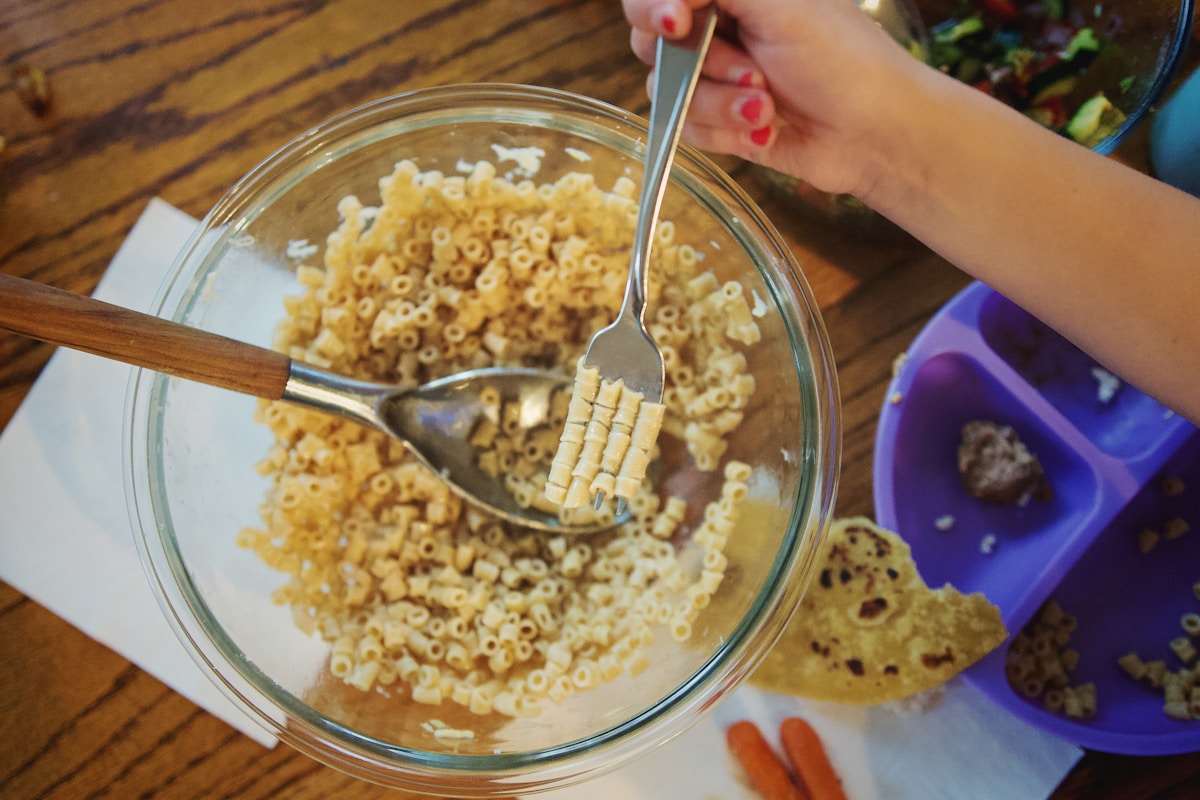
Dump in your macaroni and let it cook, stirring occasionally. When the timer goes off, the pasta will be soft, plump, and maybe even a little fragile. Perfect. This is exactly what we want. The softer pasta has a more porous structure, allowing it to soak up the cheese sauce and become one with the dish, rather than just being a separate component coated in it. This is the key to that spoonable, uniform texture we remember.
The Step-by-Step Recipe for Nostalgia
Alright, are you ready to make a hug in a bowl? Let’s do this. It’s incredibly forgiving, so please don’t stress. Just enjoy the process.
Yields: 6-8 servings Prep time: 5 minutes Cook time: 20 minutes
You Will Need:
- 1 lb (454g) elbow macaroni
- 1/2 cup (4 oz / 113g) salted butter
- 1 lb (454g) Velveeta, cut into 1-inch cubes (or 16-20 slices of American cheese)
- 1 can (12 oz / 354ml) evaporated milk
- 1/2 teaspoon black pepper
- 1/4 teaspoon paprika (optional, for color and a tiny bit of warmth)
- Salt to taste (be careful, the cheese is already salty!)
Instructions:
-
Cook the Pasta (The Fun Part!): Get a large pot of water boiling. Add a good tablespoon of salt. Add the macaroni and cook it for about 4 minutes past the package’s al dente recommendation. We want it very tender.
-
Start the Sauce: While the pasta is cooking, melt the butter in a medium saucepan or Dutch oven over medium-low heat. We don’t want the butter to brown, just to melt into a lovely golden pool.
-
Melt the Magic Cheese: Add your cubed Velveeta or torn-up American cheese slices to the melted butter. Stir constantly with a spatula or wooden spoon. The heat should be low and gentle. It will look a bit gloppy at first, but have faith. Just keep stirring.
-
Create the Liquid Gold: Once the cheese is about halfway melted, slowly pour in the evaporated milk while continuing to stir. This is the moment where it all comes together. Keep stirring until every lump is gone and you have a completely smooth, glossy, vibrant orange sauce. It’s a beautiful sight.
-
Season Gently: Stir in the black pepper and the optional paprika. Now, give it a taste. Does it need salt? Only add a tiny pinch at a time if it does. It probably won’t need much, if any.
-
Bring It All Together: By now, your pasta should be perfectly soft. Drain it well in a colander. Do not rinse the pasta! The starch clinging to the noodles will help the sauce stick beautifully. Pour the hot, drained pasta right back into its cooking pot.
-
The Grand Finale: Pour every last drop of that glorious cheese sauce over the hot pasta. Use your spatula to stir everything together, making sure every single noodle is completely coated and bathed in cheese. Serve immediately and watch the smiles appear.
But Beatrice, What If…? (Normalizing Mistakes)
- “My sauce seems too thin!” Don’t panic! This sauce is designed to be a little looser at first. As it sits for a minute or two, the pasta will continue to absorb the liquid and the sauce will thicken up to the perfect consistency. If it’s really too thin for your liking, you can always let it simmer on very low heat for another couple of minutes, stirring constantly.
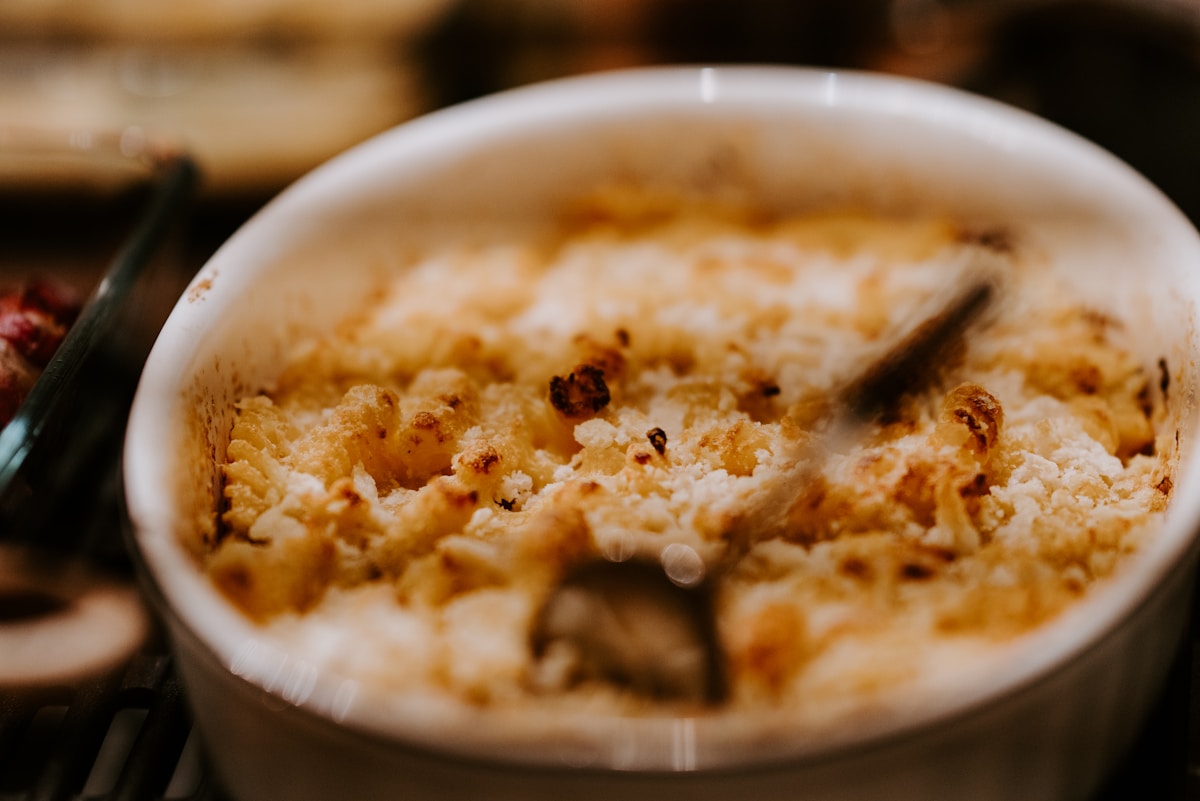
- “Can I bake this?” You absolutely can! This recipe makes a fantastic base for a baked mac and cheese. Just pour the finished dish into a greased 9x13 inch baking dish. You can top it with buttered breadcrumbs, crushed crackers (like Ritz!), or more shredded cheese. Bake at 375°F (190°C) for 20-25 minutes, until it’s bubbly and golden on top.
- “I don’t have Velveeta or evaporated milk!” No problem at all. You can achieve a very similar result by gently heating 1.5 cups of whole milk or half-and-half in a saucepan (don’t let it boil!) and melting in about 16 slices of American cheese. It works like a charm.
This recipe is more than just a recipe. It’s a permission slip. It’s permission to stop chasing gourmet perfection when all you really want is a bowl of comfort. It’s proof that sometimes, the simplest ingredients and techniques are the ones that bring us the most joy. Everyone starts somewhere, and sometimes the best place to start is with a taste of home.
Try This Tonight: You don’t need to commit to a whole pound of pasta to try this. Make a mini version! Boil a cup of macaroni. While it cooks, gently warm up a half-cup of evaporated milk (or regular milk) in a small pot. Tear in 4 slices of American cheese and stir until melted. Drain your pasta, mix it with the sauce, and you have a perfect single serving of nostalgic bliss in under 15 minutes. Go on, you deserve it.