


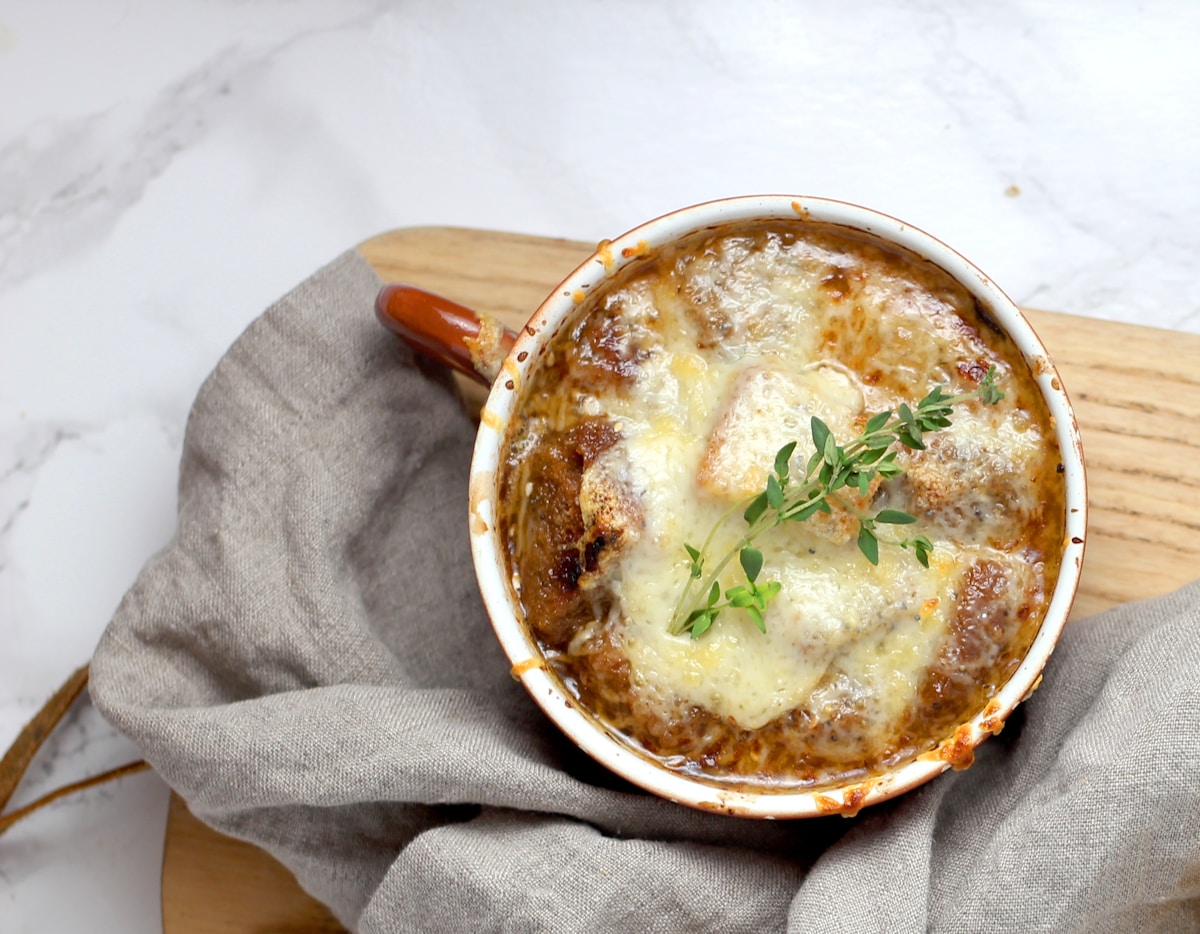
Picture this: a chilly evening, a cozy bistro, and a steaming crock of French Onion Soup arrives at your table. The cheese pulls in long, glorious strings, the crouton is perfectly saturated with savory broth, and the first spoonful reveals a flavor so deep and complex it feels like a warm hug. Now, picture your attempt at home: a little thin, a bit watery, the onions tasting more boiled than beautiful.
What’s the secret that separates the bistro masterpiece from the disappointing bowl? It’s not a secret ingredient, but a secret virtue: patience. The soul of this iconic soup is born from a slow, magical transformation that happens in the bottom of your pot. Today, we’re going to pull back the curtain on this process and learn how to master it together, turning a simple dish into an unforgettable experience.
The Humble Onion’s Heroic Journey
Every great story needs a hero, and in this one, it’s the humble onion. But not just any onion will do. Choosing the right one is your first step toward soup perfection.
-
Yellow Onions: This is your classic, all-purpose champion for French Onion Soup. They strike the perfect balance, possessing a high sugar content ideal for browning and a robust, sulfurous backbone that prevents the final dish from becoming cloyingly sweet. Their sturdy structure means they won’t disintegrate into mush during the long cooking process.
-
Sweet Onions (like Vidalia or Walla Walla): While tempting, proceed with caution. These varieties have even more sugar and less of that pungent bite, which can sometimes result in a soup that feels one-dimensional. If you choose to use them, you might need to add a splash of balsamic vinegar or sherry vinegar at the end to introduce a bit of balancing acidity.
-
Red Onions: Save these for your salads and salsas. While delicious raw, their flavor profile doesn’t quite match the classic soup, and they can lend an unappealing grayish hue to your beautiful broth.
For a standard recipe that serves about six, you’ll need a surprising quantity of onions—around 2.5 to 3 pounds (or 1 to 1.5 kg). When you slice them all up, they will look like an impossible mountain in your pot. Have faith! They will cook down to a fraction of their original volume, concentrating their flavor as they release their water. As I was researching this piece, I came across a delightful online cooking community where home chefs shared the simple joy of finding unique, artistic patterns in their produce while prepping. It’s a wonderful reminder that food tells a story, and that story begins with these beautiful, raw ingredients.
The Alchemy of Low and Slow Caramelization
This is it. The single most important stage in making French Onion Soup. This is the step you absolutely cannot rush, skip, or shortcut. We aren’t just sweating or softening the onions; we are coaxing them through a deep, magical transformation. This process relies on two key chemical reactions: caramelization (the browning of sugar) and the Maillard reaction (a complex reaction between amino acids and reducing sugars). Together, they create hundreds of new, complex aromatic compounds, turning sharp, raw onions into something nutty, toasty, rich, and profoundly savory.
Your Step-by-Step Guide to Flavor:
-
The Right Vessel: Use a heavy-bottomed pot, such as a cast-iron Dutch oven (a Lodge or Le Creuset is perfect for this). A heavy pot will retain and distribute heat evenly, which is absolutely crucial for preventing the onions from scorching before they can properly caramelize.
-
The Foundation of Fat: Start with a generous amount of fat. I find a combination of unsalted butter (for its rich flavor) and a neutral oil like avocado or canola (to raise the smoke point and prevent the butter from burning) works best. Plan on about 3-4 tablespoons total.
-
The Virtue of Low Heat: This is where patience comes in. Set your burner to low or medium-low. If the heat is too high, the onions’ exterior will burn long before their internal sugars have had a chance to develop and transform. You want to gently coax the flavor out, not shock it.
-
The Gift of Time: Block out at least 45 minutes for this step. An hour is even better. (Yes, really.) This is not a task to begin when you’re in a hurry. Stay nearby and stir the onions every 5-10 minutes to ensure they cook evenly.
The Visual Stages of Transformation:
- First 10-15 minutes: The onions will soften, become translucent, and release a great deal of water. The pot will be steamy, and it might not look like much is happening. This is normal.
- Next 15-20 minutes: Most of the water will have evaporated. The onions will turn a pale, buttery yellow, and you’ll start to smell a distinct sweetness in your kitchen. They are on their way.
- The Final 20-30 minutes: This is the active browning stage. The color will shift from golden to a beautiful amber, and finally to a deep, rich mahogany brown. As the sugars concentrate, they will stick to the bottom of the pot. You must stir more frequently now to prevent burning. This is where the deepest, most complex flavor is born.
Kitchen Hack: If your onions seem a bit reluctant to brown (this can happen with lower-sugar varieties), you can add a tiny pinch of sugar (about 1/4 teaspoon) to help kickstart the caramelization process.
Building a Broth with Body and Soul
Once your onions have reached that perfect deep brown, it’s time to build the soup.
Deglazing: Do not skip this step! See all those dark, crusty bits stuck to the bottom of your pot? That’s called the “fond,” and it’s pure, concentrated flavor gold. To release it, pour in about a half-cup of liquid—dry sherry is traditional and fantastic, but a dry white wine like Sauvignon Blanc or even a splash of brandy works wonderfully. As the liquid sizzles, use a wooden spoon to scrape up every last bit from the bottom of the pot, dissolving it into the liquid. Let it bubble for a minute or two until the alcohol smell has cooked off.
The Broth Itself: The quality of your broth is just as important as the quality of your caramelization.
- The Gold Standard: A rich, homemade beef stock is the traditional and undisputed champion. The natural gelatin from slow-simmered beef bones gives the soup an incredible body and silky mouthfeel that you simply cannot replicate from a carton.
- High-Quality Store-Bought: If homemade isn’t in the cards, seek out the best quality beef broth you can find. Look for low-sodium options with a deep, clear color. Brands like Kettle & Fire or Pacific Foods are reliable choices.
- A Robust Vegetarian Option: A fantastic vegetarian French Onion Soup is entirely possible! Create a deep, umami-rich broth by simmering dried shiitake mushrooms, a piece of kombu (a type of seaweed), a splash of soy sauce or tamari, and some aromatic vegetables.
Once deglazed, add 6-8 cups of your chosen broth to the onions, along with a few sprigs of fresh thyme and a bay leaf. Bring the soup to a boil, then immediately reduce the heat to low and let it simmer gently, partially covered, for at least 30 minutes. This allows all those beautiful flavors to meld together into a harmonious whole. Finally, taste and season with salt and freshly ground black pepper.
The Glorious Gratinée Finish
The molten, bubbly cap of cheese—the “gratinée”—is the iconic final touch that makes this soup so decadent.
The Bread: Use thick, 1-inch slices of a sturdy, day-old baguette. Fresh bread will get too soggy. For best results, toast the slices in an oven at 350°F (175°C) until they are completely dry and crisp. For an extra layer of flavor, you can rub the warm toast with the cut side of a raw garlic clove.
The Cheese: Gruyère is the undisputed classic. It’s a Swiss cheese with a fantastic nutty, slightly sweet flavor that melts into a perfect, gooey blanket. Comté is an excellent French substitute. You can also use a blend of Emmental for its superb stretchiness and a little Provolone for sharpness. The most important tip: grate it yourself. Pre-shredded cheeses are often coated in starches that inhibit smooth melting.
The Assembly:
- Preheat your oven’s broiler to its highest setting (around 500°F / 260°C).
- Ladle the hot soup into oven-safe ceramic bowls or crocks.
- Float one or two slices of the toasted bread on top of the soup.
- Pile a very generous mound of grated cheese over the bread, letting it spill over the sides of the bowl. (This creates those delicious crispy bits.)
- Place the bowls on a sturdy baking sheet to catch any drips and slide them under the broiler.
Watch them like a hawk! This step takes only 2-4 minutes. You want the cheese to be completely melted, bubbly, and beautifully browned in spots. Carefully remove the bowls from the oven—they will be volcanically hot. Let them rest for at least five minutes before serving. That first spoonful, breaking through the cheesy crust into the rich onion soup below, will be your delicious reward.


