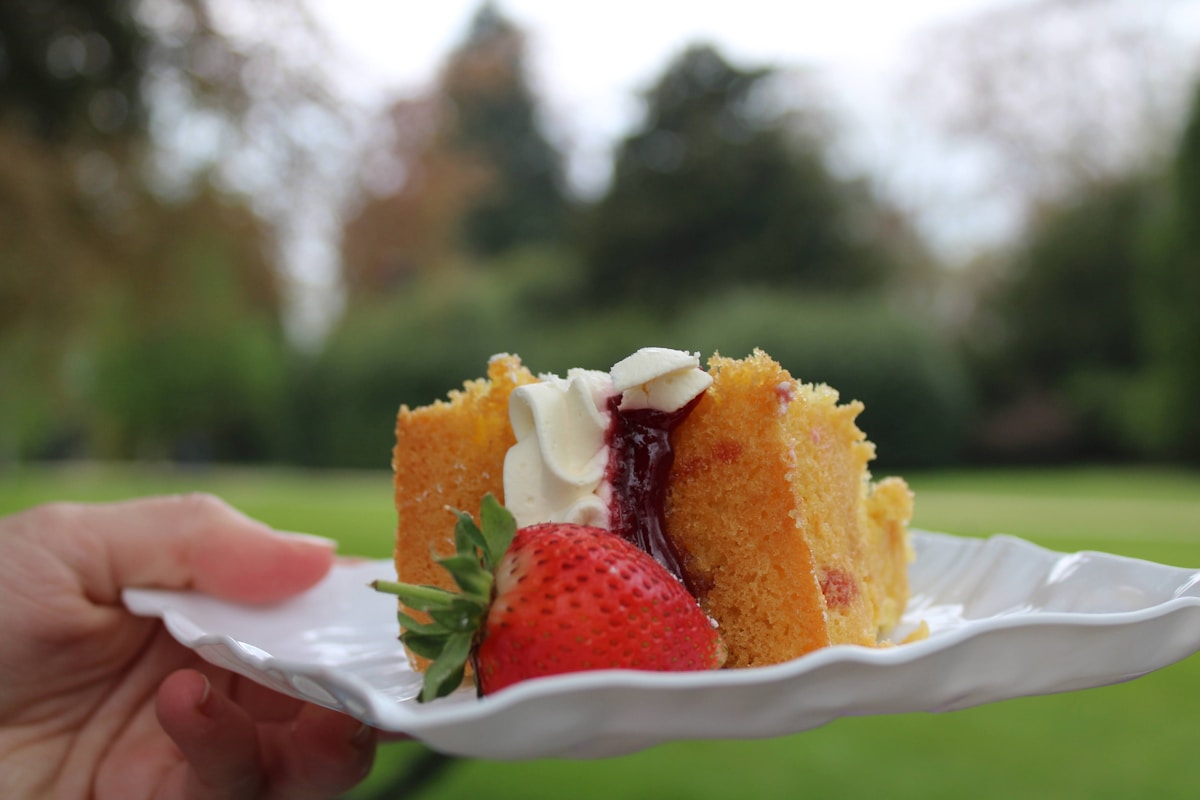
There’s a special kind of panic that sets in when your little one, with all the conviction in their tiny heart, requests a very specific birthday cake. Not just “chocolate” or “vanilla,” but something wonderfully imaginative like “strawberry banana swirl!” or “peachy raspberry explosion!” My nephew, Leo, once asked for a “blueberry-apple” cake for his fourth birthday because that was his favorite morning smoothie.
Your heart melts, of course. But then the practical baker part of your brain kicks in. How on earth do you get that much real fruit flavor into a delicate cake without turning it into a dense, soggy puddle? Tossing chopped fruit into the batter sounds lovely, but I’ve seen it lead to more tears than cheers. The fruit releases its water during baking, creating gummy pockets and a cake that can collapse in the middle. And while extracts have their place, many of us prefer to skip the artificial flavors and colors when baking for our youngest family members.
Don’t you worry. I have a wonderfully simple, absolutely magical solution that will make you the hero of every future birthday party. We’re going to create an intensely flavorful, all-natural fruit syrup to soak our cake layers. It’s the secret to delivering that big fruit taste your toddler craves while keeping the cake’s crumb perfectly light and fluffy. (Trust me, it’s a game-changer.)
The Problem with Raw Fruit in Cake Batter
Before we get to the fun part, let’s quickly chat about why our first instinct—just folding in some fresh strawberries or mashed bananas—can be a bit of a baking disaster. Fruits are mostly water. A beautiful, ripe strawberry can be over 90% water! When you put that fruit into a hot oven, all that water turns to steam and has to go somewhere.
In a delicate cake batter, this extra moisture does a few unfortunate things:
- It Weighs Down the Crumb: The carefully created air pockets in your batter, which make the cake light and airy, get flooded with liquid. This leads to a heavy, dense texture.
- It Creates Gummy Spots: The areas immediately surrounding the fruit pieces can become undercooked and wet, almost like a pudding consistency instead of a cake.
- It Compromises Structure: Too much moisture can prevent the cake from setting properly, causing it to sink in the middle as it cools. There’s nothing more heartbreaking than pulling a sunken cake from the oven.
This doesn’t mean you can never bake with fruit! It just means that for a classic, light-as-a-cloud birthday cake, we need a more clever approach to get that flavor in there.
The Magic of a Concentrated Fruit Soaking Syrup
This is where our kitchen magic comes in. Instead of putting the fruit in the cake batter, we’re going to infuse the flavor into the baked cake. We’ll do this by creating a concentrated fruit syrup.
The process is simple: we gently cook the fruit on the stovetop with a little sugar and a splash of water. The heat breaks down the fruit, releasing all its natural juices and deepens its flavor. The sugar helps to concentrate these flavors into a beautiful, thick syrup. Then, the most important step: we strain out all the solids (the pulp and seeds), leaving behind a pure, liquid flavor bomb.
This syrup does two wonderful things. First, it packs an incredible punch of authentic fruit flavor without any artificial aftertaste. Second, when you brush it onto your cooled cake layers, it soaks in just enough to add moisture and taste without ever making the cake soggy. It works with the cake’s structure, not against it. You get a tender, flavorful crumb from top to bottom. It’s the technique professional pastry chefs use, and it’s surprisingly easy to do at home.
My Go-To Strawberry Banana Soaking Syrup Recipe
Let’s make the syrup for that “strawberry banana swirl” cake my little taste-tester might request. This recipe is incredibly forgiving, so feel free to adjust the sugar based on the sweetness of your fruit. This makes enough for a standard two-layer 8-inch or 9-inch round cake.
You Will Need:
- 1 cup fresh strawberries, hulled and roughly chopped
- 1 very ripe banana, mashed (the browner, the better!)
- 1/4 cup granulated sugar
- 1/4 cup water
- 1 teaspoon fresh lemon juice (this brightens the fruit flavor and prevents the banana from browning too much)
- A small saucepan
- A fine-mesh sieve
Instructions:
-
Combine Ingredients: In your small saucepan, combine the chopped strawberries, mashed banana, sugar, water, and lemon juice. Give it a gentle stir to mix everything together.
-
Simmer Gently: Place the saucepan over medium heat and bring it to a gentle simmer. You’ll see little bubbles start to form around the edges. Reduce the heat to low, so it’s just barely bubbling.
-
Cook and Concentrate: Let the mixture simmer for about 15-20 minutes. As it cooks, the fruit will break down completely. I like to gently mash the fruit against the side of the pan with a wooden spoon every so often to help it along. The mixture will thicken slightly and smell absolutely divine. (Your kitchen will smell like pure summer.)
-
Strain for Perfection: Place your fine-mesh sieve over a bowl or a glass measuring cup. Carefully pour the hot fruit mixture into the sieve. Using the back of a spoon, press down firmly on the fruit solids to squeeze out every last drop of that precious syrup. What you’re left with in the bowl is pure liquid gold. The solids can be discarded or, my favorite kitchen hack, saved to stir into yogurt or spoon over oatmeal for breakfast!
-
Cool Completely: Let the syrup cool to room temperature before using it on your cake. You never want to put a warm syrup on a cake, as it can melt the crumb.
How to Perfectly Apply Your Syrup
Once your vanilla or yellow cake layers are baked and have cooled completely, it’s time for the final touch. I recommend leveling your cakes first (slicing off the domed top with a serrated knife) to create a flat surface for both soaking and frosting.
Place your first cake layer on its serving plate. Now, grab a pastry brush. A brush is much better than a spoon here because it gives you total control for a thin, even application. (If you don’t have one, the back of a spoon will work in a pinch.)
Dip your brush into the cooled syrup and gently paint it across the entire surface of the cake layer. Don’t drench it! You’re aiming for a glistening, even coat, not a swimming pool. Let the syrup sit for a minute or two to soak in. You’ll see the surface go from shiny to matte as the cake drinks up the flavor. That’s it! You’re ready to add your filling and top with the next layer, which you’ll also brush with syrup.
The Perfect Frosting for Your Fruit-Soaked Cake
With such a flavorful, moist cake, you don’t need a heavy, sugary frosting to carry the show. The cake is the star! You want a frosting that is light, creamy, and complements the bright fruit flavor.
My absolute favorite pairing is a Mascarpone Whipped Cream. It’s less sweet than buttercream, incredibly stable, and has a slight tang that cuts through the sweetness of the syrup beautifully. It tastes like the world’s most luxurious cloud.
To make it, simply beat 8 ounces of cold mascarpone cheese with 1 1/2 cups of cold heavy whipping cream, 1/2 cup of powdered sugar, and a teaspoon of good vanilla extract (like Nielsen-Massey) until stiff peaks form. It’s that simple and pipes like a dream.
A classic Cream Cheese Frosting is also a fantastic choice. The tangy flavor is a natural match for almost any fruit. Just be sure to use a recipe that isn’t overly sweet, allowing the cake’s flavor to shine through.
Seeing that little face light up when they take their first bite and recognize their special flavor is one of the greatest rewards in a family kitchen. It’s a bit of extra effort, yes, but it transforms a simple cake into a cherished memory. You didn’t just make a cake; you made their wish come true. And that, my friends, is what baking is all about.