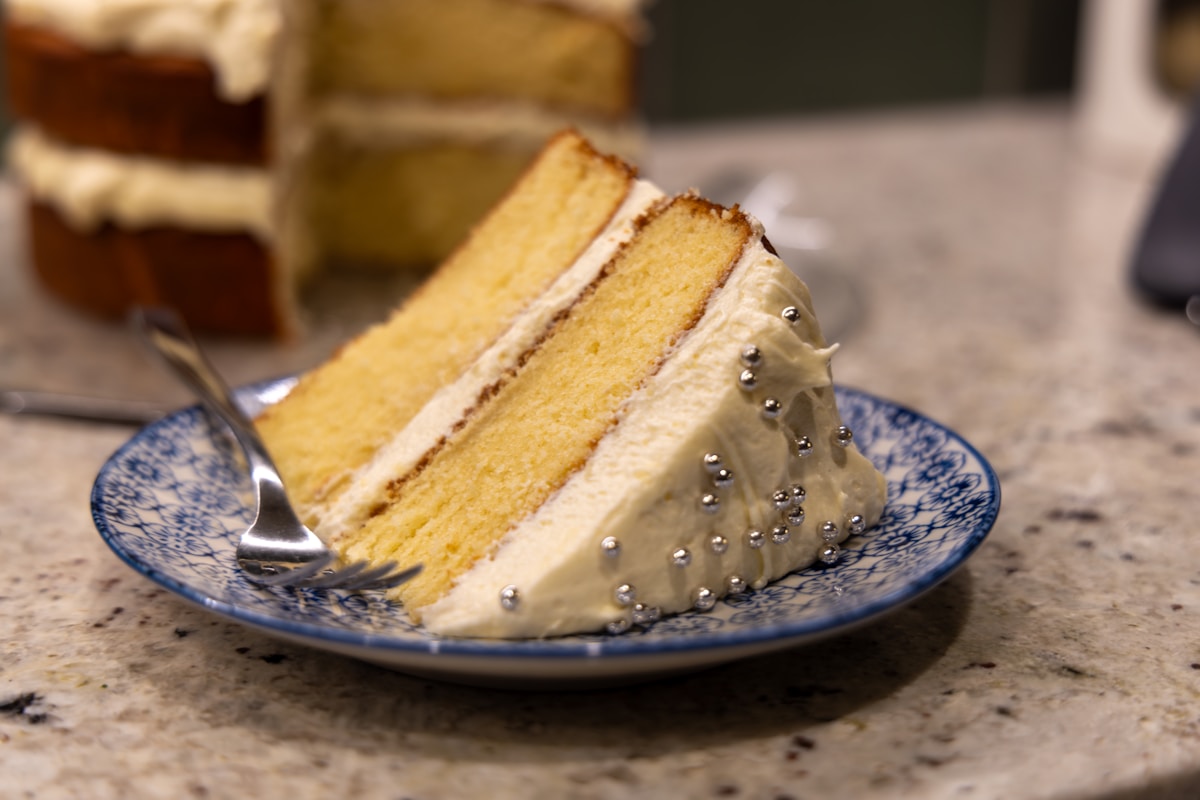
There’s a special kind of magic that fills a kitchen when you’re baking a birthday cake. It’s more than just mixing flour and sugar; it’s an act of love, a centerpiece for a celebration. But have you ever stood there, whisk in hand, and thought, “I want to make something… different”? You want to move beyond the classic vanilla-on-vanilla or the dependable chocolate fudge.
I had one of those moments recently while scrolling through a baking community online. My eyes landed on a photo of the most stunning cake: a tender lemon cake, peeking through layers of a deep purple frosting, with a ruby-red jam oozing ever so slightly from the center. The description read: Lemon cake with blackberry compote filling and an ube cream cheese buttercream. My heart skipped a beat. Lemon, blackberry, and ube? It sounded daring, brilliant, and absolutely delicious.
That single cake sent me down a rabbit hole of flavor exploration. It’s proof that the most memorable cakes are born from curiosity. Creating a unique flavor profile isn’t about throwing random ingredients together; it’s about understanding harmony and balance. It’s about telling a story with every single bite. So, let’s leave the boxed mixes on the shelf today and explore how you can compose your own cake masterpiece.
The Philosophy of Flavor Pairing
Before we start creaming butter and sugar, let’s talk about the ‘why’ behind a great flavor combination. A truly spectacular cake plays with contrast. It’s a delicate dance between sweet, tart, rich, and complex notes. Think of it like a musical chord—each note is distinct, but together they create a beautiful harmony.
Let’s break down that inspirational cake:
-
The Bright Acid (The High Note): The lemon cake provides a zesty, acidic base. This tartness is crucial. It cuts through the richness of the frosting and refreshes the palate, making you want another bite. Without it, the cake could feel heavy or cloying.
-
The Fruity Sweet-Tart (The Melody): The blackberry compote adds another layer of complexity. Blackberries have a wonderful balance of sweetness and tartness, with deep, wine-like undertones. This complements the bright lemon while adding a beautiful color and textural contrast.
-
The Creamy Richness (The Bass Line): The cream cheese buttercream is the foundation of richness. Its tangy, creamy profile is the perfect decadent counterpoint to the fruit. It’s the comforting, familiar flavor that grounds the more adventurous notes.
-
The Unexpected Complexity (The Harmony): And then there’s the ube. This is the showstopper. Ube, a purple yam from the Philippines, has a gentle, earthy sweetness often described as a mix of vanilla, pistachio, and coconut. It brings a subtle, nutty complexity that elevates the entire cake from ‘delicious’ to ‘unforgettable.’ It adds a gorgeous, natural lavender hue and a story from another part of the world.
When you think about your own creations, try to fill these roles. What will be your bright note? What will provide the richness? And what will be your unique, complex element that makes everyone ask, “What is that amazing flavor?”
Building Your Cake Layer by Layer
A cake is an architectural marvel of flavor. Each component needs to be structurally and deliciously sound. Let’s build our lemon, blackberry, and ube cake from the ground up.
1. The Cake: A Sturdy, Lemony Foundation
You need a cake that is fluffy but has a tight enough crumb to support a filling without getting soggy. A butter-based lemon cake is perfect. The fat from the butter helps create a tender crumb that also acts as a slight barrier to moisture.
A Simple Lemon Cake Base (for two 8-inch pans):
- 1 cup (227g) unsalted butter, softened
- 1 3/4 cups (350g) granulated sugar
- 4 large eggs, room temperature
- Zest of 2 large lemons
- 3 cups (360g) all-purpose flour (King Arthur is a reliable choice)
- 1 tsp baking powder
- 1/2 tsp baking soda
- 1/2 tsp salt
- 1 cup (240ml) buttermilk, room temperature
- 1/4 cup (60ml) fresh lemon juice
Cream the butter, sugar, and lemon zest until light and fluffy. Beat in the eggs one at a time. In a separate bowl, whisk your dry ingredients. Alternate adding the dry ingredients and the buttermilk to the butter mixture, beginning and ending with the dry. Finally, stir in the lemon juice. Divide between two greased and floured 8-inch cake pans and bake at 350°F (175°C) for 30-35 minutes, or until a toothpick comes out clean.
2. The Filling: A Luscious Blackberry Compote
A good filling needs to be intensely flavorful and thick enough to stay put. You don’t want a runny filling making your cake layers slide around! The key is cooking it down to the right consistency.
Thick Blackberry Compote:
- 2 cups (about 12 oz) fresh or frozen blackberries
- 1/2 cup (100g) granulated sugar
- 1 tbsp fresh lemon juice
- 1 tbsp cornstarch mixed with 1 tbsp cold water (your slurry)
Combine the berries, sugar, and lemon juice in a saucepan over medium heat. Mash the berries slightly as they cook. Once simmering, let it bubble for about 5-7 minutes. It will start to thicken. To give it extra stability, slowly whisk in the cornstarch slurry and cook for another 1-2 minutes until it’s noticeably thicker. A digital thermometer is your friend here—you’re aiming for a temperature around 215°F (102°C), where the natural pectins and cornstarch are fully activated. Let it cool completely before using. (This is non-negotiable! A warm filling will melt your frosting.)
3. The Frosting: Vibrant Ube Cream Cheese Buttercream
This is where the magic happens. You can find ube extract or ube halaya (a sweet jam) in most Asian markets or online. Ube extract provides intense color and flavor, while halaya adds flavor and texture.
Ube Cream Cheese Buttercream:
- 8 oz (226g) full-fat block cream cheese, softened but still cool
- 1/2 cup (113g) unsalted butter, softened
- 4 cups (480g) powdered sugar, sifted
- 1-2 tsp ube extract (start with 1 and taste!)
- 1/4 cup ube halaya (optional, for extra flavor and texture)
- 1 tsp vanilla extract
- Pinch of salt
In a stand mixer (like a KitchenAid) fitted with the paddle attachment, beat the cream cheese and butter on medium-high speed until completely smooth with no lumps. Reduce the speed to low and gradually add the sifted powdered sugar. Once incorporated, add the ube extract, ube halaya (if using), vanilla, and salt. Increase the speed to medium-high and beat for 2-3 minutes until light and fluffy. The color will be a breathtaking lavender.
A World of Flavor Awaits: Pairings to Inspire You
Once you master the basic formula—acid, fruit, richness, complexity—a universe of possibilities opens up. Here are a few combinations to get your creative gears turning:
-
Earthy & Sophisticated:
- Cake: Earl Grey Tea Infused
- Filling: Lemon Curd
- Frosting: Lavender Swiss Meringue Buttercream
-
Spiced & Nutty:
- Cake: Cardamom-Spiced Almond Cake
- Filling: Pistachio Paste
- Frosting: Rosewater Ermine Frosting
-
Modern & Bold:
- Cake: Matcha Green Tea Cake
- Filling: Raspberry Compote
- Frosting: White Chocolate Ganache
-
Cozy & Herbaceous:
- Cake: Olive Oil Cake
- Filling: Pear and Rosemary Compote
- Frosting: Salted Caramel Buttercream
Don’t be afraid to pull inspiration from your favorite drinks (like a London Fog latte), desserts, or even savory dishes. The beautiful pairing of rosemary and pear is a classic in roasts, but it transforms into something ethereal and elegant in a cake.
My Favorite Kitchen Hack: The Flavor Test Bite
Here’s a situation we want to avoid: you spend an entire day baking and assembling a magnificent three-layer cake. You present it, everyone oohs and aahs, you take the first bite… and the flavors just don’t work. Maybe the frosting is too sweet for the filling, or the cake flavor gets completely lost.
Here’s the simple trick to prevent that: always taste the components together before you assemble.
Once your cake is baked and cooled, your filling is chilled, and your frosting is whipped, take a small plate. Crumble a little piece of the cake. Add a tiny dollop of the filling right next to it. Then add a schmear of the frosting. Using a small spoon, get a little of all three components in one go. This is your test bite.
This tiny preview tells you everything. Is the balance right? Does it need more salt in the frosting to cut the sweetness? A little more lemon juice in the filling to brighten it up? Making these tiny adjustments before you spend an hour meticulously frosting your creation is a game-changer. (Your future self will thank you.)
Food, especially a celebration cake, is a story. It tells the story of a person’s favorite flavors, of a season, or even of a place. By stepping outside the familiar, you’re not just baking a cake; you’re creating a delicious, edible memory. So be curious, be brave, and trust your palate. The next unforgettable flavor combination is waiting for you in your own kitchen.