


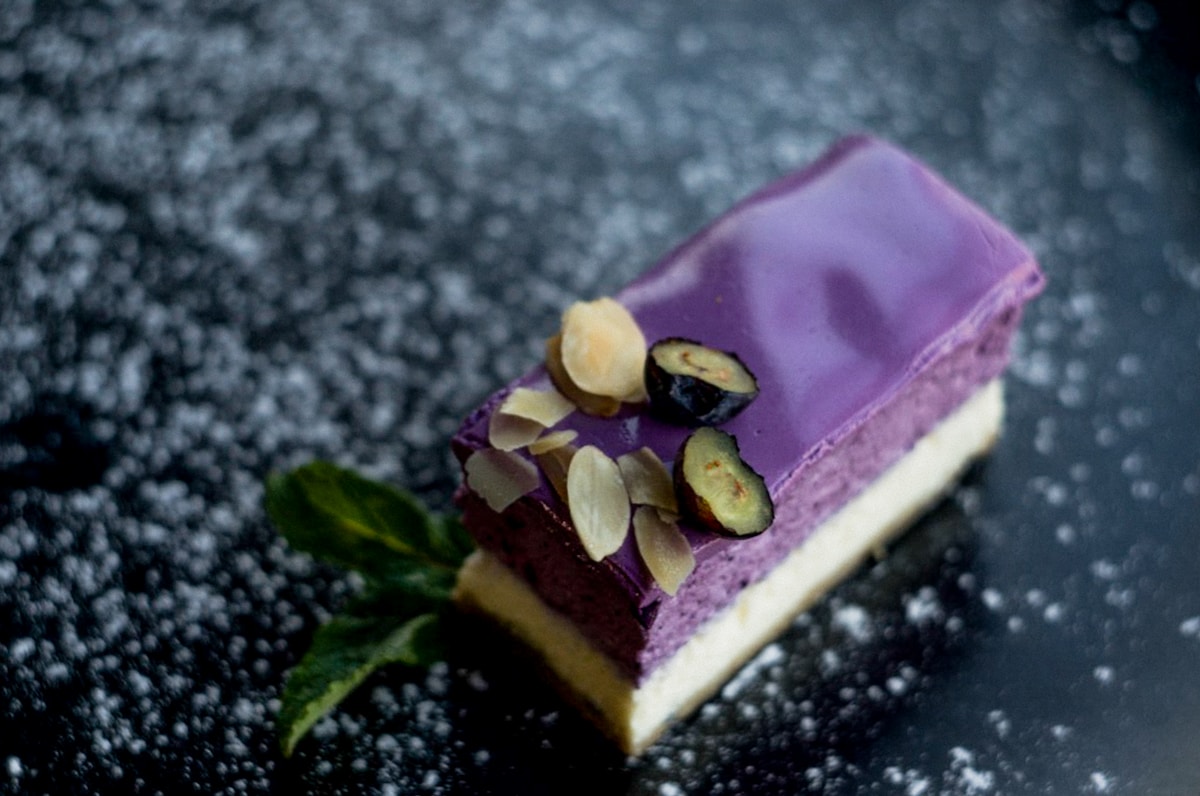
Have you ever stood in your kitchen, dreaming of a celebration cake that was truly different? Not just another chocolate or vanilla creation, but something that tells a story, a cake that makes your guests pause and ask, “What is that incredible flavor?” I’ve been there many times, and recently, I found a spectacular answer in one of the most beautiful ingredients nature has to offer: ube.
The vibrant, majestic purple of ube is what first catches your eye, but it’s the sophisticated, unexpected flavor pairings that will capture your heart. Combining the earthy, vanilla-like notes of ube with the electric tang of lemon and the jammy sweetness of blackberry creates a dessert that is truly unforgettable. It sounds complex, but trust me, achieving that perfect balance is a joyful journey in your kitchen.
The Story of Ube A Journey in a Tuber
Before we even get to baking, let’s talk about our star. Ube (pronounced OO-beh) is not just a trendy purple food coloring found on social media. It’s a purple yam, a treasured staple in the Philippines with a history as rich as its flavor. For generations, it has been the heart of beloved desserts, most notably ube halaya, a sweet, thick jam that is a delicacy in its own right.
To describe its flavor is to capture a feeling. Imagine a blend of vanilla, pistachio, and a gentle, earthy sweetness with a subtle hint of coconut. It’s comforting and exotic all at once, a flavor that feels both familiar and brand new. When you bake with ube, you’re not just adding color; you’re weaving a thread of Filipino culinary heritage into your creation. It’s a privilege to work with an ingredient that carries so much cultural significance, and it’s our job as curious cooks to honor its authentic taste.
Creating a Symphony of Flavors Why Ube Lemon and Blackberry Works
Now, pairing such a unique flavor can feel daunting. Ube’s creamy, rich profile can easily overwhelm other ingredients, or become muted itself. This is where the magic of balance comes in. Why lemon and blackberry? Think of it like a perfectly composed piece of music.
- The Ube: This is our rich, resonant cello section—deep, earthy, and foundational. Its creamy, nutty sweetness provides the comforting base for the entire cake.
- The Lemon: This is our bright, zesty violin, cutting through the richness with its sharp, clean acidity. It prevents the ube from feeling too heavy and awakens the palate, adding a necessary sparkle.
- The Blackberry: This is the viola, providing a deep, fruity sweetness with its own touch of tartness that bridges the two main players. It connects the low, mellow notes of the ube and the high, sharp notes of the lemon into a single, harmonious chord.
Together, they create a flavor profile that is sophisticated, surprising, and absolutely delicious. Each element shines without overpowering the others.
Building Your Masterpiece Layer by Layer
This stunning combination comes to life in a layered cake, where each component gets its moment. Here’s how you can approach building it for a show-stopping result.
1. The Lemon Cake Base You need a cake with character. A simple vanilla sponge will get lost. I recommend a vibrant lemon butter cake that is moist but sturdy. The key is to use both the zest and the juice of at least two large lemons. The zest provides the fragrant oils and a floral lemon aroma, while the juice brings that unmistakable acidic punch. Your cake needs to be assertive enough to stand up and say, “I am lemon!” This structural integrity is also important to hold the weight of the filling and frosting without collapsing.
2. The Blackberry Compote Filling This is your sweet and tart bridge flavor, and it couldn’t be simpler to make. In a small saucepan, combine about 2 cups (around 300g) of fresh or frozen blackberries, 1/4 cup (50g) of granulated sugar, and a tablespoon of fresh lemon juice. Simmer over medium heat for 10-15 minutes, stirring occasionally, until the berries have broken down and the sauce has thickened nicely. You can mash them slightly with the back of a fork for a jammy texture. Let it cool completely. (And I mean completely.) A warm filling will melt your frosting and create a soupy mess. (Your future self will thank you for being patient here.)
3. The Ube Buttercream Crown This is the showstopper. For the most authentic and deep flavor, you must use real ube halaya (purple yam jam). You can find it in jars at most Asian markets or online. Ube extract can give you the color, but it often has an artificial, one-note taste and lacks the wonderful starchy body that real ube provides.
For a classic American buttercream, you’ll beat 1 cup (227g) of unsalted butter at true room temperature (a crucial 68°F/20°C for perfect emulsion) until it’s light and fluffy. Then, on low speed, gradually beat in 4 cups (about 500g) of powdered sugar, a teaspoon of vanilla extract, and a pinch of salt. Once combined, increase the speed and whip until smooth. The final step is to beat in about 1/2 to 3/4 cup of ube halaya until you have a gloriously purple, magnificently flavored frosting. Always taste and adjust—some ube halaya brands are sweeter than others, so you may need more or less.
The Art of Assembly and Decoration
Patience is your best friend during assembly. Make sure your cake layers are completely cool (chilling them briefly makes them easier to handle). Level them with a serrated knife if they have a slight dome.
Place your first layer on your cake stand. Now for my favorite kitchen hack for layered cakes: pipe a thick border or “dam” of your ube buttercream around the top edge of the cake layer. This sturdy little wall will contain your blackberry compote and prevent it from squishing out the sides when you add the next layer. Fill the center with a generous layer of the cooled compote. Place the next cake layer on top, press gently, and repeat.
Once stacked, apply a thin “crumb coat” of frosting all over the cake and chill it in the refrigerator for at least 30 minutes. This simple step traps any loose crumbs and gives you a perfect, smooth canvas for your final, beautiful purple coat of frosting. The visual reveal when you slice into it—the pale yellow cake, the dark jammy stripe of blackberry, and the vibrant ube—is a reward in itself.
Beatrice’s Kitchen Tip Sourcing Authentic Ube
Let’s talk sourcing, because this is key. Finding good quality ube halaya can feel like a treasure hunt, but it’s worth the effort. When you’re at an Asian market, look for brands that list “ube” or “purple yam” as the first ingredient. Some popular and reliable brands from the Philippines are ‘Good Shepherd’ or ‘Tita Ely’. Avoid products labeled “Ube Flavor” with a long list of artificial ingredients and purple food coloring.
If you can’t find it locally, several online retailers specialize in Filipino groceries and will ship it directly to you. And a word of caution: never use raw, grated ube in a buttercream frosting. Its texture is fibrous and starchy like a potato, and it absolutely needs to be cooked down with sugar and milk into a jam (halaya) to be smooth and palatable. Trying to shortcut this step will result in a gritty, unpleasant texture.
This ube, lemon, and blackberry cake is more than just a dessert. It’s a conversation starter. It’s a delicious exploration of how flavors from different parts of the world can come together to create something new, exciting, and beautiful. It’s a testament to the idea that the kitchen is a place of endless discovery. So next time you’re planning a celebration, I encourage you to look beyond the usual and invite these three incredible flavors to the party. You’re not just baking a cake; you’re serving a story.


