


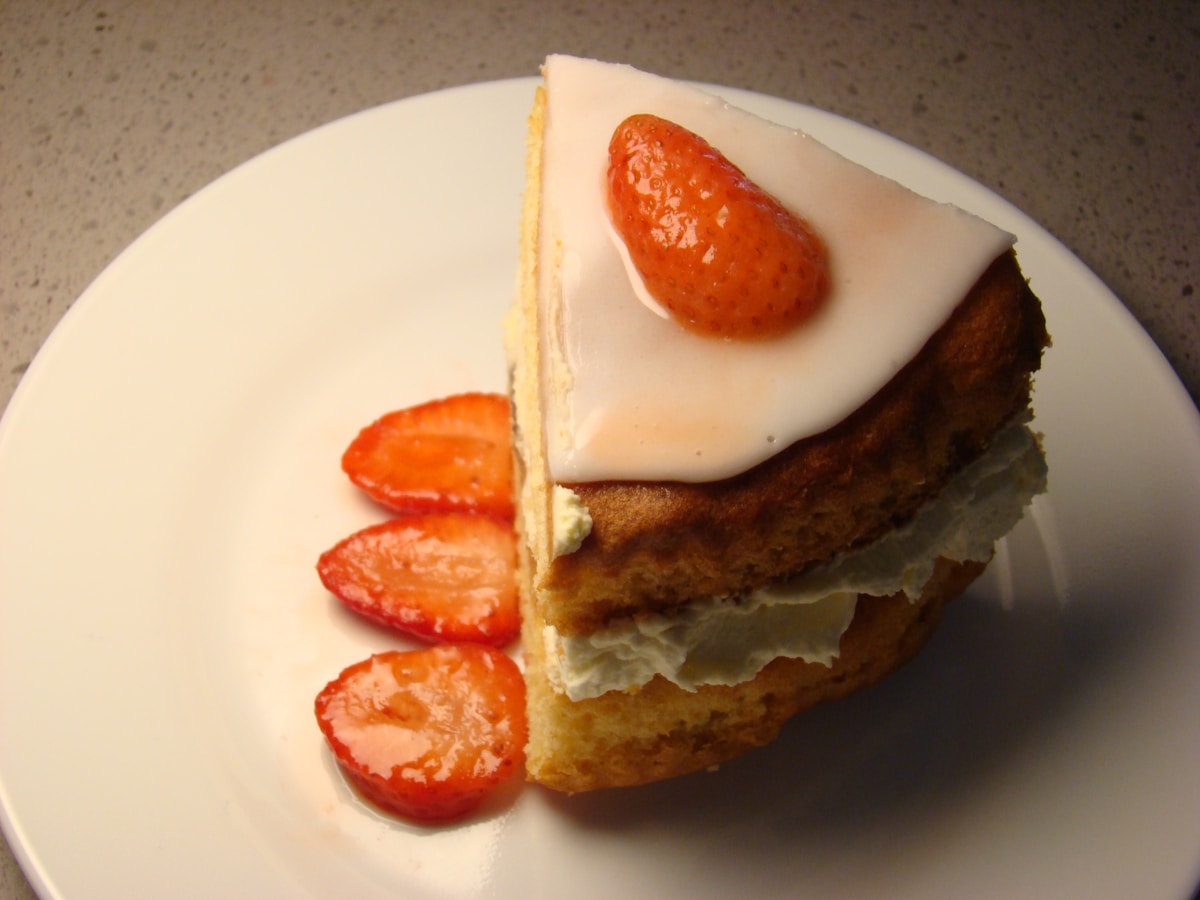
There’s a moment of pure satisfaction when you slice into a homemade chiffon cake. It’s the whisper-quiet sound the knife makes, the impossibly light and airy crumb, the delicate, cloud-like texture that melts in your mouth. A well-made chiffon is a testament to the magic of emulsification and aeration. It’s nearly perfect on its own. But what if we could take it from nearly perfect to truly unforgettable?
The secret isn’t in a new flavor or a fancy frosting. The secret lies in contrast. Specifically, textural contrast. By introducing a crisp, crunchy layer at the very bottom, you create a dynamic eating experience that makes every single bite more interesting. It’s a technique used constantly in professional pastry kitchens, and it’s surprisingly simple to master at home. Baking is chemistry you can eat, and today’s experiment is all about the physics of mouthfeel.
The Science of a Satisfying Crunch
Before we get our hands dirty, let’s talk about the why. Why does a crunchy base work so well with a soft cake? Our brains are wired to appreciate contrast. The juxtaposition of a yielding, moist crumb against a firm, crisp foundation sends a cascade of interesting signals. It prevents palate fatigue—that feeling where every bite tastes the same—and keeps the experience engaging from start to finish.
A chiffon cake is the ideal candidate for this treatment. Its structure is a marvel of food science. The oil and egg yolks create a rich emulsion, while the whipped egg whites, stabilized with sugar, form a strong but delicate foam. This gives us that signature light, moist texture with a very fine crumb. It’s a uniform softness. By adding a crunchy base, we’re not ‘fixing’ the chiffon; we’re giving it a partner that highlights its best qualities.
Think about it like adding crunchy croutons to a creamy tomato soup, or toasted nuts to a soft cheese. The crunch provides a counterpoint that makes the softness even more pronounced and luxurious. We’re going to explore three distinct methods to achieve this effect, ranging from a simple, pantry-friendly option to a classic pastry technique.
Method 1 The No-Bake Chocolate Cereal Crunch
This is perhaps the easiest and most immediately gratifying way to add a fantastic crunch. It’s playful, nostalgic, and delivers a powerful textural punch with minimal effort. The key is to create a solid, chocolatey barrier that won’t get soggy from the cake batter.
You’ll need a two-piece chiffon tube pan for this (and any chiffon cake, really). The removable bottom is non-negotiable for getting the cake out cleanly.
Ingredients:
- 150g (about 5 cups) plain cornflakes, lightly crushed
- 200g (7 oz) good-quality dark or semi-sweet chocolate (60-70% cacao), chopped. Brands like Guittard or Callebaut work beautifully.
- 30g (2 tbsp) unsalted butter
- 1/4 tsp fine sea salt
The Process:
- Prepare the Pan: Lightly grease the bottom piece of your chiffon pan only. Do not grease the sides—the cake needs to cling to them to climb high as it bakes.
- Melt the Chocolate: In a heatproof bowl set over a saucepan of simmering water (a double boiler), melt the chopped chocolate and butter together, stirring until smooth. Alternatively, you can use a microwave on 50% power in 30-second intervals, stirring between each, to prevent scorching. (Trust me, scorched chocolate is a tragedy.)
- Combine: Remove the bowl from the heat. Add the sea salt and stir. Gently fold in the crushed cornflakes until they are completely coated in the chocolate mixture. You want to crush them enough to be manageable but still have some texture; don’t turn them into dust.
- Form the Base: Immediately spoon the mixture onto the bottom disc of your chiffon pan. Use the back of a spoon or an offset spatula to press it into an even, compact layer.
- Chill Firm: Place the base in the refrigerator for at least 30 minutes, or until the chocolate is completely hard. This is the most crucial step. A firm, cold base will act as a barrier against the liquid cake batter.
- Add Batter and Bake: Once the base is rock solid, place it back into the tube pan’s outer ring. Pour your prepared chiffon batter directly on top and bake according to your recipe’s instructions. The chocolate will insulate the cornflakes, keeping them wonderfully crisp.
Troubleshooting: If your base seems a little soft after baking, it’s likely the chocolate layer wasn’t fully chilled or thick enough. Next time, ensure it’s completely firm to the touch before adding the batter.
Method 2 The Classic Baked Shortbread Crust
For a more refined, buttery crunch, a par-baked shortbread crust is a phenomenal choice. It pairs exceptionally well with citrus-flavored chiffons, like lemon or yuzu. Par-baking (partially baking) the crust before adding the main batter is essential to ensure it’s cooked through and crisp, not pale and doughy.
Ingredients:
- 150g (1 1/4 cups) all-purpose flour (King Arthur is a reliable choice)
- 113g (1/2 cup or 1 stick) cold unsalted butter, cut into 1/2-inch cubes
- 50g (1/2 cup) powdered sugar
- 1/2 tsp vanilla extract
- 1/4 tsp salt
The Process:
- Preheat and Prep: Preheat your oven to 350°F (175°C). You’ll be using the same two-piece chiffon pan.
- Mix the Dough: In a food processor, pulse the flour, powdered sugar, and salt until combined. Add the cold butter cubes and pulse in short bursts until the mixture resembles coarse, sandy crumbs. Add the vanilla and pulse a few more times just to incorporate. Don’t overmix!
- Form the Crust: Dump the crumbly mixture onto the bottom disc of your chiffon pan. Use your fingers or the flat bottom of a measuring cup to press it firmly and evenly across the surface.
- Par-Bake: Place the disc on a baking sheet and bake for 12-15 minutes, or until the edges are just beginning to turn a pale golden brown. The center might look slightly underdone, which is perfect.
- Cool Completely: This is just as important as the chilling step in the first method. You must let the shortbread crust cool completely to room temperature before adding your chiffon batter. A hot or warm crust will start to cook the batter on contact, creating a gummy layer.
- Assemble and Bake: Once cool, lock the crust base into the chiffon pan. Pour in your batter and bake as directed. The result will be a tender, buttery, cookie-like layer at the bottom of your ethereal cake.
Method 3 The Pâtissier’s Feuilletine Crunch
If you want to create a texture that will have people asking for your secret, this is it. Feuilletine (pronounced foy-uh-teen) are delicate, crispy shards of crushed crêpes dentelles. They provide an incredibly light, shatteringly crisp texture that’s less dense than cereal or shortbread. You can easily buy them online from brands like Cacao Barry.
Because feuilletine is so delicate, we don’t bake it with the cake. Instead, we create a separate crunch layer and use it as a base for the finished cake. This preserves its perfect texture.
Ingredients:
- 100g (about 2 cups) feuilletine flakes
- 100g (about 1/2 cup) praline paste (hazelnut or almond)
- 100g (3.5 oz) high-quality milk chocolate, melted and cooled slightly
The Process & A Kitchen Hack:
- Mix Gently: In a bowl, combine the praline paste and the slightly cooled melted chocolate. Mix until smooth. Very gently, fold in the feuilletine flakes. You want to coat them, not crush them.
- Spread Thinly: On a sheet of parchment paper, trace the outline of your chiffon cake pan. Spread the feuilletine mixture inside the circle to create a thin, even disc.
- Chill to Set: Place the parchment on a baking sheet and refrigerate until the disc is completely firm, about 20-30 minutes.
- Bake Your Cake: Bake and cool your chiffon cake completely as you normally would. This means inverting it in the pan to cool to prevent it from collapsing.
- The Assembly: Once the cake is fully cooled, carefully remove it from the pan. Now for the hack: place the chilled, firm feuilletine disc directly on your serving plate. Carefully place the cooled chiffon cake on top of it. The slight moisture from the cake will help it adhere perfectly. When you slice into the cake, you’ll cut through the soft crumb and hit that impossibly crisp, nutty, chocolatey layer. (Your guests will be amazed.)
Final Thoughts on Flavor and Assembly
Don’t be afraid to mix and match flavors. A chocolate cornflake base is stunning with a vanilla or even a matcha chiffon. The buttery shortbread crust is a natural fit for lemon, orange, or Earl Grey chiffon. And the nutty feuilletine-praline layer is absolutely divine with a coffee or chocolate chiffon cake.
Remember, the goal is thoughtful contrast. By understanding the science of texture and using one of these simple, achievable techniques, you can elevate a beautiful homemade cake into a truly professional-quality dessert. It’s a small step that makes a world of difference, turning a simple bake into a memorable culinary experience.


