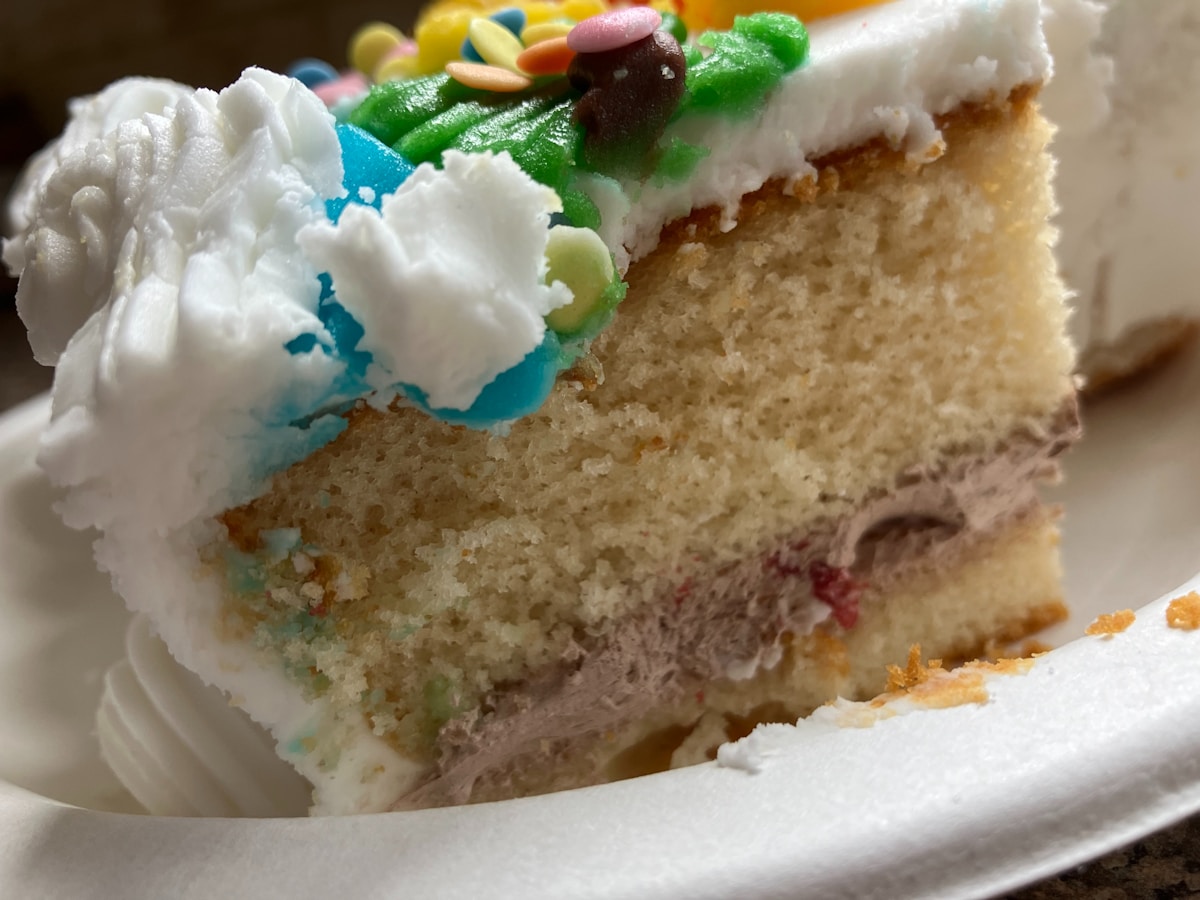
It’s a moment many of us who love to bake know intimately. You spend hours, maybe even days, planning and executing a dessert. You laminate dough until it shatters into a thousand buttery shards. You whip a sabayon over a double boiler until it’s a pale, ribbony cloud. You temper chocolate to a perfect, glossy snap.
Then, you present your masterpiece: a beautiful choux au craquelin tower with a delicate crème diplomate filling. And your family… your beloved, well-fed family… reaches for the bag of potato chips. Or your partner decides it’s the perfect time to go brush their teeth. The deflation is real. It’s a quiet, flour-dusted heartbreak that can make you question why you bother with the stand mixer at all.
But before you hang up your apron, let’s get into the science of this phenomenon. Because the answer isn’t personal, it’s chemical. Understanding the ‘why’ is the first step to bridging the gap between your passion for complex baking and your family’s palate.
It’s Not You It’s Their Palate Chemistry
Baking is chemistry you can eat, but tasting is biology in action. Human brains are wired for survival, and that wiring heavily influences our food preferences. For millennia, three flavors signaled safety and energy: sweet (calories), salty (essential minerals), and fatty (dense energy storage). These are primal, easy-to-love tastes. A simple, fudgy brownie hits all those notes with sledgehammer-like efficiency.
A complex dessert, however, asks more of the taster. That beautiful raspberry entremet you made? It has layers of tartness from the fruit, a slight bitterness from the dark chocolate mousse, the subtle vanilla of a dacquoise, and a complex mouthfeel. It’s a symphony. A bag of chips is a power chord. For a palate that isn’t primed for it, or is simply tired after a long day, the power chord often wins.
This is especially true for children, whose palates are still developing. They often exhibit food neophobia—a fear of trying new things. An unfamiliar texture, like a silky panna cotta or a chewy meringue, can be genuinely off-putting to them. It’s not a judgment on your skill; it’s a developmental stage. Adults, too, become creatures of habit. The familiar comfort of a chocolate chip cookie can feel more relaxing than the mental effort required to analyze a new flavor combination.
So, the first step is to de-personalize the rejection. It isn’t a critique of your love or your labor. It’s a biological and psychological response to stimuli. Your art is simply speaking a language their palate isn’t fluent in at that moment.
The Passion vs Pragmatism Playbook
The joy of baking often comes from the process itself—the challenge of mastering a new technique, the precision of weighing ingredients, the magic of watching a batter rise in the oven. The sharing part is a wonderful, validating bonus, but it can’t be the only reason you do it. When your primary motivation is external praise, you set yourself up for disappointment.
Instead, I propose a dual-track approach. You need a strategy for pursuing your passion projects and a separate one for bringing joy to the family table. They don’t always have to be the same bake.
Your passion projects are for you. They are for honing your craft, for the sheer pleasure of creation. The family bakes are for connection and comfort. This distinction is freeing. It means you don’t have to abandon your dream of perfecting macarons just because your kids think they’re “weird little sandwiches.” It just means you need a smarter way to manage the output.
Strategies for Your Ambitious Bakes
When you get the urge to tackle a multi-day, technically demanding project, don’t suppress it. Channel it with one of these strategies to ensure your effort is appreciated—by someone, even if that someone is just you at a later date.
-
The Small-Batch Solution: Instead of making a full 9-inch, 12-serving gâteau, scale the recipe down. Invest in a few 4-inch tart rings or mini cake pans. This allows you to practice the technique without being left with a mountain of dessert nobody wants. Most recipes can be halved or quartered with a little math. A kitchen scale is your best friend here. If a recipe calls for one large egg (~50g) and you need to halve it, just whisk the egg and weigh out 25g. (Your future self will thank you.)
-
Find Your “Tasting Panel”: Every passionate baker needs an appreciative audience. This might be your coworkers, your book club, or a few foodie friends. A quick text—“I’m testing a new recipe for brown butter financiers, can I drop some off?"—is often met with wild enthusiasm. This gives you valuable feedback and the joy of seeing your creation devoured with gusto.
-
Master the Art of Freezing: Your freezer is an incredible tool for preserving your hard work. But you must know what freezes well and what doesn’t.
- Freezes Beautifully: Unfilled pastry like choux buns or tart shells, cake layers (wrap them tightly in two layers of plastic wrap then a layer of foil), most cookie doughs, and baked-off brownies or scones.
- Do Not Freeze: Dairy-heavy custards and pastry creams (they weep and separate upon thawing), delicate meringues (they become sticky), and anything with gelatin unless specifically formulated for freezing. For cake layers, wrap them while they’re still slightly warm to trap the moisture. They can be stored for up to two months and will taste perfectly fresh when thawed at room temperature.
The Universal Approval Brownie Recipe
Every baker needs a guaranteed crowd-pleaser in their back pocket. This is the recipe you pull out when you just want to make everyone happy. For my family, it’s these ultra-fudgy brownies. They are simple, but the technique makes them sublime. The key is in how we handle the fat and sugar—it’s pure chemistry.
Ingredients:
- 1 cup (227g) unsalted butter, cubed
- 4 oz (113g) high-quality unsweetened chocolate, chopped (like Guittard or Valrhona)
- 1 1/4 cups (250g) granulated sugar
- 3/4 cup (160g) packed light brown sugar
- 3 large eggs, at room temperature
- 1 tablespoon vanilla extract
- 1 cup (120g) all-purpose flour (King Arthur is a reliable choice)
- 1/2 cup (45g) Dutch-processed cocoa powder
- 1 teaspoon salt
- 6 oz (170g) bittersweet chocolate chips or chunks
Instructions:
-
Prep: Preheat your oven to 350°F (175°C). Line a 9x9-inch baking pan with parchment paper, leaving an overhang on two sides to use as handles later.
-
The Emulsion: In a medium saucepan over low heat, melt the butter and the unsweetened chocolate together, stirring constantly until smooth. Remove from heat. This step is crucial. By melting the fat and chocolate together, you create a stable emulsion that coats the flour later, which inhibits gluten development. Less gluten equals a fudgier brownie, not a cakey one.
-
Dissolve the Sugar: Whisk the granulated and brown sugars into the warm chocolate mixture until fully incorporated. The mixture will look grainy. Now, let it sit for 5 minutes. This allows the residual heat to begin dissolving the sugar crystals, which is the secret to getting that coveted, shiny, crackly top crust.
-
Add Eggs and Vanilla: Whisk in the eggs one at a time, mixing vigorously after each addition. The batter will start to look smooth and glossy. Stir in the vanilla.
-
Fold in Dry Ingredients: In a separate bowl, whisk together the flour, cocoa powder, and salt. Add this to the wet ingredients and fold gently with a spatula until just a few streaks of flour remain. Do not overmix! Finally, fold in the chocolate chips.
-
Bake: Pour the batter into your prepared pan and smooth the top. Bake for 30-35 minutes. The edges should be set, and a toothpick inserted into the center should come out with moist, sticky crumbs attached, but not wet batter. This is key for fudginess—err on the side of underbaking.
-
Cool Completely: This is the hardest part. Let the brownies cool in the pan completely, at least 2 hours, before lifting them out with the parchment handles and slicing. Cooling allows the structure to set for clean cuts and the ultimate dense texture.
Make Baking a Team Sport
If you want your family to be more invested in the things you bake, involve them in the process. But don’t just hand them a whisk; involve them in the decision-making.
Sit down with a cookbook or a baking website together. Let them pick the next project. When they choose the funfetti cupcakes, they have instant buy-in. They’ll be excited to see—and taste—the result because it was their idea.
Let them help in age-appropriate ways. A young child can dump pre-measured ingredients into a bowl. An older one can learn to crack an egg or measure flour properly (spoon and level, never scoop!). This participation builds a connection to the food that goes beyond just eating it. It demystifies the process and fosters an appreciation for the effort involved.
Ultimately, your journey in baking is your own. It’s a craft fueled by curiosity and a desire to create something wonderful from humble ingredients. Continue to challenge yourself with those laminated doughs and delicate mousses. Bake them for you. And when you want to bake for your family, pull out the brownie recipe and create a moment of simple, shared, and universally approved joy.