


The Sink of Danger: A Story You Might Know
Picture this: you’re washing dishes, working through a mountain of plates and pots, and you plunge your hand into a sink full of soapy water. Then, the unmistakable sting of a blade meets your fingertips. That’s a moment every cook dreads, and it’s exactly why the Reddit community r/KitchenConfidential has a strict, unanimous rule: never, ever leave a knife in a sink. This simple act is one of the most common kitchen hazards, causing both nasty cuts and ruining your blade’s edge. But don’t worry — once you learn the right way to store your knives, you’ll wonder why you ever did anything else. Let’s break down the safest, most practical methods so you can cook with confidence and keep your fingers intact.
Why Proper Knife Storage Matters More Than You Think
Leaving a knife in the sink isn’t just a safety risk — it’s also a surefire way to dull your blade. When a knife clatters against other metal or ceramic dishes, its edge gets chipped and bent. And here’s a scary truth: a dull knife is actually more dangerous than a sharp one. Why? Because a dull blade requires more force to cut, making it more likely to slip and slice you instead of that tomato. Professional chefs and home cooks alike agree that storing knives properly extends their life and reduces the chance of injury. Whether you have a single chef’s knife or a full set, your storage method should keep blades separated, visible, and off the countertop. The three best options, as recommended by experts like Wirecutter and America’s Test Kitchen, are magnetic wall strips, traditional knife blocks, and in-drawer blade organizers. Let’s explore each one.
Magnetic Wall Strips: The Space-Saving Champion
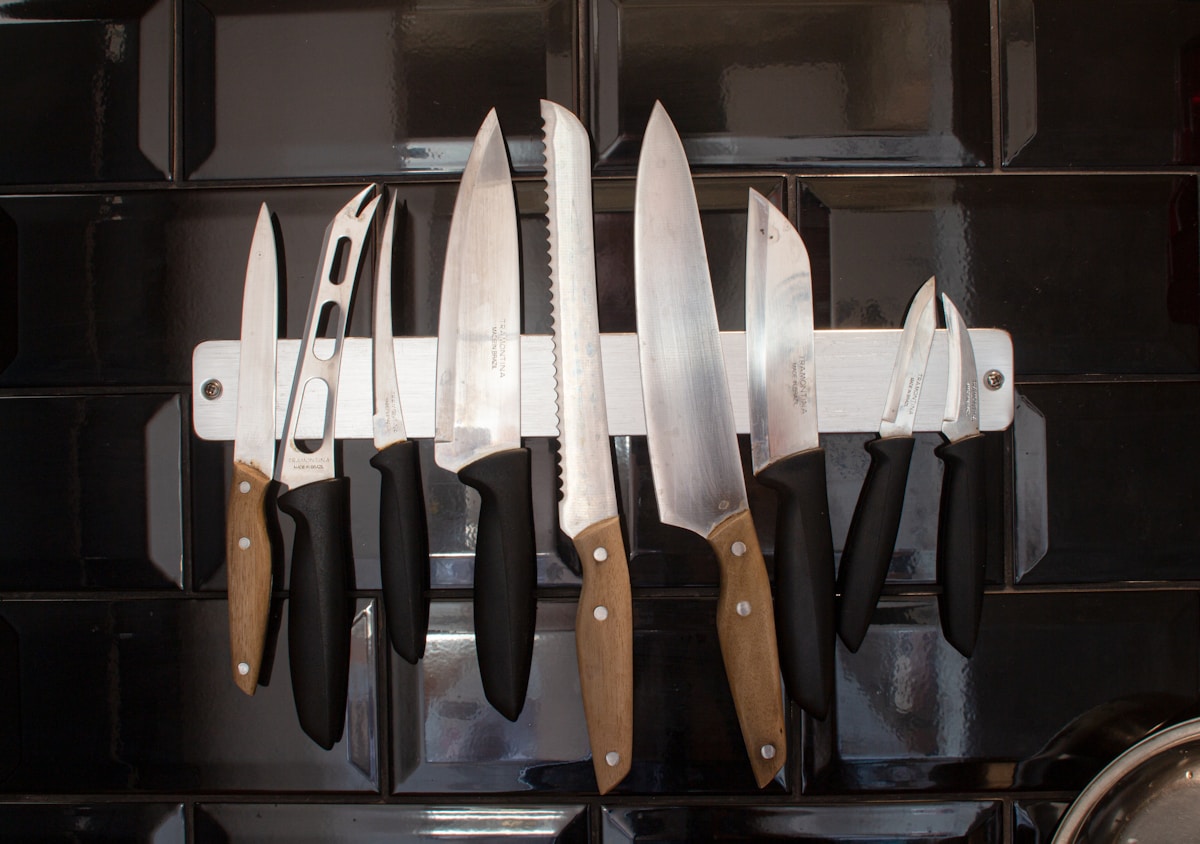
Magnetic strips are a favorite of small-kitchen dwellers and pros who want knives within arm’s reach. These strips — usually made of stainless steel with a strong neodymium magnet inside — mount to your wall or backsplash. Brands like Utopia Kitchen, OXO, and IKEA offer reliable options ranging from $15 to $50. The biggest advantage? Visibility. Your knives hang horizontally or vertically, so you can instantly grab the right one without rummaging. There’s no contact between blades, which means less dulling. And because they’re up on the wall, they stay out of the sink and away from curious toddlers (just mount them high enough). The downsides: you need wall space and a stud or strong adhesive. Also, magnetic strips can collect dust and grease, so wipe them down weekly with a damp cloth. One tip: test the strip’s strength before loading all your expensive knives. A good strip will hold a heavy cleaver securely, but cheaper ones might let go. (Nobody wants a falling knife — trust me on this one.)
Wooden Knife Blocks: Classic but High-Maintenance
The wooden knife block is the most traditional storage method. It sits on your counter, looks handsome, and keeps knives safely tucked away. Many sets come with their own block, but you can also buy universal blocks with interchangeable slots. The catch: you must clean the block regularly. Those dark, narrow slots are perfect breeding grounds for bacteria — especially if you ever slide a slightly damp knife inside. To avoid this, look for blocks with removable plastic or bamboo inserts that can be washed. KitchenAid, Wusthof, and Williams Sonoma all make models with anti-microbial features. Price range: $20 to $100+. Pros: easy access, protects blades from bumps, and looks tidy. Cons: takes up counter space and requires periodic cleaning. You can also reduce risk by storing only knives you use often and leaving slots empty for air circulation. And never, ever put a knife in the block wet. (Your future self will thank you.)
In-Drawer Blade Organizers: The Hidden Gem
If you hate clutter on your counter and have a usable drawer, an in-drawer organizer is a perfect solution. These are usually made of bamboo, wood, or plastic with slots that hold each knife vertically. Brands like Joseph Joseph, Bambüsi, and Messermeister offer sizes to fit standard drawers (about 20-22 inches deep). Prices range from $10 to $40. The big plus: knives are hidden from view, yet fully separated. No risk of accidental contact, and the drawer keeps them clean and protected. These organizers also fit a variety of knife shapes, including long bread knives. One thing to watch for: make sure your drawer depth accommodates the blade length. A 10-inch chef’s knife needs about 9 inches of clear vertical space. Also, avoid overcrowding — leave a little room between slots so you can easily grab a handle without hitting another blade. Cleaning is simple: just wipe down the organizer and drawer interior monthly. The only downside is that you have to open a drawer to get a knife, but many home cooks find that a small trade-off for a safer kitchen.
How to Choose the Right Method for Your Kitchen
Now that you know the options, which one should you pick? It depends on your kitchen’s layout, your knife collection, and your budget. Here’s a quick guide:
- Magnetic strip is best for renters or anyone short on counter space. It works well near your prep area, especially if you have a tile backsplash. Just avoid mounting near heat or moisture (like right above a stove).
- Knife block is ideal for a large set of knives and a generous countertop. If you choose this, invest in a block with removable, washable inserts to prevent bacteria.
- In-drawer organizer fits neatly in a kitchen with limited counter space but an extra drawer. It’s also the safest if you have small children who can’t reach drawer handles.
No matter which you choose, the golden rule remains: keep knives out of the sink. And remember, storage is only half the battle. To keep your knives truly sharp, you’ll also need to use a honing rod (steel) every few uses and sharpen them a few times a year. A honing rod realigns the edge — it doesn’t remove metal. For sharpening, consider a whetstone (1000/6000 grit) or a pull-through sharpener like Work Sharp or Chef’sChoice. A sharp knife makes cooking safer and more enjoyable.
Try This Tonight: Clear Your Sink and Choose a Storage Method
Take a moment right now to walk over to your kitchen sink. Is there a knife lurking under the sponge? If so, pull it out, wash it carefully (by hand — not in the dishwasher), and decide on your new storage solution. Even if you don’t buy anything today, you can place a dish towel on the counter and lay your knives flat, blades facing away from you, until a proper home arrives. That simple habit will immediately reduce your risk of a trip to the ER. The kitchen should be a place of joy, not danger. With the right storage, you’ll keep your knives sharp, your fingers safe, and your cooking fun. (And your future self will thank you every time you reach for a clean, ready blade.)


