A large bowl of vegetables goes into the pan, you add one tiny drizzle of oil, and a few minutes later dinner looks pale, dry, and strangely under-seasoned. If that sounds familiar, the problem may not be your cooking skills—it may be that the oil has been spread too thinly across too much food.
The practical answer is to use enough oil to give the cooking surface and the current batch of food a light sheen, not enough to create a pool. For a large skillet holding several cups of ingredients, about 1 tablespoon of oil is a reasonable starting point for the first batch. Add a small amount only if the pan becomes dry or food begins sticking. A wok may use a similar total amount, but usually in separate additions. A nonstick skillet may need less.
The exact stir-fry oil amount depends on your pan, the volume and dryness of the ingredients, the heat, and whether you cook everything at once or in batches. If the pan is crowded, adding more oil is usually not the best fix. Smaller batches, appropriate preheating, and a measured sauce often make a bigger difference.
Key Takeaways
- For a large skillet, start with about 1 tablespoon of oil for the first manageable batch, then adjust by the teaspoon.
- Aim for a light sheen on the pan and food, not visible oil pooling underneath.
- If ingredients steam, release liquid, or barely sizzle, reduce the batch size before adding more oil.
- Tofu, meat, vegetables, and noodles may need different amounts depending on their moisture and surface texture.
- Use sauce or a small splash of cooking liquid to finish a dry stir-fry when the pan itself is not sticking.
Why a Tiny Drizzle May Not Be Enough
A cherry-sized drizzle can disappear quickly in a large skillet. Some coats the pan, some clings to the first ingredients added, and some is absorbed or spread across vegetables, tofu, meat, or noodles. By the time the rest of the food goes in, there may be no thin coating left where it is needed.
Oil has several practical jobs in a stir-fry. It helps food release from the cooking surface, spreads heat across small contact points, supports browning, and helps carry salty, spicy, or aromatic flavors over the ingredients. It also contributes richness, so using almost none can make a large batch taste flat even when the sauce is well seasoned.
The goal is not to lubricate the whole pan with a deep layer of oil. You want the surface to look lightly glossy after the oil is moved around. When ingredients are added, they should pick up a little sheen without sitting in visible oil.
Pan shape changes how that looks. A small skillet has less surface area, so a teaspoon may coat it adequately for a modest batch. A large skillet has more room and often holds more food, so it may need closer to 1 tablespoon for the first batch. A wok has sloped sides and a smaller hot center; oil can be swirled through the bottom before food is pushed up the sides.
None of these pans guarantees a better stir-fry. A large pan can still steam food if it is overloaded, while a small pan can brown beautifully when used for a manageable batch. Oil cannot solve a lack of cooking space.
How to Estimate Oil for Different Stir-Fry Ingredients
Think of oil as a starting adjustment rather than a fixed rule. Begin with a modest amount, observe the pan as the food cooks, and add only a little more if the cooking surface is dry or the food is sticking. Adding oil by the teaspoon is easier to control than pouring freely.
Vegetables: Vegetables vary widely. Mushrooms, eggplant, sliced carrots, broccoli, and other fibrous or porous vegetables can absorb or hold more oil than crisp, watery vegetables. For a large skillet containing several cups of vegetables, start with roughly 1 tablespoon for the first batch. If the vegetables are browning too quickly or the pan looks dry before they soften, add a teaspoon and toss.
Dry the outside of washed vegetables before cooking if you want browning. Excess water cools the pan and creates steam, making it difficult to tell whether you need more oil or simply less moisture and less crowding.
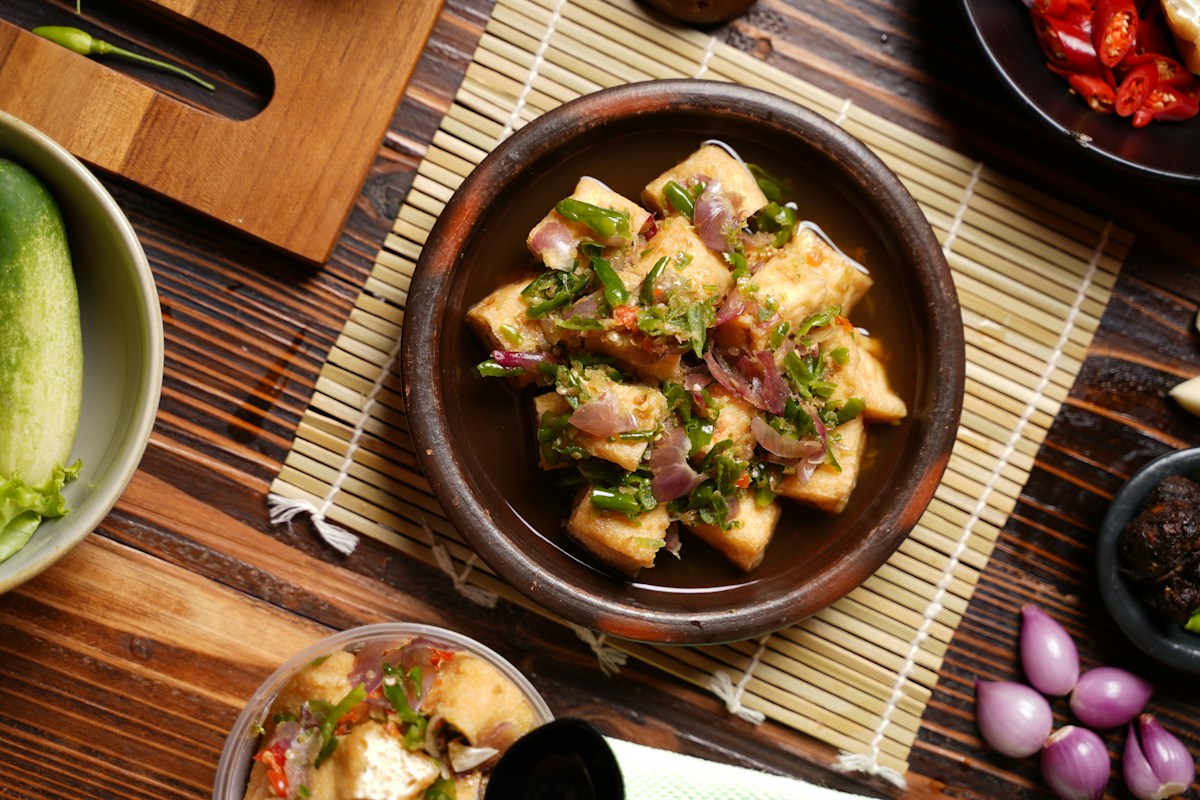
Tofu: Tofu can need extra attention because its surface may stick before it develops a firm crust. Pressed or patted-dry tofu usually behaves more predictably than wet tofu. If you are searing tofu cubes in a large skillet, start with enough oil to lightly coat the cooking surface—often around 1 tablespoon for a batch—and leave space between the pieces.
Pre-seared tofu generally needs less additional oil when it returns to the pan with vegetables and sauce. If the tofu is already coated with a marinade or thick sauce, remember that the coating may also affect sticking and browning.
Chicken or other lean meat: Thin strips of chicken or lean meat often need enough oil to prevent sticking while the outside cooks, but they do not necessarily need more oil than tofu. A lightly coated pan is a useful starting point. Pat the meat dry, avoid piling it into the pan, and cook it in a single layer when possible.
If the meat releases liquid and begins simmering, adding extra oil will not restore browning. Remove some of the meat, let the pan regain heat, and continue in batches. Cook meat thoroughly before serving; exact cooking time depends on piece size, starting temperature, and equipment.
Cooked noodles or rice: Noodles and rice can cling together and absorb some of the oil that coats them. However, they may also bring moisture, sauce, or residual cooking water into the pan. Start with a light coating rather than a large pour, loosen the noodles before adding them, and toss promptly.
If noodles seem dry, a small splash of sauce or cooking liquid may help more than another spoonful of oil. Add liquid gradually so the noodles become coated rather than wet and soft.
Nonstick cookware: A nonstick skillet may reduce sticking, so you may be able to begin with less oil—perhaps 1 to 2 teaspoons for a small batch, depending on the pan and ingredients. It does not remove the need to preheat according to the cookware instructions, space food properly, or cook in batches.
Use utensils recommended for your pan, and avoid treating a lower oil requirement as permission to overload it. Less sticking does not prevent food from steaming when too much is added at once.
When to Add Oil in Batches
A large stir-fry often turns out better when cooked in stages. If vegetables, protein, tofu, and noodles fill the pan above a comfortable single layer, the food releases moisture faster than it can evaporate. The result is weak sizzling, pale ingredients, sticking, and uneven seasoning.
Do not compensate by adding enough oil to cover the entire crowded pan. That can leave the finished dish greasy while the food still fails to brown. Instead, divide the ingredients into manageable batches and add a small amount of fresh oil between batches if the surface needs it.
A useful sequence is:
- Prepare and portion all ingredients before heating the pan. Keep sauce in a bowl so it can be added quickly at the end.
- Preheat the pan according to its material and the manufacturer’s guidance. It should be ready for cooking, but oil should not be left to smoke heavily.
- Add a modest amount of oil and swirl or spread it over the cooking surface.
- Cook protein or tofu in a single layer when possible. Transfer it out once cooked or browned as appropriate.
- Add dense vegetables first, followed by quicker-cooking vegetables. Use a small fresh amount of oil only if the pan looks completely dry or food is sticking.
- Return the protein or tofu, add noodles or rice, and toss briefly.
- Add sauce gradually, then remove the pan from the heat when the ingredients are coated and cooked.
Use care when adding oil to a hot pan. Keep your face and hands away from splatters, and never pour oil into a pan that is smoking heavily. If the oil begins smoking substantially, move the pan away from the heat and allow it to settle before continuing according to your equipment and oil instructions.
How to Avoid a Greasy or Dry Stir-Fry
A dry stir-fry and an under-oiled stir-fry are not always the same problem. Look at the food and the pan before reaching for more oil.
If food sticks immediately, the cooking surface looks completely dry, and the ingredients have rough patches where they contact the pan, add a small amount of oil—about a teaspoon at a time. Also check whether the pan is too crowded or the heat has dropped.
If the food looks pale, wet, and soft while liquid collects at the bottom, the pan is probably overloaded or too cool. Use a smaller batch, give the ingredients more room, and allow moisture to evaporate. More oil will not create browning in a pan that cannot maintain enough heat.
If oil is visibly pooling around the food, stop adding it. Toss more deliberately, drain ingredients that brought excess liquid or marinade, and cook the next batch with less oil. A properly coated stir-fry may look glossy, but it should not have a layer of oil gathering underneath it.
For a dry stir-fry, try these fixes in order:
- Check for sticking and add a teaspoon of oil only if the pan truly needs it.
- Reduce the amount of food in the pan or cook the next portion separately.
- Add a measured sauce, broth, or other suitable cooking liquid near the end.
- Toss briefly to coat, rather than simmering the vegetables in liquid.
- Taste before adding more oil; the dish may need salt, acidity, spice, or aromatics instead.
Sauce changes the final oil amount because it supplies moisture and helps seasoning cling. Add it gradually, especially with delicate vegetables or noodles. Too much sauce can make vegetables soft, dilute flavor, and create the same steaming effect that comes from overcrowding.
A Practical Visual Guide for Adjusting the Pan
Use these cues while cooking:
- Food releases easily and has a light sheen: Continue cooking. You probably have enough oil.
- Food sticks immediately and the surface looks dry: Add a small amount of oil, then check the heat and batch size.
- Oil pools around the ingredients: Stop adding oil. Toss, drain excess moisture, or divide the next batch.
- Ingredients steam, release lots of liquid, or barely sizzle: The pan is too crowded, too cool, or both. Remove some food and continue in stages.
- Food browns too quickly: Lower the heat, move the pan as needed, and check whether pieces are too small or were added in the wrong order.
For a large vegetable stir-fry, begin with about 1 tablespoon of oil for the first batch, cook dense vegetables separately if needed, and add a teaspoon between batches only when the pan becomes dry. Finish with a small amount of sauce rather than extra oil.
For tofu, use enough oil to lightly coat the pan while the tofu sears in a single layer. Once the tofu has a firm surface, remove it, cook the vegetables, and return the tofu before saucing. This prevents you from continually adding oil to protect tofu that is already cooked.
For chicken and noodles, sear the chicken in a lightly coated pan, transfer it out, then cook the vegetables. Add the cooked noodles with a modest amount of sauce and return the chicken at the end. If the noodles cling, loosen them with a small splash of cooking liquid before adding more oil.
The core rule is simple: use enough oil to coat and cook the current batch, not enough to lubricate an overcrowded pan. A practical stir-fry oil amount may be a teaspoon in a small nonstick skillet, around a tablespoon for a first batch in a large skillet, or several small additions in a wok. Let the pan’s appearance, the food’s texture, and the size of each batch guide you.
FAQ
How much oil should you use for stir-fry vegetables?
For a large skillet holding several cups of vegetables, start with about 1 tablespoon for the first batch and adjust in teaspoons. A smaller nonstick skillet may need less. If vegetables are steaming, use fewer vegetables at once rather than automatically adding oil.
Why is my stir-fry too dry even when I add oil?
The pan may be overcrowded, too cool, or missing finishing liquid. Oil cannot replace cooking space or heat. Cook smaller batches, dry wet ingredients on the outside, and finish with a measured sauce or a small splash of cooking liquid.
Does tofu stir-fry need more oil than vegetables?
Not always. Tofu may need enough oil to sear without sticking, particularly when it is wet or the pan is not nonstick, but pre-seared tofu needs less when it returns to the pan. Keep pieces spaced apart and add oil only when the surface is dry or sticking occurs.
How do you know whether to add oil or sauce?
Add oil when food is sticking and the cooking surface is dry. Add sauce or cooking liquid when the food needs moisture or seasoning near the end. If oil is pooling, add neither; reduce crowding and improve tossing instead.