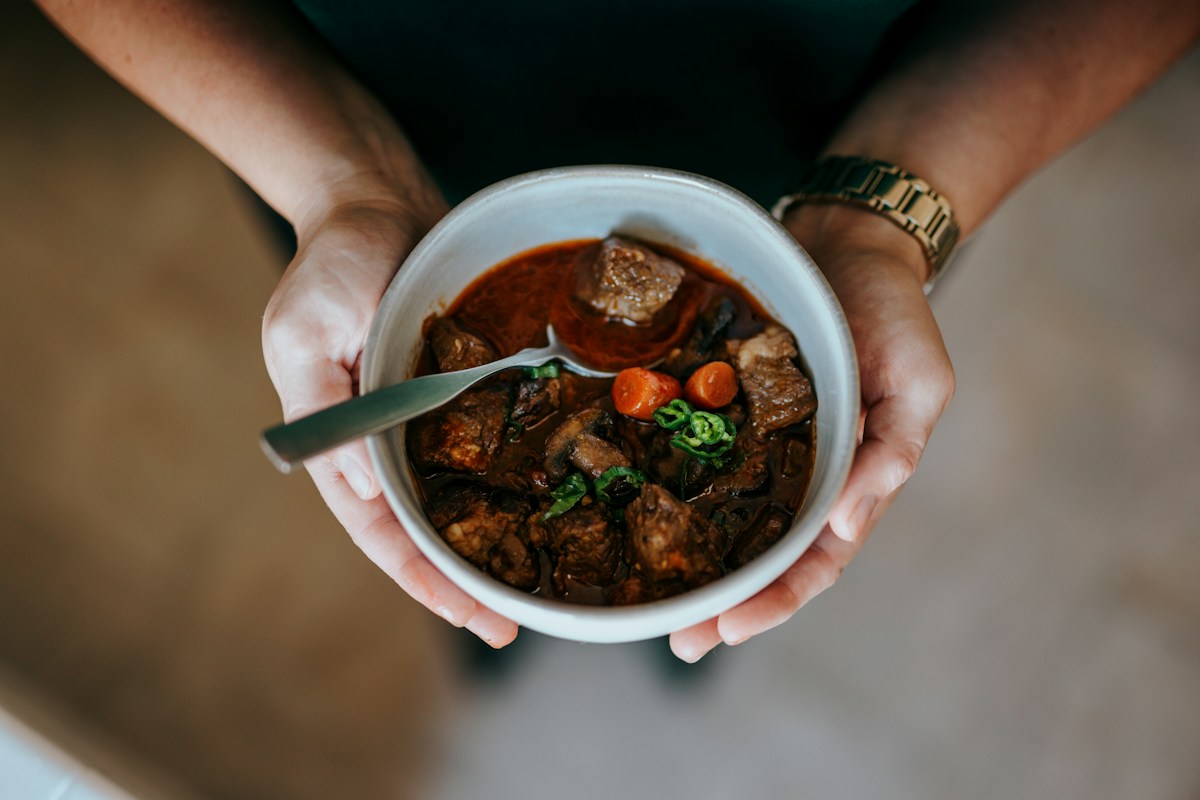
You lift the slow-cooker lid expecting a cozy, savory stew, but the surface is shining with butter. Before you panic or pour in a lot of water, know that you can usually fix buttery stew in stages.
First remove visible fat if possible. Then decide whether the remaining problem is truly greasy or simply richer than you intended. A short rest, careful skimming, or chilling can remove excess butter, while stock, vegetables, gentle acidity, and a little starch can rebalance the finished dish without turning it into thin soup.
Key Takeaways
- Let the stew settle, then skim visible butter with a shallow spoon or ladle.
- Chill the stew when possible so separated fat can firm up and be lifted away.
- Remove some fatty broth before adding unsalted stock or compatible vegetables.
- Acidity can brighten a rich stew, but it does not remove fat.
- Cool, store, and reheat leftovers according to current food-safety guidance.
Tell Whether the Stew Is Greasy or Simply Rich
Look at the surface before stirring. Excess butter or grease may appear as a glossy film, small pools around the edges, or a thicker layer floating over the broth. A slick coating on your lips and a heavy buttery aftertaste are stronger signs that the stew needs correction.
A naturally rich stew may still look shiny, especially if it contains fatty meat, but it can taste balanced and pleasant. If the broth tastes good and does not feel oily, aggressive fat removal may take away flavor. Correct only as much as necessary.
The type of fat matters. Dairy butter, rendered fat from beef or poultry, and cooking oil can separate differently. Some butter may remain dispersed in the broth, particularly if the stew has been stirred often or contains starch, gelatin, or other ingredients that help hold fat in the liquid. In that case, you may be able to reduce the sensation of richness, but not remove every trace of fat.
If the stew smells sour, rancid, fermented, or otherwise suspicious, do not try to disguise it with seasoning or acidity. A rich flavor alone is not a sign of spoilage, but questionable storage or an unpleasant odor is a reason to discard the food.
Skim Excess Butter While the Stew Is Hot
If dinner is nearly ready, hot skimming is the quickest way to save an oily stew. Pause the slow cooker or turn off the heat if practical, following the appliance instructions. Let the stew sit undisturbed for several minutes so the liquid can settle and more fat can collect at the surface.
Use a shallow spoon or small ladle. Hold it almost level with the surface and gently collect the shiny layer without digging into the broth. Empty the spoon into a heatproof bowl, then repeat around the edges, where butter often gathers first.
For better control, skim in several short passes rather than trying to remove everything at once. Wait briefly between passes, especially if stirring has mixed the fat back into the liquid. Keep the meat and vegetables in the cooker while you skim so the solids remain in the stew.
A chilled metal spoon can help with a thin film. Place the back or bowl of the cold spoon lightly against the surface so the fat clings to it, then wipe the spoon into a separate container. This is slow but useful when you want to remove only a small amount.
A purpose-made fat-absorbing sheet may also help with surface grease. Use it exactly as directed, keep it on the surface rather than pushing it into the stew, and remove it completely so no fragments remain. Avoid improvised paper products that can break apart or leave fibers in the food.
Take care with hot liquid, steam, and the slow-cooker insert. Do not carry a full, hot crock across the kitchen just to skim it. If the surface is difficult to reach or the cooker is very full, use a long-handled utensil and work slowly.
Chill the Stew for the Most Effective Fat Removal
When time allows, chilling is usually the cleanest way to see how much excess fat can be removed. As the stew cools, some separated butter or rendered fat firms on the surface. Once solid, it can often be lifted away in pieces while the meat and vegetables remain below.
Do not leave a large pot of stew sitting at room temperature for an extended period. Instead, follow current food-safety guidance for cooling leftovers. Transfer the stew carefully into suitable shallow containers when practical, leaving enough room for the liquid, and refrigerate it promptly. A very hot, heavy container can be difficult to cool evenly, so use containers that are safe for the food and your refrigerator.
After the fat has firmed, slide a spoon or thin spatula under the top layer and lift it away. Remove only the solid fat, not the layer of broth beneath it. If the fat has formed in several small patches, pick them out one at a time.
This method works best when the fat has separated. Butter that has fully blended into the broth may not form a neat cap. Oil and rendered meat fat may also firm differently, depending on the recipe and temperature. Chilling can still make the stew easier to evaluate, but it does not guarantee that all fat will become removable.
Reheat only the amount you plan to serve. Once the chilled fat has been removed, warm the stew gently and stir so the broth is evenly distributed. The texture may change slightly after chilling, particularly if the stew contains gelatin or starch, but gentle reheating usually restores a spoonable consistency.
Balance the Stew Without Making It Watery
If skimming does not solve the problem, do not immediately add a large amount of water. Water can spread out the butter while weakening the broth, salt level, color, and overall flavor. Instead, remove a modest amount of the fattier liquid first, keeping as many meat and vegetable pieces in the pot as possible.
Replace only what the stew needs. Unsalted stock is often a better choice than water because it adds volume without washing out as much flavor. Add a small splash, stir, and wait briefly before deciding whether more is needed. Taste only when the food is safe to sample and hot enough for normal serving conditions.
You can also add compatible solids. Extra carrots, potatoes, mushrooms, onions, beans, or cooked grains may make the stew feel more balanced by increasing the proportion of ingredients to broth. Choose additions that suit the original recipe, and cook them until tender rather than adding a large quantity all at once.
A little acidity can make a rich stew taste brighter, but it does not remove butter. Try a small amount of suitable vinegar, lemon juice, or a tomato-based ingredient only when it fits the flavor of the dish. Stir it in gradually, because too much acid can make the stew sharp rather than balanced.
Adjust salt and other seasonings after removing or diluting some of the fatty liquid. If you season first, adding stock or vegetables later may leave the stew bland or unevenly salted. Garlic, pepper, herbs, chili, or a fresh garnish can add contrast, but they should support the stew rather than cover an unpleasant smell.
If the corrected stew becomes too thin, thicken it carefully. A small slurry made with starch and cool liquid can add body, or you can use another thickening method appropriate for the recipe. Add a little at a time and allow the stew to cook according to the thickener’s needs before adding more.
Remember that starch changes texture; it does not remove fat. Do not use flour, cornstarch, potatoes, or bread to conceal spoiled food, rancid odors, or a questionable taste. A thick stew can still be unsafe or unpleasant.
A practical rescue sequence looks like this:
- Pause cooking and let the surface settle.
- Skim visible butter with a shallow spoon or ladle.
- Remove a small amount of fatty broth if the stew is still heavy.
- Add unsalted stock or compatible vegetables gradually.
- Use a small amount of acidity if the recipe needs brightness.
- Correct salt and seasonings only after the volume and richness are balanced.
- Thicken cautiously if necessary.
- Finish with fresh herbs or another suitable garnish.
Store and Reheat the Corrected Stew Safely
Correcting the flavor does not change the basic safety needs of leftover stew. Cool and refrigerate it using current guidance from the USDA Food Safety and Inspection Service or the FDA. Avoid leaving a large pot at room temperature for an extended period, and use clean, suitable containers with well-fitting covers.
Shallow containers can help a large quantity cool more evenly than one deep container. Handle hot stew carefully when transferring it, and do not overfill containers. If you are unsure how your slow-cooker insert should be handled, follow the appliance manufacturer’s instructions along with current food-safety guidance.
Keep leftovers refrigerated and consult current USDA or FDA recommendations for the appropriate storage window rather than relying on smell alone. Avoid repeated cycles of cooling, reheating, and cooling. Portioning the stew before storage makes it easier to warm only what you need.
Reheat gently, stirring so the broth, meat, vegetables, and remaining fat are distributed evenly. The food should be hot throughout according to current food-safety guidance. If the stew separates again during reheating, stir it well or skim a small amount from the surface.
Discard stew that has been stored improperly or has a sour, rancid, fermented, or otherwise suspicious smell or appearance. Do not taste questionable food to decide whether it is safe, and do not try to repair it with vinegar, extra salt, spices, or thickener.
FAQ
Will the extra butter rise to the top of stew?
Often, separated butter or grease rises, especially when the stew rests without stirring. You may see a shiny film or small pools at the edges. However, butter can remain dispersed when it has emulsified into the broth or combined with starch and other ingredients, so a clean removable layer is not guaranteed.
How do you remove butter from stew without losing the meat and vegetables?
Keep the solids in the pot while you skim only the surface liquid. If necessary, remove a small amount of fatty broth with a ladle rather than pouring out the whole stew. Chilling is especially helpful because firmed fat can be lifted from the top while the meat and vegetables stay underneath.
Can you save a slow-cooker stew that is too greasy without adding more water?
Yes. First pause cooking and skim visible grease. If the stew is still heavy, remove some fatty liquid and replace it gradually with unsalted stock, compatible vegetables, beans, or another ingredient that belongs in the recipe. A small amount of suitable acidity can brighten the flavor, but it will not remove the fat.
How can you fix a buttery stew while it is still cooking?
Pause or turn off the slow cooker if practical, let the surface settle, and skim with a shallow spoon or ladle. If the stew has several hours left to cook, avoid repeated vigorous stirring, which can mix surface fat back into the broth. You can finish cooking, chill the stew, and remove firmed fat later if the schedule allows.
When should you chill the stew to remove the most fat?
Chill it after cooking or when it is otherwise ready to be safely cooled, particularly if you have enough time before serving. Chilling works best when the fat is separated and can firm on the surface. It may be less effective when butter is fully blended into the broth.
Does acidity remove fat or only make the flavor seem less heavy?
Acidity only balances the flavor; it does not remove butter, oil, or rendered meat fat. Add it gradually and only when it suits the stew. If the dish has a suspicious sour or rancid smell, do not use acidity to mask the problem.
A buttery stew is often recoverable. Start with the least disruptive fix—settling and skimming—then chill it when possible. Add stock, solids, or brightness slowly, and stop as soon as the broth tastes balanced rather than trying to remove every trace of richness.