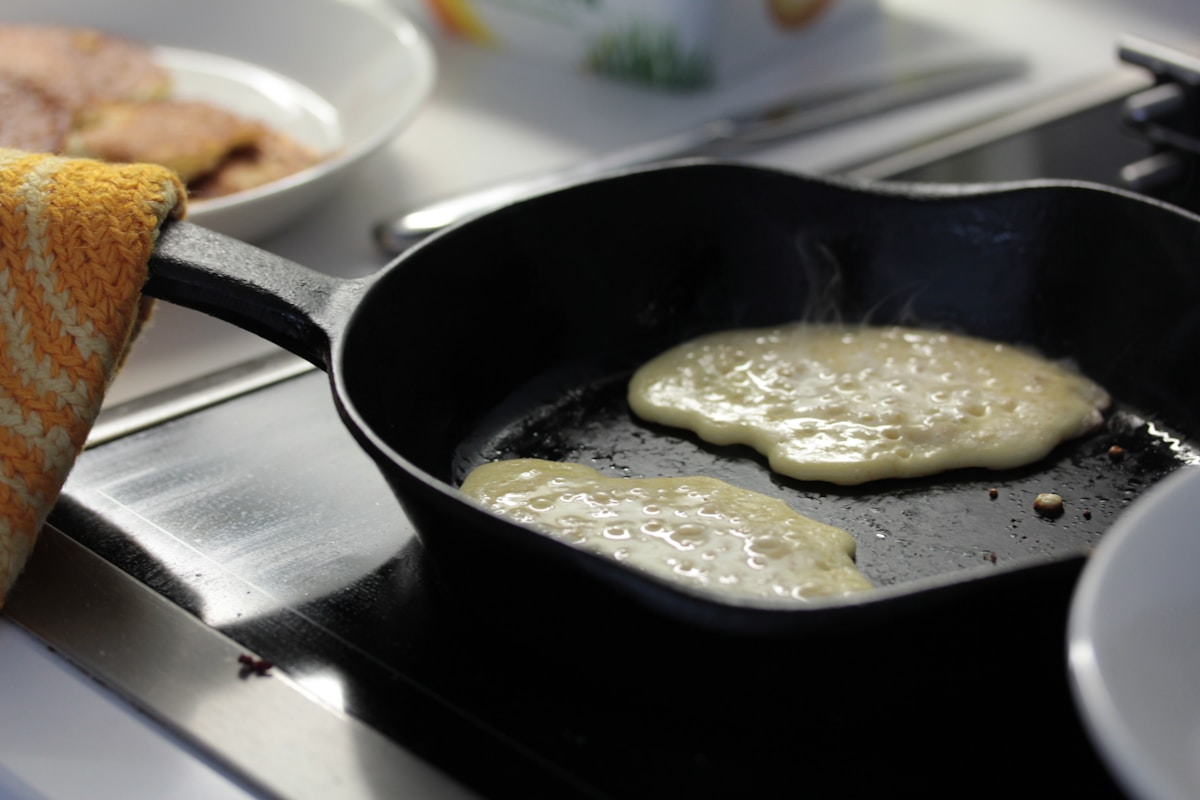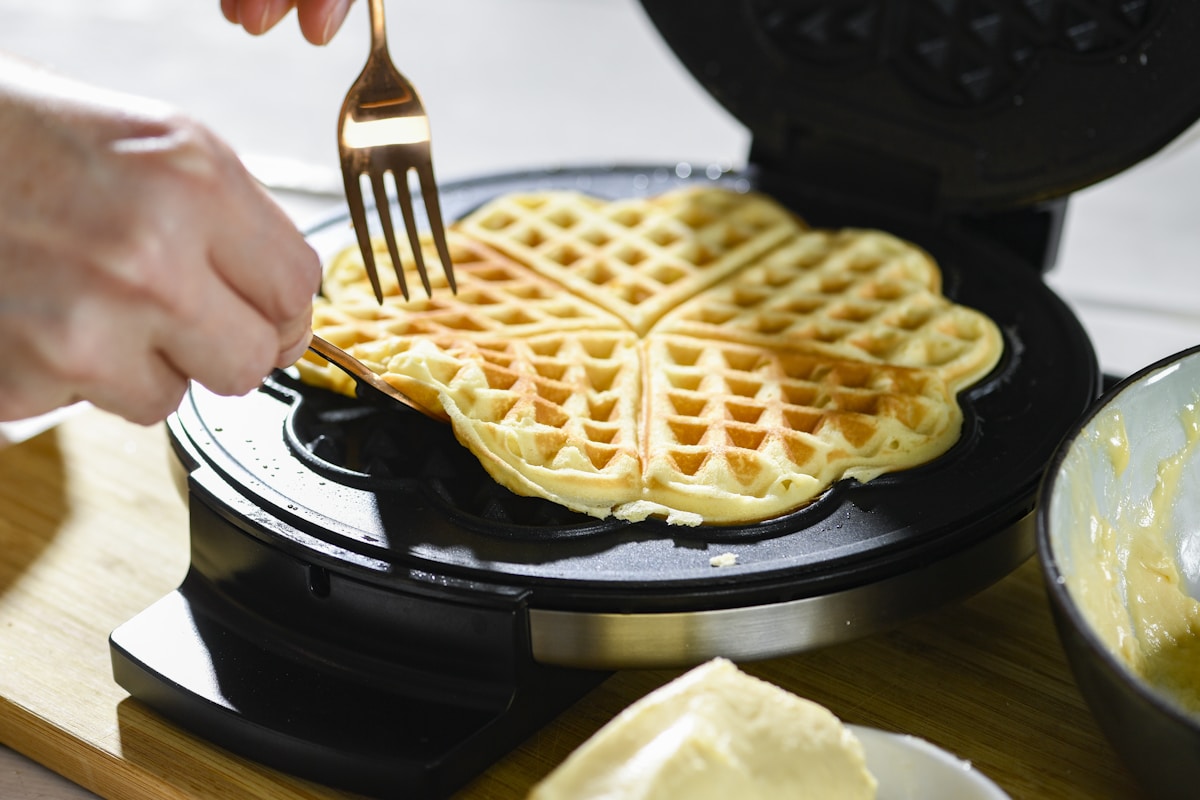
You have waffle batter mixed, coffee brewing, and hungry people waiting in the kitchen. In that moment, a cast iron waffle maker can feel wonderfully hands-on—or like one more thing demanding attention.
The short answer: a cast iron waffle maker is worth it if you enjoy learning a stovetop routine, want a durable tool with no electrical parts, and make waffles often enough to keep it seasoned and dry. If you want quick weekday breakfasts, predictable results with little practice, and push-button operation, an electric waffle maker is usually the better fit.
Key Takeaways
- A cast iron waffle maker rewards hands-on cooks who do not mind preheating, turning, and making small adjustments.
- An electric waffle maker is usually easier for fast breakfasts and repeatable results with less attention.
- Cast iron requires careful drying and occasional seasoning, while electric models require appliance-specific cleaning and storage.
- Vintage waffle irons may be usable, but cracks, warping, unstable handles, severe pitting, and unknown coatings deserve caution.
- Check the manufacturer guidance for your exact iron and cooktop before using a stovetop waffle maker.
The short answer: who a cast iron waffle maker is for
A stovetop cast iron waffle maker suits cooks who like being involved in the process. You heat it, grease it, add batter, close it, turn it, watch the heat, and adjust from one waffle to the next. That manual control is the appeal, but it is also the extra work.
It can be a good buy if these points sound reasonable rather than frustrating:
- You make waffles regularly, not once a year.
- You have room for a heavy iron with long handles.
- You do not mind preheating both halves before cooking.
- You are willing to use a test waffle to learn your burner and batter.
- You can dry and store cast iron carefully after use.
- Your specific model is approved for your stove type.
A cast iron waffle iron is less practical if you want breakfast moving quickly while packing lunches, supervising children, or getting out the door. It may also be a poor fit if you dislike maintenance, have limited storage, or want every waffle to brown similarly without monitoring the burner.
The choice is not about whether cast iron is better or electric is more modern. It is about whether you want a cooking project or a convenient appliance. Both can make good waffles; they simply ask different things of the cook.
How a stovetop cast iron waffle maker works—and what the learning curve involves
A typical stovetop waffle maker has two patterned cast iron plates joined by a hinge, usually with handles that extend beyond the burner. You warm the closed iron, open it, add batter to one cooking surface, close it, and turn or rotate it according to its design so both sides cook.
Several small variables matter. The iron needs reasonably even preheating. The burner needs enough heat to cook the waffle without scorching the outside before the center sets. The batter amount must fill the pattern without spilling over the edges.
Early waffles are often calibration waffles. If batter leaks out, use less next time. If the waffle is pale after a long wait, increase heat gradually or allow more preheating. If it burns quickly, lower the heat and let the iron settle before starting another batch.
Sticking is another common beginner frustration. It can happen when the iron was not heated enough, when the cooking surface needs a light coating of fat, when the batter is especially low in fat or sugar, or when the waffle is opened before it has set. There is no universal fix, so change one variable at a time.
Manual control is the main advantage. You can lower the burner if one batch browns too fast, cook a little longer for a darker waffle, or adjust batter quantity immediately. The trade-off is that you must stay nearby: a stovetop waffle maker does not manage temperature or signal doneness for you.
Performance varies by iron design, plate thickness, burner style, batter recipe, and technique. Gas burners, electric coils, smooth-top ranges, and induction cooktops can heat differently, and not every waffle iron is suitable for every heat source. Check the instructions for the exact model before using it.
Cast iron versus electric waffle maker: compare the trade-offs before buying
A cast iron versus electric waffle maker comparison is easiest when you consider the daily routine, not just the finished waffle.
| Factor | Cast iron waffle maker | Typical electric waffle maker |
|---|---|---|
| Heat control | Adjusted manually with the burner | Usually managed by appliance settings |
| Preheating | Requires warming the iron on the stove | Requires warming the appliance before batter |
| Attention during cooking | High; you monitor, turn, and judge doneness | Lower; many models simplify the process |
| Consistency | Improves with practice but depends on technique | Often easier to repeat from batch to batch |
| Batch speed | Can be slower while learning and reheating | Often more convenient for routine batches |
| Capacity | Usually one waffle at a time | Varies; some models make one waffle and others make more |
| Cleanup | Remove crumbs and residue, then dry the iron thoroughly | Clean plates and exterior according to the appliance instructions |
| Storage | Heavy, durable, and sometimes awkward because of handles | Often bulkier overall but may store upright |
| Durability | No electrical components, but rust prevention matters | More components that can eventually wear or fail |
| Ongoing maintenance | Seasoning and careful drying may be needed | Usually less seasoning work, but follow appliance care instructions |
An electric waffle maker is generally the easier choice for frequent weekday use. It creates a more contained workflow: preheat, fill, close, wait, and remove. Electric models still vary, but they usually reduce the heat-management learning curve.
A cast iron waffle maker offers a different kind of value. It has no cord, no electronic controls, and no appliance-specific parts to replace. It can suit relaxed weekend breakfasts, approved outdoor cooking setups, or cooks who already enjoy caring for cast iron.
Storage deserves attention before buying. A cast iron waffle iron may take less cabinet width than a large appliance, but it is heavy and its handles can make it awkward. An electric unit may be lighter to lift but bulkier overall. Measure the shelf or drawer where it will actually live instead of assuming either option is compact.
Also check cooktop compatibility. Do not assume every cast iron waffle maker works safely on gas, electric coil, smooth-top, induction, or outdoor heat. Shape, handle design, flatness, weight, and manufacturer guidance all matter.
Use this simple decision guide:
- Choose cast iron if the process is part of the fun and you will use, clean, and maintain it regularly.
- Choose electric if convenience, repeatable results, and low-effort weekday waffles matter most.
- Wait on both if waffles are only an occasional craving and you do not have clear storage space or a realistic use routine.
Buying new or vintage: what to inspect on a cast iron waffle iron
Vintage waffle iron cooking can be rewarding, but an old piece deserves a closer inspection than a new one. Age alone does not make cookware unusable, and surface rust does not automatically mean an iron is beyond saving. Condition, previous repairs, and unknown coatings matter before food touches the cooking surface.
Start with a basic function check. Open and close the iron carefully. The hinge should move without feeling dangerously loose or seized. The two halves should align and close properly, the handles should be secure, and the iron should sit steadily instead of rocking on the stove.
Some visible issues may be manageable after careful assessment:
- Light surface rust.
- Worn or uneven seasoning.
- Old cooking residue.
- Dirt and grime in exterior crevices.
These conditions differ from structural or food-contact concerns. A piece needs extra caution, qualified assessment, or simply a pass if you find cracks, warped halves that will not close correctly, loose or damaged handles, severe pitting on the cooking surface, sharp corrosion, or instability on a flat surface.
Be especially wary of paint, mystery coatings, filler materials, welding repairs, or unknown restoration treatments near food-contact surfaces. Ordinary seasoning is a thin baked-on oil layer; it is not the same as an unidentified finish. Do not cook with a vintage iron until you understand what is on its cooking surfaces and whether prior repairs or coatings are appropriate for food use.
Photos can hide problems. When buying secondhand in person, inspect the patterned pockets, hinge area, handles, and underside in good light. When buying remotely, treat incomplete photos and vague condition descriptions as a reason to ask more questions, not as proof that the iron is ready to use.
For a new cast iron waffle maker, follow the supplied care directions rather than applying generic cast iron advice blindly. The maker may specify seasoning needs, heat limits, approved cooking surfaces, and cleaning restrictions that differ from another model.
First successful waffle: seasoning, preheating, cooking, and storing the iron
The first goal is not perfection. It is learning a repeatable routine that gives you a waffle that releases cleanly and tells you what to adjust next.
Before cooking, read the manufacturer instructions for your specific iron and stove compatibility. If the iron is bare cast iron, seasoning generally means building a thin baked-on oil layer that supports release and rust resistance. It is useful protection, not a promise of a permanently nonstick surface.
Preheat the closed iron gradually over moderate heat rather than starting at maximum burner power. Warm both sides as evenly as your setup allows. Exact preheat time depends on the iron, burner, and room conditions, so use your first batch as a guide instead of relying on one universal number.
When the iron is hot, open it carefully because steam and hot metal are hazards. Lightly grease the cooking surfaces if your model and seasoning condition call for it. Use a small amount at first; excess grease can smoke, pool in the pattern, and make cleanup messier.
Add batter to the lower plate without trying to fill every pocket to the edge. Batter expands as it cooks, and too much batter is a common cause of overflow. Close the iron carefully and rotate it as required by its design.
Let the waffle cook before attempting to open the plates. If it tears or clings firmly, it may need more cooking time, a better-preheated iron, a little more grease, or an adjustment to the batter. Avoid prying aggressively, which can damage the waffle and scrape seasoning.
Open the iron away from your face because steam can escape quickly. Remove the waffle with a tool appropriate for the iron that will not unnecessarily gouge the cooking surface. Then make one adjustment for the next waffle:
- Pale waffle: Try slightly more heat or a longer cook.
- Dark edges and an underdone center: Lower the heat and cook more steadily.
- Overflow: Reduce the batter amount.
- Uneven browning: Improve preheating and check burner placement.
- Sticking: Assess heat, grease, cooking time, and surface condition one at a time.
After cooking, let the iron cool enough to handle safely. Remove crumbs and residue without prolonged soaking unless the maker specifically allows it. Dry every part thoroughly, including around the hinge and patterned cooking pockets, because trapped moisture can encourage rust.
If appropriate for your iron, wipe on a very thin protective layer of oil after drying. It should not feel wet or sticky. Store the waffle iron in a dry location, and avoid packing it away while damp. Follow the maker’s cleaning and storage directions when available, especially for newer models with specific finishes or handle materials.
FAQs about cast iron waffle makers
Is a cast iron waffle maker hard to use for beginners?
It is manageable for beginners, but it is less forgiving than a typical electric model. Expect the first one or two waffles to help you learn batter quantity, burner heat, and release timing. A patient weekend breakfast is a better first attempt than a rushed weekday morning.
How do you season a cast iron waffle iron without making waffles stick?
Use the seasoning instructions from the maker when available. In general, seasoning works best as a very thin baked-on oil layer, not a heavy or sticky coating. Preheating, light greasing when needed, proper cook time, and avoiding overfilling matter just as much as seasoning for clean release.
Can a vintage cast iron waffle maker be safely used for cooking?
Possibly, but do not make that decision based only on age or appearance. Check for cracks, warping, unstable handles, severe pitting, corrosion, and unknown coatings or repairs. If the food-contact surface or restoration history is uncertain, seek qualified guidance before using it for cooking.