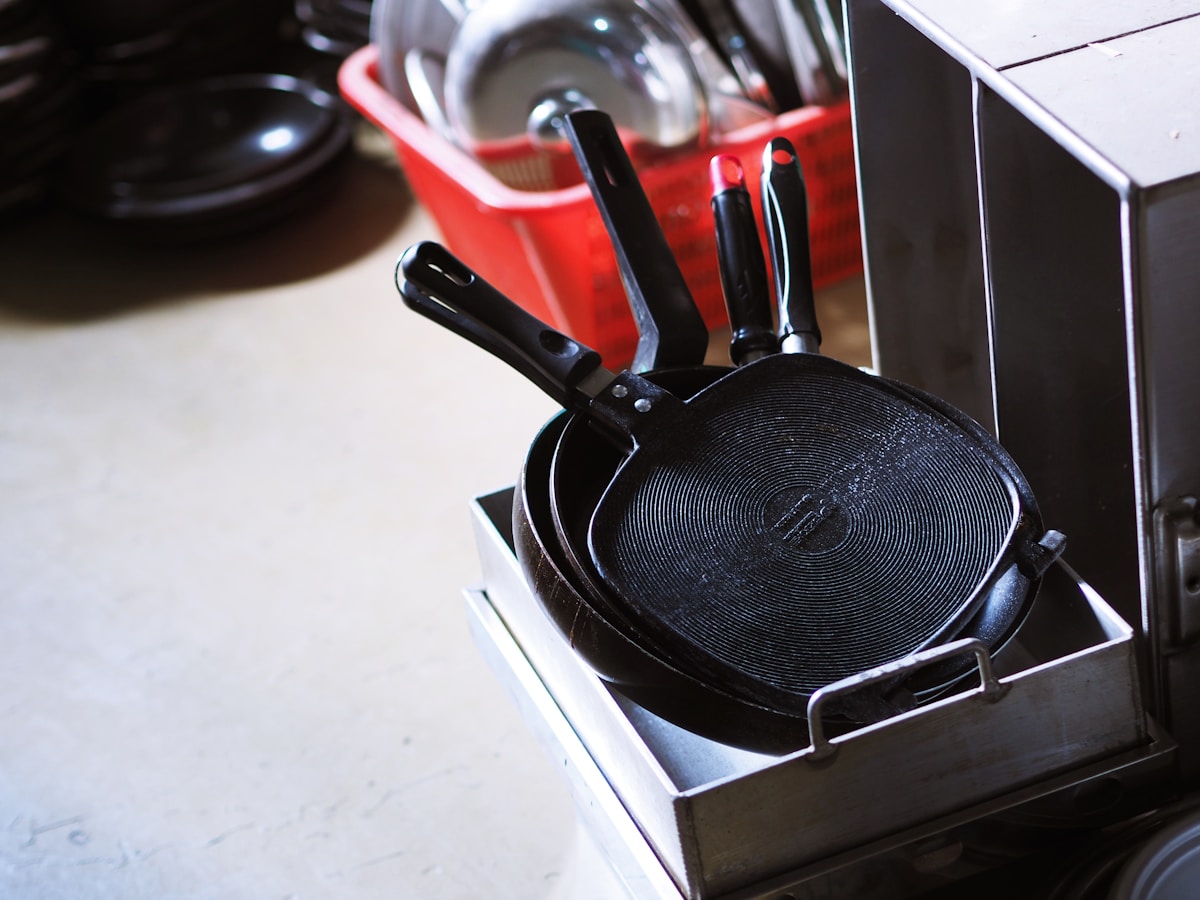
You see it at a garage sale or buried in your grandmother’s basement—a heavy, solid cast iron skillet. It feels like quality in your hands. But it’s a horror show. We’re talking flaky orange rust, thick black crud that looks like it’s been carbon-dated, and a cooking surface you wouldn’t wish on your worst enemy.
Your first instinct is to pass. It looks ruined, a piece of junk destined for the scrap heap. I get it. With most modern cookware, that would be the end of the story. A scratched non-stick pan is a goner. A chipped enamel pot is compromised.
But cast iron is different. It’s simpler. It’s more honest. It’s a thick, nearly indestructible piece of iron. The common wisdom among cast iron fanatics is simple and almost always true: “Unless it’s cracked, it’s not dead.” That rusty, crusty pan isn’t trash; it’s a treasure waiting to be uncovered. Let’s walk through how to resurrect it.
First The Diagnosis Is It Truly a Goner
Before you roll up your sleeves, you need to play doctor for a minute. 99% of ugly pans are perfectly salvageable, but there are a couple of fatal flaws that no amount of elbow grease can fix. Spend two minutes checking for these deal-breakers.
-
The Crack Test: This is the most important one. Inspect the entire pan, inside and out, for cracks. Pay close attention to the handle where it meets the pan body and along the rim. Hairline cracks can be tough to spot when the pan is covered in gunk. If you can, tap the side of the pan with a wooden spoon. A healthy pan will have a nice ring to it; a cracked pan will have a dull, short thud. A crack means the pan is unsafe to use and should be retired.
-
The Wobble Test: Place the pan on a perfectly flat surface, like your countertop or a glass-top stove. Press down on the edges. Does it wobble or spin? A significant wobble means the pan is warped, likely from being heated or cooled too quickly at some point in its life. A warped pan won’t make good contact with a flat cooking surface, leading to terrible heat distribution. (If you only cook on a gas range, a little wobble might be acceptable, but it’s still not ideal.)
-
The Pitting Check: Severe, deep pitting on the cooking surface can be a problem. This happens when rust is left to eat away at the iron for a very long time. Minor pitting is purely cosmetic and will fill in as you build up seasoning. But if the surface looks like the surface of the moon, it might be too far gone to ever become smooth again.
If your pan has no cracks and sits flat, congratulations. You have a restoration project, and it’s going to be a success. The rest is just a matter of stripping it down to the bare metal.
Choose Your Weapon Stripping Methods Explained
To build a new surface, you have to completely remove the old one—both the rust and the caked-on, flaky old seasoning. There are a few ways to get to that clean, gray, raw iron. They range from easy and accessible to more involved but incredibly effective.
-
Method 1: The Yellow Cap Oven Cleaner (The Beginner’s Choice) This is my go-to recommendation for anyone restoring just one or two pans. It’s low-effort and highly effective on old seasoning. You’ll need a can of Easy-Off Heavy Duty Oven Cleaner (it MUST be the yellow cap version, which contains lye), a heavy-duty trash bag, and rubber gloves.
- Process: In a well-ventilated area (outside is best), spray the entire pan—top, bottom, and handle—with a thick, even coat of the oven cleaner. Place the pan in the trash bag, seal it up tightly to keep the spray from drying out, and let it sit for 24-48 hours. Take it out (with gloves on!), and scrub it under hot water with a stainless steel scrubber. The old gunk should melt right off. Repeat if necessary for stubborn spots.
- Price Range: $5 - $10
- Pros: Very effective, cheap, minimal physical effort.
- Cons: Uses harsh chemicals, requires good ventilation and safety gear.
-
Method 2: The Vinegar Bath (For Rust Only) If your pan is mostly just covered in surface rust without a lot of old seasoning buildup, this is a quick and simple solution. Lye-based methods remove seasoning, but they don’t touch rust.
- Process: Submerge the pan in a 50/50 solution of white vinegar and water. This is critical: do NOT leave it for more than 30-60 minutes at a time. The acid that eats the rust will also eat the iron itself if left too long, causing pitting. After 30 minutes, pull it out and give it a good scrub with steel wool. The rust should come right off.
- Price Range: $3 - $5
- Pros: Very cheap, non-toxic, fast-acting on rust.
- Cons: Labor-intensive scrubbing, only removes rust, can damage the pan if left too long.
-
Method 3: Electrolysis (The Ultimate Restoration) This is how serious collectors and restorers do it. It sounds intimidating, but it’s the safest and most thorough method. It uses a low-voltage electrical current to remove both rust and old seasoning without any harsh chemicals or risk to the iron. Setting up a tank is a project, but if you plan on restoring more pans in the future, it’s worth it.
- Process: This involves a plastic tub, water, washing soda, a manual car battery charger, and sacrificial pieces of steel (rebar works well). You hook the negative lead to your pan and the positive lead to the steel. The current pulls all the crud and rust off the pan and deposits it onto the steel. It’s science! It takes about 12-24 hours per side.
- Price Range: $50 - $75 for setup.
- Pros: Safest for the iron, removes everything, no chemicals, no scrubbing.
- Cons: Requires a dedicated setup and understanding of the process.
The Rebirth Seasoning From Scratch
Once you have a clean, bare, gray iron pan, you must act fast. Raw iron will begin to rust again within minutes if exposed to moisture in the air. (This is called flash rust.) The goal now is to build a new, durable, non-stick surface through a process called polymerization.
This is the most important part, and it’s where most people go wrong. Follow these steps exactly.
-
Wash and Dry COMPLETELY: Wash your stripped pan with soap and water. Immediately dry it with a towel and place it in a 200°F (95°C) oven for 15-20 minutes. This drives out every last molecule of moisture from the pores of the iron.
-
Apply a Micro-Thin Layer of Oil: While the pan is still warm (but cool enough to handle), apply a very small amount of a neutral, high-smoke-point oil. Grapeseed, canola, or even basic Crisco shortening are excellent choices. Do NOT use olive oil or butter. Using a paper towel, rub the oil over the entire pan—inside, outside, handle, everywhere.
-
WIPE IT ALL OFF: This is the kitchen hack that changes everything. Take a clean, dry paper towel and wipe the pan down as if you made a mistake and are trying to remove every trace of oil you just applied. I’m serious. The goal is a microscopic layer of oil, not a visible one. If the pan looks oily or wet, you’ve left too much on. Too much oil will polymerize into a sticky, splotchy, weak mess. The pan should look dry and matte.
-
Bake It Hot: Place the pan upside down in your oven. This prevents any excess oil from pooling. Heat the oven to 450-500°F (230-260°C), well above the smoke point of your chosen oil. You need to exceed the smoke point for polymerization to occur properly. Let it bake for one full hour. You might see some light smoke; that’s normal.
-
Cool and Repeat: Turn the oven off and let the pan cool down completely inside the oven without opening the door. This can take a couple of hours. When it’s cool, the surface will be slightly darker. This is your first layer of seasoning. It’s a start, but it’s not enough.
To get that slick, durable, jet-black surface you see on vintage pans like a Griswold or Wagner, you need to repeat this process—oiling, wiping, baking, and cooling—at least 3 to 5 times. Yes, it’s an afternoon project, but the rock-hard, non-stick surface you build will last for years.
From Flea Market Find to Family Heirloom
That pan you almost left behind is now a gleaming, black, perfectly functional piece of kitchen equipment. The money you spent was minimal, but the value you’ve created is immense. You didn’t just clean a pan; you restored a tool that could sear a steak for your child’s graduation dinner.
This is the beauty of cast iron. It’s not disposable. It carries history, and with a little knowledge and effort, you can ensure it has a future. So next time you see a rusty skillet, don’t see trash. See potential.