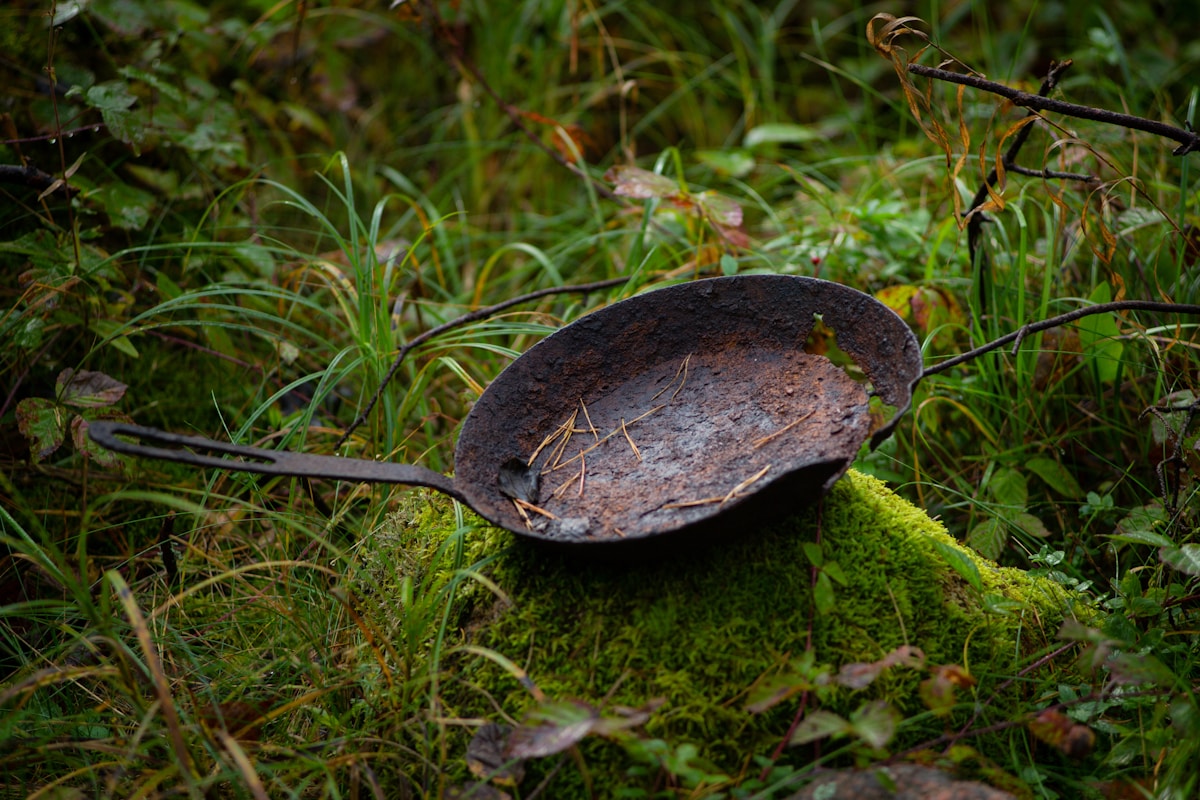
You found it in the back of a cupboard, at a flea market, or maybe you inherited it from your grandma. It’s a heavy, solid piece of cookware, but it’s covered in a crust of black gunk and a layer of angry orange rust. Your first thought is probably, “Well, this is garbage now.”
I’m here to tell you to stop right there. Put down the trash bag.
Unlike modern, coated non-stick pans that are genuinely ruined once the surface is scratched, that cast iron skillet is almost certainly salvageable. In fact, you can probably make it look brand new. Cast iron isn’t just cookware; it’s a lifetime investment that can be passed down through generations. All it needs is a little bit of work. Let’s walk through how to resurrect that pan from the dead.
Why Cast Iron is (Almost) Indestructible
Before we get our hands dirty, you need to understand why this works. Your typical non-stick pan has a delicate chemical coating (PTFE, or Teflon) applied to an aluminum base. When that coating gets scratched or overheated, it’s compromised forever. It flakes off, loses its non-stick properties, and the pan is done.
Cast iron is different. It’s a solid chunk of iron alloy. The “non-stick” surface isn’t a coating; it’s a layer of polymerized oil—what we call seasoning—that you build and maintain yourself. The rust and crud you see are just surface-level problems. The iron underneath is perfectly fine. By stripping away the old, damaged seasoning and the rust, you get back to the bare metal, giving you a blank slate to build a new, perfect cooking surface.
This is the core of the cast iron philosophy: value over vanity. You aren’t buying a disposable product; you’re maintaining a tool. (Your wallet will thank you.)
Phase 1: Stripping It Down to Bare Metal
First, we need to remove every last bit of old seasoning, carbon buildup, and grime. The goal is to see nothing but raw, gray iron. You have two popular and effective methods to choose from. A word of caution: both methods require good ventilation and safety gear.
Method A: The Oven’s Self-Cleaning Cycle
This is often the easiest method if you have a modern oven. The intense heat of the self-clean cycle (often reaching over 900°F / 482°C) will incinerate all the old seasoning, turning it into a fine ash.
- Prep: Remove the oven racks. Any non-enameled cast iron can go in, but don’t ever put enameled pieces like a Le Creuset in a self-clean cycle—it will destroy the enamel.
- Placement: Place the pan upside down in the center of the oven.
- Ventilate: This is CRITICAL. The process creates a lot of smoke and unpleasant fumes. Open your windows, turn on your kitchen exhaust fan, and maybe keep kids and pets out of the room for a few hours.
- Run the Cycle: Start the self-cleaning cycle according to your oven’s instructions. It usually takes 2-4 hours.
- Cool Down: Let the oven and the pan cool down completely. This can take several more hours. Do not try to open it early.
- The Result: When you open it, the pan will be a dull gray color, possibly covered in a light layer of ash and rust. That’s exactly what you want.
Method B: The Lye Bath (Using Oven Cleaner)
This method uses chemistry instead of heat. It’s less dramatic but equally effective. You’ll need a can of heavy-duty oven cleaner that contains lye (sodium hydroxide) — check the ingredients. Easy-Off Heavy Duty (in the yellow can) is the classic choice.
- Safety First: Do this outside or in a very well-ventilated garage. Wear rubber gloves and eye protection. Lye is caustic and can cause serious burns.
- Bag It: Place the pan inside a heavy-duty trash bag.
- Spray It Down: Liberally spray the entire pan—top, bottom, and handle—with the oven cleaner. Seal the bag tightly, pushing out as much air as possible.
- Wait: Let the pan sit in the bag for 24-48 hours. Place it somewhere warm (like the sun) to speed up the chemical reaction.
- Scrub and Rinse: Still wearing your gloves and goggles, remove the pan from the bag. Use a stainless steel scrubber to remove the gunk, which should now be a disgusting black sludge. Rinse thoroughly with warm water.
After either method, you’ll be left with a bare metal pan. Now, we fight the rust.
Phase 2: The Final Battle Against Rust
Your stripped pan is now extremely vulnerable to rust. In fact, it probably has some already. The fix is simple and cheap: white vinegar.
- Create the Bath: Find a basin or bucket large enough to fully submerge the pan. Create a solution of 50% white vinegar and 50% water.
- Soak, But Don’t Forget: Submerge the pan in the solution. Here’s the most important tip: Set a timer for 30 minutes. That’s all you need. The mild acid in the vinegar will eat away the rust (iron oxide) but leave the iron alone.
- Check and Scrub: After 30 minutes, pull the pan out and give it a scrub with fine steel wool (#0000 is great if you can find it) or a stainless steel scrubber. The rust should come right off.
- Rinse and Repeat (If Needed): If there are still stubborn rust spots, you can put it back in the vinegar bath for another 30-minute interval. Do not just leave it in for hours; the acid can eventually start to pit the iron itself.
- Final Rinse: Once all the rust is gone, wash the pan thoroughly with soap and water to neutralize the acid. Yes, this is one of the few times you should definitely use soap on cast iron.
Phase 3: Building Your New Seasoning Layer by Layer
This is the most satisfying part. You’re about to turn that dull gray pan into a glossy, black, non-stick workhorse. The key here is applying extremely thin layers of oil and baking them on at high heat.
- Immediate Drying (The Flash Rust Hack): The moment you rinse the pan, it will want to rust again. This is called flash rust. To prevent it, immediately towel dry the pan and place it in a preheated oven at 200°F (95°C) for 10-15 minutes. This will evaporate every last molecule of water.
- Choose Your Oil: You need a neutral oil with a high smoke point. Good choices include grapeseed oil, canola oil, sunflower oil, or even solid vegetable shortening like Crisco. (Flaxseed oil is popular but can be prone to flaking, so I usually steer people away from it for their first time.)
- Apply a Micro-Thin Layer: Take the warm pan out of the oven. Put a tiny amount of your chosen oil in the pan—about half a teaspoon. Using a lint-free cloth or a paper towel, rub that oil over every single surface of the pan: inside, outside, the handle, everywhere.
- Wipe It All Off: Now, take a clean cloth and pretend you made a mistake. Try to wipe every last bit of oil off the pan. You won’t be able to, of course. The microscopic layer that remains is the perfect amount. If you leave too much oil on, it will become a sticky, splotchy mess. (This is the #1 mistake people make.)
- Bake It On: Place the pan upside down on a rack in your oven. This prevents any excess oil from pooling. Place a sheet of foil on the rack below to catch any potential drips. Heat your oven to 450-500°F (232-260°C), well above the smoke point of your oil.
- Polymerize: Bake the pan for one full hour. Your kitchen will get a bit smoky, so keep that ventilation going. During this hour, the heat is transforming the liquid oil into a hard, solid, plastic-like layer—a process called polymerization. This is your seasoning.
- Cool and Repeat: After an hour, turn the oven off but leave the pan inside to cool down slowly. Once it’s cool enough to handle, repeat the process: apply a micro-thin layer of oil, wipe it off, and bake for another hour.
How many times? A minimum of three layers is good. Five or six is even better. Each layer adds durability and non-stick power. Your pan will transform from gray to bronze, and finally to a deep, satin black.
After the final layer, your pan is officially restored. You took a piece of rusted metal and turned it into a high-performance cooking tool. Go ahead and fry an egg—you’ve earned it.