


We’ve all been there. You’re flipping an omelet and notice little black flakes in with the eggs. Your trusty $20 non-stick pan, after a year of faithful service, has officially given up. You can either buy another one just like it, knowing you’ll be in the same spot next year, or you can rethink the entire game.
A friend once told me a story about his dad buying a quality power saw after a cheap one broke mid-project. His dad told him, “You can buy ten cheap saws over your life, or one good one.” That lesson sticks with me every time I step into the kitchen. It’s the ‘buy once, cry once’ philosophy, and it will save you money and frustration in the long run.
The secret is knowing where to invest. You don’t need a top-of-the-line everything. But for the core tools you use daily, quality isn’t an expense; it’s an investment in every meal you’ll ever make.
Investment #1 The Workhorse Chef’s Knife
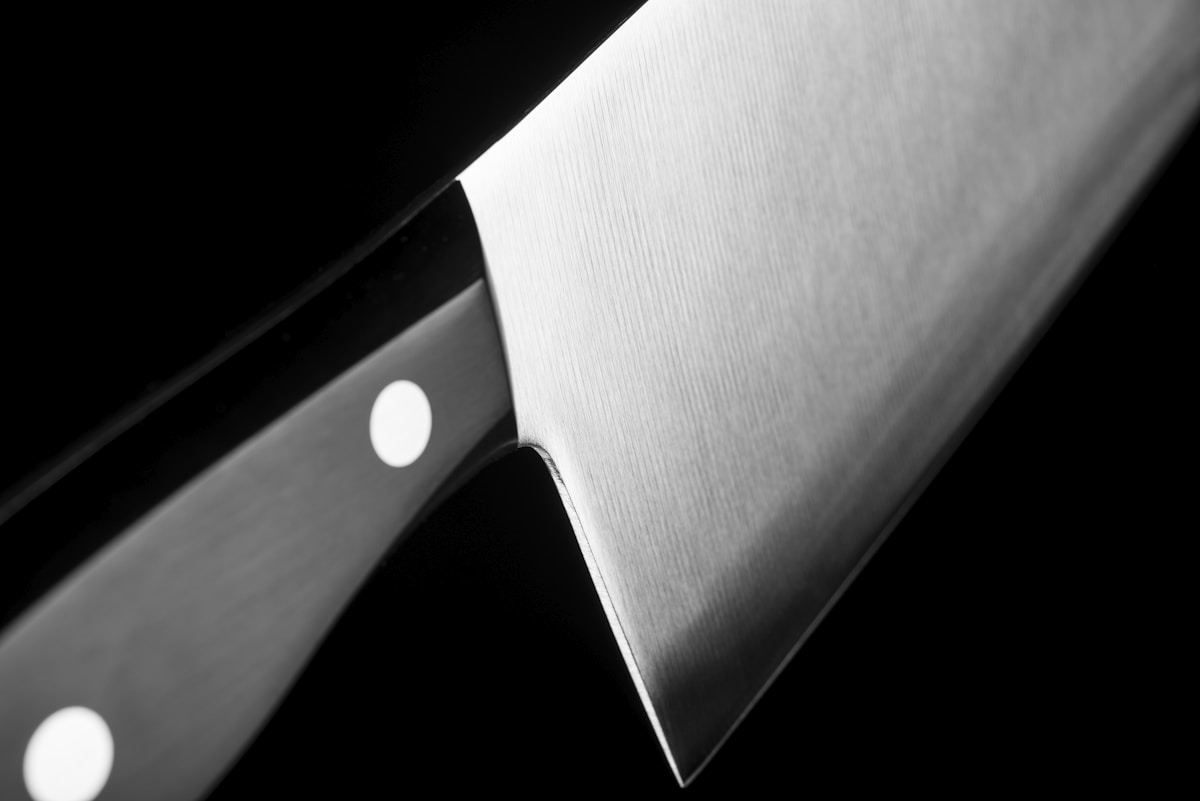
Forget the 18-piece knife block with the mystery blades you never use. You do 90% of your kitchen cutting with one tool: the chef’s knife. A cheap, dull knife is slow, frustrating, and frankly, more dangerous than a sharp one. A great knife feels like an extension of your hand.
What to Look For: A forged blade (stronger than stamped) with a “full tang,” meaning the metal runs all the way through the handle for better balance and durability.
- The Gold Standard: A Wüsthof Classic 8-inch Chef’s Knife (around $160) or a Shun Classic 8-inch Chef’s Knife (around $175) are true lifetime purchases. They hold an edge beautifully, feel incredible in your hand, and will still be dicing onions for your grandkids.
- The Unbeatable Value: The Victorinox Fibrox Pro 8-inch Chef’s Knife (around $45). Let me be direct: this is the best value in the entire kitchen world. It doesn’t have the fancy wood handle or the heft of the German knives, but its blade is wickedly sharp and it performs as well as knives three times the price. If you’re on a budget, this is your answer.
Kitchen Hack: Stop holding your knife like a hammer. The best way to control a chef’s knife is the “pinch grip.” Pinch the blade itself right in front of the handle with your thumb and forefinger, then wrap your other three fingers around the handle. You’ll have instantly better control and precision. (You’re welcome.)
Investment #2 The Indestructible Skillet
This is where the non-stick nightmare ends. While a non-stick pan has its place for delicate things like eggs, it is a consumable item, not an investment. The coating is destined to fail. For real, high-heat cooking and lifetime durability, you need one of two things.
Option A: Cast Iron Your grandmother was right. A Lodge 12-inch Cast Iron Skillet costs about $30-$40 and, with minimal care, will outlive you. It gets better with age as layers of seasoning build up, creating a naturally non-stick surface. It’s the king for searing steaks at high heat (think 450°F / 232°C), crisping up potatoes, or baking a perfect skillet cornbread. The heat retention is legendary.
Option B: Stainless Steel A high-quality, fully clad stainless steel skillet is the most versatile pan in a professional kitchen. “Clad” means it’s a sandwich of metals, usually an aluminum core for fast, even heating, bonded with durable stainless steel. It can do everything a cast iron can and also excels at developing “fond”—the tasty brown bits on the bottom of the pan that form the base of incredible pan sauces. An All-Clad D3 12-inch Fry Pan is a classic choice (around $130), but brands like Tramontina and Cuisinart make excellent clad pans for less.
My advice? Buy one of each. For less than the cost of a mediocre “set” of cookware, you’ll have two pans that can handle any task and will last forever.
Investment #3 The Legacy Dutch Oven
If a skillet is for fast, high-heat cooking, the Dutch oven is for the slow, magical transformations. This heavy, lidded pot is the master of braises, stews, soups, and even baking crusty, bakery-level bread.
The enameled cast iron locks in moisture and provides incredibly steady, even heat for hours. It’s the perfect vessel for turning tough cuts of meat like chuck roast into fall-apart-tender pot roast over 3-4 hours at 325°F (165°C).
- The Heirlooms: Le Creuset and Staub are the icons for a reason. Their enamel is exceptionally durable and their quality control is legendary. A 5.5-quart Le Creuset (around $420) is an aspirational piece that becomes a family treasure. (Yes, really.)
- The Smart Money: The Lodge 6-quart Enameled Dutch Oven (around $80). The performance is astonishingly close to its French cousins for a fraction of the cost. The enamel may not be quite as chip-resistant over 30 years, but for the price, it’s one of the best investments you can make.
Investment #4 The Powerhouse Stand Mixer
This is the one conditional investment on the list. If you don’t bake bread, make cookies, or whip up meringues regularly, you do not need one. A good hand mixer is a more practical choice.
But if you do bake, a stand mixer is transformative. The KitchenAid Artisan Series 5-quart Stand Mixer (around $450) is the undisputed champion of the home kitchen. These things are built like tanks. It’s not uncommon to hear of people using the same KitchenAid their parents got as a wedding gift 25 years ago.
Its power allows you to knead dense bread dough for 10 minutes straight without breaking a sweat, a task that is exhausting by hand. It whips cream and egg whites to stiff peaks effortlessly. And with the dozens of available attachments, it can become a pasta maker, a meat grinder, or an ice cream machine. It’s not just a mixer; it’s a countertop power station.
Building Your Kitchen One Smart Piece at a Time
You don’t need to rush out and buy all of this tomorrow. The ‘buy it for life’ approach is a marathon, not a sprint. Start with the tool that addresses your biggest frustration.
Is chopping vegetables a chore? Start with the knife. Tired of replacing skillets? Get the cast iron. Pick one piece, save for it, and appreciate the difference in quality every time you use it. Investing in the tools you touch every day will pay you back with better, more joyful cooking for decades to come.


