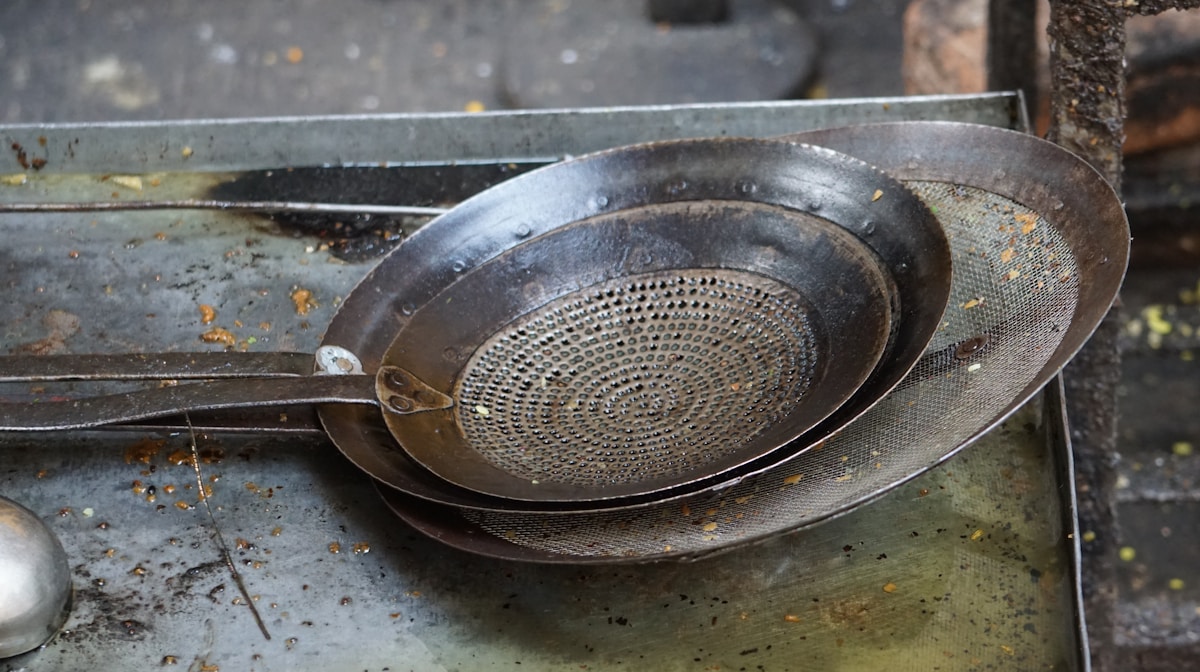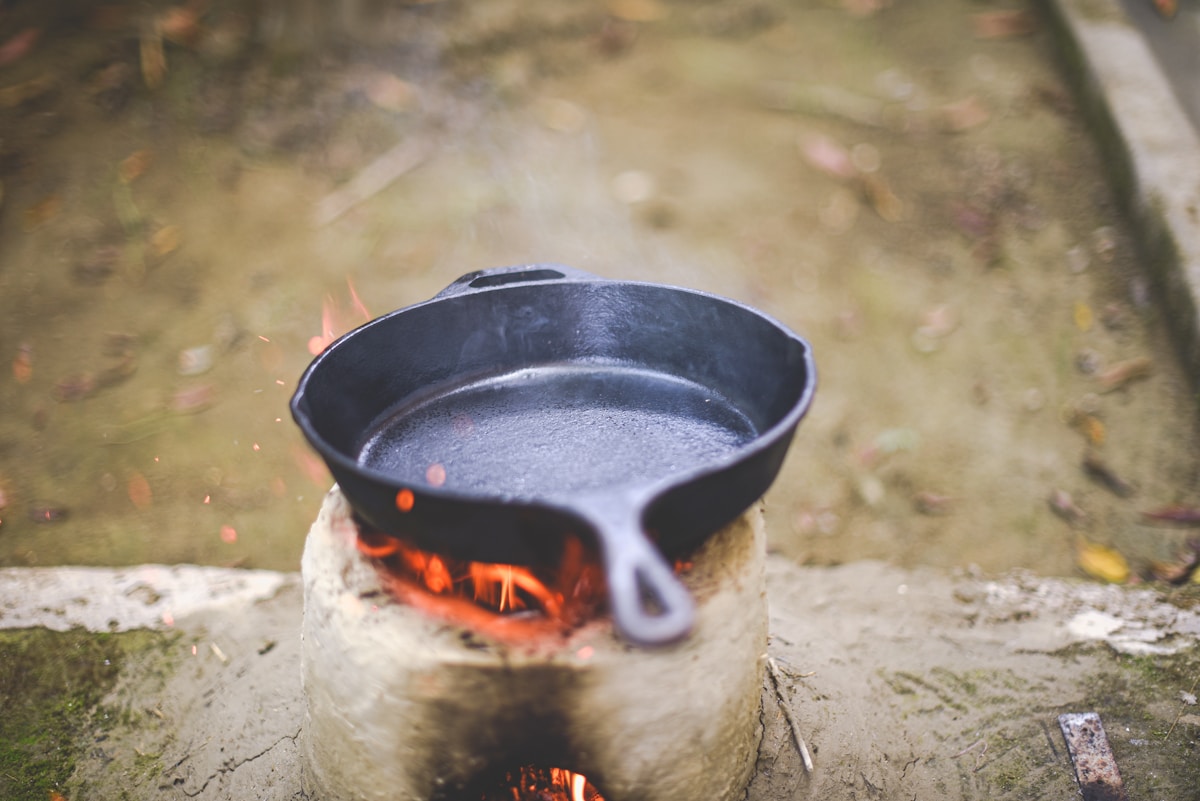
You pull a skillet from the back of a cabinet, ready to make dinner, and find orange spots, black flakes, and a rough surface. It may look beyond saving, but most rusty cast iron pans with surface rust or worn seasoning can be restored. Cracks, severe warping, unstable handles, and an unresolved contamination history are the reasons to stop and reconsider.
Key Takeaways
- Surface rust, patchy seasoning, sticky buildup, and minor roughness are usually fixable.
- Inspect for cracks, a rocking base, handle damage, sharp corrosion, and unknown contamination before cleaning.
- Spot-clean small problem areas, but strip and reseason a skillet with widespread rust or failing seasoning.
- Dry cast iron completely after washing and apply only a very thin oil layer to help prevent repeat rust.
- Do not return a pan with possible hazardous contamination or serious structural damage to food use.
Start With the Decision: Is This Rusty Cast Iron Pan Structurally Sound?
Before scrubbing, inspect the pan in good light. A skillet can look neglected yet still be an excellent restoration candidate, while a pan that merely looks old may have damage that cleaning cannot fix.
Start with the structure. Look over the cooking surface, sidewalls, rim, underside, and the area where the handle joins the pan. A visible crack is a serious warning sign. Seasoning cannot stabilize a crack, and repeated heating may make it worse.
Next, set the cool pan on a known-flat counter or cooktop. Press gently on opposite sides. A pan that sits firmly is generally easier to restore and use. If it rocks noticeably, spins, or has a base warped enough to feel unstable or cook unevenly, replacement may be the better choice.
Then identify what you are seeing:
- Orange or reddish-brown dust and spots: usually surface rust.
- Black, brown, or gray patches: often worn, uneven, or flaking seasoning.
- Raised, greasy, hard deposits: commonly stuck-on food or carbon buildup.
- Low spots or holes in the metal: possible cast iron pitting damage.
Run a fingertip across the cooled surface. Rust often feels dry and gritty. Food residue sits above the surface, while pitting feels like depressions in the metal itself. Rust and residue can often be removed; missing metal cannot be replaced.
Finally, consider the pan’s history. If it was used for non-food projects, stored in a workshop, or inherited with no reliable background, pause before restoring it for cooking. A home-cleaning routine does not resolve an unknown hazardous contamination concern.
The decision is straightforward: restore a structurally sound pan with ordinary rust or seasoning failure; investigate one with an uncertain history; and replace or seek further guidance for a cracked, sharply damaged, severely warped, or unstable pan.
What Can Usually Be Fixed vs. What May Require Replacement
A rough appearance alone is not a reason to discard cast iron. Damp storage can leave a pan looking terrible while its walls, base, and handle remain sound.
Usually worth restoring are pans with light to moderate surface rust, dull or patchy seasoning, minor roughness, sticky buildup, or food that clings more than it used to. These issues usually point to neglected or damaged seasoning rather than a failed pan.
A deeper restoration may be needed when rust covers a large area, old seasoning flakes in several places, or thick sticky buildup coats much of the surface. Adding more oil over loose material rarely solves the problem. In these cases, stripping and reseasoning the skillet gives you a cleaner starting point.
Replacement is more reasonable when a pan has a crack, broken structural area, severely warped base, or handle damage that makes lifting it unreliable. Cast iron is heavy, so handle damage is not just cosmetic.
Pitting needs a more careful assessment. Small, shallow pits may be mostly cosmetic and can become less noticeable after cleaning and seasoning. They may hold onto residue more easily, so the pan may require more attentive cleaning.
Deep, widespread, or sharp pitting is more concerning. It can make the cooking surface difficult to maintain and may signal deeper corrosion. If the pan has sharp edges, thin-feeling areas, or extensive damage across the cooking surface, replacement may offer better value than a lengthy restoration.
Cast iron pan safety is not guaranteed by a pan’s age or appearance. A structurally sound pan that has been cleaned appropriately and has no credible contamination concern may be suitable for restoration. Do not use cookware for food if possible lead exposure or another hazardous history remains unresolved.
How to Restore Rusty Cast Iron Without Overdoing It
The goal of cast iron rust removal is to remove rust and loose residue, dry the pan thoroughly, and rebuild a thin seasoning layer. Avoid aggressive grinding or harsh methods that could damage the pan unnecessarily. Cleaning cannot solve cracks, warping, or contamination concerns.
1. Remove rust and residue. Scrub the affected areas with a cookware-appropriate cleaning method that is free from unknown contaminants. Use enough pressure to lift orange rust and loose buildup, but do not try to polish every bit of texture from the iron.
Work in stages. Clean a small section, rinse away loosened debris, and inspect it again. If orange material continues to wipe off, more rust removal is needed. If the surface is dark, stable, and does not shed flakes, it may be old seasoning rather than active rust.
2. Decide whether to spot-clean or strip. Spot-cleaning makes sense when most seasoning is hard, dry, and well attached, with only a few rusty patches or rough areas. Clean those spots, dry the pan, and rebuild the coating gradually.
Strip and reseason the skillet when seasoning is flaky, sticky across much of the surface, badly uneven, or hiding widespread rust. A full reset takes more effort, but it avoids sealing loose material under fresh oil.
3. Wash away debris. Once rust and old residue are loose, wash the pan thoroughly so debris and cleaner remnants are gone. Check the corners where the sidewalls meet the cooking surface, along the rim, and on the underside.
4. Dry immediately and completely. Towel-dry the pan right away, then warm it briefly to evaporate remaining moisture. Do not leave recently scrubbed iron wet while you prepare the next step. Bare iron can develop fresh orange rust quickly when moisture remains on the surface.
5. Apply an extremely thin oil layer. Lightly coat the cooking surface, sidewalls, rim, and exterior. Then wipe away the excess until the pan looks nearly dry rather than glossy. Too much oil can create a tacky, uneven finish instead of a durable seasoning layer.
6. Rebuild the seasoning. Follow the seasoning instructions provided by the pan’s manufacturer when available, or build the coating gradually through regular oil-friendly cooking. Several thin layers and normal use are generally more useful than one heavy layer.
Expect a restored pan to look imperfect at first. Its color may be blotchy, and some areas may darken faster than others. Early patchiness does not automatically mean the restoration failed.
Common problems can help you decide what to do next:
- Orange residue returns after cleaning: Remove remaining rust and make sure the pan is fully dry.
- The surface feels tacky: There was likely too much oil, or the coating did not cure fully.
- Seasoning flakes off: Loose old coating may remain underneath, so a fuller strip may be needed.
- The pan looks dry or gray after use: It may need another very thin seasoning layer and gentler routine care.
- The surface stays rough: Determine whether the texture is stable pitting, old residue, or active corrosion before continuing.
Test the Restored Pan Before Returning It to Regular Cooking
After cleaning and reseasoning, inspect the pan once more. Set it on the cooktop to confirm it sits stable. Check that the handle feels secure and that no sharp spots, fresh flakes, or orange rust appear after drying.
A newly restored skillet rarely delivers instant nonstick performance. Start with foods that benefit from a little cooking oil, such as sautéed potatoes, roasted vegetables, grilled sandwiches, or cornbread. Do not judge the restoration based on one delicate-food test.
Watch the pan over several uses. A stable seasoning layer should gradually become more even with suitable cooking and careful cleaning. Temporary patchiness is common after a full strip and reseason.
If rust repeatedly returns despite prompt drying and a thin oil film, reassess the storage conditions. Moist cabinets, trapped water, incomplete drying, and deep corrosion can all contribute to repeat rust. Persistent problems may mean the pan needs more restoration work or is no longer worth the effort.
Prevent Rust From Returning During Washing and Storage
Routine care is easier than another full restoration. Wash the pan after use as needed, remove food residue, and avoid leaving it wet in the sink. Long soaking is especially unhelpful when seasoning is damaged or still developing.
After washing, dry the pan promptly with a towel and warm it briefly so remaining moisture can evaporate. If it looks dry or has a recently scrubbed bare area, apply a minimal protective oil film and wipe off all visible excess.
Storage matters as much as washing. Keep the pan in a dry location, and avoid trapping moisture under a lid or between stacked cookware. If you stack pans, use a dry liner to reduce rubbing and keep hidden moisture from sitting against the surface.
Check rarely used skillets before cooking, especially after long storage or humid weather. Catching a small orange spot early is much easier than restoring a fully rusty cast iron pan later.
The practical rule is simple: keep the pan clean, dry it completely, and maintain a thin seasoning layer. Small care steps can prevent most repeat rust and make future repairs far less dramatic.
FAQs
Can I cook with a rusty cast iron pan after I scrub off the rust?
Possibly, if the pan is structurally sound, thoroughly cleaned, completely dried, and has no unresolved contamination concern. Rebuild the seasoning before regular cooking. Do not use a pan with cracks, serious structural damage, or an uncertain hazardous exposure history simply because visible rust came off.
Is cast iron pitting damage a reason to throw the pan away?
Not always. Minor, shallow pitting can be largely cosmetic and may still allow the pan to work well after cleaning and seasoning. Deep, widespread, sharp, or worsening pitting is a stronger reason to consider replacement, especially if it makes the surface difficult to clean or maintain.
How do I know whether I should strip and reseason a skillet instead of adding another coat of oil?
Add a thin new layer when the existing seasoning is mostly hard and intact, with only small bare or rusty patches. Strip and reseason when the coating is flaky, sticky, heavily built up, or uneven across much of the pan. New oil will not reliably fix loose old seasoning or rust trapped beneath it.