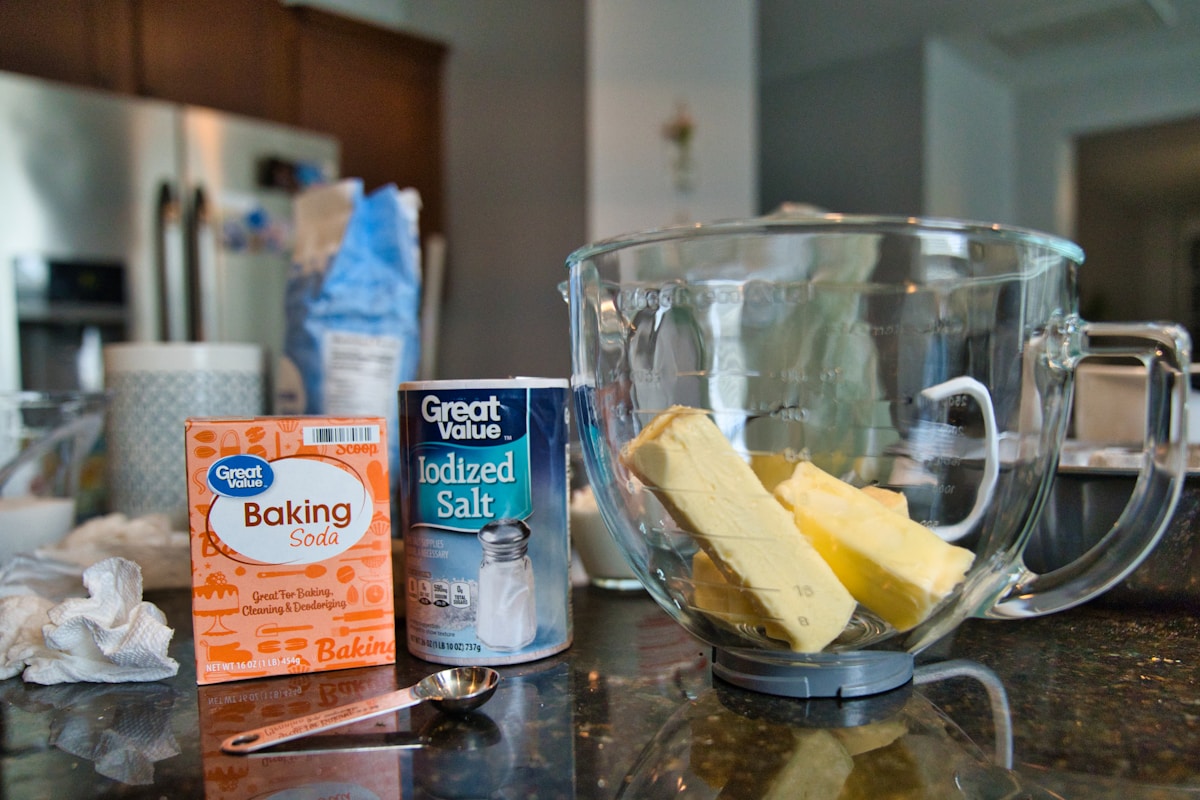
A cake recipe says “one cup of flour,” but your cup is packed tightly while the recipe writer’s was lightly scooped. The batter looks different before it even reaches the oven. This is where a kitchen scale earns its space.
For most beginners, the best kitchen scale for baking is a simple digital model that measures in grams, has a tare button, shows 1-gram increments, and can hold a mixing bowl without hiding the display. You do not need a bakery-style machine for ordinary cakes, brownies, cookies, or small bread batches.
The right choice depends on how often you bake, the size of your bowls, your available storage, and whether you make large dough batches. A compact budget scale suits occasional bakers, while frequent bread bakers may prefer a larger, sturdier platform and higher capacity.
Key Takeaways
- Choose a digital scale with grams, ounces, tare, 1-gram increments, and a readable display.
- Make sure its capacity includes the bowl’s weight as well as the ingredients.
- A compact scale is usually enough for cakes, brownies, cookies, and small batches.
- Bread bakers may prefer a larger platform, higher capacity, and more durable construction.
- Treat rechargeable power, timers, baker’s percentage, and ultra-fine readings as conveniences, not requirements.
Why a Digital Scale Can Make Beginner Baking Easier
Measuring cups measure volume. A scale measures mass. That distinction matters because ingredients can occupy different amounts of space even when the measuring cup is the same.
Flour is the clearest example. If you scoop directly from the bag, the flour can become compacted. If you spoon it gently into a cup and level it, you may get a different amount. Neither method is automatically wrong if it matches the recipe’s intended method, but the variation can affect cakes, cookies, pastry, and bread.
Weighing in grams gives you a repeatable target. If a recipe calls for 240 grams of flour, you can add flour until the display reaches 240 grams instead of guessing how firmly to fill a cup. This does not guarantee perfect baking: oven temperature, ingredient condition, mixing, pan size, and recipe instructions still matter. It simply removes one common source of variation.
A scale is particularly useful for recipes that contain several dry ingredients. You can measure flour, sugar, cocoa powder, and oats into one bowl, resetting the display between ingredients. That can reduce both measuring cups and washing up.
Grams Versus Cups in Plain Language
Use the unit specified by the recipe. Grams are usually the most practical choice when the recipe provides weights. A cup is not a fixed weight for every ingredient: a cup of flour, sugar, butter, and chopped nuts will all weigh different amounts.
Do not convert cups to grams using a single universal number. The correct weight depends on the ingredient and the recipe’s measuring convention. If a recipe gives only cups, use a reliable ingredient-specific conversion or continue using the stated volume method rather than making an unsupported guess.
A Simple Flour-and-Butter Demonstration
- Put the empty mixing bowl in the center of the scale.
- Press the tare button so the display returns to zero.
- Add flour gradually until the target gram amount appears.
- Press tare again without removing the flour.
- Add butter until the second target appears.
- Repeat for other ingredients if the recipe allows them to share the bowl.
For small amounts such as a few grams of yeast or salt, add slowly and watch the display. For everyday cakes and cookies, 1-gram increments are generally suitable. A scale that shows finer changes may help with specialized recipes, but more decimal places do not automatically mean better real-world results.
The Baking Scale Features That Matter Most
A long list of specifications can make a digital scale for baking seem more complicated than it is. Start with the features that affect an ordinary mixing session.
Tare Function
Tare is essential. It resets the display to zero after you place the bowl on the platform or add an ingredient.
Without tare, you would need to calculate the bowl’s weight and subtract it from every reading. With tare, you can add ingredients directly to one bowl and reset between them. Check that the tare button is easy to identify and responds without requiring excessive pressure.
Gram and Ounce Settings
Grams should be a priority because many baking recipes use them. Ounces are helpful when you follow recipes written by weight in the imperial system or when packaging uses ounces.
For most beginners, grams and ounces are enough. Milliliters, pounds, fluid ounces, percentage modes, and other settings may be useful in particular kitchens, but they are not requirements for baking cakes or brownies. Remember that a fluid-ounce measurement is volume, while a weight ounce is mass; the scale’s unit label and the recipe’s instructions need to match.
A Readable Display
The display is easy to overlook until a large bowl blocks it. Before buying, check product photos and dimensions carefully. Look for a screen positioned toward the front or side, sufficient contrast, and numbers that can be read while a bowl is centered on the platform.
If you usually bake in a tall stand-mixer bowl, a scale with a display at the rear may be inconvenient. You may have to tilt the bowl, move it repeatedly, or add ingredients from an awkward angle. A low, wide bowl can be easier to use on a compact scale.
Buttons should also be practical. Touch controls can be neat and easy to wipe, while physical buttons may provide more obvious feedback. Either design can work if you can operate it with clean, dry hands and without pressing against the bowl.
Resolution and Precision
Resolution describes the smallest displayed increment. A scale that reads in 1-gram steps will show 100, 101, 102, and so on. That is normally sufficient for flour, sugar, butter, cocoa, and similar ingredients in home baking.
Do not confuse resolution with guaranteed accuracy or repeatability. A display showing extra decimal places does not prove that the scale measures every ingredient more reliably. For a beginner, stable operation, sensible placement, and a clear display are usually more valuable than laboratory-style readings.
Fine precision becomes more relevant when you regularly measure very small quantities, experiment with scaled recipes, or follow specialized formulas. Even then, confirm that the product is designed for the amount and type of work you plan to do.
Maximum Capacity
Capacity includes the bowl as well as the ingredients. This is the calculation many new buyers miss.
If your empty bowl weighs 1.5 kilograms and your dough ingredients total 2 kilograms, a scale rated for 3 kilograms may be too close to its limit. The bowl, flour, water, and other ingredients all count toward the maximum. A larger margin gives you more flexibility, especially for bread dough or double batches.
For occasional cakes and brownies, a standard household capacity is usually adequate. For large loaves, pizza dough, or batch baking, consider the weight of your largest bowl and full recipe before choosing a model.
Platform Size and Stability
A bowl should sit securely without rocking or covering every control. Put the scale on a stable, level, dry counter, then center the bowl before pressing tare.
A small platform saves storage space, but it may be awkward with a wide bowl or baking tray. A larger platform is easier for big containers but takes more room in a drawer or cupboard. More capacity and a larger surface do not automatically mean better measurement performance; they simply suit different tasks.
Auto-Off Behavior
Auto-off saves battery power, but it can interrupt a slow recipe. This matters if you pause to soften butter, read instructions, or find another ingredient.
Look for the stated auto-off behavior in the manual or product information. If it cannot be adjusted, keep ingredients ready and avoid leaving the scale idle during a long weighing session. Do not assume that a model stays on indefinitely just because its display is bright or large.
Beginner-Friendly Kitchen Scale Types and Who They Suit
Basic Compact Digital Scale
This is the sensible starting point for occasional cakes, brownies, cookies, and general baking. It normally offers grams, ounces, tare, a modest footprint, and simple battery power.
Its main advantages are price, easy storage, and straightforward controls. The trade-offs may include a smaller display, less room around a large bowl, and lower capacity. Choose this type if you bake occasionally and your usual bowl is not unusually large.
Larger High-Capacity Digital Scale
A larger scale suits bread bakers, pizza makers, frequent batch bakers, and anyone who weighs ingredients directly in a heavy mixing bowl. The extra capacity reduces the chance that the bowl and dough will approach the limit.
The disadvantages are practical rather than technical. It may occupy more counter space, fit less comfortably in a drawer, and cost more. Before choosing one, measure the place where it will live and compare the platform with your largest bowl.
Bakery-Oriented or More Durable Scale
A sturdier model can make sense if you bake several times a week, regularly prepare heavy dough, or dislike lightweight equipment sliding during use. Construction may feel more substantial, and some models offer plug-in operation or a larger working surface.
However, durability and capacity do not automatically prove superior accuracy. Judge the scale by its documented functions, usable display, platform stability, cleaning instructions, and return policy rather than by its appearance alone.
Premium or Multipurpose Scale
Rechargeable power, a timer, baker’s percentage mode, a larger display, or selectable auto-off settings can be worthwhile conveniences. Baker’s percentage is especially useful for people who develop bread formulas, but it is unnecessary for someone following standard cake recipes.
Pay extra only for a feature you will use. A premium price is difficult to justify if the scale still has an inconvenient display, a platform too small for your bowl, or controls that are difficult to clean.
Everyday Details That Affect Whether You Will Use It
Cleaning determines whether the scale remains pleasant to use. Look for a smooth, wipe-clean platform and controls that do not create obvious traps for flour and sugar. Follow the manual’s cleaning instructions, keep liquids away from openings and controls, and never assume a kitchen scale can be immersed or washed under running water unless the manufacturer explicitly says so.
Power is another practical choice. Replaceable batteries are easy to keep as a backup, while rechargeable models can reduce disposable battery use but require charging. Some scales may support plug-in operation, but verify the exact arrangement before buying. Store spare batteries or charge the scale before a long baking session rather than discovering the problem halfway through a recipe.
Storage matters more than a few extra functions. A slim scale can lie flat in a drawer, while a larger model may need a permanent counter position. If you bake often, leaving the scale accessible may encourage you to use it. If counter space is limited, measure the stored dimensions and check whether the buttons or platform could be damaged by crowded storage.
Try to evaluate a scale as if you were already baking. Can the bowl fit without rocking? Can you see the display from your normal standing position? Can you press tare after adding flour? Can you wipe away a spill without pushing residue into the controls? Does the auto-off timing suit your recipe pace?
How to Choose the Best Kitchen Scale for Your Baking Routine
For most beginners, the minimum useful feature set is:
- Gram and ounce readings
- A tare button
- 1-gram increments for ordinary baking
- A display visible beside or behind your usual bowl
- A stable platform
- Enough capacity for the bowl plus a full recipe
- A surface and control layout that can be cleaned according to the manual
- Power that suits your storage and charging habits
Choose a compact budget scale if you mainly make cakes, brownies, cookies, and small batches, have limited storage, and want to learn weight-based recipes without spending much. Choose a larger or more durable scale if you make bread frequently, use heavy bowls, prepare double batches, or want more room around the display.
When comparing price, focus on useful features rather than brand reputation or a long specification list. Check the current product page or manual for maximum capacity, displayed increments, supported units, power source, auto-off behavior, cleaning guidance, warranty terms, and return conditions. These details can change, and a retailer’s headline description may not include every limitation.
Your final checklist is simple: identify your recipes, weigh your largest empty bowl, estimate the total weight of your biggest batch, check display visibility with that bowl shape, and confirm that the scale fits your storage space. Then choose the least expensive model that meets those needs and has a clear return policy.
FAQ
Is a kitchen scale worth buying for a beginner baker?
Yes, especially if you want more repeatable ingredient measurements or plan to try recipes written in grams. It will not correct every baking problem, but it can reduce uncertainty around flour and other ingredients. A basic digital scale is usually enough to begin.
How accurate does a digital scale for baking need to be?
For cakes, brownies, cookies, and typical bread recipes, 1-gram increments are generally sufficient. Resolution is not the same as guaranteed accuracy, so also consider stability, a level surface, a clear display, and sensible operation according to the manual.
What capacity and features should a beginner look for in a baking scale?
Look for grams, ounces, tare, 1-gram increments, a readable display, and a stable platform. Capacity should cover the empty bowl plus every ingredient in your largest recipe. Occasional bakers can usually choose a compact model; frequent bread bakers may benefit from a larger platform and more capacity.
Are grams and ounces both necessary?
Grams are the most useful priority for many baking recipes, while ounces are convenient for recipes written in that unit. If your recipes consistently use grams, grams alone may be enough. Additional units are optional.
Which scale is best for cakes and brownies versus bread?
For cakes and brownies, choose a compact, easy-to-store digital scale with a readable display and tare. For frequent bread baking, favor a larger platform, more capacity, and construction that suits heavy bowls and dough. Neither type is automatically best for every baker.