I remember the first time my niece laid her hands on a tiny wooden play kitchen. Her eyes went wide, and within minutes she was stirring an invisible pot of soup, handing me a plastic carrot with all the seriousness of a master chef. That afternoon, something clicked—not just for her, but for the whole family. The kitchen became a stage for stories, pretend meals, and the kind of messy, joyful learning that only play can provide. If you’re wondering what is the best first kitchen set for a preschooler, you’re not alone. Parents on Reddit and beyond celebrate these little kitchens as gateways to bonding, motor skill development, and a lifelong love of cooking. But with so many options—wooden vs. plastic, compact vs. elaborate—it can feel overwhelming. Let me walk you through everything I’ve learned from my own Kitchen-Fun experiments and from watching countless little chefs in action.
Why a play kitchen set matters more than you think
A preschooler’s first kitchen set isn’t just a toy—it’s a miniature world where real learning happens without a single worksheet. Pediatric occupational therapists often recommend play kitchens because they naturally develop fine motor skills. Turning knobs, opening tiny oven doors, and stacking play food all require precise hand movements that strengthen coordination. Socially, pretend cooking encourages sharing, turn-taking, and cooperation. When kids pretend to serve you a meal, they’re practicing empathy and storytelling. And there’s an emotional layer too: the Reddit community r/KitchenConfidential shared heartwarming stories of chef parents passing on their love of cooking through these sets. One parent wrote about her toddler mixing pretend herbs into a wooden bowl, mirroring mom’s real dinner prep. That mirroring is powerful. It sparks curiosity about real food and gives children a safe space to explore kitchen routines before they’re old enough to help with actual knives or hot stoves. For preschoolers, a kitchen set is a tool for mastering their world—one wooden spatula at a time.
Safety first: what to look for in a preschool kitchen set
Before you dive into brand comparisons, let’s talk safety. Preschoolers are enthusiastic and often unsteady, so your kitchen set needs to be built for real-world play. Look for rounded edges on all corners and surfaces. Check that any attached accessories—like knobs, faucets, or handles—are securely fastened and won’t become choking hazards. Non-toxic paints are non-negotiable; reputable brands like Step2 and Melissa & Doug use water-based, lead-free finishes. The base should be wide and stable to prevent tipping when a child leans against the stove or hangs a pretend pot on the side. For plastic units, look for BPA-free materials. For wooden sets, ensure the wood is sanded smooth with no splinters. If the set comes with small pretend food pieces, keep them away from children under three. Many preschool sets are recommended for ages 3 and up, but always check the manufacturer’s guidelines. And here’s a tip: place the kitchen on a rug or mat to prevent slipping and to protect your floors from spills during imaginary baking sessions.
Top brands that deliver on durability and fun
When I surveyed parents and looked at thousands of reviews, three brands consistently rise to the top for preschool kitchen sets: Step2, KidKraft, and Melissa & Doug. Each has its own strengths, and the best choice depends on your space, budget, and your child’s personality.
Step2 is the king of plastic play kitchens. Their sets are colorful, weather-resistant (yes, they can live on a covered porch or in a playroom), and incredibly durable. The Step2 Fun with Friends Kitchen features a working sink with a realistic faucet, a stove with clicking knobs, and plenty of cabinet space. It’s around $150-$200 and is built to survive years of rough play. The plastic is easy to wipe clean—a huge plus after a play dough explosion.
KidKraft offers beautiful wooden kitchens that look like mini versions of grown-up kitchens. Their sets often come with realistic sounds and lights (battery-operated) and include plenty of accessories like pots, pans, and play food. The KidKraft Ultimate Kitchen (around $200-$250) is a popular choice because it’s large enough for two children to play together, encouraging social interaction. The wooden construction is sturdy and can handle enthusiastic play, but it’s heavier and harder to move if you rearrange rooms.
Melissa & Doug focuses on simpler, open-ended wooden sets that are perfect for younger preschoolers. Their Let’s Play House Kitchen (about $120-$150) is compact and made of smooth, natural wood with minimal parts. It prioritizes imagination over bells and whistles. Many parents love that it’s smaller and easier to tuck into a corner. Melissa & Doug also sells separate food sets and utensils, so you can customize the experience. Their materials are consistently non-toxic and kid-safe.
What features actually matter for a preschooler
You don’t need a kitchen that costs a fortune or has a dozen electronic sounds. In fact, the best first kitchen set for a preschooler is often the one with a few well-designed features that spark the most creative play. Here’s what to prioritize:
- Realistic knobs and dials: Kids love clicking and turning. Look for knobs that actually move and make a satisfying sound. Step2’s clicking knobs are a hit.
- A working sink and stove top: Even if it’s just a basin and a few burner graphics, these provide the core structure for pretend washing and cooking.
- Storage space: Cabinets and shelves encourage organization and give kids a sense of ownership. They’ll learn to put their play food away (sometimes).
- Durable accessories: The best sets include a few pots, pans, and utensils made of sturdy plastic or wood. Avoid sets with tiny pieces that easily break or get lost.
- Adjustable height: Some wooden kitchens have adjustable shelves or removable panels that allow the unit to grow with your child. That’s a smart investment.
Avoid sets with too many electronic features for a first kitchen. They can be distracting and may break. A simple set with a couple of sound effects is fine, but the magic comes from the child’s imagination, not from a battery.
How to choose the right size and style for your home
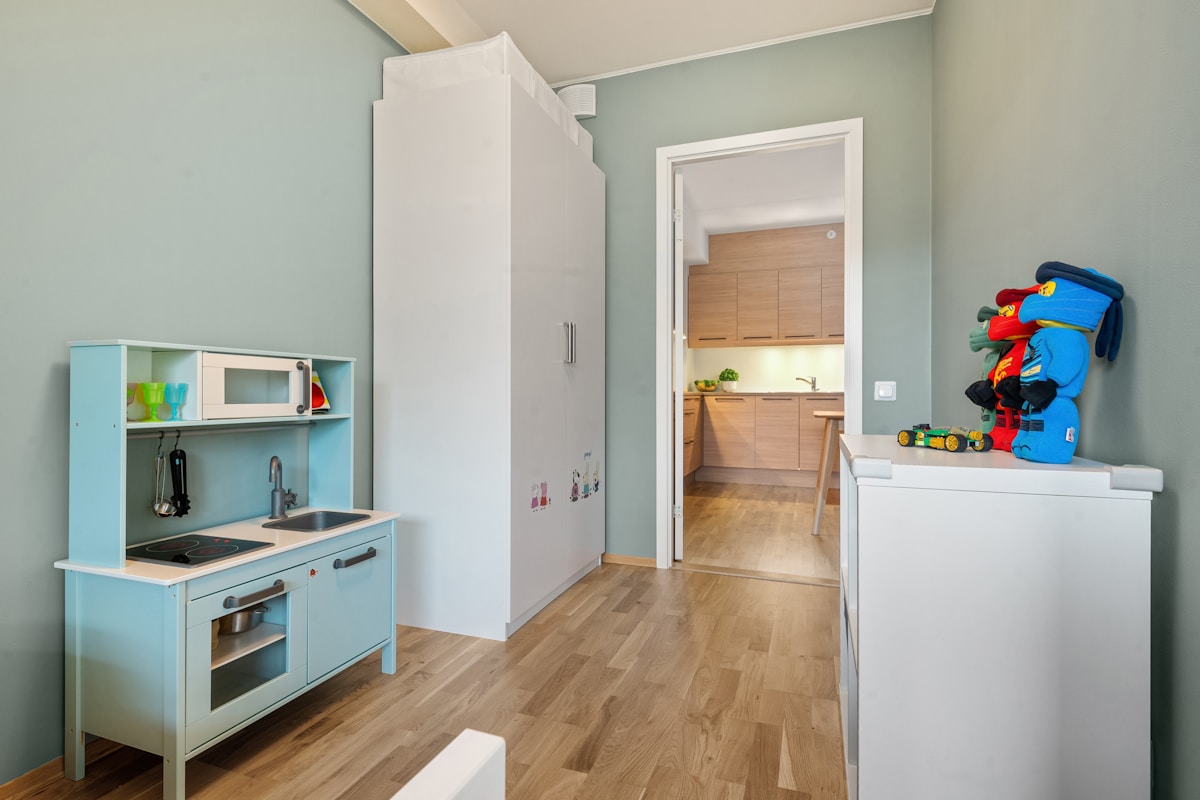
Before you click “add to cart,” measure the space where the kitchen will live. Preschool kitchens range from about 2 feet wide to over 3.5 feet wide. A compact set like the Melissa & Doug Let’s Play House Kitchen (approx. 32" wide) fits nicely in a corner of a living room or playroom. Larger sets like the KidKraft Ultimate Kitchen can be over 40" wide and need a dedicated spot. Also consider ceiling height: some wooden sets have tall backsplashes or microwaves that could be tight under low ceilings. Think about whether you want a neutral wood finish that blends with your decor or a bright plastic color that becomes a playful accent. Many parents choose neutral wooden sets for longevity, knowing they’ll live in the main living area for years. If you have multiple children, a larger set with two cooking stations (like the Step2 Fun with Friends) can reduce squabbles. And don’t forget: a kitchen set often inspires mealtime role-play with stuffed animals and dolls, so make sure there’s floor space for an audience.
Real parent tips for getting the most out of the kitchen
Once you bring the kitchen home, the real fun begins. Here are a few tips from seasoned parents (and from my own experience):
- Start with a “grand opening”: Unbox and set up the kitchen together. Let your child turn the screws (with your help) and arrange the accessories. This builds ownership.
- Add real kitchen tools: After a few weeks, introduce safe real items like a small stainless steel bowl, a wooden spoon, or a silicone spatula. Supervise closely, but let them feel real textures. (Your future self will thank you when they’re comfortable helping in the real kitchen.)
- Rotate play food: Just like toys, rotating pretend food keeps interest fresh. Store some in a bin and swap every few weeks.
- Play along: Get down on their level and order a pretend meal. Ask for “extra sprinkles” or “a hot dog with no bun.” These interactions boost language skills and social bonding.
- Embrace the mess: Play dough, water (if your set has a sink that can hold a little), and pretend spills are part of the learning. Keep a towel nearby and let them experiment. Every spill is a lesson.
- Add a learning tower: Once your preschooler outgrows pure pretend play, a kitchen tower lets them stand safely beside you at the counter. Many parents pair a play kitchen with a tower to transition into real cooking experiences.
My final advice for picking the perfect first kitchen
If you’re still wondering what is the best first kitchen set for a preschooler, here’s my honest take: the best one is the one that fits your space, your budget, and your child’s personality. If you have a small home and a child who loves quiet, imaginative play, go with the Melissa & Doug wooden set. If you have a high-energy toddler who needs durable, wipe-clean surfaces, choose a Step2 plastic kitchen. If you want a showstopper that will last through multiple kids, the KidKraft large wooden set is a beautiful investment.
But no matter which you pick, remember: the kitchen isn’t about the brand or the price tag. It’s about the moments you’ll share. The pretend tea parties. The “special sauce” made from invisible ingredients. The way your child’s face lights up when they hand you a plastic cookie and say, “I made this just for you.” Those moments are the real payoff. So go ahead, pick a set, clear a corner of the living room, and let the messy, beautiful adventure begin. Trust me on this one—you won’t regret a single pretend spill.