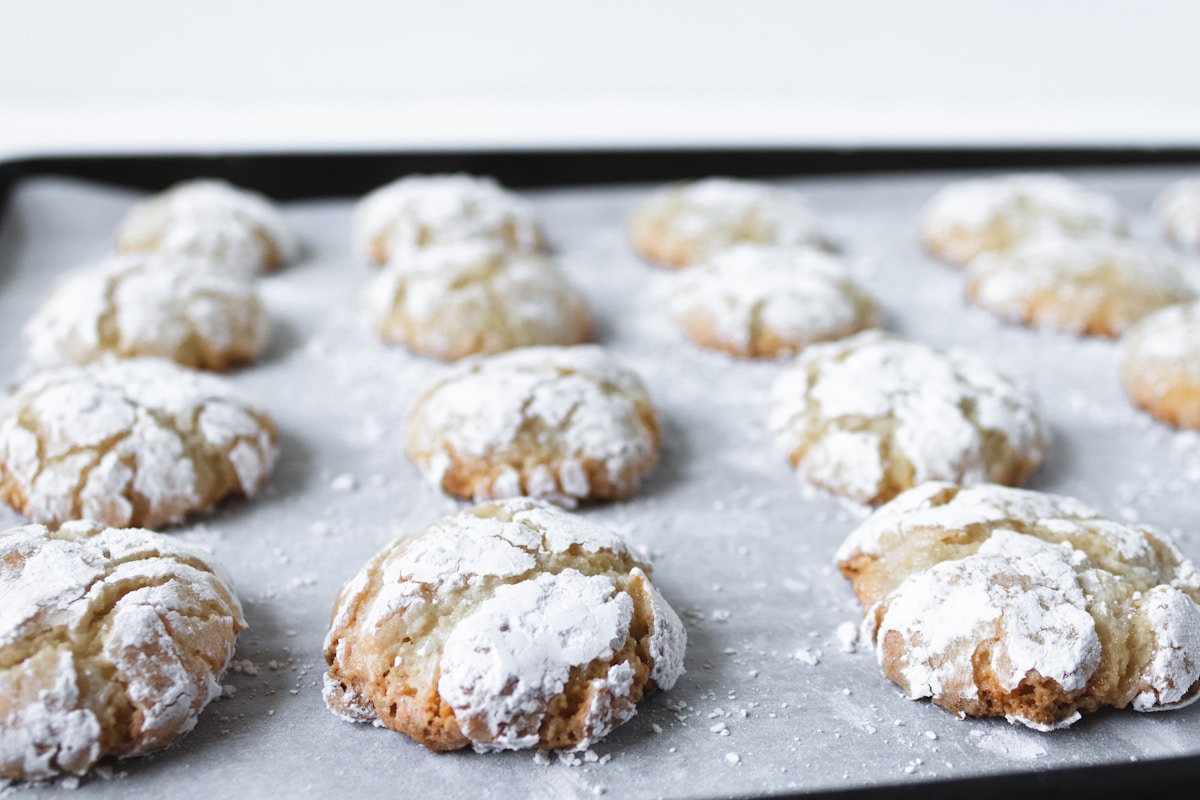
You pull a tray of cookies from the oven, move a few onto an old rack, and immediately spot the problems: small cookies dip between the bars, the rack rocks on the counter, and the next tray has nowhere to go. A cooling rack is simple equipment, but the wrong one becomes frustrating fast.
For most home bakers, the best cooling rack for baking is a sturdy, tightly spaced grid rack that fits inside the half sheet pan they use most often. It supports cookies and delicate pastries, offers useful surface area, and can catch glaze drips when set inside a rimmed pan. Still, the right choice depends on what you bake, the pans you own, whether oven use matters, and how much storage space you have.
Key Takeaways
- A closely spaced grid rack is usually the most versatile cooling rack for cookies and delicate pastries.
- Measure the inside bottom of your sheet pan before buying; half-sheet labels do not guarantee a universal fit.
- Look for a rigid frame, smooth corners, secure joints, and evenly placed raised feet.
- Use a rack in the oven only when the manufacturer approves that exact model for the intended temperature and task.
- Choose the largest rack you can comfortably wash, store, and use regularly.
The short answer: match the rack to what you bake and the pans you own
If you mostly bake cookies, choose a flat grid-style rack with closely spaced wires, a firm outer frame, and stable raised feet. When possible, select one that nests comfortably inside your most-used rimmed sheet pan. That setup is handy for cooling and glazing, as well as any oven task the manufacturer specifically approves.
A parallel-bar rack can work well for a large loaf cake, sturdy pastries, or bread. It is usually less useful as the only rack in a cookie-focused kitchen because small items can sag between the bars or sit unevenly across them.
Before buying, compare seven details: grid pattern, usable dimensions, sheet-pan fit, material and coating, feet, frame strength, and storage. A low-cost rack is not a good value if it flexes under a batch of cookies, catches on towels, or will not fit where you need to store it.
Why a cooling rack matters and which design works for each bake
A rack lifts baked goods above the counter so air can circulate underneath as they cool. Depending on the recipe and the bake, this can help prevent the underside from becoming overly soft while also freeing the sheet pan for the next batch.
For everyday baking, a grid is generally more useful than wires that run in only one direction. Crossing wires create smaller openings and provide more support across the rack.
A closely spaced grid is an especially practical cooling rack for cookies, including small butter cookies, thin cutouts, sandwich-cookie halves, tart shells, and delicate pastries. Smaller openings help these items stay level rather than sinking into wide gaps. A grid also makes it easier to slide a thin spatula under several small pieces.
Parallel-bar racks have wider open spaces and fewer support points. They can work well for larger, firmer items such as bread, loaf cakes, larger scones, and sturdy pastries. The trade-off is that tender cake layers may show more noticeable rack lines, while small cookies can bend or catch in the gaps.
Check the underside as carefully as the top. Raised feet create clearance between the grid and the counter or sheet pan. Evenly placed feet help a loaded rack stay stable; uneven feet can make transferring hot cookies awkward.
A good frame should feel firm when pressed lightly near the center. Avoid racks with sharp corners, rough wire ends, loose-looking joints, or feet that do not sit level. Those details can lead to towel snags, wobbling, and difficult cleanup.
Choose the right wire cooling rack size for your pans, counter and cabinets
Wire cooling rack sizes are not as standardized as product labels can make them seem. A rack described as half-sheet size may not fit every half sheet pan, and listed measurements may refer to the outside frame rather than the usable grid. Measure before buying instead of relying on a size name alone.
Use this quick measuring process:
- Measure the inside bottom of your rimmed sheet pan, where the rack would actually rest.
- Measure both length and width because pans can vary slightly in shape.
- Leave a little clearance around every side so the rack sits flat without catching on sloped pan walls.
- Compare your measurements with the manufacturer’s listed usable and overall rack dimensions.
- Measure the drawer, cabinet shelf, or vertical slot where the rack will be stored.
Compact or quarter-sheet-size racks suit small batches, narrow counters, and kitchens with limited storage. They are often easier to wash in a standard sink and tuck into a cabinet. Their limitation becomes clear when you bake several trays of cookies and run out of cooling space.
A half sheet pan rack is usually the most flexible everyday choice for regular cookie bakers. It offers room for a substantial batch and can sit inside a matching rimmed pan to catch icing, crumbs, or glaze. Do not assume a specific rack will fit your pan; verify its actual interior dimensions.
Extra-large racks are helpful for cooling several loaves, a large batch of cookies, or multiple pastries at once. They can reduce counter clutter during busy baking days, but they need a realistic storage plan. A rack that does not fit in the sink, cabinet, pantry, or dishwasher may be used less often than expected.
Round racks make sense for round cake pans, layer cakes, and specialty jobs. They are less efficient as an only rack for cookies because they leave unused space around a rectangular batch. Consider a round rack a useful second rack rather than the most versatile first purchase.
Material, coating and oven-safe claims: what to compare carefully
Material affects care, feel, and permitted use, but it does not tell you everything about a rack. Review the manufacturer’s instructions for the exact product rather than making assumptions based on appearance.
Uncoated stainless steel racks appeal to bakers who want a straightforward multipurpose option. However, stainless racks vary in wire thickness, frame construction, weld quality, and care requirements. Check whether the rack feels rigid and whether its cleaning instructions suit your routine.
Coated steel racks may have a smooth finish and come in many pan-friendly shapes. Coatings can have different care requirements and temperature limits, so read the instructions before using abrasive scrubbers, a dishwasher, or high heat.
A nonstick cooling rack may be convenient for sticky glazes, caramel-like drips, or delicate foods that are difficult to lift cleanly. It is not automatically effortless to clean or automatically safe for oven use. Confirm the manufacturer’s guidance for utensils, washing, stated temperature limits, and approved uses.
The oven-safe distinction matters. A rack is not safe for oven use simply because it is metal or sold with baking equipment. Use a rack in the oven only when the manufacturer explicitly states that exact model is approved for the planned task and temperature.
If you want to roast, reheat, or crisp food on a rack inside a sheet pan, check four details: the rack’s oven approval, stated maximum temperature, material or coating guidance, and secure fit inside the pan. The rack should rest on the pan bottom rather than balance on the rim or catch on angled sides.
Best cooling rack for baking by household need
For frequent cookie bakers: Choose a tightly spaced grid rack with a sturdy perimeter frame and raised, stable feet. A size that fits your commonly used half sheet pan is often the most practical all-around option. Flat storage is helpful in a crowded cabinet.
For cookies and delicate pastries: Prioritize grid spacing over decorative handles or complicated folding features. Small openings give mini cookies, fragile tart shells, and thin pastries more support. Check the outer edge, too; food should not easily slide or snag where the grid meets the frame.
For cakes, loaves and larger bakes: Choose a rack with enough surface area for the item to rest without hanging over the edge. A strong frame matters because heavier loaves can make a lightweight rack flex. If you often cool tender cake layers, consider whether the wire pattern may leave marks you dislike.
For glazing and multipurpose pan use: A rack that sits securely inside a rimmed pan keeps drips contained and makes cleanup more manageable. This setup works well for iced loaf cakes, doughnuts, and glazed cookies. For oven tasks, follow only the product’s approved-use instructions.
For small kitchens: One compact rack or a pair of matching smaller racks may be more useful than one oversized model. Smaller racks are easier to wash and store, while two create flexible cooling zones. For stackable designs, make sure the levels sit securely and leave enough clearance between them.
For sticky bakes: Focus on a design you can clean promptly and thoroughly according to its care instructions. A simple grid without cramped joints may be easier to reach than a complex folding rack. Dry the rack well and inspect seams, corners, and any coating over time.
Buying checklist, care routine and quick decision guide
Use this checklist before buying:
- Does the grid support the smallest cookies or pastries you make?
- Does the rack sit flat and feel rigid when lightly pressed?
- Are the feet evenly placed and tall enough to create under-rack clearance?
- Does it fit inside your existing sheet pan with room around the edges?
- Does it have smooth corners, tidy wire ends, and secure-looking joints?
- Can it be stored flat, upright, or stacked without forcing it into a tight space?
- If oven use matters, does the manufacturer explicitly approve that exact rack for your planned temperature and task?
Wash sticky drips soon after use so residue does not harden in the grid corners. Use only cleaners, scrubbers, dishwasher settings, and utensils approved for the rack’s finish. Dry it thoroughly before storage, and periodically inspect the feet, joints, and coating for wear or looseness.
The fast match is simple: if you bake mostly cookies, choose a tightly spaced grid sized for your favorite sheet pan. If you bake cakes and loaves, choose a stable rack with a strong frame and sufficient surface area. If you need cooling plus manufacturer-approved oven use, prioritize verified oven specifications and secure pan fit. If storage is limited, buy the largest rack you can comfortably wash, store, and use often.
Frequently asked questions
What size cooling rack fits a half sheet pan?
Measure the inside bottom of your own pan, then compare that measurement with the rack’s listed usable dimensions and overall frame size. Leave a little room at the edges so the rack rests flat rather than catching on sloped sides. Half-sheet labels are useful starting points, not a universal fit guarantee.
Are nonstick cooling racks safe to use in the oven?
Use a nonstick rack in the oven only when its manufacturer clearly states that exact rack is oven safe for your intended temperature and task. Check the instructions for coating-specific limits and care requirements. Do not rely on the fact that it looks like a metal baking rack.
Is a grid cooling rack better than a parallel-bar rack for cookies?
Usually, yes. A closely spaced grid gives small cookies and delicate pastries more support, helping prevent them from sagging through wide gaps. Parallel bars can still work for larger, sturdier baked goods, but a grid rack is generally the more versatile first choice for a cookie-baking kitchen.