You’ve spent hours baking the perfect layer cake, only to watch your buttercream finish turn into a lumpy mess as you try to smooth it. The frosting drags, the crumbs mix in, and suddenly that gorgeous vision you had for a flawless cake feels impossible. I’ve been there more times than I care to admit. But here’s the secret that changed everything for me: it’s not about expensive piping bags or pro-level turntables alone. It’s about having the right bench scraper in your hand.
A bench scraper (also called a dough scraper or pastry scraper) is one of those humble kitchen tools that quietly does a world of work. And when it comes to smoothing buttercream, the right scraper can make the difference between a cake that looks like it belongs in a bakery display and one that screams “I tried.” After testing several options and digging into real-world feedback from Serious Eats and the cake decorating community on Reddit, I can confidently point you to one scraper that stands above the rest.
Why a Bench Scraper Matters for Buttercream
Let’s be clear: a good bench scraper isn’t just for cutting dough. Its straight, sharp edge acts like a mini trowel for frosting. When you’re smoothing buttercream on a cake, you’re essentially trying to create a clean, even surface by shaving off excess frosting and filling in gaps. A dull or flimsy scraper will drag the frosting instead of cutting it flush, leaving ridges and streaks.
The physics is simple: you want a blade that is rigid, sharp, and wide enough to span the height of your cake in one pass. Too narrow and you’ll have to make multiple strokes, increasing the chance of unevenness. Too flexible and the edge will warp under pressure, creating waves. That’s why a quality bench scraper with a 6-inch blade, like the Ateco 622, strikes the ideal balance. It’s long enough to cover most cake heights (standard 6-inch or 8-inch layers) without being unwieldy.
The Ateco 622 Under the Microscope
Serious Eats put eight bench scrapers through rigorous testing, and the Ateco 622 Stainless Steel Bench Scraper came out on top for buttercream smoothing. The reasons are clear: a sharp, perfectly straight edge that doesn’t flex, a comfortable handle that gives you control, and stainless steel construction that resists rust from the constant washing that comes with cake decorating.
At around $15 to $20, the Ateco 622 is a steal. (Yes, really.) Compare that to some high-end scrapers that cost $40 or more and don’t perform any better for frosting work. The 6-inch blade gives you precise pressure control — you can apply light pressure for gentle smoothing or heavier pressure to knock down thicker ridges. The stainless steel blade is also easy to clean: just rinse under hot water and wipe dry. No rust spots, no warping.
I’ve used mine for over a year now, and it still has a razor-sharp edge. That’s because Ateco heat-treats the steel to hold its shape. I’ve also found it works beautifully for cutting brownies, scones, and even for scraping dough off a work surface. It’s a true multipurpose tool.
How to Use a Bench Scraper for Flawless Buttercream
Having the right tool is step one. Step two is technique. Professional cake decorators on Reddit’s r/cakedecorating community emphasize two things: a turntable and the 45-degree angle.
Start with a crumb coat — a thin layer of buttercream that seals in crumbs. Chill the cake for 15 minutes in the fridge (at about 40°F / 4°C) so the crumb coat sets. Then apply a thicker final coat of buttercream. Place the cake on a turntable and hold the bench scraper vertically with the blade flush against the side of the cake. Tilt the scraper slightly so the top edge is leaning away from you — about 45 degrees off the cake surface. This angle allows the blade to shear off excess frosting cleanly rather than pushing it along.
Now, spin the turntable with your other hand while keeping the scraper steady. Apply consistent, gentle pressure. Let the scraper do the work. You’ll see the excess buttercream collect on the edge. After one full rotation, scrape off the buildup and repeat. For the top edge, use the same angle but hold the scraper horizontally, starting at the far edge and pulling toward you while spinning the turntable.
A quick kitchen hack: chill your bench scraper in the fridge for 10 minutes before smoothing. The cold metal helps keep the buttercream firm and prevents it from melting or smearing as you work. (Trust me on this one — it makes a noticeable difference.)
One more tip: if you see air bubbles or gaps, don’t try to fix them with the scraper alone. Use a small offset spatula to fill the holes with extra buttercream, then smooth again with the bench scraper. The goal is a continuous, seamless surface.
Beyond Buttercream: Other Uses for Your Bench Scraper
You might buy the Ateco 622 for cake decorating, but you’ll keep it on your counter for a dozen other tasks. It’s a workhorse in the kitchen.
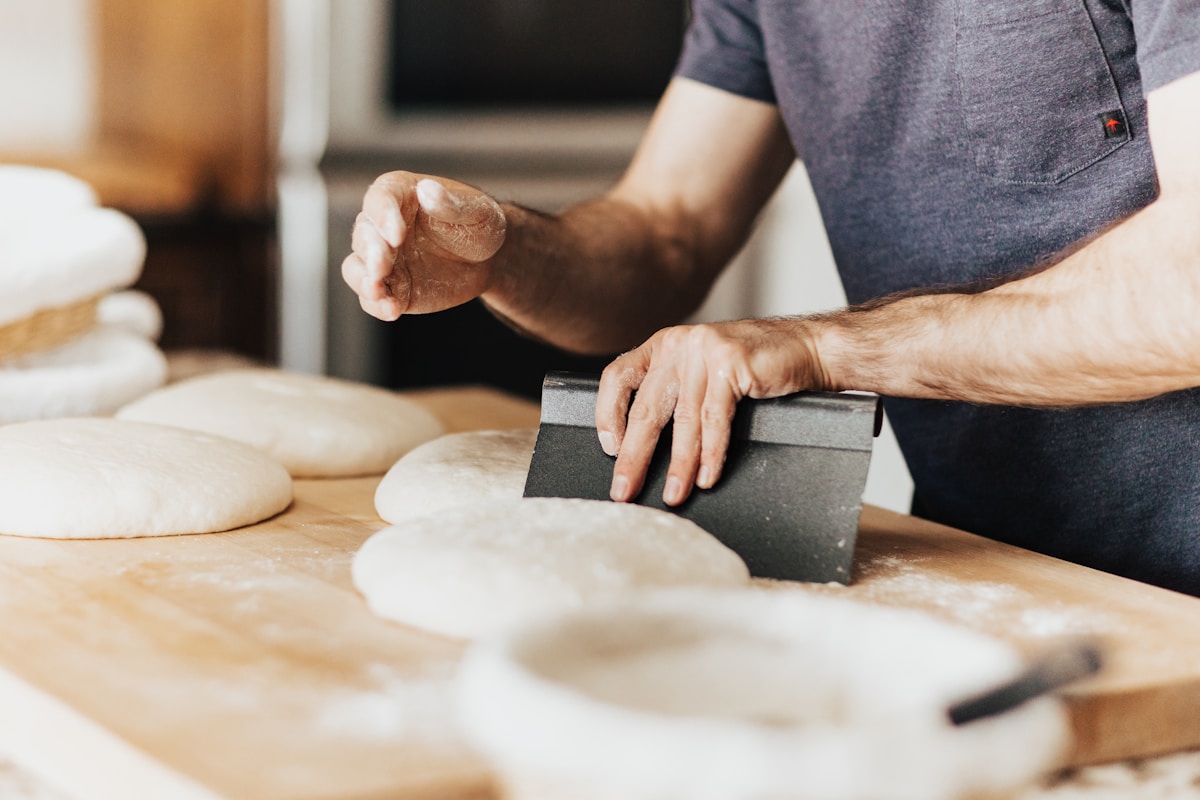
- Cutting dough: Whether you’re making pie crust, pasta, or scones, a sharp bench scraper cuts through butter and flour mixtures without warming the dough like your hands would.
- Scraping and cleaning your work surface: No more battling sticky dough with a dull knife. The straight edge lifts every bit of residue off your countertop.
- Chopping nuts or herbs: The wide blade works like a mezzaluna. Rock it back and forth over a pile of walnuts or parsley for even chop.
- Dividing pastry: Perfect for portioning croissant dough or brownie slabs into clean squares.
- Smoothing other frostings: It works for cream cheese frosting, whipped ganache, and even royal icing on cookies.
What About Alternatives?
The Ateco 622 is my top pick, but it’s worth mentioning a couple of other bench scrapers that perform well for different reasons. If you prefer a wooden handle for better grip (and don’t mind hand-washing), the OXO Good Grips Stainless Steel Bench Scraper has a comfortable rubberized handle and costs about the same, around $15. However, its blade is a bit shorter at 5 inches, and some users note that the edge isn’t as sharp out of the box. For buttercream smoothing, sharpness matters.
Another contender is the Dexter-Russell 4-inch Bench Scraper. It’s smaller, so it’s better for detail work like smoothing the top of a mini cake or trimming edges. But for full-size cakes, you’ll want the 6-inch length of the Ateco.
If you’re on a tight budget, a simple plastic dough scraper from a restaurant supply store costs around $3 and can work in a pinch. But it won’t hold an edge, it flexes too much, and it’s not as easy to clean. Save yourself the frustration — invest once in a good metal scraper.
Final Verdict and Recommendations
The Ateco 622 Stainless Steel Bench Scraper isn’t flashy. It doesn’t have a fancy name or a celebrity chef endorsement. But it does what it’s supposed to do: cut and smooth buttercream with precision and durability. At that price point (typically $15–$20, depending on where you buy), it’s a no-brainer for anyone who bakes cakes even a few times a year.
Pair it with a decent turntable (you don’t need a $100 rotating cake stand — a simple plastic turntable for $25 works fine) and the 45-degree angle technique, and you’ll be turning out cakes with straight, clean sides and perfectly smooth tops. Your friends and family will think you secretly enrolled in a pastry school.
Remember, the most expensive tool isn’t always the right one. The right tool makes cooking — and decorating — easier. For buttercream, that tool is a sharp, straight bench scraper that you can hold confidently in your hand. The Ateco 622 delivers that and more.
So next time you’re about to give up on a lumpy buttercream and reach for a tub of store-bought frosting, think about what a simple bench scraper can do. It’s a small investment that pays off in every cake you create. Happy baking!