Have you ever sat down to a meal you were so proud of, only to find yourself wrestling with a piece of steak that’s just a little too big? Or watched a loved one struggle with a giant chunk of roasted potato? It’s a moment that can shift you from feeling like a kitchen hero to a worried host in a split second. It feels awkward, a little embarrassing, and honestly, a tiny bit scary.
Believe me, we have all been there. In our excitement to get dinner on the table, we rush through the prep. We chop haphazardly, focused only on getting the food from the cutting board into the pan. But here’s a little secret I’ve learned over many years: the most important part of cooking happens before you even turn on the stove. It happens with your cutting board and your knife.
Learning to cut your ingredients to the right size isn’t just about making your food look professional. It’s the absolute foundation of kitchen safety, deliciousness, and confidence. It’s the difference between a stressful meal and a joyful one. So, let’s take a deep breath, grab our favorite knife, and talk about why size truly matters.
The Two Big Reasons Size Matters Safety and Flavor
When we talk about cutting food, it’s easy to think it’s just for looks. But the two most important reasons are far more practical: one is for your body, and the other is for your pan.
First, let’s talk safety. This is the big one. Food cut into overly large, awkward, or tough pieces is a genuine choking hazard, for both children and adults. A piece of sausage that hasn’t been sliced thinly, a chunk of carrot that’s just a bit too blocky, or a piece of tough gristle on a steak can be difficult to chew properly. By taking the time to cut ingredients into manageable, bite-sized pieces, you are doing the first and most important step of ‘chewing’ before the food even reaches your mouth. You’re making each bite safer and more enjoyable for everyone at the table.
Second, it’s all about the cooking science. Have you ever made a vegetable soup where some of the carrots were perfectly tender, but others were still hard as a rock? The culprit wasn’t your recipe; it was your knife work. When ingredients are cut to a uniform size, they cook at a uniform rate.
Think about it: a tiny piece of potato will cook much, much faster than a huge chunk sitting next to it in the same hot pan. If you’re sautéing, the small pieces might burn before the large ones are even warm. If you’re roasting, you’ll end up with a frustrating mix of mushy and raw. Consistent cuts mean consistent results. It means every bite of your stir-fry has that perfect crisp-tender texture, and every spoonful of your stew is gloriously soft and cohesive. It is, without a doubt, the secret to leveling up your cooking from good to great.
Your First Three Friendly Knife Cuts
The world of knife skills can seem intimidating, with fancy French terms and chefs on TV moving their hands like lightning. Forget all that. To start, you only need to get comfortable with three basic, friendly cuts. Master these, and you can tackle about 90% of the recipes you’ll ever encounter.
-
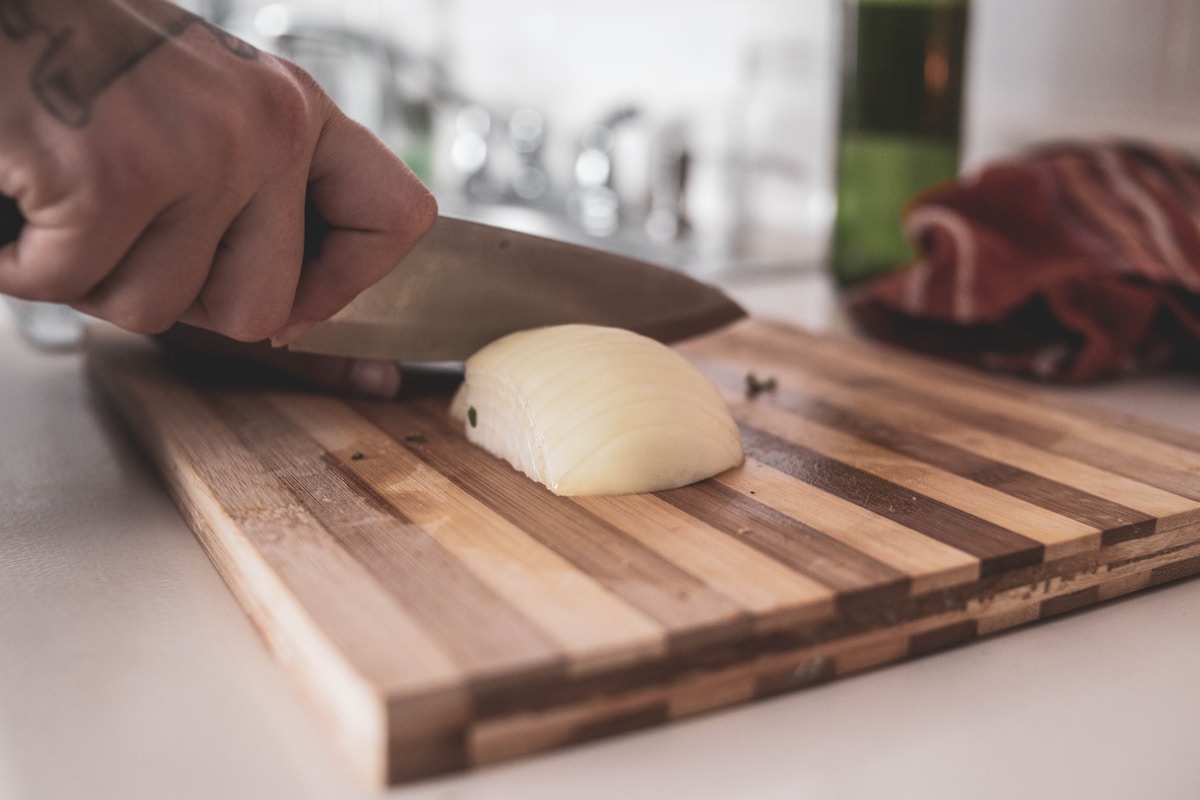
The Rough Chop: This is your best friend for anything where appearance doesn’t matter. Think stocks, broths, or rustic soups that are going to be blended later. A rough chop is exactly what it sounds like—imperfect and quick. The pieces don’t have to be the same size, but you should still aim for a generally similar ballpark. The goal here is simply to break down large vegetables like onions, celery, and carrots to release their flavor.
-
The Dice: This is the next step up and it’s all about creating those uniform cubes we talked about. Dicing creates consistency for things like potato hash, vegetable soup, and salsas. A ‘dice’ usually comes in three sizes:
- Small Dice: About 1/4-inch (6 mm) cubes. Perfect for delicate soups or a fine mirepoix (a flavor base of onion, carrot, and celery).
- Medium Dice: About 1/2-inch (12 mm) cubes. This is your all-purpose size for things like roasted root vegetables, stews, and chunky soups.
- Large Dice: About 3/4-inch (2 cm) cubes. Great for hearty, long-cooking stews or big skewers for the grill.
-
The Slice (or Rondelle): This is as simple as it sounds! It’s cutting a round vegetable, like a carrot, zucchini, or cucumber, into round ‘coins’. You can control the thickness for different results. Thin slices of cucumber are perfect for a salad, while thicker slices of zucchini hold up beautifully on the grill.
Your Instant Kitchen Hack: The Claw Grip! To protect your fingers, don’t hold the food with your fingertips pointing out. Instead, curl your fingers under so your knuckles are facing the blade. This is called the ‘claw grip’. Rest the side of the knife blade against your knuckles and use them as a guide as you slice. Your fingers will be safely tucked away. (It feels weird at first, but trust me, it will become second nature.)
Your Knife Is Your Friend Not Your Enemy
Many beginner cooks have a fear of their knives, especially big, sharp ones. But I’m going to tell you something that might sound backward: a sharp knife is a safe knife. A dull knife is dangerous.
Why? A dull knife requires you to use more pressure to cut through food. When you’re pushing down hard, the blade is far more likely to slip off a tough onion skin or a wobbly tomato and go somewhere you don’t want it to—like your finger. A sharp knife, on the other hand, bites into the food with very little pressure. It does the work for you, gliding through ingredients smoothly and predictably.
You don’t need a whole block of expensive knives to start. For years, I did almost everything with one single knife: an 8-inch chef’s knife. It’s the ultimate kitchen multi-tool. Look for one that feels comfortable in your hand. A brand like Victorinox makes an incredible, affordable ‘Fibrox Pro’ chef’s knife that is beloved by home cooks and professional chefs alike. It’s a fantastic first investment. Add a small paring knife for little jobs like peeling garlic or hulling strawberries, and you’re set.
A Moment of Mindful Prep
So much of the stress we feel in the kitchen comes from rushing. We try to chop an onion while the oil is already smoking in the pan, and that’s when mistakes (and accidents) happen. The French have a term for this: mise en place, which means ’everything in its place’. It’s the simple act of preparing all of your ingredients before you start cooking.
This is where you practice your new skills. Before you even think about turning on a burner, take 15 minutes to be alone with your cutting board. Put on some music. Pour a glass of water. And just… prep.
Let’s imagine that roasted vegetable dish. Take out your carrots, potatoes, and bell peppers. Wash and dry them. Now, focus on one vegetable at a time. Decide you want a medium dice. Methodically, patiently, turn your vegetables into neat, even piles of 1/2-inch cubes. As you work, you’ll notice a rhythm. Your movements will become more confident. By the time you’re done, you’ll have beautiful, uniform vegetables ready to go, and a wonderful sense of calm accomplishment.
When you finally toss them with oil and seasonings and slide them into a 400°F (200°C) oven, you can relax, knowing everything will roast to perfection at the exact same time. That is the magic of mindful prep.
Try This Tonight
Feeling overwhelmed? Don’t be. Like any new skill, this takes a little practice. So here is your assignment for tonight. It’s simple, low-stakes, and will take you five minutes.
Go get one single carrot. That’s it. Just one.
Wash it and peel it (or don’t, your choice!). Place it on your cutting board. Using your best ‘claw grip’, just practice slicing it into thin coins. Don’t worry about speed. Pay attention to the sound the knife makes. Feel the slight resistance of the carrot. Try to make the slices as even as you can. When you’re done, you’ll have a neat pile of little orange discs.
You don’t even have to cook them. You can snack on them, save them for a salad tomorrow, or give them to your dog. (Your dog will be very grateful.) The point isn’t the final product; it’s the process. It’s about building muscle memory and proving to yourself that you can do this.
Because you can. Everyone starts somewhere, and starting with a single, well-cut carrot is a beautiful, safe, and delicious place to begin.