The traditional Wuxi foods are very sweet and savoury types of food, but there is a wide range of selection of western foods. In some alleys there are different snack stalls and tiny mom-and-pop eateries tucked away, offering everything from braised pork ribs to osmanthus-fragrant rice cakes — and every bite tells you something about a city that has been cooking with pleasure and pride for centuries. Kitchen is a magic place, and nowhere is that more true than in the food streets and family kitchens of Wuxi.
The Sweet-Savoury Soul of Wuxi
Wuxi cuisine belongs to the Jiangsu culinary tradition, a style known for its refined balance of flavors, careful braising techniques, and generous hand with both sugar and soy sauce. The defining characteristic of Wuxi food is a signature sweetness layered beneath savory depth — soy-braised dishes are almost always enriched with rock sugar, giving sauces a glossy lacquer finish and a rounded sweetness that is quite unlike anything you’ll find in spicier Chinese regional cuisines. First-time visitors often describe the food as richer and sweeter than expected, in the best possible way.
The city sits on the shores of Taihu Lake, one of the largest freshwater lakes in China, and this geography has shaped the local table profoundly. Fresh fish, shrimp, crab, and eel from the lake appear in traditional dishes that have been refined over more than a hundred years of local cooking.
Wuxi Pork Ribs (無錫排骨)
No dish defines Wuxi more completely than its pork ribs. Wuxi pork ribs — known locally as Wu Xi Rou Gu Tou — are the city’s most iconic culinary export, and eating them here, made by someone who grew up making them, is a completely different experience from encountering them in a Chinese restaurant overseas.

Photo by Unsplash — Braised pork with rice, closest Unsplash equivalent to Wuxi-style ribs
The ribs are first marinated in soy sauce for several hours, then slow-braised with rock sugar, Shaoxing rice wine, ginger, star anise, cinnamon, and scallions until the sauce reduces to a sticky, dark, intensely flavored glaze that coats every rib in a shining mahogany lacquer. The meat falls cleanly from the bone and carries that unmistakable Wuxi sweetness in every bite. Locals eat them with plain steamed rice — the simplicity of the rice is the perfect counterweight to the richness of the braise.
Xiaolongbao (小笼馒头)
Wuxi’s version of the steamed soup dumpling — called Xiaolongmantou rather than the Shanghainese xiaolongbao — is how many locals start their day. These small pleated parcels are filled with sweet, juicy pork and a generous amount of hot, gelatinized broth that liquefies during steaming into a rich soup trapped inside the dough.

Photo by Unsplash — Xiaolongbao (小笼包) Chinese soup dumplings
The key difference between Wuxi’s version and those found in Shanghai or Nanjing is the filling: Wuxi dumplings lean noticeably sweeter, reflecting the local palate’s preference for that salty-sweet harmony. They are served in bamboo steamers, six to eight at a time, with a small bowl of black vinegar and shredded ginger on the side. The correct technique is to lift gently, take a small bite from the side, drink the soup, then eat the rest — the opposite order results in a scalded mouth and a lot of regret.
Fried Gluten Balls (油面筋)
One of Wuxi’s most beloved local specialties is something you’re unlikely to find in this form anywhere else: fried gluten balls, or you mian jin. These golden, hollow spheres of deep-fried wheat gluten are airy and slightly crisp on the outside, and completely empty inside — which is precisely the point. When simmered in broth or braised in sauce, they absorb liquid like tiny sponges, becoming juicy, tender, and packed with whatever flavors surround them.
They are often stuffed with minced pork and vegetables before being added to clay pot dishes, soups, or stir-fries. The texture is genuinely unique — spongy, yielding, and satisfying in a way that’s different from tofu, meat, or any other common ingredient. Locals buy them by the bag from markets and corner stores to use at home, and they also appear in virtually every casual restaurant in the city.
Liangxi Crispy Eel (梁溪脆鳝)
Named after the Liangxi River that runs through Wuxi, Liangxi crispy eel is a traditional Taihu Lake area dish with a history of more than a hundred years. Fresh eels are selected, cleaned, and deep-fried twice — the double-frying technique creates an exterior that is genuinely crispy rather than simply cooked through — then tossed in a sauce of Shaoxing wine, soy sauce, sugar, and spices until the eel pieces are brown, shiny, and fragrant.
The finished dish is intensely savory with a distinct sweetness and the deep umami of well-caramelized sauce. It is considered one of the pinnacle preparations of Wuxi cuisine and a dish that serious food travelers specifically seek out when visiting the city.
Street Snacks and Local Bites
Beyond the restaurant staples, Wuxi’s streets and food alleys offer a rotating cast of snacks worth exploring at every hour of the day:
- Sanxian Huntun (三鲜馄饨) — wontons stuffed with pork, shrimp, and pickled vegetables, served in a fragrant broth with egg ribbons and silken tofu strips; originally from the nearby township of Xishan, now a Wuxi staple
- Luobosi Bing (萝卜丝饼) — pan-fried turnip cakes, crispy and golden on the outside, soft and savory within; a simple snack that rewards patience waiting in line at the better street stalls
- Fanggao (方糕) — square rice cakes pressed in wooden moulds and stuffed with sweet bean paste, dusted with sugar; the wooden moulds are such a local icon that they’re sold as souvenirs
- Tang Cu Xia (糖醋虾) — sweet-and-sour shrimp cooked in a glossy vinegar, sugar, and soy glaze; the reddish-orange sauce is as beautiful as it is delicious
- Plum Blossom Cake (梅花糕) — a street-side classic, baked in flower-shaped iron moulds, filled with red bean paste and topped with sweet toppings; particularly popular around temples and old town areas
- Jiuniang Mianziyuan (酒酿棉子圆) — small glutinous rice balls served in sweet fermented rice wine broth; a warm, comforting dessert snack especially popular in cooler months
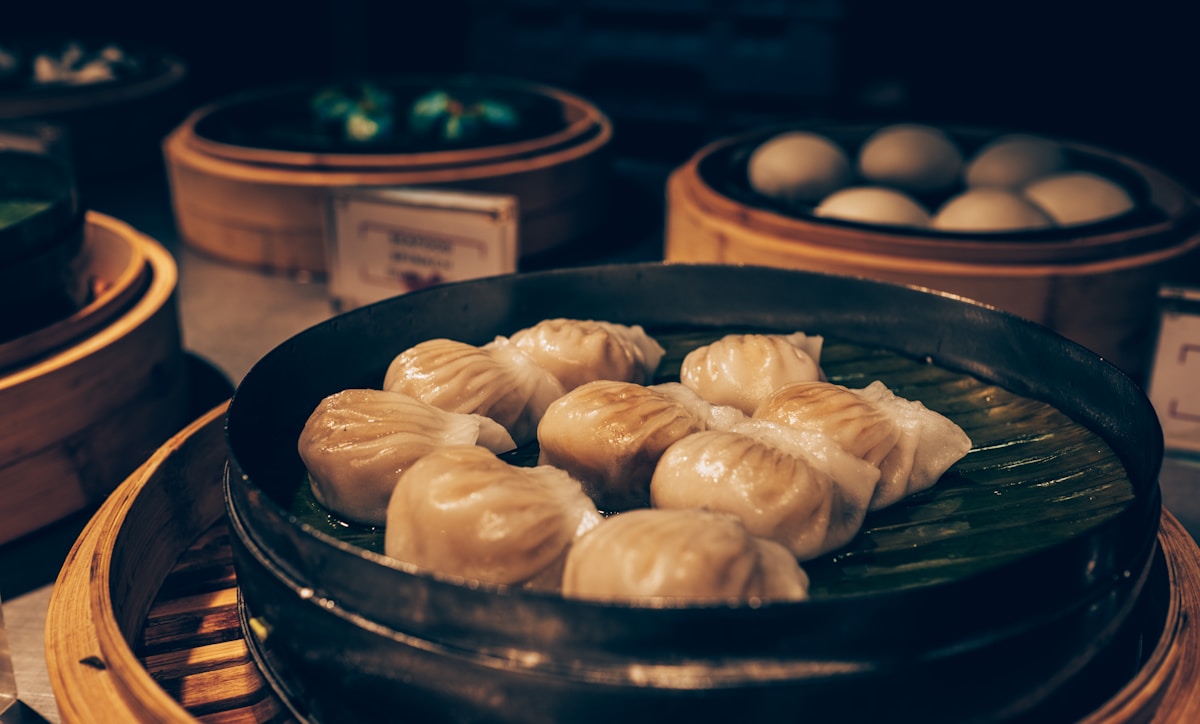
Photo by Unsplash — Chinese street food spread
Taihu Lake Freshwater Specialties
Wuxi’s position on Taihu Lake gives it access to some of the finest freshwater ingredients in China, and these appear across restaurant menus throughout the city. Taihu whitebait (Taihu Yinyu) — tiny, translucent fish barely longer than a finger — are stir-fried simply with egg and scallion or served in soup, and their delicate flavor is a direct expression of the lake’s clean water. During autumn, Taihu hairy crabs (Taihu Da Zha Xie) are the city’s most celebrated seasonal ingredient, eaten steamed with nothing more than vinegar and ginger to preserve their sweet, briny complexity.
Where to Eat: Food Streets and Markets
Wuxi rewards wandering. The city’s best eating is often found not in formal restaurants but in the covered markets, pedestrian food streets, and old alley eateries where the same families have been cooking the same dishes for decades.
- Wuxi No. 1 Food Street — a bustling pedestrian strip particularly lively after dark; skewers, steamed buns, noodle bars, and fried snacks line both sides, and the atmosphere is as much a reason to visit as the food
- Chongning Road area — a car-free shopping and snacking hub where traditional snack counters operate alongside modern shops; look for dumpling houses and fresh spring rolls between the boutiques
- Local morning markets — the earliest and most authentic eating in Wuxi happens between 6 and 9 AM, when locals queue for fresh xiaolongmantou, wontons, and pan-fried turnip cakes at neighborhood breakfast counters that don’t necessarily have signs in English — or any sign at all
“You’ll find an inviting mix of open-air stalls and tiny mom-and-pop eateries serving Wuxi classics like spare ribs, soup dumplings, fried gluten balls, and sweet osmanthus rice cakes.”
A Note on the Sweetness
First-time visitors to Wuxi should come prepared: the food here is genuinely sweeter than most Chinese regional cuisines, and this isn’t a compromise or a concession to tourist taste — it is the authentic, historic character of the local kitchen. Rock sugar features in braises, osmanthus syrup flavors desserts, and even savory dishes carry a sweetness that’s unusual if you’re accustomed to Sichuan, Cantonese, or northern Chinese cooking.
Lean into it. The sweetness in Wuxi cooking isn’t cloying — it’s carefully balanced with soy, vinegar, and aromatic spices into something that feels complete and harmonious rather than simply sugary. It is one of the most distinctive and rewarding regional palates in all of China, and Wuxi is the only place to experience it fully.


 Lucas
Lucas
