You finish a Sunday batch of burritos, cooked chicken, roasted vegetables, and pasta sauce—then realize ordinary containers have turned the freezer into a stack of mystery boxes. A vacuum sealer for meal prep can make portions flatter, easier to label, and easier to stack.
For most households, a compact external vacuum sealer is the practical choice. A chamber vacuum sealer is worth considering only if you regularly package large batches of soups, sauces, marinades, or other liquid-heavy meals and have room for a much larger appliance.
Key Takeaways
- Most home cooks do well with a compact external sealer for cooled burritos, proteins, vegetables, and portioned leftovers.
- For soft or moist foods, prioritize pulse or manual vacuum control and a reliable seal-only button over maximum suction claims.
- Premade bags are fastest for standard servings; rolls are more flexible for long burritos, bulky proteins, and irregular portions.
- Chill or briefly pre-freeze wet foods before sealing with an external machine to keep liquid away from the sealing area.
- Chamber sealers are better suited to frequent liquid-heavy prep, but their size and cost are unnecessary for many kitchens.
Start With Your Freezer-Meal Routine, Not the Most Expensive Machine
The best vacuum sealer for freezer meals depends less on a brand name and more on what you actually freeze. Someone sealing four chicken portions and a few leftovers each week needs a different machine than someone preparing 30 dinners at a time.
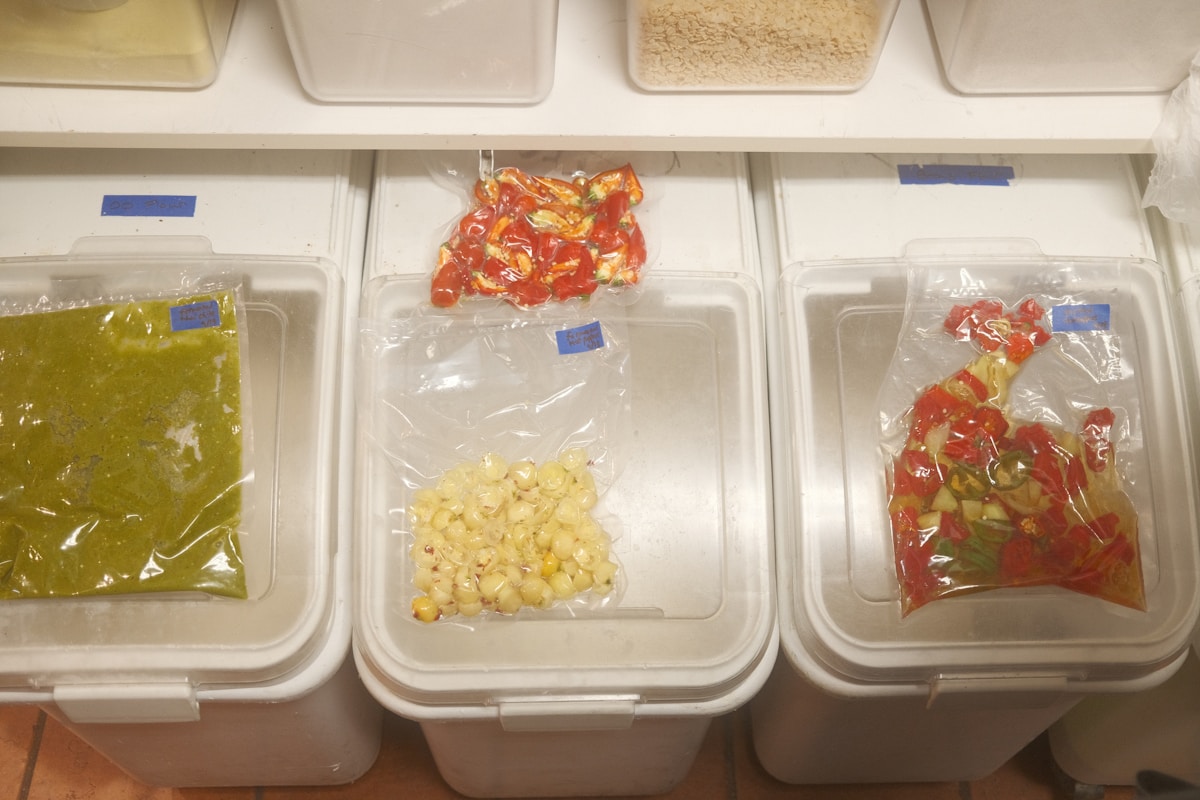
A vacuum sealer makes sense if you regularly freeze cooked proteins, vegetables, burritos, casseroles, meal-sized leftovers, or bulk ingredients. Sealed portions can lie flat, stack neatly, and take up less awkward freezer space than rigid containers.
Keep expectations realistic. Removing air can reduce air exposure around food and make freezer storage more orderly, but it does not replace safe cooling, freezing, labeling, thawing, or reheating practices. Warm food, a poor seal, or an unlabeled package can still create problems.
Use this quick decision rule:
- Choose a compact external sealer for a few to several cooled, mostly dry portions each week.
- Choose a larger external machine if you batch cook often and want a faster bag-making workflow.
- Consider a chamber machine only when wet foods are a routine part of your prep, not an occasional soup night.
Do not buy a high-capacity appliance simply because you hope to meal prep more. A smaller sealer that is easy to use, clean, and store is often the better long-term choice.
Choose the Right Type: Compact External Sealer vs. Chamber Vacuum Sealer
External suction sealers are the familiar countertop style. You place the open end of a textured bag in the machine, it draws air out through that opening, and it heat-seals the bag.
They are a strong fit for freezer meals, burritos, cooked proteins, vegetables, and fully cooled leftovers. They generally cost less, take up less room, and use familiar bag formats. Their biggest limitation is moisture: liquid can travel toward the sealing strip before the bag is sealed.
Chamber vacuum sealers work differently. The entire bag sits inside a chamber, air is removed from the chamber, and the bag is sealed before pressure returns. This design is generally better suited to liquid-heavy foods because it does not depend on pulling air through the open end of the bag in the same way.
The trade-off is substantial in a typical kitchen. Chamber machines are usually larger, heavier, more expensive, and harder to store. They can make sense for serious batch cooking, but most home meal preppers do not need one.
| Machine type | Ideal user | Foods it handles well | Counter and storage needs | Bag type | Reasons to skip it |
|---|---|---|---|---|---|
| Compact external sealer | Weekly meal prep and leftovers | Burritos, proteins, vegetables, firm portions | Small footprint; often cabinet-friendly | Usually textured bags or rolls | Less convenient for runny soups and sauces |
| Larger external sealer | Frequent batch cook | The same foods, with a quicker repeated-bag workflow | Needs more cabinet or counter room | Often rolls plus premade textured bags | Extra features may not matter for light use |
| Chamber sealer | High-volume cook who often packs wet foods | Soups, sauces, marinades, large prep projects | Heavy and space-hungry | Typically smooth chamber bags | Cost and size are excessive for many homes |
For a vacuum sealer for burritos, an external model is usually enough. Burritos are soft and irregular rather than truly liquid, so manual control is more useful than a chamber setup.
Vacuum Sealer Features That Matter for Freezer Meals
Feature lists can be misleading when several buttons solve the same small problem. Focus on controls that improve sealing quality and reduce frustration during your normal prep routine.
Moist-food mode or manual control: This can help with cooked chicken, saucy fillings, and foods that release a little liquid. It may adjust the sealing process or let you stop suction sooner, but it will not make hot or runny food easy to package. Chill food first and keep the sealing edge clean.
Pulse or gentle vacuum: This is one of the most useful vacuum sealer features for soft food. Short bursts of suction let you stop before crushing cooked vegetables, flattening a burrito, or pulling filling toward the seal. For delicate baked goods, a seal-only function may be better than trying to remove much air.
Seal-only button: Do not overlook this basic control. You need it to make bags from a roll, close a bag after using manual suction, and package foods that do not need a full vacuum. A dependable seal-only function is often more useful than a long list of automatic presets.
Removable drip tray or easy-clean channel: Moisture can reach the vacuum channel, especially during a large prep session. An accessible channel or removable tray makes cleanup easier and helps you spot residue that can interfere with sealing.
Built-in roll storage and cutter: These features are worthwhile if you make many custom bags. A roll holder prevents material from unspooling, while a cutter speeds repetitive work. If you usually buy premade bags, they are conveniences rather than must-haves.
Bag compatibility: Check this before buying. Many external machines require textured bags or rolls, while others accept a broader range of compatible options. Replacement-bag availability and cost matter more than the starter bags included in the box.
Footprint and storage details: Measure the cabinet shelf, not just the counter. Check the machine’s width, depth, lid clearance, weight, cord storage, and whether the manual permits upright storage. A compact vacuum sealer is only compact if it fits where you will keep it.
Cycle speed and cooldown: These are convenience factors for big prep days. A short pause between seals is rarely a problem for occasional use, but it becomes tedious when you are packing 20 or more portions.
Bags vs. Rolls for Burritos, Portions, and Bulky Prep Batches
Your bag choice affects speed, flexibility, freezer organization, and how much material you trim away. For many kitchens, the most practical answer is keeping both premade bags and rolls on hand.
Premade bags are the fastest option for standard portions. They work well for single servings of chicken, vegetables, rice, and leftovers when the size is predictable. They are especially convenient for weeknight prep because there is no cutting or first seal to make.
Bag rolls are more flexible. You can cut a short bag for two chicken thighs, a wide bag for a family-size portion, or a long bag for oversized burritos. Rolls can reduce excess bag length when portions vary, but every bag takes an extra step: cut it, seal one end, fill it, then vacuum-seal the open end.
For a bags-versus-rolls vacuum sealer decision, choose premade bags when speed and consistent portions matter most. Choose rolls when you often freeze bulky proteins, long burritos, or irregular portions.
Reusable vacuum bags and containers can be useful for selected dry foods or short-term storage when they are made to work with your machine. Follow the manufacturer’s instructions for food contact, cleaning, reuse, and replacement. Reusable does not automatically make a product the best choice for every freezer task.
Use these bag-sizing checks every time:
- Leave several inches of empty bag material above the food for a clean seal.
- Keep the sealing edge dry and free of crumbs, grease, sauce, and folds.
- Avoid packing food all the way to the top of the bag.
- Choose a bag wide enough for food to lie in a relatively even layer.
- Label the bag before filling it, or use a label that remains readable after freezing.
Best setup for freezer burritos: Choose an external sealer with pulse or manual control, a reliable seal-only option, and either rolls or wide premade bags. Wrap burritos consistently, arrange them in a single layer, and stop suction before filling is pushed toward the opening.
Compare the Best Vacuum Sealer for Freezer Meals by Budget and Use Case
There is no single best vacuum sealer for freezer meals. Compare machines by the job you need them to do, and confirm current specifications, warranty terms, bag requirements, included accessories, and dimensions before purchasing a particular model.
Best compact vacuum sealer for meal prep: Look for simple controls, a small footprint, dependable sealing, and commonly available replacement bags. This category suits cooks who freeze a handful of portions each week and need the appliance to fit in a cabinet.
Best for frequent batch cooking: Prioritize a built-in roll holder and cutter, an accessible drip area, a sturdy locking mechanism, and an efficient repeated-sealing workflow. Those details save time when you are portioning several proteins, vegetables, and complete meals at once.
Best for burritos and soft foods: Put pulse or manual control first. Maximum suction is not the goal when you need to preserve shape and keep filling away from the seal. A seal-only button is equally important.
Best for moist meals and liquid-heavy prep: A chamber sealer may be worth considering if soups, sauces, marinades, and wet preparations are routine. Before committing, measure your available space and consider whether you want to move a heavy appliance regularly.
Skip premium features if you seal only a few dry portions each week, have limited cabinet space, or prefer premade bags. You probably do not need integrated roll storage, multiple automatic modes, a large machine body, or a chamber system to package ordinary freezer meals well.
Keep the Sealer Working and Meals Ready for the Freezer
Good results come from preparation and maintenance as much as the machine itself. Most sealing failures begin with too much moisture, an overfilled bag, a wrinkled opening, or residue in the sealing area.
Let cooked food cool and handle it safely before packaging. Vacuum sealing is not a substitute for proper cooling or freezer storage. Follow current food-safety guidance for cooling, storing, thawing, and reheating cooked food.
For soups, sauces, and wet fillings, portion them first and chill or pre-freeze them until firm enough to keep liquid away from the opening. Once the surface is firm, place the bag carefully in the sealer and keep the top edge dry. This is far less messy than trying to vacuum-seal a full bag of warm sauce.
Before each seal, smooth the bag opening flat. Wipe it dry, remove visible crumbs or oil, and make sure the bag is not folded across the sealing strip. If sauce starts creeping upward, stop suction and use seal-only rather than forcing a questionable seal.
Clean the sealing strip, gasket area, and removable drip components according to the manufacturer’s manual. Do not scrape heated or delicate parts with sharp tools. Let components dry completely before storing the appliance.
Store the machine as directed. Some manuals recommend leaving the lid unlatched so the gasket is not held under constant pressure. Avoid stacking heavy items on the appliance, especially near the lid and seal area.
Finally, label every package with its contents and date. Flat, clearly marked packages are what turn freezer meal prep into meals you can actually find and use.
FAQs
What is the best vacuum sealer for freezer meals if I only prep a few meals each week?
A compact external sealer with straightforward controls is usually the best value. Look for a reliable seal-only button, easy-to-find bags, and a size you will not mind storing. Skip large roll-storage systems and chamber models unless your routine changes.
Can I use a vacuum sealer for burritos, soups, and other moist foods?
Yes, but the method should match the food. Burritos work well with an external sealer that has pulse or manual control. For soups and sauces, chill or pre-freeze portions until firm before sealing with an external machine, or consider a chamber sealer if liquid-heavy prep is frequent.
Are vacuum sealer rolls better than premade bags for meal prep?
Rolls are better for variable sizes, long burritos, and bulky portions because you cut each bag to fit. Premade bags are better for fast, consistent meal portions. Keeping both is often practical: use premade bags for routine servings and rolls for awkward or oversized batches.