


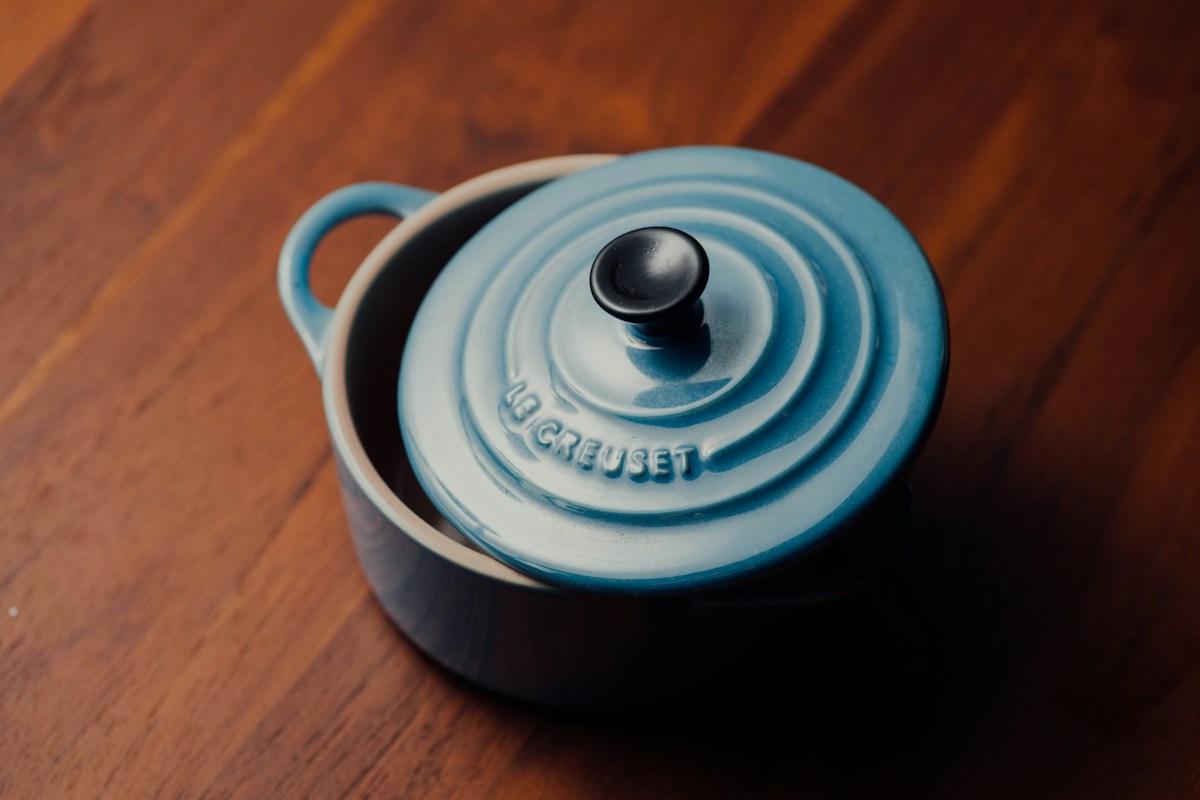
You unwrap a tiny cast iron pot, admire its weight, and then wonder what could possibly fit inside besides a few peanuts. The answer is not a full family dinner—but a miniature pot can be genuinely useful for a warm sauce, individual bake, small side, or oven-to-table serving.
The best tiny cast iron pot uses depend on its finish, usable capacity, and approved heat sources. Measure it first, then choose recipes that fit its real size instead of forcing a full meal into a vessel that holds only a few ounces.
Key Takeaways
- Tiny cast iron pots are most useful for condiments, sauces, individual baked dishes, small sides, and tabletop serving.
- Measure the pot with water before choosing a recipe; usable cooking capacity is less than rim-full capacity.
- Shallow pots suit dips, baked eggs, crisps, brownies, and cookies, while deeper cocottes work better for saucy sides and small bakes.
- Check the manufacturer’s instructions before using any mini pot on a stovetop, in a high-heat oven, or under a broiler.
- Bare and enameled cast iron need different cleaning and maintenance routines.
First, Identify What Your Tiny Cast Iron Pot Can Actually Do
Start by checking the underside of the pot and lid. A maker’s mark, model number, capacity marking, or brand name can help you locate the correct care instructions. Those instructions matter because a tiny pot may be oven-safe but unsuitable for a stovetop, or its lid knob may limit high-heat use.
Next, identify the cooking surface. Bare cast iron is usually dark gray or black with a somewhat textured finish. It relies on seasoning for rust protection and improved food release. Enameled cast iron has a glossy exterior and an interior that may be cream, black, or colored; it follows different cleaning and maintenance guidance.
Do not assume every small cast iron cocotte works on every heat source. Check the manufacturer’s guidance before using it on gas, electric, induction, in a high-heat oven, or under a broiler. The base diameter, enamel, lid, and knob can all affect safe use.
Measure usable capacity with water. Fill the pot to a sensible cooking level rather than the rim, then pour that water into a measuring cup. This gives you a much better guide than outside dimensions alone.
As a rough guide, pots under about 4 ounces are usually best for condiments, melted butter, garnishes, or presentation. Pieces around 6 to 12 ounces can handle a small dip, individual dessert, baked egg dish, or compact side. Larger mini Dutch ovens may hold a modest one-person bake, but they still need room for bubbling, rising, and stirring.
An extremely tiny pot is not a failed cooking tool. It may simply be better as an oven-to-table vessel or tabletop condiment pot than as primary cookware.
15 Tiny Cast Iron Pot Uses That Make Sense at Home
-
Warm a small sauce. Use the pot for gravy, pan sauce, hot fudge, caramel, queso, or garlic butter. This is one of the most practical mini pot cooking ideas because the sauce can accompany a larger meal made in standard cookware.
-
Serve melted butter. A small amount of butter works well beside seafood, corn, steak, pancakes, or warm bread. Heat it gently only if the pot is approved for that heat source, then treat it as hot cookware at the table.
-
Bake a single egg dish. Grease the interior, add an egg with cheese, greens, or finely chopped leftover vegetables, and bake within the manufacturer’s approved temperature range. Check early, since such a small portion can cook quickly.
-
Make a small hot dip. A compact spinach-artichoke-style dip, bean dip, pizza dip, or baked goat cheese turns a tiny pot into a useful sharing dish. Leave headroom so a bubbling dip does not spill over the edge.
-
Bake an individual dessert. Fruit crisp, brownie, cookie, cobbler, bread pudding, and small chocolate cakes are excellent individual cast iron dishes. A shallow pot is especially good for crisp toppings and skillet-cookie-style desserts because more surface area is exposed.
-
Finish personal mac and cheese. Cook pasta and cheese sauce in larger cookware, then transfer one serving to the mini pot for a breadcrumb topping and oven finish. You get the presentation without trying to stir a full recipe in a tiny vessel.
-
Make a mini pot pie. A deeper pot can hold cooked filling topped with biscuit dough or pastry. Use this idea only when there is enough room beneath the lid line for the topping to rise without sticking or overflowing.
-
Serve a small braised side. Mushrooms, glazed carrots, creamed spinach, or a few roasted vegetables look right at home in a tiny cocotte. Think of it as a special side portion for one diner rather than a vessel for cooking an entire vegetable dish.
-
Bake beans for one. Baked beans work well beside barbecue, breakfast, or grilled food. A 4-ounce pot may hold more of a condiment portion, while a larger cocotte can manage a true side serving.
-
Hold a sizzling topping. Serve sautéed mushrooms, onions, peppers, or crisp breadcrumbs next to steak, burgers, or baked potatoes. Do stovetop cooking only if the pot is approved for it and has a stable base for your burner.
-
Warm nuts or snack mix. A larger miniature pot can warm spiced nuts or a small snack mix over low, monitored heat. Set it on a trivet before serving and make it clear that the vessel is hot.
-
Make personal baked oatmeal. Oats, milk, fruit, and a little sweetener make a compact breakfast bake in a larger mini cocotte. Grease the pot and leave space for the mixture to expand slightly.
-
Bake a small cheese course. A portion of soft cheese can be warmed with herbs, fruit, or nuts and served with bread or crackers. Choose a pot with enough empty space to keep melted toppings from running over.
-
Serve olives, nuts, or chilled garnishes. Not every use needs heat. A clean, food-safe mini pot makes an attractive vessel for olives, toasted nuts, lemon wedges, pickles, or a chilled garnish.
-
Use it as a tabletop condiment pot. Flaky salt, compound butter, salsa, aioli, or barbecue sauce can make a decorative-size pot earn cabinet space. For very small cast iron ramekin ideas, room-temperature serving is often more practical than cooking.
Match the Recipe to the Pot’s Real Capacity
The key to useful tiny cast iron pot uses is matching the recipe to the interior volume. Fillable capacity is not the same as practical cooking capacity. Saucy foods, dips, and batters need empty space at the top, and an overfilled pot is difficult to move safely.
For a pot under 4 ounces, plan on a condiment, a few tablespoons of sauce, a butter portion, or a garnish. At roughly 6 to 8 ounces, a small dessert, baked egg, hot dip, or side portion becomes realistic. At 10 to 12 ounces and above, you may have room for personal mac and cheese, baked oatmeal, beans, or a compact pot pie.
Shape matters as much as volume. Shallow pieces suit baked eggs, dips, crisps, brownies, and cookies because the food cooks in a thin layer. Deeper lidded cocottes are better for saucy sides, beans, tender vegetables, and individual braise-style dishes.
Use your tiny pot alongside a normal main dish. Roast chicken in a standard pan and bake one personal crisp in the small pot, for example. Or make burgers in a skillet, then serve sautéed onions in the cocotte. This is where mini Dutch oven recipes make the most sense: they add a special individual element without creating extra kitchen frustration.
Skip actual cooking when the interior is too tight to stir, when the lid leaves almost no headroom, or when a recipe needs frequent temperature changes. Also skip it if the manufacturer does not approve your intended cooktop or oven use. A tiny pot should make a meal more enjoyable, not turn a simple recipe into a balancing act.
Cast iron remains hot after leaving the oven or burner. Place the pot on a trivet or other heat-safe surface, use a dry mitt to move it, and keep handles clear of crowded place settings. Let diners know that the vessel is hot, especially when children are nearby.
Better Results With Less Sticking and Overcooking
Tiny cast iron heats quickly because there is little food inside to absorb that heat. Use moderate settings, avoid walking away, and start checking earlier than you would with a larger baking dish. Small portions can go from warm to overcooked quickly.
For bare cast iron, an intact seasoning layer helps, but it does not make every recipe completely nonstick. Use enough butter or oil for eggs, sticky sauces, desserts, and cheese-heavy dips. Greasing the interior before baking is usually more reliable than trying to release food from a dry pot.
For enameled cookware, follow the maker’s guidance on preheating, utensils, and sudden temperature changes. Do not treat enamel exactly like bare cast iron, and do not assume it needs seasoning. If a recipe lists a temperature, treat it as a starting point that must stay within your pot’s approved limits.
Parchment can help with brownies or small cakes, but only if it fits without extending above the rim or interfering with the food. Trim it neatly. For baked eggs, crisps, and dips, a light coating of fat is usually more practical.
Be cautious with broiler use and extreme oven temperatures. Product limits vary, particularly when lids, knobs, and enamel are involved. Avoid setting a hot pot directly on a cold, wet surface, and allow it to cool before washing unless the manufacturer directs otherwise.
Clean, Season, and Store a Small Cast Iron Cocotte
Bare cast iron and enameled cast iron need different care. Treating them the same can lead to unnecessary rust, dull enamel, or surface damage.
For bare cast iron, wash promptly with warm water and a nonabrasive brush or sponge. Dry it thoroughly right away. If the manufacturer’s care guidance recommends it, wipe on a very thin layer of cooking oil after drying; heavy oil can become sticky during storage.
For enameled cast iron, do not add seasoning unless the maker specifically instructs you to do so. Follow product guidance for soaking, scrubbers, dishwasher use, and stain removal. Abrasive tools and aggressive cleaning methods may not suit every enamel finish.
Before storing any small cast iron cocotte, make sure it is completely dry. If it has a lid, store it slightly ajar or place a soft, dry barrier between the lid and pot when appropriate, so moisture is less likely to become trapped and surfaces are less likely to rub.
Inspect the pot before cooking if you notice rust, chipped enamel, cracks, loose handles, or a damaged lid. Check the manufacturer’s guidance for that specific issue rather than assuming every cosmetic mark is harmless or every defect is repairable.
FAQs
Can I use a tiny cast iron pot on the stovetop?
Maybe. Compatibility depends on the exact pot, its base size, your cooktop, and the lid or knob. Check the manufacturer’s instructions before heating it on gas, electric, induction, or another stove type. A very small base can also be awkward on a large burner.
What are the best mini Dutch oven recipes for a very small pot?
The most reliable choices are baked eggs, warm dips, individual crisps or brownies, melted butter, sauces, and small side portions. Measure usable capacity first, then choose a recipe that leaves room for bubbling or rising.
Do I need to season a small cast iron cocotte?
Bare cast iron generally needs seasoning care to protect the surface and improve food release. Enamel-coated cookware usually follows a different maintenance routine and should be cleaned according to the manufacturer’s instructions rather than seasoned like bare iron.

