


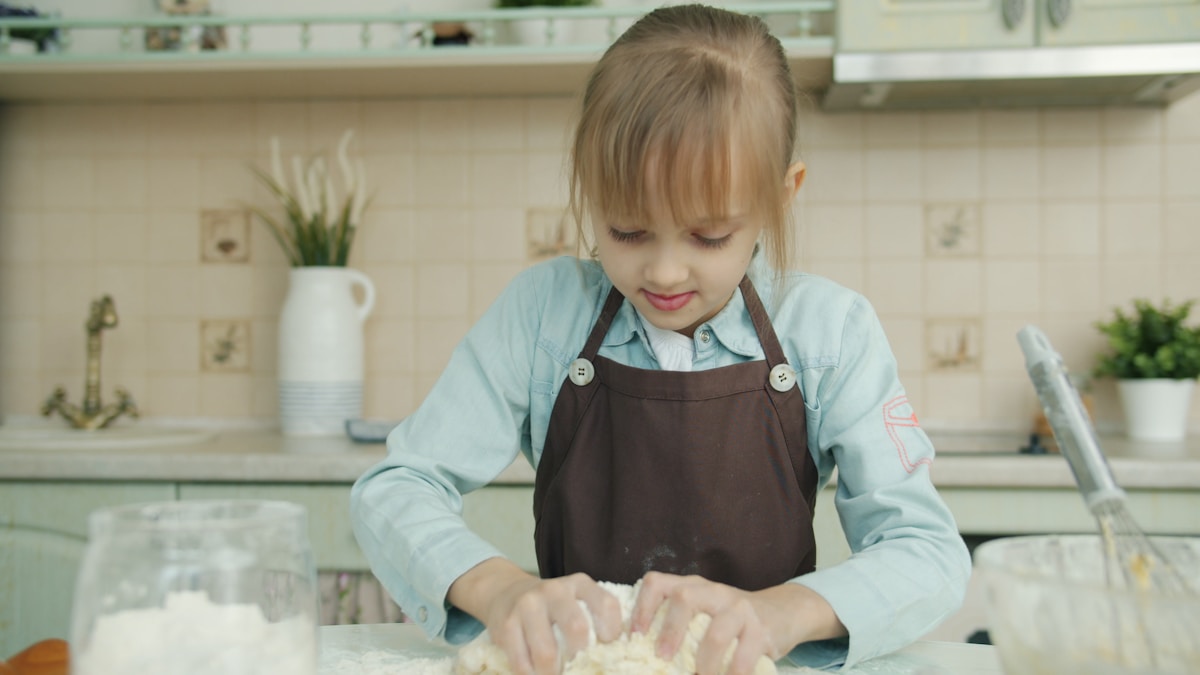
The Moment You Realize a Phone Isn’t Required
I remember reading a post from a parent on Reddit whose eight-year-old didn’t have a phone, but a school project demanded app usage. That sparked a whole conversation about teaching kids practical life skills without screens. And honestly, it made me smile. Because the kitchen is one of the best places to put down the phone and get hands-on. You don’t need a digital recipe to make scrambled eggs. You need a whisk, a little patience, and a child who’s ready to learn. Let’s explore how you can teach your eight-year-old to cook without relying on a smartphone.
Why Ditching the Phone Matters
When we reach for our phones to look up a recipe or watch a video, we’re modeling a habit that’s hard to break. Cooking without a screen encourages something deeper: listening, observing, and memorizing. Your child learns to follow a printed recipe, to taste and adjust, to ask questions. It’s a slower process, but it’s richer. (I promise, the extra time is worth it.) The Reddit community widely supported that parent’s approach, and many shared their own phone-free cooking lessons. It’s not about being anti-tech; it’s about being pro-connection.
Age-Appropriate Tasks for an 8 Year Old
An eight-year-old is capable of much more than you might think. Start with tasks that build confidence and require fine motor skills. Here are some ideas, broken down by safety and complexity:
- Washing vegetables – simple, satisfying, and a great intro to produce.
- Stirring – whether it’s pancake batter or a pot of soup (with supervision), stirring teaches patience and consistency.
- Using a peeler – a Y-peeler is easiest for small hands. Show them how to peel downward, away from fingers.
- Measuring dry ingredients – use nested measuring cups and level off with a knife. King Arthur Flour’s recipe cards are excellent for this.
- Cracking eggs – yes, there will be shells, but practice makes perfect. Have a small bowl for shells and a bigger bowl for eggs.
- Spreading – butter on toast, jam on bread, or even sauce on pizza dough.
Always supervise near heat, raw ingredients, and sharp tools. But let them do the actual work. It’s okay if the carrots are a little crooked.
Building Safety Habits Early
Safety is non-negotiable, but it doesn’t have to be scary. Teach your child these four simple rules:
- Ask before touching – any appliance, knife, or hot surface.
- Clean as you go – spills happen, but wiping them up prevents slips.
- Keep handles turned inward – so no one accidentally knocks a pot off the stove.
- Use a stable cutting board – put a damp paper towel underneath to prevent sliding.
I recommend a good-quality apron (I like the ones from Hedley & Bennett, but any sturdy apron works) and a kid-friendly knife set like the Curious Chef knives. They’re serrated nylon and will cut through soft vegetables without cutting little fingers. For real knife skills, start with a butter knife to spread or cut soft fruits like bananas. Eventually, you can graduate to a small paring knife under close supervision. Safety experts from Kids Cook Real Food recommend guided practice with gradual independence.
Simple Recipes to Try Together
The best recipes for new cooks have few ingredients, clear steps, and immediate rewards. Here are three favorites that don’t require a phone.
Scrambled Eggs (with supervision)
- Ingredients: 2 large eggs, a splash of milk, salt and pepper, butter.
- Tools: Small mixing bowl, fork, nonstick skillet, spatula.
- Steps: Have your child crack eggs into a bowl, add milk, and whisk until uniform. Melt a pat of butter in a skillet over medium-low heat (you handle the stove). Pour in eggs, and let them set for a minute. Then show your child how to gently push the eggs with a spatula, folding them over themselves. Remove from heat when still slightly wet; they’ll continue cooking. Serve with toast. (Yes, real butter makes a difference.)
No-Bake Energy Bites
- Ingredients: 1 cup rolled oats, 1/2 cup peanut butter, 1/3 cup honey, 1/2 cup mini chocolate chips or dried fruit.
- Tools: Mixing bowl, measuring cups, rubber spatula, baking sheet lined with parchment.
- Steps: Mix oats, peanut butter, honey, and chips in a bowl. Stir until combined. Using clean hands, roll tablespoons of mixture into balls. Place on parchment. Refrigerate for 30 minutes. This recipe is perfect because there’s no heat required and the measuring gives math practice.
Build-Your-Own Pita Pockets
- Ingredients: whole wheat pita breads, hummus, shredded carrots, cucumber slices, cherry tomatoes, cooked chicken or chickpeas.
- Tools: Small cutting board, kid-safe knife (Curious Chef), measuring spoons.
- Steps: Let your child halve the pita pockets using scissors (safer than a knife for this). Spread hummus inside using a spoon. Chop soft vegetables with the kid-safe knife. Fill the pocket with veggies and protein. This builds assembly skills and teaches balanced eating.
Gradual Independence and Confidence
As your child masters these tasks, increase the challenge. Next, they can learn to use a box grater (with a cut-resistant glove), follow a printed recipe from start to finish (like pancakes from a King Arthur mix), or even plan a simple meal. The goal is not perfection but participation. I’ve seen eight-year-olds proudly serve their family a meal they helped create, and that feeling builds self-esteem in a way no app ever could. Remember, every stir, every spill, every slightly lumpy sauce is a lesson. (And they taste just as good.)
A Final Note on Kitchen Fun
Cooking without a phone is a return to the heart of the kitchen: touch, smell, taste, and shared time. Your child will learn that a recipe isn’t on a screen but in their hands. They’ll learn that mistakes are part of the process. And most importantly, they’ll learn that the kitchen is a place where families grow together. So put the phone in a drawer, pull out a printed recipe card, and invite your little chef to join you. I promise you’ll both love it.


