


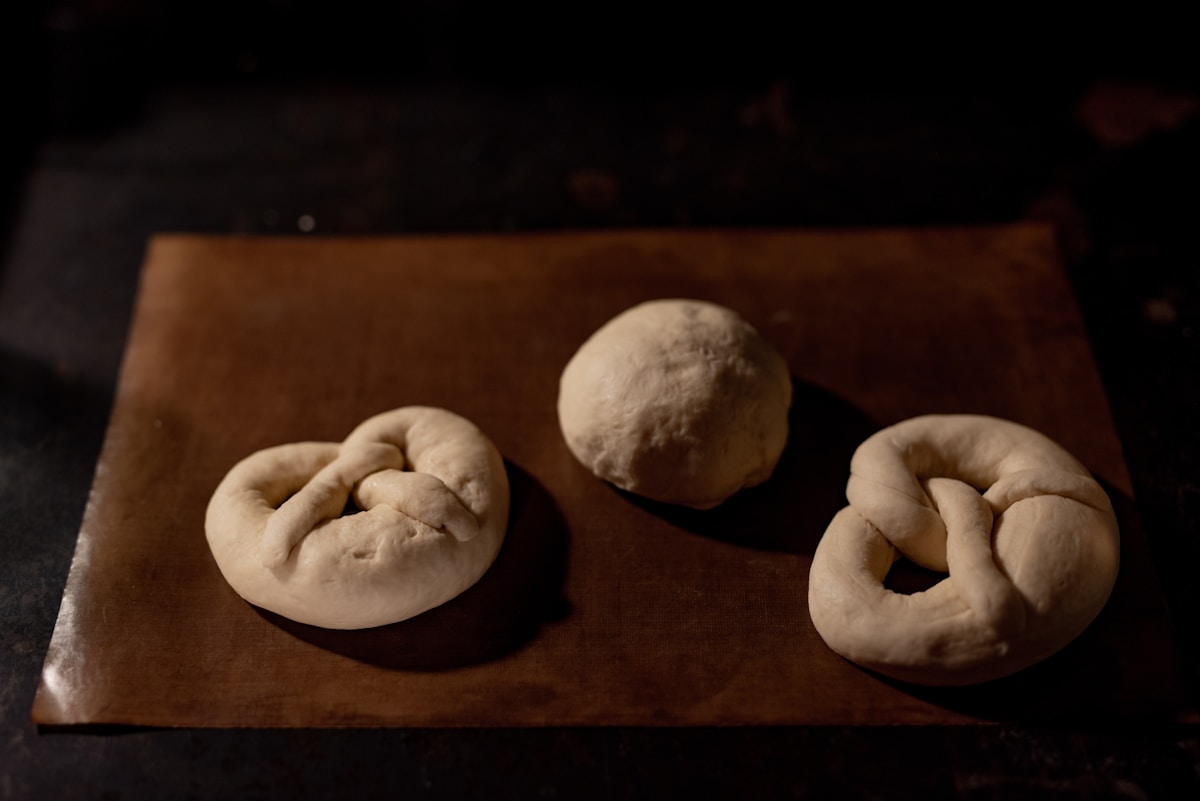
You know that moment when you can’t decide between a soft pretzel and a bagel? You want the chewy, salty crust of a pretzel but the portability and shape of a bagel. A home baker on r/Baking recently shared their answer: soft pretzel bagels. Combining the best of both worlds, these bagels get boiled in a baking soda bath before baking, giving them that signature dark, shiny pretzel crust. And the best part? You can top them with classic salted, everything seasoning, cinnamon sugar, or asiago cheese. Let’s break down the science and technique so you can make them in your own kitchen.
Why This Hybrid Works
Baking is chemistry you can eat. Soft pretzels get their distinctive crust from being boiled in an alkaline solution — typically baking soda (sodium bicarbonate) or lye (sodium hydroxide). The alkaline bath raises the pH of the dough’s surface, which promotes the Maillard reaction during baking, producing that deep brown color and unique flavor. Bagels, on the other hand, also get boiled — but usually in plain water or water with a bit of malt syrup. The pretzel bagel combines the two: you boil in an alkaline solution, then bake at high heat. The result is a bagel-shaped roll with a pretzel’s chewy crust and a soft, airy interior.
The Right Dough
Start with bread flour. King Arthur Flour’s bread flour or Bob’s Red Mill Artisan Bread Flour are excellent choices. Bread flour has a higher protein content (12-14%) than all-purpose flour. More protein means more gluten development, which gives bagels their essential chew. If you use all-purpose flour, your bagels will be softer and less dense — still good, but not the authentic texture.
For the dough, you’ll need:
- 500g bread flour (about 4 cups, measured by weight)
- 10g active dry yeast (or 7g instant yeast)
- 10g salt
- 20g unsalted butter, softened (or 15g vegetable oil)
- 300g warm water (about 110°F / 43°C)
- 1 tablespoon brown sugar or malt powder (optional, for browning)
The butter or oil enriches the dough slightly, making it tender but still chewy. Mix dry ingredients first, then add water and butter. Knead for 8-10 minutes by hand or 5-6 minutes in a stand mixer with dough hook until smooth and elastic. The dough should pass the windowpane test: stretch a small piece thin enough to see light through without tearing. Cover and let rise for 1 hour, or until doubled.
Shaping and Proofing
Punch down the dough and divide into 8 equal pieces (about 100g each). Shape each piece into a smooth ball, then poke a hole through the center with your finger and gently stretch to about 3 inches in diameter. Place on a parchment-lined baking sheet, cover, and let rest for 20 minutes. This short proof relaxes the gluten and helps the bagels puff slightly during boiling.
The Boiling Bath
This is the critical step. You have two options: baking soda or lye.
Baking soda bath (easier, safer): Dissolve 1/4 cup (60g) baking soda in about 8 cups (2 liters) of water. Bring to a boil. The water will foam up, so use a wide pot. Boil each bagel for 30 seconds per side. The longer you boil, the thicker and chewier the crust. 30 seconds is standard for a balanced texture. Too short and the crust is pale; too long and the bagel becomes tough and dark.
Lye bath (professional, more authentic): Use food-grade lye (sodium hydroxide). Caution: lye is caustic. Wear gloves and eye protection. Do not use aluminum pots. Dissolve 1 tablespoon lye in 1 liter water (always add lye to water, not water to lye). Boil not required — just dip each bagel for 20-30 seconds. Lye gives a deeper, more authentic pretzel flavor and a shinier crust. If you’re new to pretzel making, start with baking soda.
After boiling, place bagels on a wire rack to drain briefly. They will look slightly wrinkled — that’s fine.
Topping and Baking
Immediately after boiling, brush each bagel with an egg wash (1 egg beaten with 1 tablespoon water) or just spritz with water for toppings to stick. Then add your toppings:
- Classic salted: Coarse sea salt or pretzel salt. Don’t use fine table salt; it will dissolve and become too salty. Sprinkle generously.
- Everything seasoning: Mix equal parts sesame seeds, poppy seeds, dried minced garlic, dried minced onion, and a touch of salt. Sprinkle over the egg-washed bagels.
- Cinnamon sugar: Mix 2 tablespoons granulated sugar with 1 teaspoon cinnamon. Brush bagels with melted butter before sprinkling for best adhesion.
- Asiago cheese: Finely grate Asiago cheese (or Parmesan) and press onto the surface after boiling. The cheese will melt and form a savory crust.
Bake at 425°F (218°C) for 15-18 minutes, rotating halfway through. The bagels should be deep golden brown and sound hollow when tapped on the bottom. Let cool on a wire rack for at least 10 minutes before serving. The interior continues to set as it cools.
Troubleshooting Common Issues
- Pale, unappetizing crust: Your boiling solution wasn’t alkaline enough. Use more baking soda or switch to lye. Also ensure the water is at a rolling boil.
- Too dense and tough: Over-kneading developed too much gluten, or the dough was too dry. Next time reduce kneading time slightly or add a tablespoon more water.
- Crust too thick or tough: You boiled too long. Reduce to 15-20 seconds per side. Also check oven temperature — too low and the bagel bakes longer, drying out.
- Toppings falling off: Not enough moisture before topping. Brush with egg wash or water before applying. Press toppings gently.
- Bagels not rising in oven: Dough may have been over-proofed or under-proofed. Aim for 20-30 minute rest after shaping. Also, stale yeast?
A Chef’s Tip
For an even more authentic pretzel bagel, try a cold fermentation. After shaping, refrigerate the formed bagels overnight (covered). This develops flavor and improves crust color. Boil and bake directly from the fridge — no additional proofing needed.
Final Thoughts
Soft pretzel bagels are a perfect canvas for creativity. The r/Baking community loved these four flavors, but don’t stop there: try jalapeño cheddar, garlic parmesan, or even chocolate chip for a sweet twist. Remember, understanding the science — why we boil in alkali, why bread flour matters — turns a good recipe into a great one. So preheat your oven, bring that water to a boil, and get ready to enjoy something that’s both pretzel and bagel. That’s kitchen fun.

