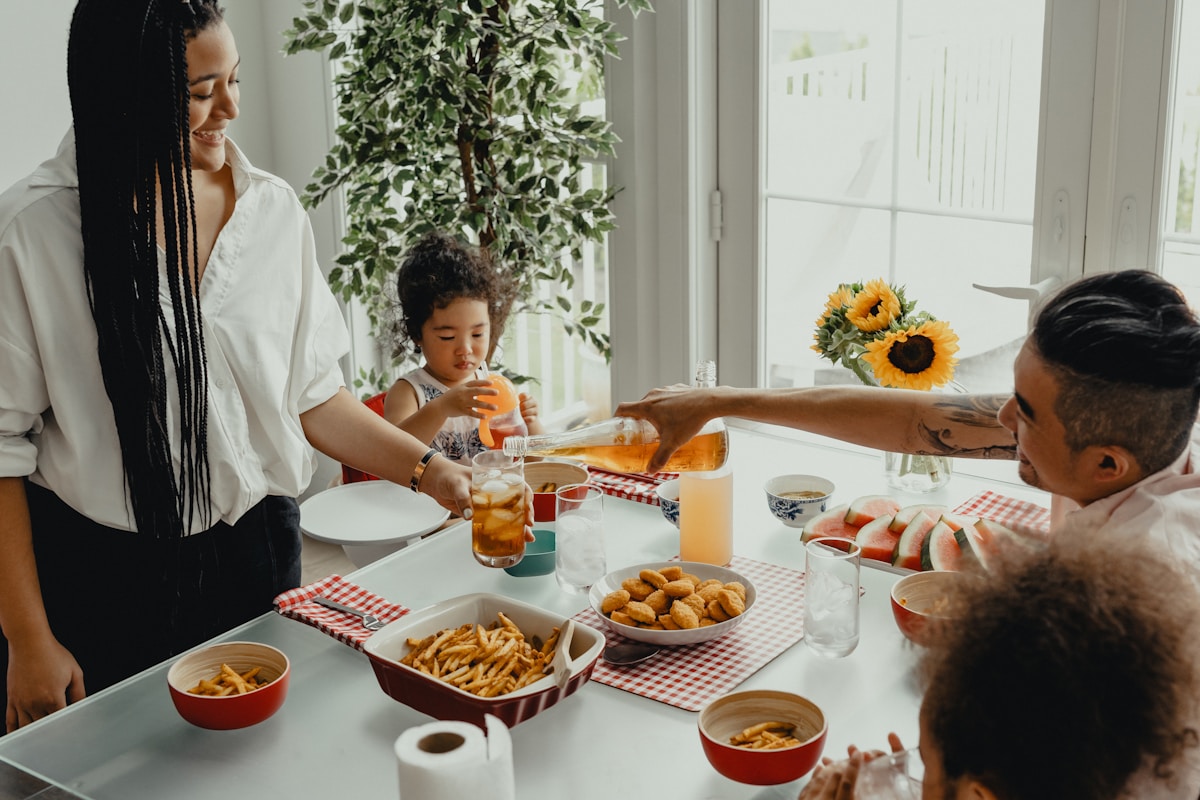
Oh, the glorious chaos of a playdate! The living room is a sea of colorful blocks, the sound of children’s laughter fills the air, and everything is going beautifully. Then comes the call: “Dinner’s ready!” Suddenly, that happy hum can turn into a tricky test of patience and diplomacy. One little guest declares he only eats white noodles, another carefully picks every single green fleck of parsley off her garlic bread, and your own child, bless their heart, is watching this unfold with wide, curious eyes.
If you’ve ever felt that flutter of panic, wondering how to be a gracious host without completely abandoning your own family’s hard-won mealtime routines, you are not alone. It’s one of the most common points of tension when families get together. We all have different approaches to food, and that’s okay! The goal isn’t to prove whose method is superior; it’s to share a meal, create happy memories, and hopefully, end the day with friendships intact and bellies (mostly) full. The kitchen should be a place of connection, not confrontation. Let’s talk about how to keep it that way, even when you have a table full of tiny, opinionated food critics.
Before They Arrive Planning for Peace
The secret to a smooth mealtime with guests often happens before they even ring the doorbell. A little bit of gentle planning can prevent a world of dinnertime drama. It’s not about being a rigid party planner; it’s about being a thoughtful host who wants everyone, big and small, to feel comfortable and welcome.
First, a quick and casual check-in with the other parent is a game-changer. You don’t need a formal interview, just a simple text message: “So excited for you all to come over Saturday! I was thinking of making build-your-own pizzas. Does that work for little Maya? Any allergies or big ’no-go’ foods I should know about?” This simple act does three wonderful things: it shows you care, it helps you avoid any serious dietary issues, and it gives you a heads-up if you’re dealing with a particularly selective eater.
My absolute favorite strategy for hosting families is serving a “deconstructed” meal. Instead of presenting a fully assembled dish, you offer all the components separately. This is culinary diplomacy at its finest! Think about it:
- Taco Bar: A bowl of seasoned ground turkey or beans, shredded lettuce, diced tomatoes, grated cheese, sour cream, and soft and hard tortilla shells. Everyone builds their own masterpiece.
- Pasta Night: A big bowl of plain pasta (a simple shape like rotini or penne is great), with separate bowls of marinara sauce, a simple butter-and-parmesan sauce, mini meatballs, and some steamed broccoli on the side.
- Burger/Slider Station: Mini patties (beef or veggie), buns, and an array of toppings like cheese slices, lettuce, pickles, and ketchup.
This approach empowers every child at the table. It gives them a sense of control and allows them to choose what they feel comfortable eating without any pressure. It sidesteps the dreaded “But it’s all mixed together!” complaint and turns dinner into a fun, interactive activity.
The Three Simple House Rules for Every Tummy
When you have multiple families under one roof, it’s helpful to have a few simple, universal house rules that apply to everyone. These aren’t about discipline; they’re about creating a safe and respectful environment for the meal. Think of them as the gentle guardrails that keep dinner from careening off course. You can even mention them casually to the other parent beforehand: “Just a heads-up, our two big rules at the table are that we stay seated while eating and we don’t say ‘yuck’ about the food!” This frames it as your house rule, not a judgment on their child.
Rule 1: We Sit at the Table to Eat. This is first and foremost a safety rule. Little ones running around with food in their mouths is a serious choking hazard. Explaining it this way takes the pressure off. It’s not about forcing a child to sit for an hour; it’s about defining the ’eating zone.’ If a child wants to get up, that’s fine, but it means they are finished with their food for now. You can say gently, “It looks like you’re ready to go play! Let’s get your hands washed, and you can leave your plate here.”
Rule 2: We Use Kind Words About the Food. The dreaded “Eww!” or “Yuck!” can feel like a little dagger to the heart of the person who cooked the meal. We have a “no yuck” rule in our house. It’s perfectly okay not to like something, but we express it respectfully. We practice using other phrases like, “No thank you,” or “This is a new food for my body,” or even just quietly leaving the unwanted item on the plate. This teaches children that food is something to be respected, and so are the feelings of the person who prepared it.
Rule 3: You Don’t Have to Eat It. This might be the most important rule of all. It’s the ultimate pressure-release valve. By making it clear to both the visiting child and their parent that you will not force anyone to eat anything, you remove the power struggle. The parent knows you respect their role, and the child feels safe. Your job as the host is to offer the food. Their job is to decide what and how much of it to eat. (Yes, really.) When a child says, “I don’t like this,” you can respond with a warm and neutral, “That’s okay! You don’t have to eat it. There’s also some bread and butter if you’re hungry.”
In-the-Moment Strategies for Tricky Situations
Even with the best planning, tricky moments can happen. A child might have a meltdown, throw a piece of food, or refuse everything. This is when you take a deep breath and remember your role: you are the calm, kind host, not the visiting disciplinarian.
Your most powerful tool is to Redirect, Don’t Discipline. When the visiting child starts acting out, your first move should be to look to their parent. Let’s say little Sam starts drumming on the table with his fork. Instead of saying, “Sam, stop that!” you can catch his mom’s eye and say with a calm smile, “Looks like Sam has a lot of energy tonight!” This gently signals the behavior to the parent and lets them step in and handle it according to their own family’s style. If food gets thrown, you can say, “Oh dear, it looks like Sam is all done with his dinner. Can I help you get him cleaned up?” You are addressing the situation by passing the baton of authority to the person it belongs to: their parent.
It’s also wise to have one “safe food” option available that requires zero extra cooking. This isn’t catering to picky eating; it’s a simple act of hospitality. It could be a bowl of plain crackers, some apple slices, a cheese stick, or a simple yogurt cup. If a child truly refuses the main meal, you can offer this without making a big fuss. It ensures no one goes completely hungry and prevents a massive hunger-fueled meltdown later.
What About Your Own Kids?
It’s completely normal to worry about how all this will affect your own children. They are watching and learning, and they might wonder why the guest gets to refuse broccoli when they have to eat three bites. This is a fantastic teaching moment!
Before your guests arrive, have a quick family huddle. Remind your kids of your mealtime rules and prepare them for what they might see. You could say, “When the Jones family comes over, remember that every family has different rules about food. In our family, we always try one bite of everything on our plate. It might be different for Charlie, and that’s okay. Our job is to be kind and welcoming friends.” This sets them up for success and helps them understand that different doesn’t mean wrong.
After your friends leave, talk about it. Ask open-ended questions like, “What was your favorite part of dinner?” or “I noticed Charlie didn’t eat his chicken. What did you think about that?” This allows you to reinforce your own family values while also teaching empathy and understanding. You can explain that some people are still learning to like new foods, and that’s a journey everyone is on.
Ultimately, opening your kitchen to friends and their children is an act of love. It will be messy. It will be imperfect. But the shared laughter and connection are worth so much more than a perfectly clean plate. Focus on the joy of being together, keep the rules simple and kind, and trust that the warmth of your hospitality is the most nourishing thing you can offer. Your kitchen is a place for growing relationships, one wonderfully chaotic meal at a time.