


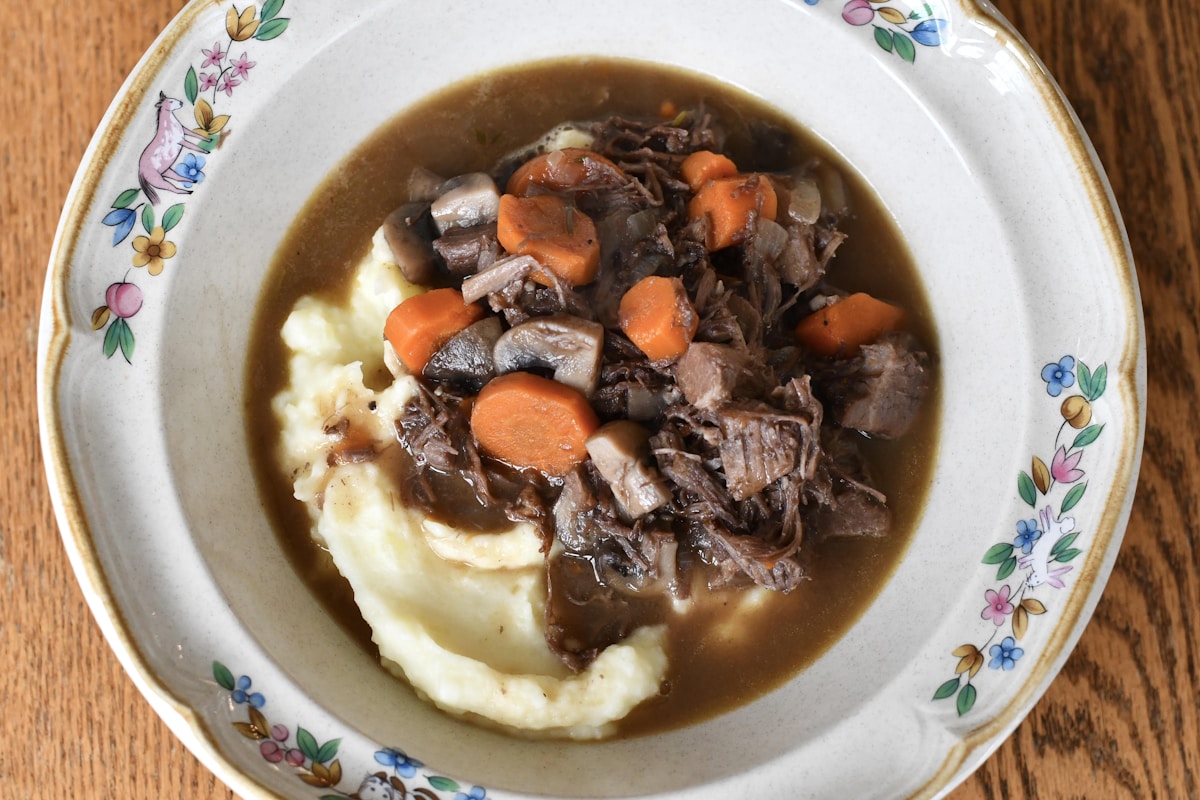
Dinner is planned for six, but homework runs long, traffic is slow, and the pot roast becomes tender early. The good news is that you can keep pot roast warm without drying it out: leave it whole, cover it well, and keep it close to its cooking liquid or gravy. Remove tender vegetables when needed, and switch to cooling and reheating if dinner will be delayed for more than a short, safely managed hold.
Key Takeaways
- Keep a finished pot roast whole until serving time whenever possible; fewer cut surfaces help it stay moist.
- Hold the roast covered and surrounded by braising liquid, broth, or gravy rather than on a dry platter.
- Remove potatoes and carrots once tender so they do not turn mushy during a longer hold.
- For hot holding, keep food at 140°F or above and confirm that your appliance maintains that temperature.
- If dinner is delayed beyond a short hold, cool and refrigerate the meal promptly, then reheat the roast covered with gravy.
Start With a Pot Roast That Is Actually Tender
Before you decide how to hold pot roast before dinner, make sure it is fully tender. A pot roast is ready when a fork slides in easily and the meat pulls apart with little resistance. If it still feels tight, firm, or chewy, it needs more gentle cooking rather than a warming plan.
Cooking time is only a guide. Roast size, thickness, marbling, liquid level, cookware, and the performance of a slow cooker or oven can all affect the timeline. Check the meat itself instead of relying on the clock alone.
Once the roast is tender, avoid slicing it immediately unless everyone is ready to eat. A whole roast has less exposed surface area than a platter of slices, so it is less likely to dry at the edges. It is also easier to reheat a larger piece without overcooking it.
Let the roast settle briefly in some of its cooking liquid instead of placing it dry on a cutting board. This pot roast resting time gives you a chance to finish the gravy, set the table, or gather the family. Keep the pot covered or tent the dish loosely while it rests.
If the roast is delicate and beginning to fall apart, lift it with two wide spatulas or a large slotted spoon. A gentle transfer helps it stay in attractive, sliceable pieces until dinner.
The Best Way to Keep Pot Roast Warm for a Short Dinner Delay
For a short delay, keep the whole roast in its pot with enough braising liquid, broth, or finished gravy to surround it well or partly submerge it. Cover the pot closely. The moist environment protects the meat far better than dry heat or an uncovered serving platter.
You can hold the roast in the slow cooker, a Dutch oven, or a covered oven-safe dish. Choose the gentlest setting that maintains safe hot holding. Hot foods should be held at 140°F or above; use a food thermometer to check the thickest part of the roast or the surrounding liquid instead of trusting an appliance dial alone.
A slow cooker’s warm setting varies by model, so do not assume it is always suitable. Check the manufacturer’s instructions and confirm the actual food temperature when possible. A low oven can also work, provided the roast stays covered and surrounded by liquid.
Try not to lift the lid repeatedly. Each peek releases heat and steam, making the temperature less steady and drying the surface of the meat. Check periodically, then cover the food again promptly.
The goal is to hold the roast, not continue cooking it. Extended warming can make a tender roast softer and eventually turn a sliceable roast into shredded meat. It may still taste good, but it may not have the texture you planned to serve.
Food-safety note: Never leave cooked pot roast on the counter while waiting for dinner. If you are holding it hot, keep it at 140°F or above. If you cannot maintain safe hot holding or the delay is no longer short, cool and refrigerate the food instead.
Keep the Meat Moist and the Vegetables Intact
The meat and vegetables often need different treatment. Potatoes and carrots can become overly soft during a long slow-cooker hold even while the roast remains moist in its juices. If they are already fork-tender, remove them first.
Use a slotted spoon to move potatoes, carrots, onions, and other tender vegetables to a separate covered dish. Spoon a little cooking liquid over them to prevent the surfaces from drying. Return them to the serving platter just before dinner.
Leave the roast in its braising liquid. If the liquid level is low, spoon some over the top before covering it. You do not need to completely drown the meat; the important part is maintaining a covered, moist environment.
The cooking liquid can become an easy serving sauce. Skim excess fat from the surface with a spoon, or let the liquid settle briefly so the fat rises and is easier to remove. Taste the liquid, then adjust gently with salt, pepper, or a splash of broth if it seems too concentrated.
For thicker gravy, bring the liquid to a gentle simmer in a saucepan. Stir equal amounts of cornstarch and cold water together, then whisk the slurry into the simmering liquid a little at a time until it reaches the consistency you like. If using flour, first make a smooth paste with flour and cool water, then whisk it into the simmering liquid and cook until the floury taste disappears.
Serve the gravy at the table and spoon it over each portion. Slice only what your family will eat now, then return the remaining roast to its covered liquid. This is one of the simplest ways to keep roast moist after cooking when family members eat at different times.
When Dinner Is Delayed Longer Cool and Reheat Pot Roast With Gravy
Sometimes the schedule changes completely. If dinner will not happen within a short, safely managed hot hold, switch plans rather than leaving the roast warming indefinitely. Cooling and reheating later can better protect the texture of the meat, potatoes, and carrots.
Separate the roast, vegetables, and cooking liquid when practical. Divide them into smaller portions or shallow containers so they cool more efficiently. Keep enough gravy or braising liquid with the meat to prevent air exposure and make reheating easier.
Refrigerate cooked perishable food within two hours, or within one hour if the temperature is above 90°F. Use shallow containers when appropriate, and avoid tightly stacking hot containers in a way that traps heat.
To reheat pot roast with gravy, place the meat in a covered baking dish, saucepan, Dutch oven, or slow cooker with gravy or braising liquid. Reheat leftovers to 165°F, checking the center of the meat or the thickest portion with a food thermometer.
A whole roast or large chunk is often the better choice for reheating because it has fewer exposed cut surfaces. Keep it covered in liquid, warm it until hot throughout, then slice it. If the roast is already sliced, arrange the slices in a shallow dish, cover them with gravy, and heat only until warmed through.
Thin slices warm quickly and can dry out if they stay under heat too long. For an easy weeknight meal, warm only the slices you need in gravy and keep the rest refrigerated for another meal.
A Flexible Pot Roast Timeline for Family Dinner
A little planning makes pot roast one of the most forgiving family meals. Use the roast’s tenderness and your actual dinner schedule to choose the next step.
If serving soon: Let the whole roast rest in cooking liquid with the lid on. Remove vegetables if they are already tender. Skim and thicken the liquid into gravy, then slice the roast just before serving.
If dinner is running late: Keep the roast whole, covered, and surrounded by broth, juices, or gravy. Use the gentlest setting that maintains a safe hot-holding temperature of 140°F or above. Check the vegetables first; they often need to come out of the heat before the roast does.
If plans change to tomorrow: Do not keep the meal on warm all evening. Portion the roast, vegetables, and gravy as needed, cool and refrigerate them promptly, then reheat the roast covered with gravy to 165°F the next day.
If you know the evening will be hectic: Make the pot roast a day ahead. Chill the roast with its juices, then remove any firm fat from the top of the cold liquid if desired. Reheat the meat slowly in the gravy before dinner, adding freshly cooked or gently reheated vegetables when you want the best texture.
For smoother slow cooker pot roast timing, start earlier than you think you need to and plan for a holding window. A roast that becomes tender early is much easier to manage than one that is still tough when everyone is hungry.
Frequently Asked Questions
Can I leave pot roast in the slow cooker on warm until dinner?
You can use a slow cooker to hold pot roast only if it maintains safe hot holding. Check the manufacturer’s instructions and use a thermometer to confirm that the food stays at 140°F or above. Even when the temperature is safe, a long warm hold can keep softening the meat and make potatoes and carrots mushy, so remove vegetables once they are tender.
How do I keep roast moist after cooking if I need to slice it?
Slice only what you need, then arrange the slices in warm gravy or cooking liquid and cover them. Keep the heat gentle and do not leave the slices uncovered. For later servings, keep the unsliced portion of the roast in its juices and cut fresh slices when possible.
Should I reheat pot roast whole or sliced?
A whole roast or large piece usually stays moister because less surface area is exposed. Reheat it covered with gravy or braising liquid, then slice it. Slices are convenient for quick meals, but they should be warmed briefly in gravy and checked carefully so they do not overcook.
What if my gravy is too thin after holding the roast?
Remove the roast and vegetables first, then simmer the liquid uncovered to reduce it slightly. You can also whisk in a small cornstarch-and-cold-water slurry. Add thickener gradually because gravy can go from thin to overly thick quickly.
The simple rule is to keep the roast whole, covered, and close to its juices for a short delay; protect the vegetables separately; and cool the meal rather than holding it endlessly when dinner plans change. That gives you tender meat, useful gravy, and less stress when the family timetable shifts.


