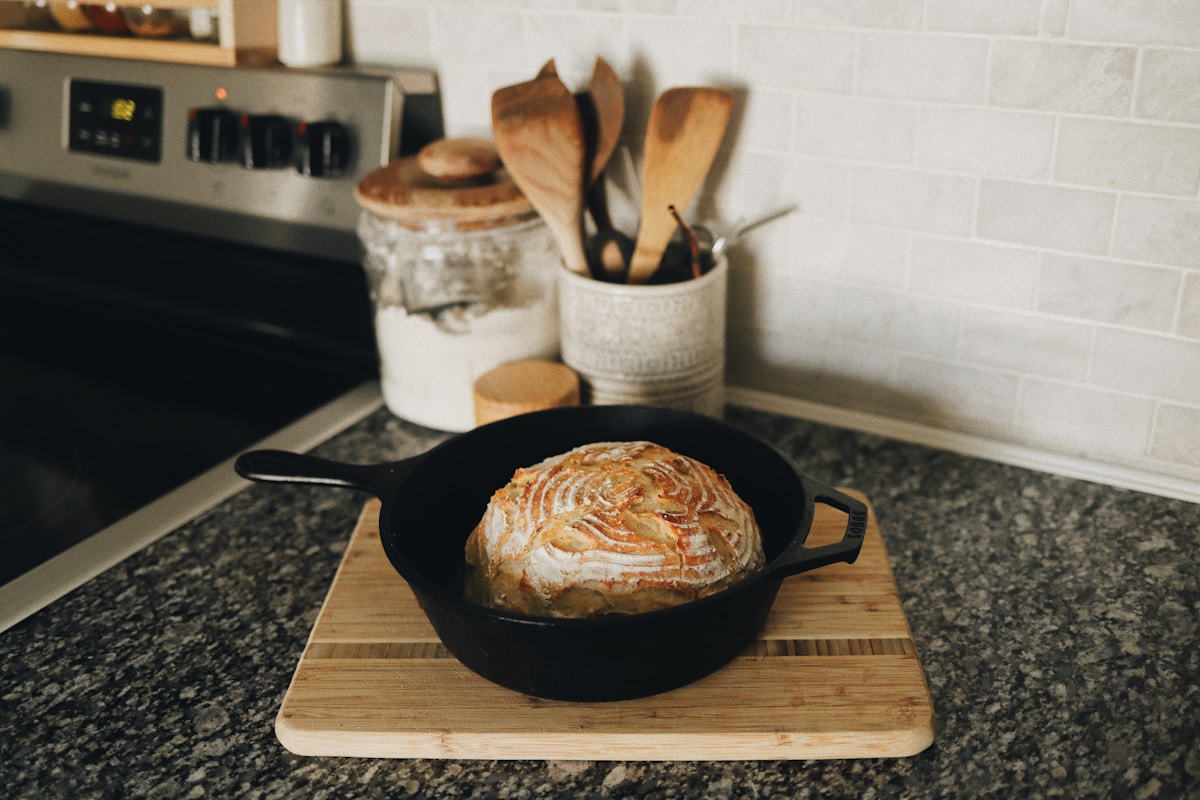
You know the moment. You’ve just put a perfect, crackling crust on a thick-cut ribeye. Now it’s time to tilt the pan, spooning that sizzling, rosemary-infused butter over the top. But first, you have to lift it. That ten-pound slab of American iron, a trusty kitchen workhorse, suddenly feels like you’re weightlifting mid-recipe.
For years, we’ve accepted this as the price of admission for cast iron cooking: incredible heat retention in exchange for a serious workout. We love our Lodge skillets. They’re affordable, indestructible, and passed down through generations. But what if there was another way? A pan with all the searing power of traditional cast iron, but light enough to handle with confidence?
Enter Japanese cast iron. It’s been whispered about in high-end culinary circles for a while now, but it’s finally making its way into the hands of curious home cooks. These pans promise a lighter, smoother, and more refined cooking experience. But do they deliver? Or is this just an expensive solution to a problem that doesn’t really exist?
As the guy who has tested more cookware than I can count, I had to find out. I pitted a classic Western skillet against a Japanese counterpart to see if the hype was real. Let’s break down the metal, the performance, and the final verdict on whether it’s time to make a switch.
The Material Difference A Tale of Two Surfaces
At first glance, a cast iron pan is a cast iron pan. But place a standard Lodge next to a Japanese pan from a brand like Iwachu or Oigen, and the differences are immediately obvious. It’s not just about the weight; it’s about the very soul of the metal.
Western Cast Iron (The Workhorse):
Most American and European cast iron, like the ubiquitous Lodge, is made using a sand-casting method optimized for mass production. Molten iron is poured into a sand mold. When it cools, the pan is popped out and often shot-blasted to remove any sand, resulting in that signature pebbly, slightly rough surface.
- Texture: This rough texture is fantastic for holding onto seasoning. Those tiny peaks and valleys create a durable, cross-linked layer of polymerized oil that becomes impressively non-stick over time.
- Weight: To ensure it can withstand thermal shock (and decades of abuse), the walls are thick. A standard 10.25-inch Lodge skillet weighs in at a hefty 5.35 pounds (about 2.4 kg).
Japanese Cast Iron (The Katana):
Japanese manufacturing, particularly from the Nambu Tekki tradition, uses a finer-grained sand mold and often involves more hand-finishing. The iron itself is typically of a higher purity, which allows for a denser, stronger final product even with thinner walls.
- Texture: Here’s the biggest differentiator. The cooking surface is often polished smooth. Not Teflon-smooth, but it feels like worn-in river stone compared to the gravel path of a new Western pan. This smoothness contributes to its fantastic non-stick properties once seasoned.
- Weight: Thanks to the thinner-but-stronger casting, these pans are significantly lighter. A comparable 10-inch Japanese skillet can weigh as little as 3.5 to 4 pounds (1.6 - 1.8 kg). That 1.5-pound difference is a game-changer for your wrist.
(Yes, a pound and a half really does make a world of difference when you’re maneuvering a 500°F pan full of hot oil.)
Talk is cheap. How do they actually cook? I put both styles to the ultimate cast iron test: searing a 1.5-inch thick steak.
My setup was simple: a 10-inch Lodge Classic and a 9.5-inch Iwachu skillet. Both were well-seasoned and preheated over medium-high heat for about 10 minutes, until a drop of water sizzled and evaporated instantly. The target surface temperature was around 500°F (260°C).
Heat-Up and Retention:
The Lodge, being thicker, took about a minute longer to come to full temperature. Both pans, as expected, retained their heat beautifully when the cold steak was placed in them. There was no significant temperature drop or loss of sizzle. On pure heat retention, it’s a draw. That’s just the nature of iron.
The Sear:
This is where things got interesting. Both pans produced a fantastic, deep-brown crust. The Lodge, with its pebbly texture, created a slightly more rugged, varied crust with very dark and medium-dark spots. The Iwachu, with its smooth surface, produced an almost perfectly uniform, edge-to-edge mahogany crust. It was visually stunning. Think of it as the difference between grilling on a classic grate versus cooking on a flat-top griddle. Both are great, but the contact is different.
The Handling:
Here, the Japanese pan won, and it wasn’t even close. Flipping the steak was easier. Tilting the pan to baste with butter felt controlled and effortless. When it was time to pour the pan drippings into a saucepan for a sauce, I could do it with one hand. With the Lodge, that same maneuver is a slower, two-handed operation to avoid a greasy catastrophe. The lighter weight and often more ergonomic handle design of the Japanese skillet made it feel less like a blunt instrument and more like a precision tool.
The Seasoning Secret Is Smoother Better
Seasoning is the ritual that turns a simple iron pan into a family heirloom. The process is the same for both types—applying a thin layer of fat and heating it past its smoke point to polymerize it—but the surface texture changes the experience.
Seasoning a pebbly Lodge is forgiving. The texture gives the oil plenty to grab onto, building up a rugged, durable layer. However, that same texture can be a pain for delicate foods like eggs or fish until you have a very established seasoning.
Seasoning a smooth Japanese pan requires a bit more care initially. Because the surface is so smooth, your layers of oil must be microscopically thin. If you leave any excess oil, it will bead up and create a sticky, splotchy mess. This brings me to my number one kitchen tip for seasoning any cast iron.
My Foolproof Seasoning Hack:
- Preheat your oven to 200°F (95°C). Place your clean, dry pan inside for 15 minutes to open up the pores of the iron.
- Carefully remove the hot pan. Put about a teaspoon of grapeseed or sunflower oil in it.
- Using a lint-free cloth or paper towel, rub that oil over the entire surface of the pan—inside and out.
- Now, take a clean cloth and wipe the pan down as if you’re trying to remove every last trace of the oil you just applied. (Trust me on this one.) The surface should look dry, not greasy. This is the most crucial step.
- Place the pan upside down in a cold oven. Set the temperature to 450-500°F (232-260°C) and let it bake for one hour.
- Turn the oven off and let the pan cool down completely inside the oven. Don’t touch it for at least two hours.
Repeat this 2-3 times for a new pan, and you’ll have a hard, slick, non-stick foundation that will make cooking a dream on either surface.
Price and Availability The Final Hurdle
This is where the practical reality sets in. Your decision might come down to your budget and how hard you’re willing to look.
- Lodge & Other Western Brands: You can walk into almost any big-box store and buy a 10-inch skillet for $20-$40. They are the definition of accessible, affordable quality. They are the Toyota Camry of cookware.
- Premium Japanese Brands (Iwachu, Oigen, Vermicular): These are investment pieces. Expect to pay anywhere from $80 to over $250 for a similar-sized skillet. You’ll likely need to order them from a specialty online retailer or a high-end kitchen store.
- The Value Play (Vintage Japanese Iron): This is the secret weapon. Keep an eye on eBay, Etsy, or local antique shops. You can sometimes find vintage Japanese skillets from the mid-20th century for $30-$60. They often have the same smooth, lightweight characteristics and, with a little cleanup, perform just as well as their brand-new counterparts.
The Verdict Who Should Buy a Japanese Skillet
After all the testing, here’s my honest breakdown. Is Japanese cast iron objectively better? For certain cooks, the answer is an enthusiastic yes.
You should seriously consider a Japanese cast iron pan if:
- You find traditional cast iron too heavy and cumbersome to use regularly.
- You cook a lot of delicate foods like fish fillets or sunny-side-up eggs and want a superior non-stick surface.
- You appreciate fine craftsmanship and view your cookware as a long-term investment in your kitchen.
- You have the budget and are willing to spend more for a tool that is a genuine joy to use.
You should probably stick with your trusty Lodge if:
- You are on a budget. Lodge offers 90% of the performance for 20% of the price, and that value is impossible to beat.
- You are a beginner to cast iron and want a forgiving pan to learn on.
- You primarily use your skillet for deep-frying, campfire cooking, or baking where maneuverability isn’t a top concern.
For me, the answer is both. My 12-inch Lodge is my go-to for deep-searing multiple steaks or for baking cornbread. But for daily tasks—sautéing vegetables, pan-searing a single chicken breast, or frying an egg—my lighter Japanese skillet gets the call. It simply makes cooking easier and more enjoyable. And at the end of the day, that’s what the right tool is all about.



 Lucas
Lucas