


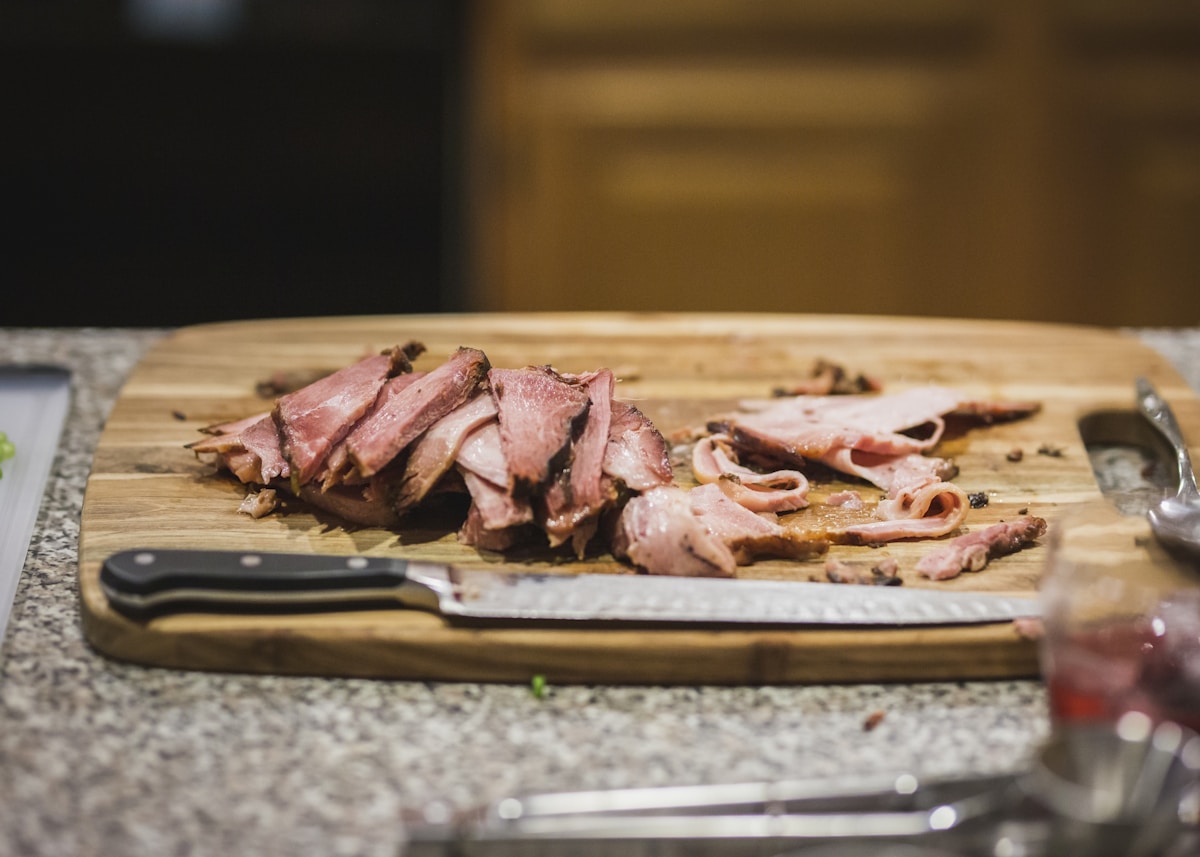
Let’s be honest. You’ve stood at a deli counter, watched them turn a solid hunk of turkey into a fluffy, paper-thin pile of perfection, and felt a pang of sandwich envy. You take it home, build your masterpiece, and it’s glorious. A week later, you try to replicate it with a knife and your own home-roasted beef. The result? Thick, clumsy slabs that are more chewy than tender. The magic is gone.
That experience inevitably leads to a single, nagging question that sends home cooks down a rabbit hole of online reviews and YouTube videos: Should I just buy my own meat slicer? It’s the promise of deli nirvana in your own kitchen. But is it a practical investment that will revolutionize your lunch, or a thousand-dollar dust collector in the making?
As someone who has tested, cleaned, and lived with these machines, I can tell you the answer isn’t a simple yes or no. It’s a classic kitchen equation balancing perfection against practicality. Let’s break it down, cut through the marketing, and figure out if a slicer is the right tool for your kitchen.
The Science of the Slice Why Thin Is In
First, let’s establish why that deli slice is so much better. It isn’t just in your head. The texture and even the flavor of meat and cheese change dramatically with thickness. The secret is surface area.
When you shave meat into whisper-thin sheets, you dramatically increase the amount of surface area that comes into contact with your tongue. This means more flavor compounds are immediately available to your taste buds, creating a more intense, savory experience. It’s the same principle behind why grated cheese tastes saltier than a block of it, or why a smashed burger has more delicious crust than a thick pub burger.
Texture is the other half of the equation. Thinly sliced meat has a delicate, almost melt-in-your-mouth quality. Your teeth don’t have to work as hard, so the perception is one of extreme tenderness. A thick slice of roast beef can be a workout for your jaw, but a pile of shaved roast beef is effortlessly succulent. This is why a classic Italian sub with layers of paper-thin prosciutto, capicola, and salami is so much more satisfying than one made with thick-cut lunch meat from a plastic tub.
This doesn’t just apply to meat. Imagine a slice of provolone so thin it drapes over your sandwich fillings like a silk blanket, melting instantly on contact with hot pastrami. Or potatoes sliced with perfect uniformity for a gratin dauphinois, ensuring every single layer cooks to creamy perfection. A slicer is a precision tool, and that precision translates directly to better-tasting, better-textured food.
The Contenders Entry-Level vs Prosumer Slicers
When you start shopping, you’ll quickly find that slicers fall into two main camps. The price difference is huge, and so is the performance.
Category 1: Entry-Level Slicers (Typically $100 - $200)
These are the models you’ll find at most big-box stores. Think brands like Chef’sChoice, OSTBA, or Cuisinart. My test model in this category is often the popular Chef’sChoice 615A.
- Construction: They rely heavily on plastic parts for the housing and food carriage, with a stainless steel blade. The motors are generally less powerful and use plastic gears. (Yes, plastic gears.)
- Performance: For slicing a cooked, chilled roast turkey or a block of medium-firm cheese like cheddar, they do a decent job. You can get a reasonably thin slice. However, the less powerful motor can bog down on very dense items, like hard salami or semi-frozen meat. The slices can sometimes have slightly feathered edges and consistency isn’t always perfect.
- Pros: Affordable and relatively lightweight, making them easier to pull out of a cabinet and put away.
- Cons: Noisy, the plastic components feel flimsy, and they struggle with precision tasks. The cleanup is still a hassle, but the parts are lighter.
Category 2: Mid-Range / Prosumer Slicers (Typically $300 - $600+)
This is where things get serious. These are essentially scaled-down versions of what you’d find in a real deli. Brands like Beswood and KWS (KitchenWare Station) dominate this space. The Beswood 9" Slicer is a common benchmark here.
- Construction: We’re talking all-metal. Cast aluminum bodies, stainless steel blades, and powerful, belt-driven induction motors. They are heavy—often 30-40 pounds—and designed to live on your counter.
- Performance: The difference is night and day. These machines hum quietly and glide through anything you put on the carriage. They can produce truly transparent, see-through slices of prosciutto. They handle semi-frozen beef for cheesesteaks or hard Parmesan cheese without a single hiccup. Many include a built-in blade sharpener to keep that edge perfect.
- Pros: Unbelievable precision, durable build, quiet operation, and professional-grade results.
- Cons: Very expensive, incredibly heavy, and take up a massive amount of counter space.
The Reality Check The Cleaning Conundrum
Here it is. The single biggest reason people’s meat slicers end up on Craigslist. Cleaning a meat slicer is not a casual affair. It is a process.
After you’re done slicing, you can’t just wipe it down. Fat and tiny food particles get everywhere: behind the blade, under the carriage, on the blade guard, and in every nook and cranny. To clean it properly, you must perform surgery.
This typically involves carefully removing the food carriage, the blade deflector plate, and—most terrifyingly—the razor-sharp blade itself. You need to wash each of these components by hand. Then, you need to meticulously clean the body of the slicer, getting into all the crevices.
My most important tip: Buy a pair of ANSI Level 5 cut-resistant gloves. They cost about $10 and are non-negotiable. That blade is sharper than any knife in your kitchen, and handling it soapy and wet is a recipe for a trip to the emergency room. (Your future self will thank you.)
A thorough cleaning takes 10 to 15 minutes, every single time you use it. Compare that to the 30 seconds it takes to wash a knife. If the thought of a 15-minute cleanup for a 30-second slicing job makes you flinch, a slicer is not for you.
Beyond the Sandwich Unlocking a Slicer’s Potential
To justify the cost, space, and cleanup, a slicer needs to be more than a one-trick pony. The good news is, it can be a surprisingly versatile machine if you commit to using it.
- Charcuterie & Entertaining: This is a slicer’s time to shine. Shaving prosciutto, soppressata, and other cured meats to the perfect thickness will elevate any cheese board from amateur to artisanal.
- Perfect Cheesesteaks: Want that authentic Philly experience? The secret is ultra-thin sliced ribeye. Partially freeze a boneless ribeye roast for 1-2 hours until it’s very firm. The slicer will shave it into paper-thin ribbons that cook up tender and juicy in seconds.
- Uniform Veggies: Get perfectly consistent slices of potato for scalloped potatoes or homemade chips. Shave cabbage for coleslaw in minutes. Get uniform onion slices for amazing onion rings.
- Save Money: This is a big one. A whole, unsliced deli roast or block of cheese is significantly cheaper per pound than the pre-sliced equivalent. If your family goes through a lot of lunch meat, a slicer can genuinely pay for itself over time.
The Verdict Is a Home Slicer Right for You
So, after all that, what’s the bottom line? It comes down to a brutally honest assessment of your habits, your kitchen, and your tolerance for chores.
You should seriously consider buying a slicer if:
- Your household consumes deli meat or sandwiches at least 3-4 times a week.
- You are willing to buy whole roasts or large blocks of cheese to slice yourself, maximizing the cost savings.
- You entertain often and love building impressive charcuterie boards.
- You have dedicated counter space or an easily accessible storage spot for a heavy, bulky appliance.
- A 15-minute, meticulous cleanup process does not intimidate you.
You should probably skip the slicer if:
- You enjoy sandwiches only occasionally.
- You have a small kitchen with limited counter and storage space.
- The thought of disassembling and cleaning a machine with a razor-sharp blade gives you anxiety.
- You value convenience above all else and are perfectly happy with the quality from your local deli counter. (There’s no shame in this!)
The right tool makes cooking easier and more joyful. The wrong tool is just clutter. A meat slicer is the ultimate example of this. For the right person, it’s a game-changing piece of equipment that unlocks a new level of quality and savings. For most people, however, it’s an expensive solution to a problem they don’t really have. Be honest about which camp you’re in, and you’ll spend your money wisely.


